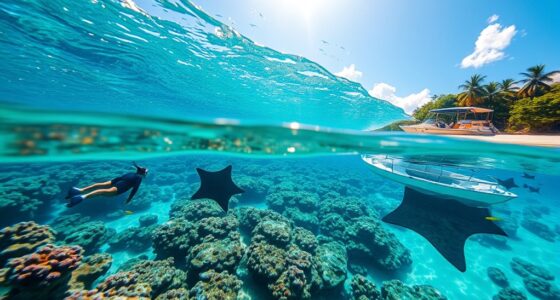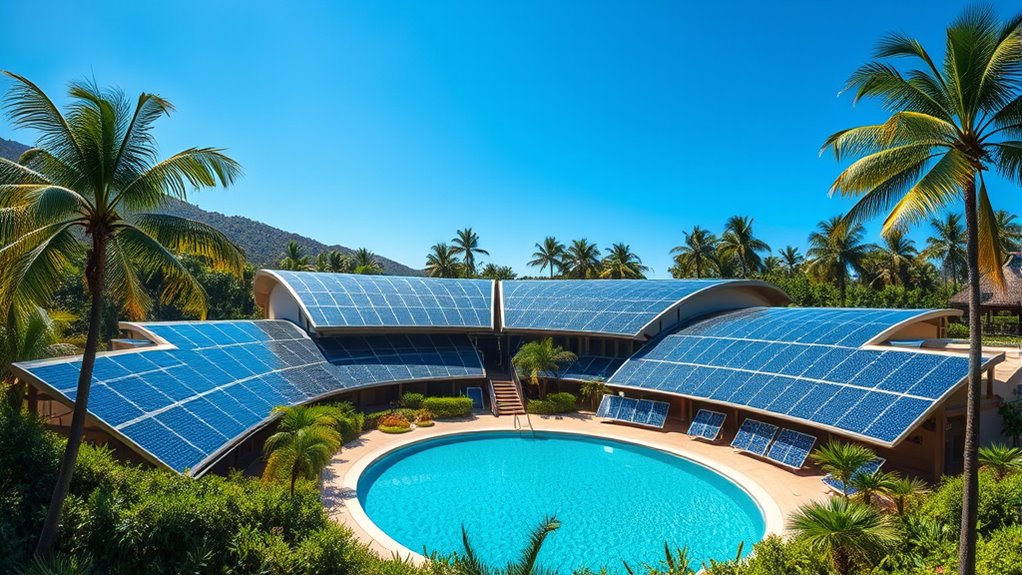

Many resorts are embracing solar power to reduce their environmental impact and provide eco-friendly stays. By installing solar panels on rooftops and open spaces, they generate clean energy seamlessly integrated into daily operations. These resorts also use energy-efficient systems and sustainable practices to boost their green credentials. By doing so, they appeal to eco-conscious travelers and lead industry efforts toward sustainability. If you stay curious, you’ll discover more about how solar-powered hospitality is shaping a greener future.
Key Takeaways
- Resorts are adopting solar energy to reduce environmental impact and demonstrate eco-friendly commitment.
- Solar panels are installed on rooftops and open spaces to generate electricity seamlessly.
- Energy efficiency strategies like smart systems and efficient appliances optimize renewable energy use.
- Solar-powered water heaters and outdoor lighting lower operational costs and promote sustainability.
- Industry leadership in solar adoption attracts eco-conscious guests and enhances the resort’s reputation.
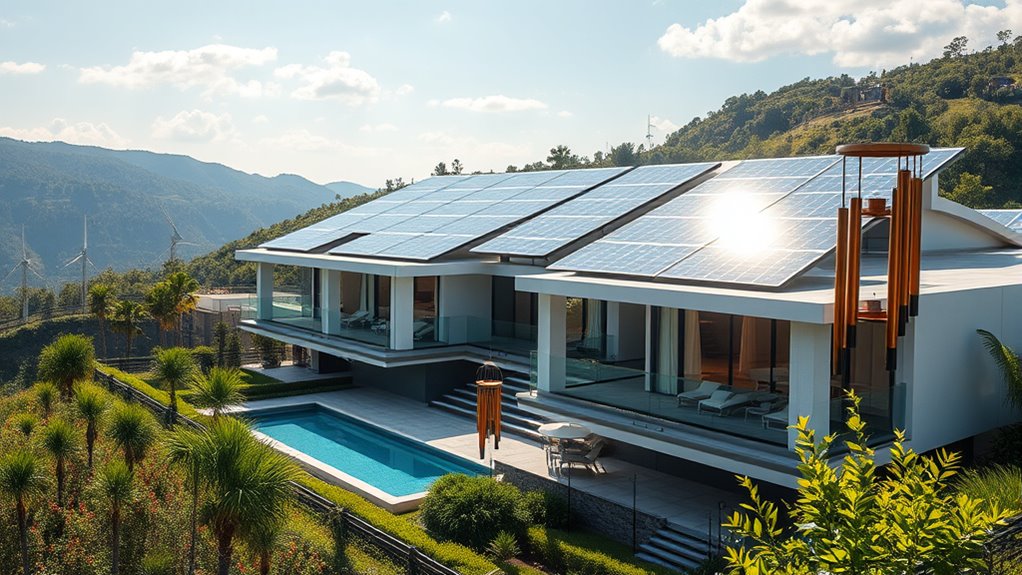
Many resorts are now turning to renewable energy sources to reduce their environmental impact and promote sustainable tourism. By adopting solar power, they demonstrate a strong commitment to eco friendly practices that benefit both the environment and their guests. When you visit a solar-powered resort, you might notice how these establishments seamlessly integrate renewable energy technology into their daily operations. Solar panels are often installed on rooftops, sprawling across vast open spaces, capturing sunlight and converting it into clean electricity. This shift not only minimizes reliance on fossil fuels but also sets a standard for responsible tourism.
Implementing energy efficiency strategies is vital for maximizing the benefits of solar energy. Resorts focus on optimizing energy consumption by installing smart systems that monitor and adjust usage in real-time. For example, advanced lighting controls ensure lights are only on when needed, reducing waste. Efficient appliances and HVAC systems further cut down energy use, aligning with the overall goal of sustainability. These energy efficiency strategies help conserve power, making solar energy more effective and guaranteeing the resort operates with minimal environmental footprint. AI-driven analysis can aid in identifying the most impactful areas for energy savings and strategy adjustments.
You can also expect eco friendly practices to be woven into every aspect of a solar-powered resort. From sustainable building materials to waste reduction programs, the emphasis is on creating a greener footprint. Many resorts incorporate solar-powered water heaters, which reduce the energy needed for hot water, and use solar lighting in outdoor areas to cut electricity consumption. These efforts not only lower operational costs but also serve as a tangible example of how renewable energy can be integrated into hospitality services. As a guest, you’re encouraged to participate in eco-conscious activities, like recycling programs or conservation initiatives, which further reinforce the resort’s sustainability commitment.
The use of solar energy at resorts also offers a significant marketing advantage. It appeals to environmentally conscious travelers who seek accommodations that align with their values. By investing in renewable energy, resorts demonstrate leadership in sustainable tourism, attracting a growing segment of eco-minded guests. They often share their success stories through marketing channels, inspiring others in the industry to follow suit.
In essence, solar-powered resorts showcase how eco friendly practices and energy efficiency strategies work hand in hand to create a more sustainable hospitality industry. You benefit from a cleaner, greener environment while enjoying the comfort and luxury of a modern resort. As more resorts embrace renewable energy, the tourism industry moves closer to a future where environmental responsibility and guest satisfaction go hand in hand, proving that sustainability and luxury can coexist seamlessly.

GKGG Solar Lights Outdoor Waterproof IP65, Solar Powered 76 LED 3 Lighting Modes Solar Spot Lights Outdoor for Yard Garden Landscape Pathway (Warm White, 4 Pack)
- Number of LEDs: 76 LEDs for bright illumination
- Waterproof Design: IP65 waterproof for all weather use
- Durable Material: Made of high-quality ABS plastic
As an affiliate, we earn on qualifying purchases.
As an affiliate, we earn on qualifying purchases.
Frequently Asked Questions
How Do Solar Panels Affect Resort Aesthetics?
Solar panels can enhance resort aesthetics when integrated thoughtfully. Your resort’s solar panel design should complement the architecture, blending seamlessly rather than standing out. Resort architectural integration involves choosing sleek, low-profile panels or creative placements that enhance the overall look. When done well, solar panels become a stylish feature, showcasing your commitment to sustainability without sacrificing beauty. This approach guarantees your resort looks modern, eco-friendly, and visually appealing to guests.
What Is the Typical ROI for Solar Investments?
Think of solar investments as planting a seed that grows into a steady financial forest. Typically, you’ll see a return on investment (ROI) within 5 to 10 years, depending on your location and system size. A thorough financial analysis reveals the investment payback period, helping you understand when your solar setup starts saving money and turning a profit. With patience, your resort will bask in the sunny rewards of sustainable energy.
Are There Any Government Incentives for Solar-Powered Resorts?
Yes, there are government incentives for solar-powered resorts. You can benefit from government grants and tax incentives that help offset installation costs. Many regions offer these incentives to promote renewable energy adoption, making solar investments more affordable. By taking advantage of these programs, you’ll reduce your resort’s environmental impact and improve your return on investment. Be sure to check local and federal programs available in your area to maximize your benefits.
How Do Resorts Manage Energy Storage on Cloudy Days?
On cloudy days, resorts rely on energy storage solutions like advanced battery technology to keep operations running smoothly. You’ll find that recent advancements in battery tech, such as higher capacity and faster charging, allow resorts to store excess solar energy generated during sunny periods. This stored energy then supplies power during cloudy weather, ensuring continuous energy availability and reducing reliance on the grid.
What Are the Maintenance Requirements for Solar Energy Systems?
You need to regularly inspect your solar energy system to guarantee peak performance, focusing on cleaning protocols that keep panels free of dust and debris. This helps extend system longevity and prevents efficiency loss. Schedule maintenance checks for wiring, inverters, and mounting components to catch issues early. By maintaining your system properly, you’ll maximize energy output and prolong its lifespan, ensuring reliable, sustainable power for your resort.
Conclusion
By choosing solar-powered resorts, you’re helping reduce greenhouse gas emissions and protect the planet. Did you know that solar energy can cut resort energy costs by up to 40%? It’s a win-win—enjoy luxurious stays while supporting sustainability. As more resorts switch to renewable energy, you get to be part of the positive change. So, next time you travel, consider staying at a solar-powered resort and make your vacation eco-friendly!