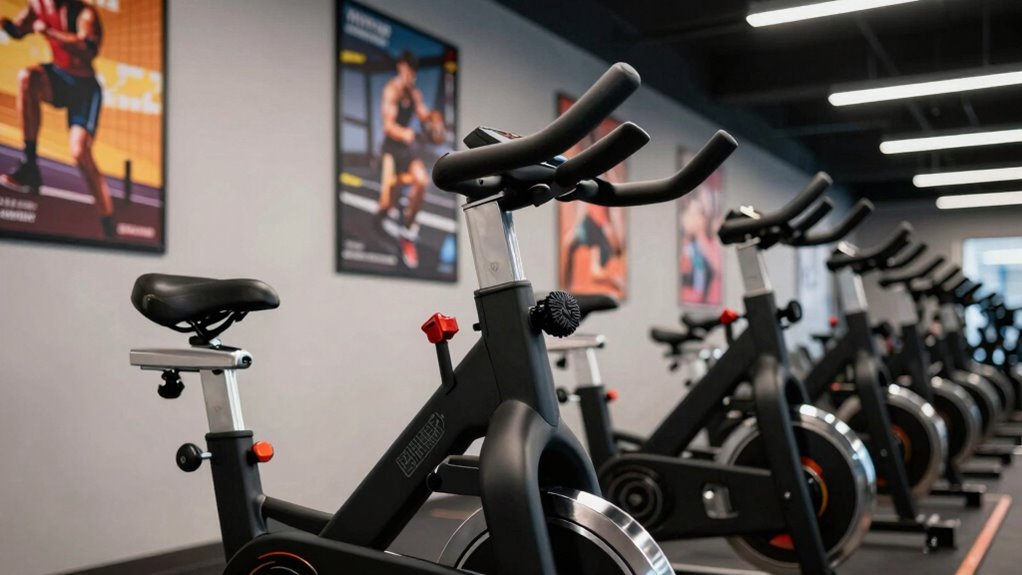

The resistance type on your indoor cycling bike markedly impacts your riding feel and workout experience. Magnetic resistance offers smooth, quiet adjustments and a consistent feel, while friction resistance provides a more traditional, tactile sensation but can be noisier. Air resistance increases with your effort, ideal for high-intensity intervals, and hydraulic resistance offers a quieter, compact option. Understanding these differences helps you customize your ride for your fitness goals. Keep exploring to discover which resistance suits your style best.
Key Takeaways
- Magnetic resistance offers smooth, quiet operation with adjustable levels for a consistent riding feel.
- Friction resistance provides a traditional, tactile experience but tends to be noisier and requires pad replacements.
- Air resistance increases with pedaling intensity, creating a dynamic feel ideal for high-intensity workouts.
- Hydraulic resistance offers a quiet, compact experience with adjustable tension, mimicking road bike riding.
- Combining smart features with resistance types allows customization for various workout intensities and sensations.
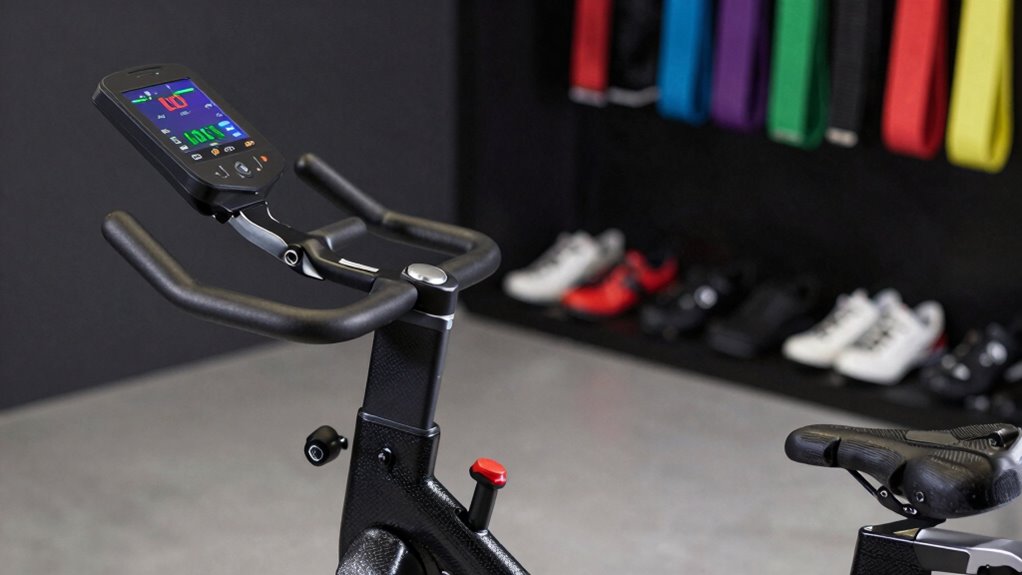
Indoor cycling bikes offer a fantastic way to stay active indoors, especially when you understand the different resistance types that change the feel of your workout. One of the biggest advantages of modern bikes is their smart features, which allow you to customize your experience and track your progress. These features often include Bluetooth connectivity, touchscreen displays, and app compatibility, giving you access to a variety of virtual classes, workout metrics, and personalized coaching. With such technology, you can seamlessly integrate your fitness journey into your daily routine, staying motivated and engaged. Plus, the exercise variety these features provide keeps your workouts fresh and challenging, preventing boredom and plateaus.
When it comes to resistance types, there are several options, each offering a different riding experience. Magnetic resistance is one of the most popular choices, prized for its quiet operation and smooth feel. It works by using magnets to create resistance against a metal flywheel, allowing you to easily adjust the intensity with a simple lever or digital control. This type of resistance is ideal for those who value a quiet environment and consistent resistance levels. Next, you have friction resistance bikes, which use a brake pad that presses directly against the flywheel. These bikes tend to be more affordable but require regular pad replacements and can be noisier. They provide a very direct feel, similar to riding a traditional bike on a rougher surface, making them suitable for riders seeking a more tactile experience.
Another resistance type gaining popularity is air resistance, which relies on a fan that spins faster as you pedal harder. The harder you push, the more resistance you generate, mimicking real outdoor cycling dynamics. This type offers unlimited resistance, making it perfect for high-intensity interval training. Hydraulic resistance bikes, meanwhile, use pistons filled with oil or water, providing a compact design and adjustable resistance levels. They often feel more natural and are quieter than friction bikes, but they may not offer the same degree of resistance as magnetic or air options. Additionally, smart resistance mechanisms are emerging, enabling automatic adjustments based on your workout program or virtual terrain.
Each resistance type influences how your workout feels, so choosing the right one depends on your fitness goals and preferences. By combining these options with the smart features available, you can tailor your indoor cycling experience to match your desired intensity, duration, and style. This flexibility ensures you stay motivated and see results, whether you’re aiming for weight loss, endurance, or overall health. Ultimately, understanding the different resistance types helps you select a bike that provides the right challenge and comfort, making your indoor cycling workouts more effective and enjoyable.

MERACH Exercise Bike, Magnetic Friction Stationary Bike with Brake Pad and Exclusive App, Low Noise Indoor Cycling Bike with 300lbs Weight Capacity, Tablet Mount and Fitness Courses for Weight Loss
- App Compatibility: Track metrics and sync with health apps
- Stable & Durable Frame: Reinforced steel construction with corrosion resistance
- Quiet Magnetic Resistance: Ultra-smooth, low-noise operation under 25dB
As an affiliate, we earn on qualifying purchases.
As an affiliate, we earn on qualifying purchases.
Frequently Asked Questions
How Do Magnetic Resistance Bikes Compare to Other Types?
Magnetic resistance bikes offer smoother, quieter rides compared to friction resistance models, which rely on brake pads pressing against the flywheel. Magnetic resistance uses electromagnetic fields to adjust resistance levels, providing precise control and minimal wear. You’ll enjoy quieter, low-maintenance workouts with magnetic resistance, making it ideal if noise and durability matter. Friction resistance bikes tend to be louder and require more upkeep, but they can be more affordable upfront.
Can Resistance Types Affect Workout Noise Levels?
Listening to your bike’s resistance type is like having a pocket full of gold—resistance affects noise levels markedly. Magnetic resistance bikes tend to be whisper-quiet, making your workout smooth and pedal smoothness enjoyable without disturbing others. They also require minimal maintenance, unlike friction or air resistance bikes, which might produce more noise over time. Choosing the right resistance type ensures a peaceful, effective ride every time, just like a well-oiled machine.
Are Certain Resistance Systems More Durable Long-Term?
Some resistance systems are more durable long-term, especially magnetic and direct-contact brake systems, thanks to their durability comparison and low maintenance requirements. You’ll find they tend to last longer and require less upkeep than friction or fan-based systems, which may wear out faster and need more frequent maintenance. Choosing a bike with a magnetic or direct-contact resistance can save you money and effort over time, ensuring your workouts stay smooth and reliable.
Do Resistance Types Influence the Bike’s Weight Capacity?
Your bike’s weight capacity isn’t directly affected by resistance types, but the resistance impact can influence your riding experience. Heavier resistance mechanisms, like magnetic systems, often add minimal weight, so they usually don’t alter the bike’s weight limit. However, if you prefer a very sturdy bike, choose one with a higher weight capacity to ensure safety and stability during intense workouts, regardless of the resistance type.
Which Resistance Type Offers the Most Realistic Road Feel?
You’ll find magnetic resistance offers the most realistic road feel because it provides smooth, quiet adjustments and consistent resistance. This resistance type closely mimics real cycling, enhancing resistance realism, so you can better simulate outdoor riding. The precise control and gradual changes make magnetic systems ideal if you want an authentic experience. Overall, for the most lifelike road feel, magnetic resistance is your best choice.
Conclusion
Choosing the right resistance type on your indoor cycling bike is like tuning a musical instrument—you’ll find the perfect pitch for your workout. Whether you prefer the smooth fade of magnetic resistance or the gritty feel of friction, each option shapes your ride’s intensity and feel. By understanding these differences, you can craft a workout that’s as dynamic and adaptable as your goals. Ultimately, the right resistance transforms your ride into a symphony of sweat and progress.