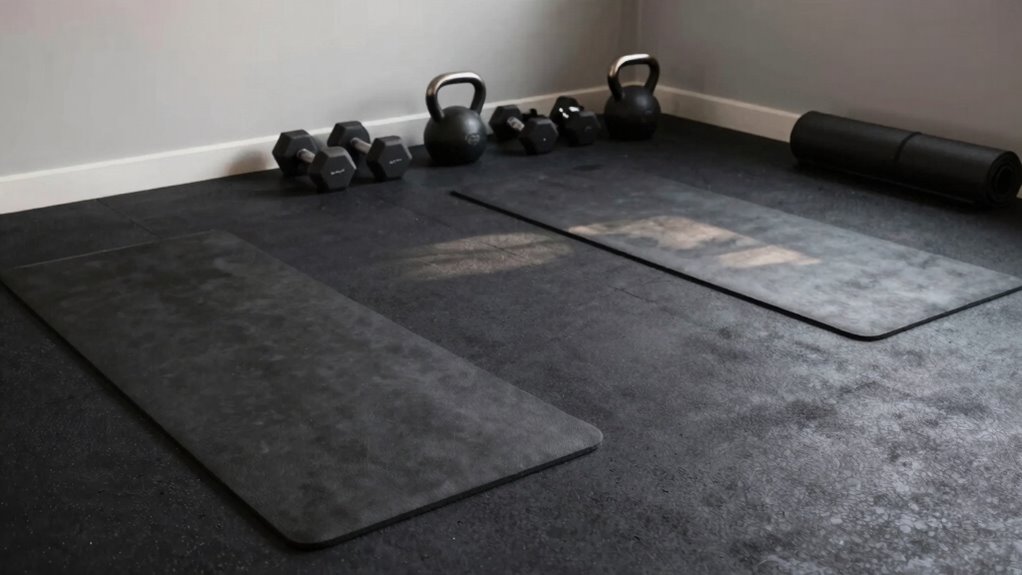

To create a quieter home gym that your neighbors will appreciate, invest in soundproof flooring options like thick rubber mats or dense foam tiles. These materials absorb impact noise and vibrations, preventing sound from escaping. Adding underlayments or interlocking tiles enhances noise reduction even more. Proper installation and choosing the right flooring can make your workouts more comfortable while minimizing disturbance. Keep going to discover more tips for transforming your gym into a silent sanctuary.
Play games included with Prime
Start a Prime free trial and play with Amazon Luna on your devices.
As an affiliate, we earn on qualifying purchases.
Key Takeaways
- Use dense rubber mats or thick underlayments to absorb impact and reduce noise transmission.
- Opt for foam or interlocking tiles designed with soundproofing properties to minimize sound escape.
- Install soundproof underlayment beneath your gym flooring for enhanced noise reduction.
- Choose mats with noise-dampening features to contain vibrations and impact sounds during workouts.
- Proper installation and materials can significantly decrease noise, keeping your home gym neighbor-friendly.

Are you wondering how to safeguard your floors and improve safety in your home gym? One of the best ways to do that is by investing in quality gym flooring. Not only does it shield your existing surfaces from damage caused by heavy equipment or dropped weights, but it also provides a stable, non-slip surface that keeps you safe during workouts. When choosing your flooring, you’ll find various types of mats designed specifically for home gyms. Rubber mats are a popular choice—they’re durable, shock-absorbent, and easy to install. Foam mats offer a softer surface, ideal for floor exercises and stretching, while interlocking tiles provide customizable coverage and a seamless look. Each type of mat serves a different purpose, so consider your workout routine and space needs before making a decision.
But protecting your floors is just part of the story. If you live close to neighbors or share walls with other parts of your home, soundproof solutions become essential. Without proper soundproofing, noise from jumping, dropping weights, or high-impact cardio can disturb others, especially in apartment buildings or shared spaces. To keep the noise levels down, look for soundproof mats or underlayment options designed to absorb vibrations and dampen sound transmission. Thick rubber mats are excellent soundproof solutions—they absorb impact noise and reduce vibrations that travel through floors and walls. You might also add specialized soundproof underlayments underneath your mats or opt for dense foam tiles that help dampen sound. Combining these solutions ensures your workouts remain quiet, so you don’t have to worry about disturbing family members or neighbors.
Incorporating the right types of mats and soundproof solutions in your home gym not only enhances safety and protects your floors but also creates a more comfortable workout environment. When you choose the appropriate mats, you’re investing in durability and comfort, making each session safer and more enjoyable. Meanwhile, soundproofing keeps noise contained, allowing you to train at any hour without concern. It’s a smart upgrade that benefits everyone around you—your neighbors will thank you for keeping the noise levels down, and you’ll appreciate the added safety and comfort during your workouts. Plus, a well-insulated, protected space encourages consistency, helping you stick to your fitness goals. So, take the time to assess your needs, select suitable types of mats, and implement effective soundproof solutions. Your home gym will become a safer, quieter, more inviting space where you can focus on your fitness without worry.
As an affiliate, we earn on qualifying purchases.
Frequently Asked Questions
What Is the Best Flooring Material for Soundproofing?
The best flooring material for soundproofing is rubber or foam tiles, as they excel in soundproofing options and provide excellent acoustic insulation. You’ll notice a significant reduction in noise transmission when you install these materials, making your workouts quieter for neighbors. Plus, they’re durable, comfortable, and easy to install, ensuring your home gym remains a quiet, neighbor-friendly space. Choose rubber or foam for effective soundproofing and acoustic insulation benefits.
How Durable Is Rubber Gym Flooring Under Heavy Weights?
Rubber gym flooring is like a sturdy ship’s hull, built to withstand relentless waves. It’s highly durable under heavy weights because of its excellent material resilience. When you place weights on it, proper weight distribution guarantees the surface absorbs pressure evenly, preventing damage. This flooring material can handle repeated impacts and heavy loads, making it a reliable choice for a long-lasting workout space that keeps your floors safe and sound.
Can Home Gym Flooring Be Installed DIY?
Yes, you can definitely do a DIY installation of home gym flooring. Start with proper flooring preparation, ensuring the surface is clean, level, and free of debris. Measure carefully and cut the mats or tiles accurately to fit your space. Follow the manufacturer’s instructions closely, and use the right tools. With patience and attention to detail, you’ll create a safe, quiet workout area that your neighbors will appreciate.
What Maintenance Is Required for Gym Flooring?
You should regularly sweep or vacuum your gym flooring to keep it looking fresh and prevent dirt buildup. Occasionally, use a damp mop with a mild cleaner to preserve its aesthetics. Check for any damage or wear, especially around edges, and address issues promptly to avoid costly repairs. Proper maintenance keeps your installation costs low and ensures your flooring stays attractive and quiet, enhancing your workout space and keeping neighbors happy.
How Does Flooring Choice Affect Workout Safety?
Your flooring choice impacts workout safety by providing noise reduction and injury prevention. Soft, shock-absorbing mats reduce noise and cushion your joints, lowering the risk of injury during high-impact exercises. Rubber flooring offers excellent durability and shock absorption, making your workouts safer and quieter. Proper flooring guarantees stability and grip, preventing slips and falls. Choose flooring that balances noise reduction with safety features to protect you and keep your workouts injury-free.
Conclusion
Choosing the right home gym flooring isn’t just about protection; it’s about creating a sanctuary where your energy flows smoothly, undisturbed by noise. Think of your floor as the foundation of your strength, quietly supporting each rep and stride. When you invest in the right surface, you’re building a peaceful retreat that benefits you and your neighbors alike. Embrace this upgrade as the foundation of your fitness journey—strong, silent, and ready to support your best self.
Flea & tick season Picks
flea and tick prevention
As an affiliate, we earn on qualifying purchases.