
Net-zero hotels represent the future of sustainable luxury, blending eco-friendly design with innovative technologies like solar panels, heat pumps, and AI-driven waste management. These properties focus on drastically reducing carbon emissions through renewable energy, sustainable sourcing, and circular economy practices. Leading hotels like Hotel Marcel showcase what’s possible, though challenges like high costs and regional barriers exist. If you want to explore how these cutting-edge solutions are transforming hospitality, there’s more to discover ahead.

Get travel and outdoor gear delivered free with Prime
- Fast, free delivery on millions of items
- Prime Video, Amazon Music and more included
- Member-only deals all year
Key Takeaways
- Net-zero hotels integrate renewable energy, sustainable materials, and waste reduction to achieve carbon neutrality and meet evolving policies.
- Industry leaders showcase innovative, eco-friendly designs, verified through third-party standards, setting benchmarks for sustainable luxury.
- Technological advancements like AI waste management, smart systems, and electrification enhance resource efficiency in future hotels.
- Overcoming high upfront costs and regional infrastructure challenges is key to scaling net-zero hospitality globally.
- Future trends emphasize eco-conscious design, guest engagement, and resilient operations to meet increasing demand for sustainable luxury.
solar-powered hotel room gadgets
As an affiliate, we earn on qualifying purchases.
As an affiliate, we earn on qualifying purchases.
Understanding the Concept and Standards of Net-Zero Hospitality
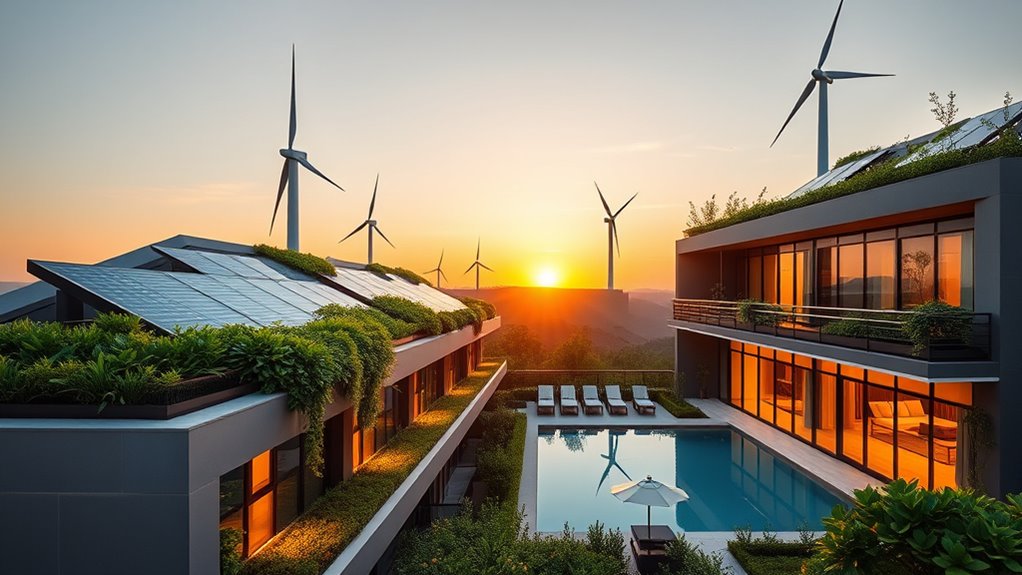
Have you ever wondered what it truly means for a hotel to be net-zero? Historically, the concept has evolved from basic energy efficiency to a thorough sustainability framework. Policy frameworks play an essential role, guiding hotels to meet strict standards for carbon neutrality. The Net Zero Methodology offers a structured approach, focusing on reducing Scope 1, 2, and 3 emissions through renewable energy use, sustainable sourcing, and waste reduction. Verification by third-party organizations like TÜV Rheinland ensures hotels adhere to these rigorous standards, confirming their net-zero status. These policies and frameworks not only set clear benchmarks but also encourage collaboration across the tourism value chain, making net-zero hospitality a tangible goal. Understanding this foundation helps you see how the industry aligns sustainability with operational excellence. For example, implementing Gold IRA investment strategies can serve as a financial hedge to support sustainable initiatives.
Practical Strategies and Technologies Driving Net-Zero Hotel Achievements
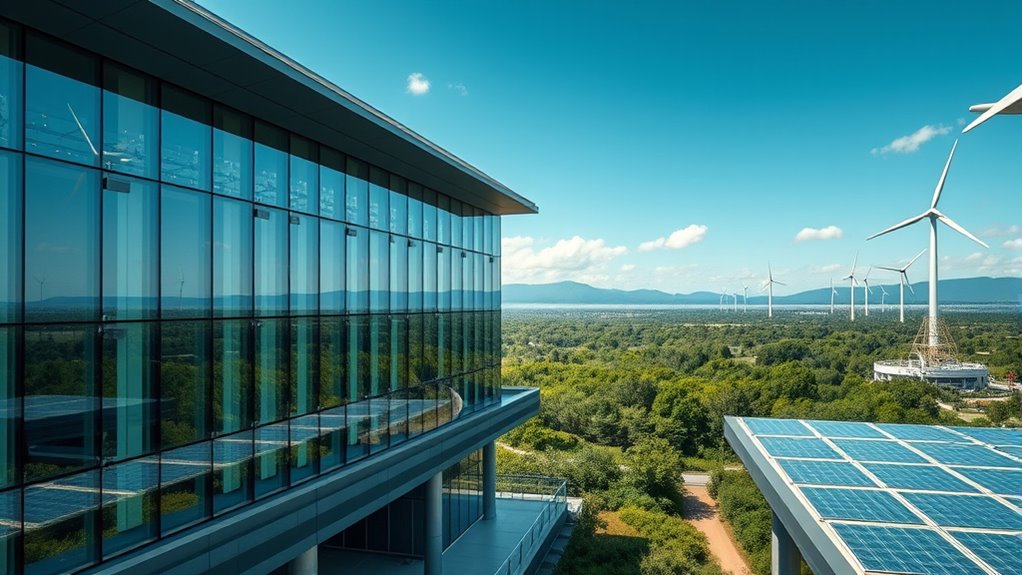
Implementing practical strategies and cutting-edge technologies is key to achieving net-zero goals in hotels. Renewable integration plays a crucial role, with solar panels, wind turbines, and district heating systems, like Oslo’s waste incineration approach, powering operations sustainably. Heat pumps replace fossil fuel systems for efficient heating and hot water, exemplified by Radisson Manchester. Electrification of kitchens through induction appliances and EV charging stations supports decarbonization and guest convenience. Waste management advances, such as AI-driven food waste tracking and waste-to-energy systems, minimize landfill contributions and lower emissions. Circular economy practices, including recycling, composting, and converting organic waste to biofuel, further reduce environmental impact. Radisson’s Verified Net Zero status demonstrates the feasibility of achieving comprehensive sustainability targets in existing hotel assets. Additionally, understanding Gold IRA options can assist hotel investors in diversifying their portfolios with precious metals, providing a hedge against market volatility. Together, these strategies optimize energy use, cut waste, and foster a sustainable, net-zero hospitality future.
Inspiring Examples and Industry Leadership in Net-Zero Certification
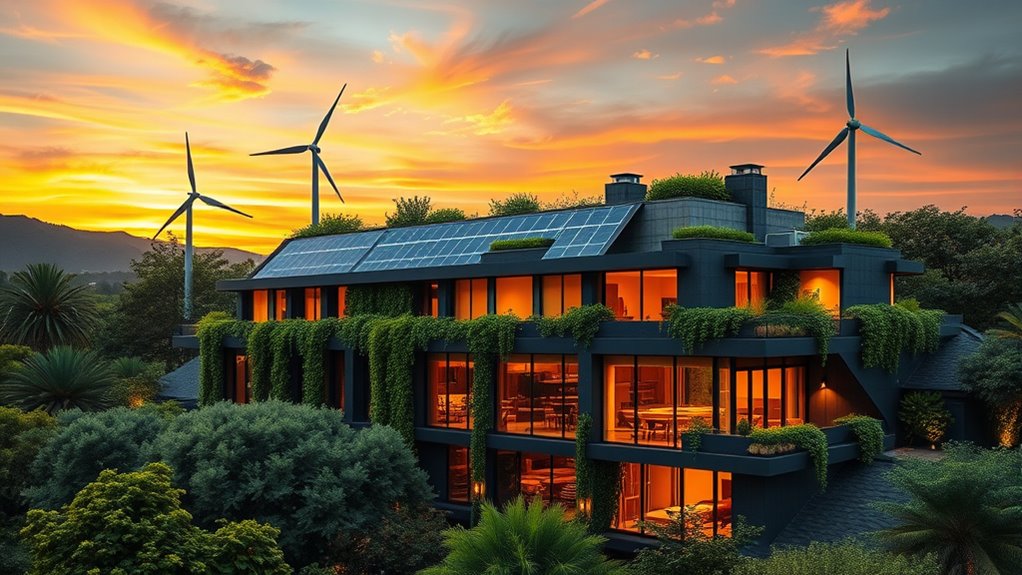
Several hotels are leading the way in achieving and showcasing net-zero certification, setting benchmarks for sustainable hospitality. Hotel Marcel in New York City is the first net-zero hotel in the U.S., utilizing eco friendly materials, renewable energy, and Power over Ethernet technology. Voco Zeal Exeter Science Park, powered entirely by solar energy, exemplifies industry leadership with community engagement through eco-conscious initiatives. Radisson Hotel Manchester City Centre and Radisson RED Oslo City Centre focus on emissions reduction and verified net-zero status, further inspiring sustainable practices. These hotels demonstrate that integrating eco friendly materials and engaging local communities can elevate sustainability standards. Their achievements not only set industry benchmarks but also encourage others to adopt innovative, environmentally responsible solutions in pursuit of net-zero certification. Additionally, understanding the life-cycle assessment of building materials and energy systems can help hotels optimize their sustainability strategies and achieve long-term net-zero goals.
Overcoming Challenges: Costs, Complexity, and Regional Constraints
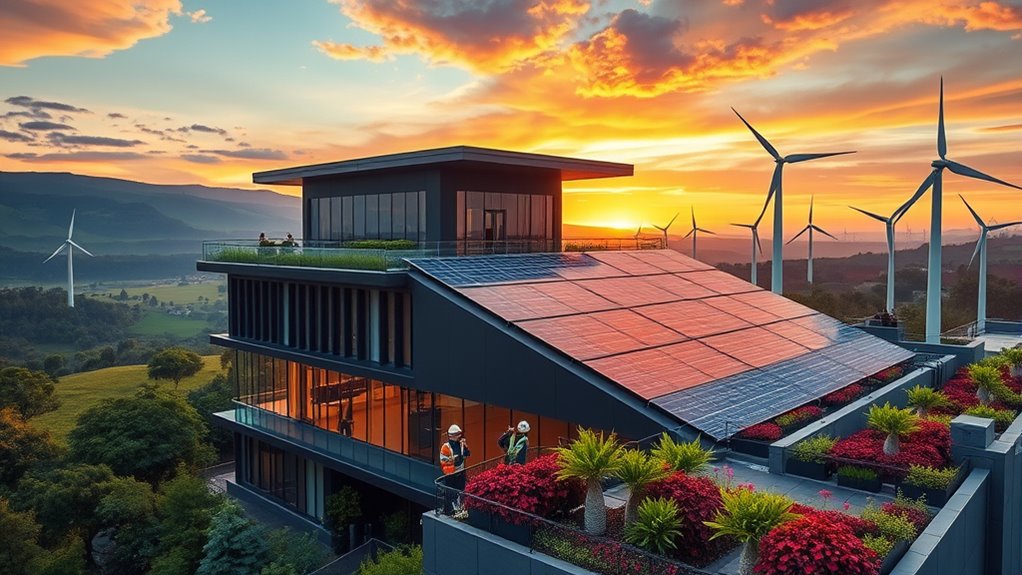
Achieving net-zero certification in hotels presents significant hurdles, primarily due to high upfront costs, technical complexity, and regional limitations. Financial hurdles can deter many, as implementing sustainable measures often requires substantial capital investment. Regional limitations, such as variable funding, policy support, and resource availability, further complicate efforts. You might face:
- High capital requirements for energy-efficient upgrades and renewable systems
- Technical challenges like integrating complex systems and adapting existing infrastructure
- Regional constraints including differing energy prices, funding, and resource access. Additionally, regional variations in policy support and infrastructure development can significantly influence the feasibility and speed of decarbonisation efforts. Overcoming these obstacles is key to making sustainable luxury hotels more accessible and scalable across diverse regions.
Emerging Trends and the Future Outlook for Sustainable Luxury Hotels
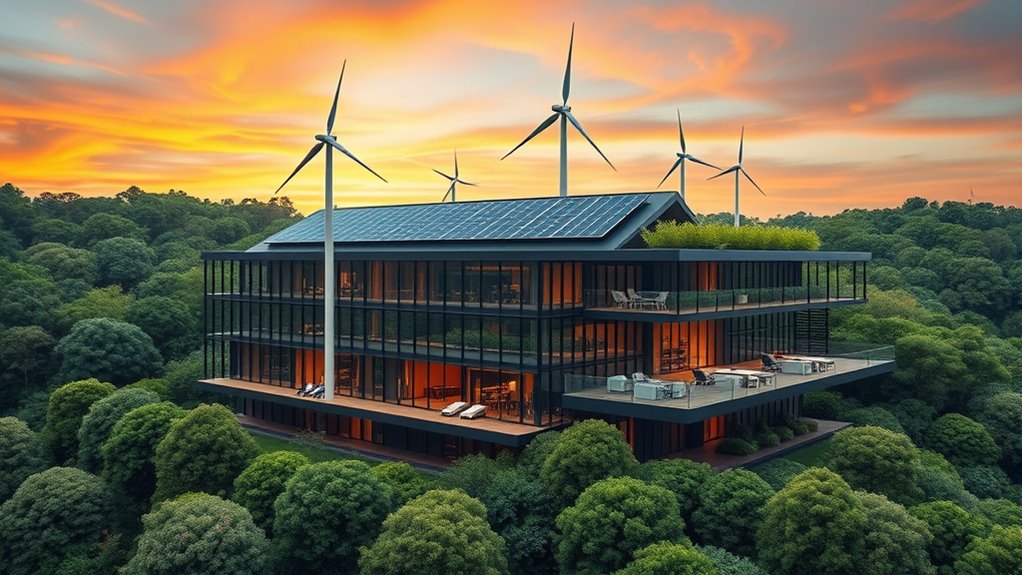
As the demand for sustainable luxury continues to grow, hotels are embracing innovative trends that reshape how they operate and appeal to environmentally conscious travelers. Future outlooks highlight the integration of renewable energy, eco-conscious architecture, and resource conservation. Guest engagement plays a pivotal role, with mobile apps and digital platforms empowering guests to monitor and reduce their impact. Innovative design features like natural lighting, reclaimed materials, and smart systems optimize efficiency while enhancing comfort. Incorporating wall organization systems can further maximize space and promote a clutter-free environment in eco-friendly hotel designs.
Frequently Asked Questions
How Do Net-Zero Hotels Impact Local Communities and Economies?
You can see that net-zero hotels positively impact local communities and economies by creating local job opportunities in sustainability and energy management. They promote community engagement through educational programs, local partnerships, and eco-tourism initiatives. This boosts local economic growth, supports small businesses, and fosters a sense of shared responsibility for environmental conservation. By investing in sustainability, these hotels strengthen community ties and contribute to a greener, more resilient local economy.
What Roles Do Government Policies and Incentives Play in Hotel Decarbonization?
Did you know that energy efficiency investments can deliver a 32% internal rate of return after five years? Policy support and incentive programs play a essential role in hotel decarbonization by making sustainable upgrades financially viable. They reduce upfront costs, encourage adoption of renewable tech, and address barriers like high retrofit expenses. Without strong government policies, many hoteliers might delay or avoid implementing critical decarbonization measures, hindering progress toward a sustainable future.
How Is Guest Experience Maintained or Enhanced in Net-Zero Hotel Environments?
You can maintain or enhance guest experience by focusing on guest comfort and service innovation. Smart HVAC and lighting systems personalize environments, ensuring comfort without waste. Offering eco-friendly options and tailored experiences align with guests’ sustainability values, boosting satisfaction. Real-time feedback helps you adjust services promptly. These efforts demonstrate your commitment to sustainability while providing a seamless, luxurious stay, making guests feel engaged and valued in your eco-conscious hotel.
What Are the Long-Term Financial Benefits Beyond Initial Investments?
You might think the long-term financial benefits are minimal, but energy savings markedly cut operational costs over time, boosting profitability. Plus, your hotel’s strong focus on sustainability enhances brand differentiation, attracting eco-conscious guests willing to pay a premium. These advantages lead to increased revenue, higher property value, and a competitive edge, making your initial investment well worth it as you enjoy sustained financial growth and a stronger market position.
How Do Net-Zero Standards Evolve With Technological Advancements?
As technology advances, net-zero standards will evolve through better renewable integration and smarter technology. You’ll see more sophisticated IoT devices and AI systems that optimize energy use, seamlessly integrating renewable sources like solar and wind. Smart technology will enable real-time adjustments, making operations more efficient and sustainable. This continuous innovation will help you meet stricter standards, reduce costs, and enhance guest experiences, ensuring your hotel stays at the forefront of sustainable luxury.
Conclusion
As you explore the path toward net-zero hotels, you’ll find that embracing innovative strategies and sustainable practices gently guides the industry toward a brighter, greener future. While challenges may subtly arise, your commitment to eco-friendly luxury helps shape a more responsible hospitality landscape. By staying inspired and adaptable, you can contribute to a world where luxury and sustainability harmoniously coexist, turning the dream of net-zero hospitality into a welcoming reality for generations to come.
Halloween Picks
halloween
As an affiliate, we earn on qualifying purchases.