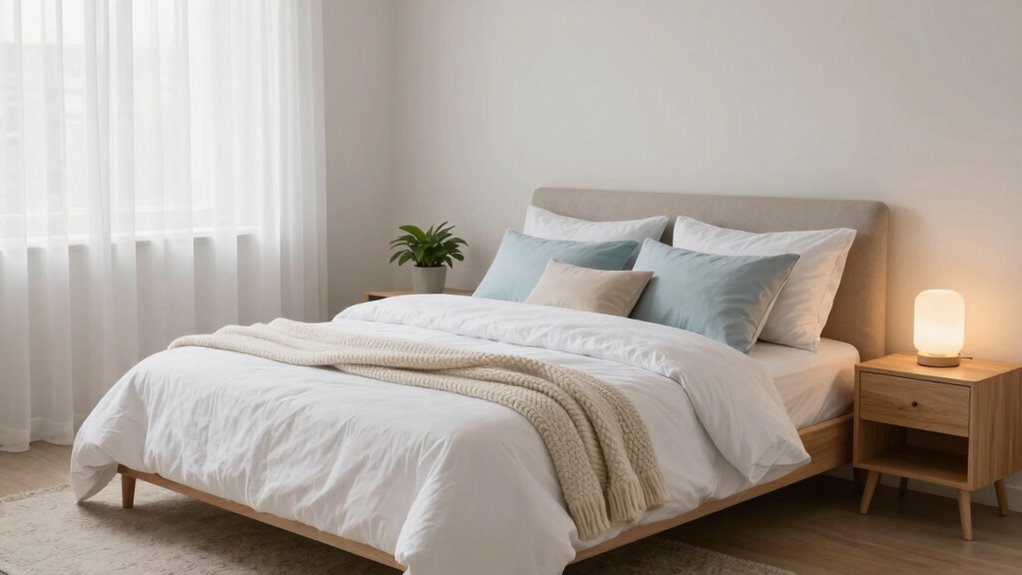

To help your guests sleep better, create a calming bedroom by using adjustable lighting with warm LED bulbs and dimmer switches, and choosing soothing, neutral colors like soft blues or beiges. Invest in comfortable bedding and position bedside lamps for easy access. Use window treatments that block out light and noise, such as blackout curtains, and consider adding soundproofing. For more tips on designing a restful space, keep exploring the ideas that make a difference.

Get travel and outdoor gear delivered free — and shop member deals
- Fast, free delivery on millions of items
- Access to Prime Big Deal Days deals on October 6–7
- Prime Video, Amazon Music and more included
Key Takeaways
- Incorporate adjustable, warm lighting with dimmers and smart controls for customizable ambiance.
- Use calming, neutral color schemes to promote relaxation and reduce stress.
- Install blackout curtains or blinds to block external light and create a dark sleeping environment.
- Position bedside lamps for easy access and optimal light placement for reading and comfort.
- Add soundproofing measures to minimize external noise and enhance overall sleep quality.
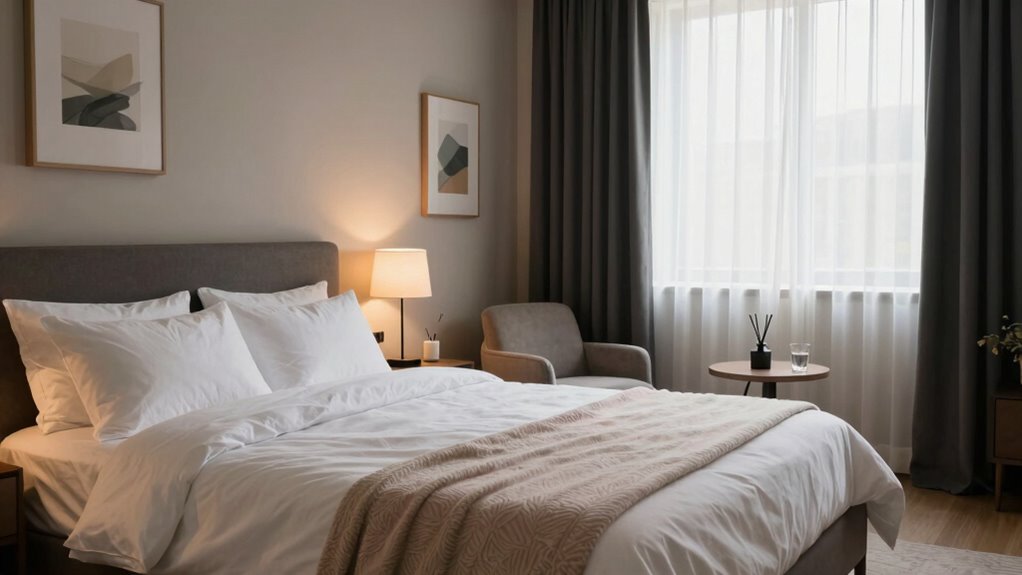
Creating a comfortable bedroom for guests starts with understanding their needs and preferences. You want to create an environment that feels welcoming and restful, and that begins with paying attention to lighting options and color schemes. Lighting plays an essential role in setting the right mood and making your guests feel at ease. Opt for a mix of ambient, task, and accent lighting so they can adjust the brightness to suit their comfort. Soft, warm LED bulbs are ideal because they mimic natural light and create a cozy atmosphere. Consider installing dimmer switches, giving your guests control over the lighting intensity. This way, they can turn down the lights for bedtime or brighten the room if they need to read or get ready in the morning. Avoid harsh fluorescent lights, which can be disruptive and make the space feel cold or uninviting.
Color schemes also have a significant impact on sleep quality. When designing the room, choose calming, neutral tones like soft blues, gentle greens, or warm beiges. These colors are known to promote relaxation and help reduce stress, making it easier for your guests to unwind. Bright or overly vibrant colors might be stimulating and hinder sleep, so steer clear of bold reds or intense yellows. Keep the walls and bedding within a cohesive palette that fosters tranquility. Adding subtle accents in muted shades can enhance the overall sense of calm without overwhelming the senses. Consider using light-colored curtains or blinds that let in natural light during the day but can be easily closed at night to block out unwanted streetlights or early morning sun. Incorporating lighting control options such as remote-controlled or smart lighting can further enhance convenience for your guests.
In addition to lighting options and color schemes, pay attention to the quality of your bedding and the placement of light sources. Opt for comfortable, breathable sheets and a supportive mattress to guarantee restful sleep. Position bedside lamps so your guests can read or adjust lighting without getting out of bed. Also, think about blackout curtains or shades to help eliminate external light and create a dark environment conducive to deep sleep. When selecting window treatments, consider the biodiversity of your neighborhood and whether external factors like street noise or light pollution might affect your guests’ rest. Making use of soundproofing techniques can further improve the quality of sleep by reducing unwanted noise. Your goal is to craft a space that feels safe, soothing, and adaptable to your guests’ preferences. When lighting options are flexible and the color scheme promotes relaxation, you give your guests the best chance at a good night’s sleep. Ultimately, creating a space that balances functionality with comfort ensures your guests wake up refreshed and grateful for your thoughtful design.
adjustable dimmer switch for bedroom lighting
As an affiliate, we earn on qualifying purchases.
As an affiliate, we earn on qualifying purchases.
Frequently Asked Questions
How Can I Improve Bedroom Air Quality for Better Sleep?
You can improve your bedroom air quality by using air purifiers to remove dust, allergens, and pollutants. Additionally, controlling humidity levels helps prevent mold and dust mites, which can disrupt sleep. Keep windows open for fresh air when possible, and avoid smoking or using strong chemicals indoors. Regularly clean your space to reduce airborne irritants, creating a healthier environment that promotes better sleep for your guests.
What Are the Best Plants to Promote Restful Sleep?
You should consider sleep-inducing herbs like lavender, chamomile, and valerian, which naturally promote relaxation. When caring for these plants, make sure they get the right amount of sunlight and water, and keep the environment cool. Incorporate them into your bedroom decor, perhaps in pots or dried arrangements, to benefit from their calming scents. Their natural properties can help create a tranquil atmosphere, making it easier for your guests to rest peacefully.
How Does Bedroom Lighting Affect Guest Sleep Quality?
Bedroom lighting considerably impacts your guest’s sleep quality by shaping the lighting ambiance. Bright, harsh lights can disrupt their sleep environment, making it harder to fall asleep. Opt for soft, warm lighting that creates a calming atmosphere, encouraging relaxation and better rest. Dimmer switches or bedside lamps allow guests to adjust lighting as needed, enhancing their comfort and ensuring a restful sleep environment throughout the night.
Should I Include Soundproofing in the Guest Bedroom?
Think of your guest bedroom as a sanctuary—soundproofing acts as its silent guardian. Yes, including acoustic insulation and noise reduction measures helps shield your guests from outside disturbances, creating a peaceful retreat. This not only enhances their sleep quality but also shows your care. By prioritizing soundproofing, you transform the room into a haven where restful sleep becomes inevitable, making your guests feel truly valued and at ease.
What Mattress Firmness Is Most Comfortable for Guests?
The most comfortable mattress firmness for guests typically falls between medium and medium-firm. You should consider mattress materials like memory foam or hybrid options, which offer good support and pressure relief. Offering a variety of firmness options guarantees you accommodate different preferences. By choosing a mattress with the right firmness and quality materials, you create a welcoming space where your guests can relax and enjoy restful sleep.
Conclusion
By creating a cozy, calming retreat, you turn your guest bedroom into a sanctuary where restful sleep blooms. Think of it as planting a seed of comfort that grows into peaceful nights. When you prioritize soft lighting, quality bedding, and a clutter-free space, you’ll help your guests drift off as easily as leaves falling in autumn. Remember, a well-designed room isn’t just a space—it’s a gentle lullaby inviting sweet dreams.
Fall Picks
fall essentials
As an affiliate, we earn on qualifying purchases.