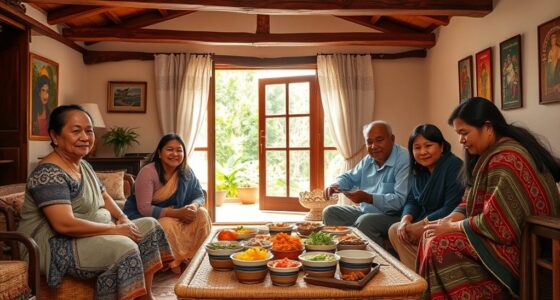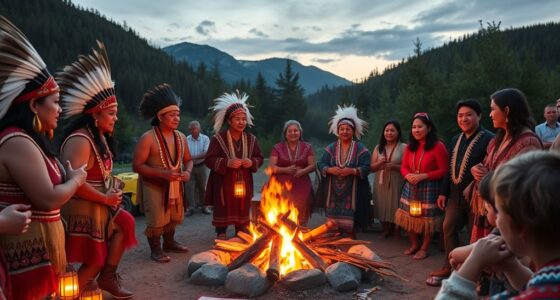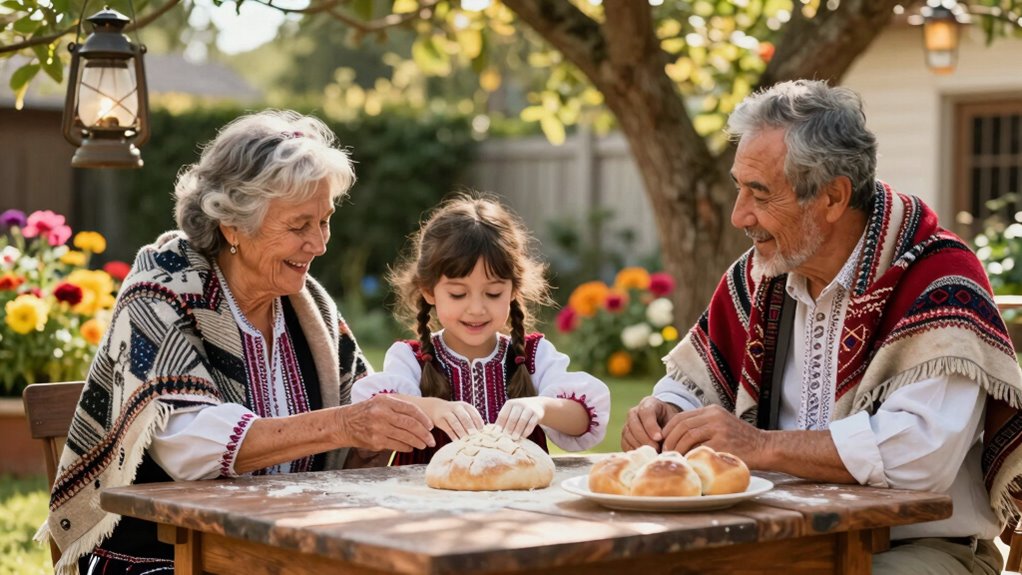

You’ll find that multi-generational traditions create stronger family bonds and keep cultural identity alive far better than polished performances. These traditions are simple acts that connect you to your roots, passing down values, stories, and lessons. They foster genuine love, understanding, and resilience across generations. Instead of focusing on perfection, you nurture meaningful bonds through participation and shared history. Keep exploring, and you’ll discover how these enduring practices can shape a richer family legacy for years to come.
Key Takeaways
- Multi-generational traditions foster authentic family bonds and transmit core values beyond superficial appearances.
- They preserve cultural identity and history, ensuring continuity across generations.
- Participating in traditions emphasizes meaningful connection over perfect performance.
- Traditions incorporate environmental and cultural knowledge, promoting sustainability and resilience.
- The enduring legacy of genuine traditions builds a stronger, more resilient family heritage than polished routines.
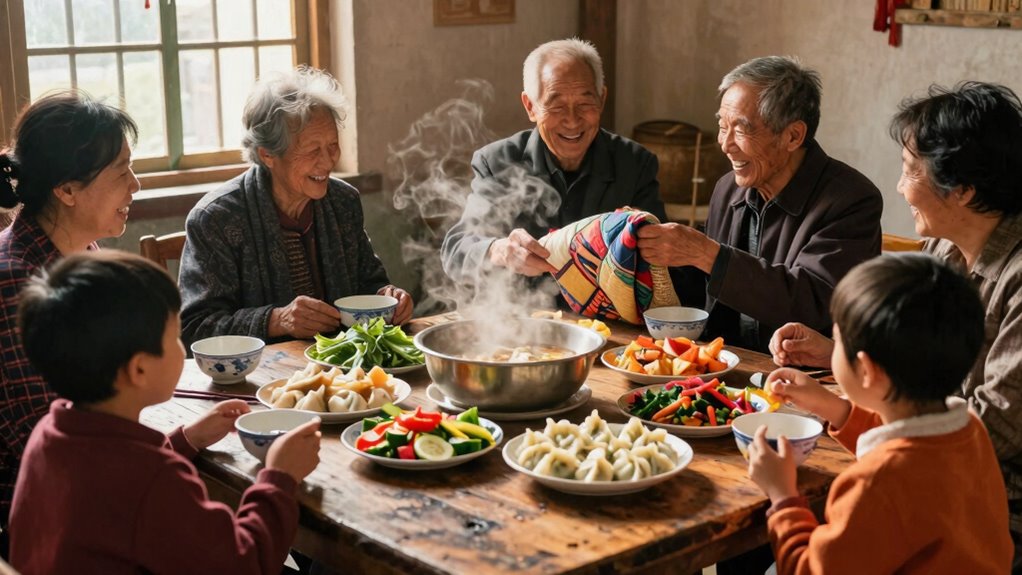
Multi-generational traditions serve as the living threads that connect families across time, preserving their history, values, and stories. When you participate in these customs, you’re doing more than just following old routines—you’re actively engaging in cultural preservation. These traditions serve as a foundation that keeps your family’s unique identity alive, passing down lessons, beliefs, and ways of life that might otherwise fade away. But beyond the preservation of culture, these shared experiences foster a deep sense of family bonding. It’s not about putting on a perfect performance or impressing others; it’s about creating genuine connections that strengthen your family’s roots.
You might notice that the beauty of multi-generational traditions lies in their simplicity. They’re often less about perfection and more about participation. Whether it’s cooking a family recipe, celebrating a holiday in a specific way, or sharing stories from the past, these acts create a sense of continuity. When you gather around the table or participate in these rituals, you’re reinforcing your family’s shared history. This shared history becomes a source of comfort and pride, reminding everyone of their collective identity. The more you pass down these traditions, the more they become ingrained in your family’s story, making it easier for future generations to feel connected to their roots.
Family bonding happens naturally when you engage in these traditions. They give you a reason to pause, reflect, and connect with your loved ones beyond daily routines. It’s in these moments that you learn about your ancestors, understand their values, and see how those values still influence your life today. These traditions become a language of love and understanding, bridging gaps between different generations. You don’t need polished performances or perfect execution—what matters most is the shared effort and the intention behind every act. That’s what makes these moments meaningful. Additionally, biodiversity plays a crucial role in enriching these cultural practices by encouraging a sustainable relationship with nature that can be passed down through generations. Recognizing the importance of cultural sustainability can help families maintain these practices for years to come. Incorporating traditional knowledge into family routines can further strengthen these bonds and preserve valuable cultural insights. Furthermore, understanding the interplay of environmental and cultural practices highlights how traditional knowledge can promote ecological health alongside cultural preservation.
Ultimately, multi-generational traditions remind you that family isn’t just about living in the same house or sharing a surname. It’s about nurturing a collective identity and passing down a legacy of love, resilience, and cultural pride. When you prioritize these traditions over superficial performances, you’re investing in something far more enduring. You’re creating a strong foundation that holds your family together through life’s changes and challenges, ensuring that your heritage continues to thrive for generations to come.

Bloom & Haven Recipe Book to Write in Your Own Recipes | Waterproof Recipe Book | Beautiful Blank Cookbook to Organize Your Recipes | Perfect Family Recipe Journal (Green)
- Book Dimensions: 8.66”x11.42” with 6.69”x9.65” pages
- Customizable Layout: Remove and rearrange pages easily
- Includes Dividers: Color-coded for organization
As an affiliate, we earn on qualifying purchases.
As an affiliate, we earn on qualifying purchases.
Frequently Asked Questions
How Do Traditions Evolve Over Generations Without Losing Their Essence?
You guarantee traditions evolve while maintaining their essence by embracing cultural continuity and adapting them to fit new generations. You involve younger family members in preserving core values, encouraging open conversations about their meaning. By blending old practices with fresh perspectives, you strengthen generational identity without losing tradition’s roots. This balance allows traditions to grow authentically, fostering a sense of connection and shared heritage across generations.
Can Modern Influences Interfere With Maintaining Multi-Generational Traditions?
Like Icarus flying too close to the sun, modern influences can threaten your multi-generational traditions. You might feel tempted to embrace modern adaptations, risking the loss of cultural authenticity. But if you stay true to core values while thoughtfully integrating new elements, you preserve the heart of your heritage. Balance keeps traditions alive, allowing them to evolve without losing their essence, even amid changing times.
What Are the Challenges of Passing Down Intangible Cultural Practices?
You face challenges in passing down intangible cultural practices because maintaining cultural authenticity can be difficult amidst modern influences. Ritual preservation requires deliberate effort to keep traditions genuine, even as younger generations might prioritize novelty. You must actively teach the significance behind customs, making certain that rituals stay meaningful. Overcoming these hurdles helps guarantee your cultural heritage remains vibrant and true, fostering a deeper connection across generations.
How Do Families Decide Which Traditions to Preserve or Modify?
You decide which traditions to preserve or modify based on their cultural significance and how they shape your family identity. Like a gardener pruning a tree, you keep the roots strong but trim the overgrowth to guarantee growth. You consider stories, values, and the meaning behind practices, balancing respect for history with the need to adapt. This way, your family’s traditions remain meaningful and relevant through generations.
Are There Psychological Benefits to Participating in Multi-Generational Traditions?
Participating in multi-generational traditions boosts your emotional resilience by creating a sense of stability and belonging. It strengthens your cultural identity, helping you feel connected to your roots and values. These shared experiences foster trust and support, making you more equipped to handle life’s challenges. Engaging in these traditions offers psychological benefits, reinforcing your sense of purpose and community, which ultimately nurtures your mental well-being.
Conclusion
You see, embracing multi-generational traditions keeps your roots strong and your family bond resilient. It’s not about perfect performances but passing down values and stories that shape who you are. Did you know that over 70% of people say that family traditions help them feel more connected and grounded? By valuing these shared moments, you’re creating a legacy that transcends generations. So, cherish those traditions—they’re the true treasures of your family’s story.