Noctourism lets you explore cities and landscapes after dark, combining urban adventures with the chance to see stunning starry skies and celestial objects. Light pollution from streetlights and buildings can hide these breathtaking views, but visiting dark sky zones helps preserve the natural night. With tips on astrophotography and responsible exploration, you can capture incredible images and enjoy the universe’s beauty. Keep going, and you’ll discover how to make your noctourism experiences truly magical.
Key Takeaways
- Noctourism combines city exploration after dark with celestial viewing for a unique, immersive night sky experience.
- Dark sky preservation efforts are crucial to reduce light pollution and enhance visibility of stars and planets.
- Effective astrophotography requires proper equipment, such as tripods, wide apertures, and careful focus for stunning night sky images.
- Planning noctourism activities around moon phases and utilizing star charts maximizes celestial observation opportunities.
- Responsible noctourism promotes environmental respect, dark sky conservation, and ensures future generations can enjoy starry nights.
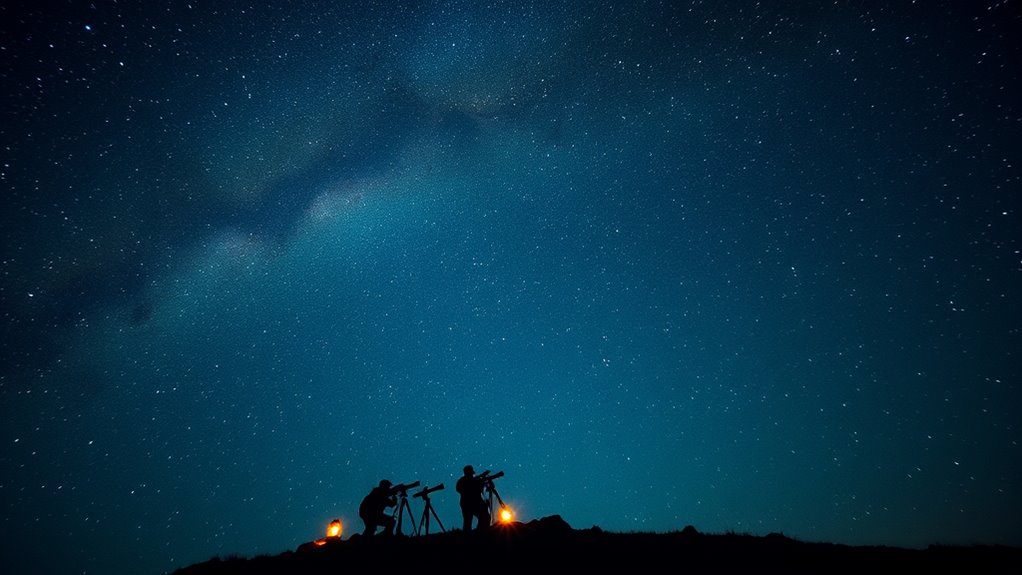
Have you ever wondered what it’s like to explore a city after dark? Noctourism offers a unique experience that combines the thrill of discovering new sights with the serenity of the night sky. As you venture into urban or rural areas after sunset, you’re often greeted by a tapestry of stars, planets, and even the Milky Way if conditions are just right. However, to truly enjoy these nocturnal adventures, it’s vital to be mindful of dark sky preservation. Light pollution from streetlights, buildings, and even cars can diminish the visibility of celestial objects, robbing you of the breathtaking views that make noctourism so special. Many destinations now prioritize dark sky initiatives, establishing protected zones where artificial light is minimized. By choosing these locations, you not only get a clearer view of the cosmos but also contribute to preserving the natural beauty of the night sky for future generations.
If you’re serious about capturing the stars, astrophotography tips can turn your nightscape into stunning images. First, use a sturdy tripod to keep your camera steady during long exposures—this is vital for avoiding blurry photos. Keep your ISO settings high enough to capture faint stars but not so high that noise becomes a problem; typically, an ISO of 1600 to 3200 works well. Aperture should be wide open, around f/2.8 or lower if your lens allows, to let in as much light as possible. Don’t forget to focus precisely; manual focus on a distant bright star or planet can help achieve sharp results. Also, plan your shoot around the moon’s phase—new moon nights provide the darkest skies, maximizing star visibility. Use apps or star charts to locate interesting celestial features and plan your shots accordingly. Experiment with different exposure times—usually between 15 to 30 seconds—to find the sweet spot where stars appear as points rather than trails, unless you’re intentionally aiming for star trails. Post-processing can further enhance your images, bringing out details in the night sky without overdoing it.
Engaging in noctourism also offers an opportunity to learn about the importance of dark sky preservation for maintaining the visibility of celestial objects. Embarking on noctourism adventures means more than just gazing upward; it’s about respecting the environment and understanding the importance of dark sky preservation. By doing so, you guarantee that future travelers can also enjoy these luminous spectacles. With some basic astrophotography tips, you can turn your night explorations into stunning visual stories. Whether you’re wandering through city streets or venturing into remote rural areas, the night sky has endless wonders waiting to be discovered. So, equip yourself with patience, curiosity, and a sense of responsibility, and let the stars guide your nocturnal journey. Ultimately, the magic of starry nights isn’t just in the sights but in the mindful appreciation of the universe’s vast beauty.
Frequently Asked Questions
What Are the Best Months for Stargazing in Different Regions?
You’ll find the best stargazing seasons vary by region, typically during clear, dark nights. In the Northern Hemisphere, fall and winter months—September to February—offer longer, darker nights, ideal for astronomy adventures, especially in regions with cold, dry climates. In the Southern Hemisphere, late winter and early spring—August to October—provide excellent conditions. Always consider regional climate considerations, such as avoiding rainy seasons or high humidity, to maximize your stargazing experience.
How Can Beginners Safely Use Telescopes During Noctourism Activities?
To safely use telescopes as a beginner, start with proper calibration to guarantee clear images. Always read the manual and handle the equipment gently. Follow beginner safety tips like avoiding direct eye contact with the sun, using red flashlight lighting, and stabilizing your telescope on a flat surface. Keep a clear area free of obstacles, and never rush your setup. With these steps, you’ll enjoy noctourism adventures safely and confidently.
Are There Specific Clothing Recommendations for Night-Time Outdoor Adventures?
Think of your night-time adventure as preparing for a celestial voyage. You should wear layering essentials like thermal shirts and a windproof jacket to stay warm under the starry sky. Don’t forget bug protection—long sleeves and insect repellent shield you from nighttime critters. Sturdy shoes and a hat complete your gear, ensuring you’re comfortable and protected as you gaze upward, unraveling the universe’s mysteries beneath the shimmering night.
What Wildlife Encounters Might Occur During Starry Night Excursions?
During your starry night excursions, you might encounter wildlife exhibiting nocturnal behaviors, such as owls hooting, bats fluttering, or small mammals scurrying. To enhance your animal observation tips, stay quiet, move slowly, and use a dim flashlight to avoid disturbing them. Be respectful of their habitats, and remember that patience often leads to rewarding wildlife encounters amid the quiet beauty of the night.
How Do Light Pollution Levels Affect the Quality of Astronomical Observations?
Light pollution considerably impacts your astronomical observations by reducing observation clarity. When artificial lights from urban areas brighten the night sky, stars and celestial objects become harder to see, making stargazing less rewarding. To enjoy ideal views, you should seek out dark sky locations with minimal light pollution. This way, you’ll experience clearer, more detailed observations, enhancing your noctourism adventures and allowing you to fully appreciate the beauty of the night sky.
Conclusion
As you drift into the night, let the stars be your guiding lantern on this noctourism journey. Embrace the magic of starry skies and the whisper of the universe’s secrets, turning your adventure into a celestial dance. Remember, each night offers a canvas of endless wonder, inviting you to explore beyond the horizon’s edge. So, keep your eyes skyward, and let the universe’s poetry inspire your soul long after the stars fade from view.