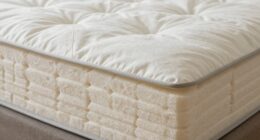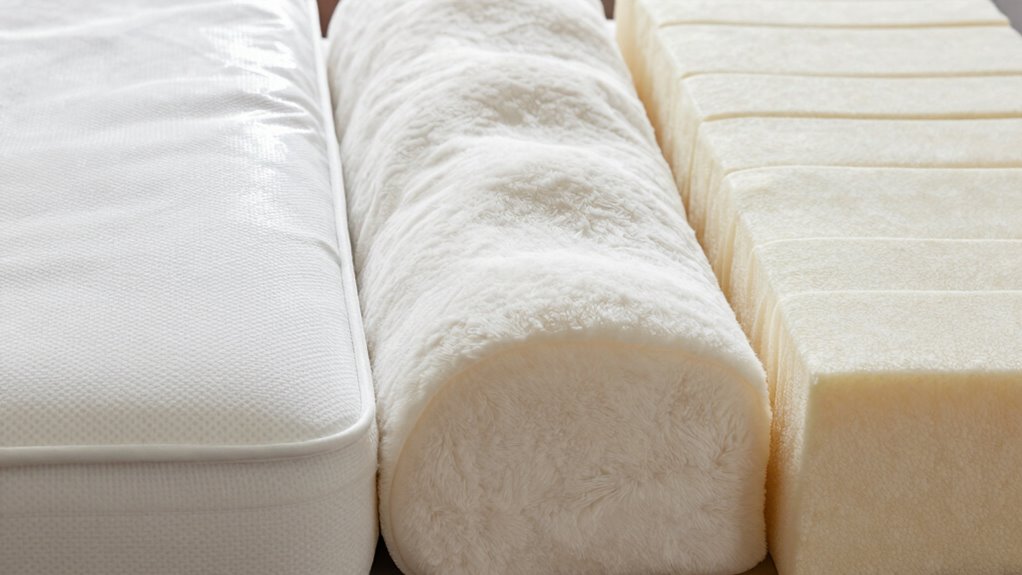
To choose between hybrid, memory foam, and latex mattresses in just minutes, think about your comfort preferences and accessibility needs. Hybrids offer a balanced feel with bounce and airflow, great if you want support and breathability. Memory foam contours closely, providing pressure relief but can trap heat. Latex is resilient, firm, and naturally resistant to allergens, ideal for support and allergy concerns. For a detailed comparison tailored to your lifestyle, keep exploring further.
Key Takeaways
- Hybrid mattresses offer a balanced feel with support and breathability, suitable for versatile preferences.
- Memory foam provides a soft, contouring experience with excellent pressure relief but may retain heat.
- Latex delivers a firm, resilient, and breathable surface that supports easier movement and allergen resistance.
- Consider bed height: latex tends to be higher, hybrids moderate, and memory foam lower, affecting accessibility.
- Durability varies: latex and hybrids generally last longer, while memory foam’s lifespan depends on quality and maintenance.
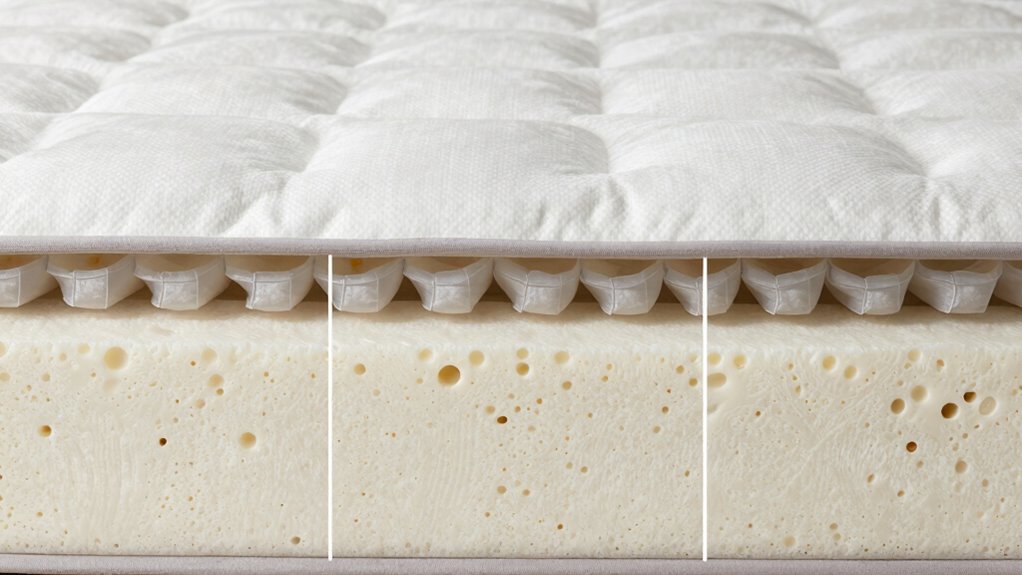
Choosing the right mattress can substantially impact your sleep quality, but with so many options available, it’s easy to get overwhelmed. One important aspect to consider is bed height, which affects your ease of getting in and out of bed. If you prefer a taller bed or have mobility concerns, a mattress that contributes to a higher bed height might be best. Conversely, if you’re looking for a lower profile, some mattresses can be thinner or have a softer core. Additionally, allergy concerns play a significant role in selecting the right mattress. If you’re sensitive to dust mites, mold, or other allergens, you’ll want a mattress that resists allergens or is easy to keep clean.
Choosing a mattress involves considering bed height and allergy resistance for better sleep quality.
Hybrid mattresses often strike a balance between support and comfort. They typically combine innerspring coils with foam layers, offering good breathability and a moderate bed height that’s easy to climb into without feeling too high or too low. For allergy sufferers, hybrids can be a good choice because many models have hypoallergenic covers and materials that resist dust mites. However, you should check whether the foam layers are CertiPUR-US certified or treated for hypoallergenic properties, especially if you have severe allergy concerns. The coil system in hybrids also promotes airflow, reducing moisture buildup that can foster mold or dust mites.
Memory foam mattresses contour closely to your body, offering excellent pressure relief. But they tend to be softer and often have a lower profile, which might make getting in and out of bed easier or harder depending on your height and mobility. If you’re concerned about allergies, memory foam can trap dust mites if not properly encased or cleaned regularly. Look for models with hypoallergenic covers or those that are resistant to allergens. Keep in mind that some memory foam mattresses can retain heat, which might be uncomfortable for allergy sufferers sensitive to heat buildup. The bed height of memory foam mattresses can also influence how accessible they are for individuals with mobility challenges.
Latex mattresses usually have a higher bed height than memory foam, providing a firm, resilient feel that supports easier movement. They’re naturally resistant to dust mites, mold, and mildew, making them ideal for allergy concerns. Their breathable material also helps regulate temperature, which benefits those sensitive to heat and allergens. If you’re concerned about bed height, latex beds often come in various thicknesses, allowing you to choose one that fits your comfort level and mobility needs. Plus, latex tends to be more durable over time, maintaining its supportive qualities and allergen resistance longer than other options.
In the end, your choice depends on your preferences for bed height, support, and allergy considerations. Whether you prefer the bounce of a hybrid, the contouring of memory foam, or the natural resilience of latex, understanding these factors helps you pick a mattress that ensures restful, healthy sleep.
Frequently Asked Questions
How Do I Choose the Best Mattress for Back Pain?
To select the optimal mattress for back pain, consider your sleep posture—whether you sleep on your back, side, or stomach—and pick a mattress that offers proper spinal alignment. Look for durability to guarantee consistent support over time. Hybrid mattresses often provide a balance of support and softness, while memory foam conforms to your body, and latex offers resilience. Prioritize comfort and support to wake up pain-free.
Are Hybrid Mattresses Suitable for Side Sleepers?
Surprisingly, hybrid mattresses are great for side sleepers. You get the best of both worlds—hybrid durability guarantees long-lasting support, while latex responsiveness offers that perfect sink and push back combo. This means your shoulders and hips get the cushioned relief they need, aligning your spine comfortably. So, if you thought hybrids weren’t for side sleepers, think again—they might just be your new favorite.
How Long Does It Take to Break in a Latex Mattress?
It generally takes about 24 to 72 hours to fully break in a latex mattress. During this time, latex durability improves as the material settles, providing better support. You might notice a slight mattress odor initially, but it should dissipate quickly. To speed up the process, keep your room well-ventilated. Once broken in, you’ll enjoy a comfortable, resilient sleep surface that maintains its firmness and long-lasting comfort.
Can Memory Foam Mattresses Cause Overheating?
Yes, memory foam mattresses can cause overheating because they tend to trap heat, affecting your sleep comfort. Their dense material often reduces temperature regulation, making it harder to stay cool throughout the night. To improve sleep comfort, consider choosing a memory foam mattress with gel infusions or breathable covers. Using fans or cooling pillows can also help keep you comfortable and maintain ideal temperature regulation for a better night’s sleep.
Which Mattress Type Offers the Best Motion Isolation?
You’ll find memory foam mattresses excel at motion isolation because they conform closely to your body, offering excellent pressure distribution. This minimizes movement transfer, helping you sleep undisturbed. However, they often have less edge support, which can affect your comfort when sitting or sleeping near the mattress’s sides. If motion isolation is your priority, a memory foam mattress is a great choice, but consider models with reinforced edges for added support.
Conclusion
Now that you’ve explored hybrid, memory foam, and latex mattresses, you’re better equipped to find your perfect fit. Remember, the right mattress should feel like a glove and support your unique sleep style. Don’t just settle for the first option—take your time and choose what truly feels right. After all, the proof is in the pudding, and a good night’s sleep is worth every effort. Sleep well and wake up refreshed!