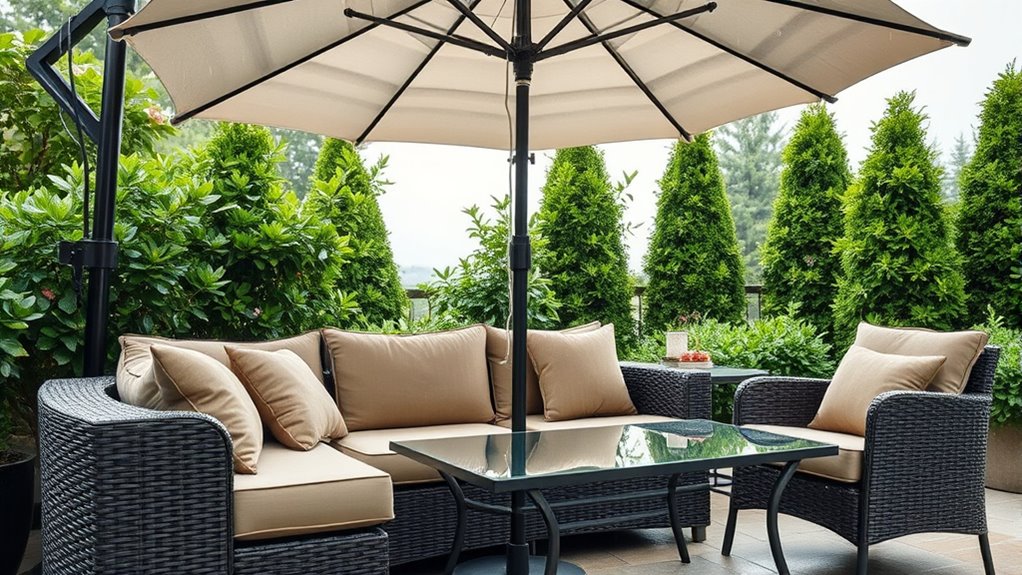

All-weather furniture combines durable materials like powder-coated aluminum, synthetic wicker, HDPE plastics, and weather-resistant fabrics such as Sunbrella to withstand rain, sun, and snow. Its sleek designs feature water drainage, UV protection, and pest-resistant cushions, ensuring style and longevity across seasons. Proper assembly, maintenance, and choice of materials can extend your furniture’s life and save you money long-term. Keep exploring to discover even more tips for creating a stylish, weatherproof outdoor space.
Key Takeaways
- Use durable materials like aluminum, synthetic wicker, and HDPE resin for weather-resistant, long-lasting furniture.
- Choose UV- and water-resistant fabrics such as Olefin or Sunbrella for cushions and upholstery.
- Incorporate proper drainage, protective coatings, and pest-resistant features to withstand all seasons.
- Opt for modular, versatile designs with bold colors and textures to maintain style year-round.
- Regular maintenance, including cleaning and storage, extends furniture lifespan and preserves aesthetic appeal.
Key Materials for All-Weather Durability
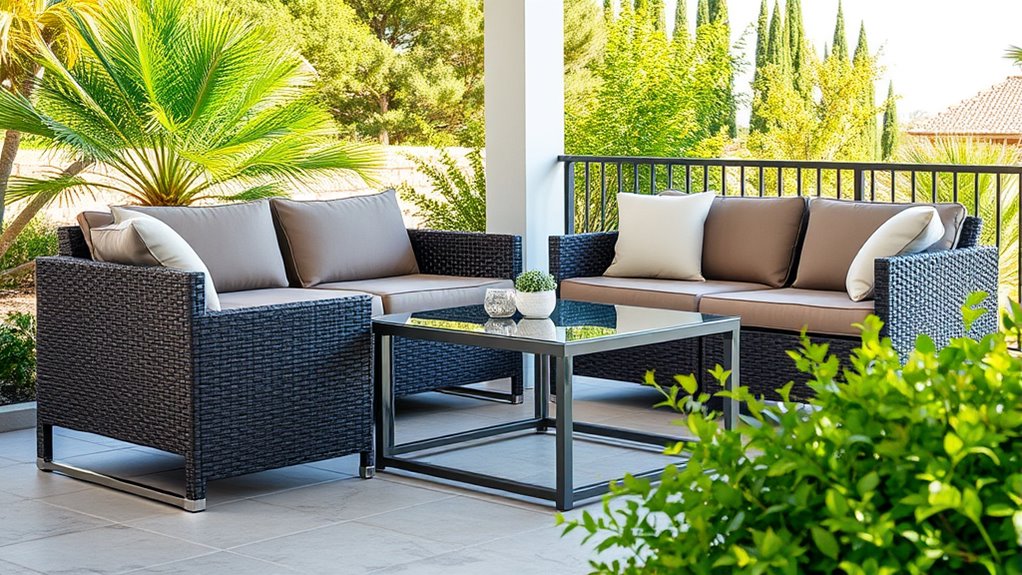
When selecting all-weather furniture, choosing the right materials is essential for durability and longevity. Materials like aluminum, teak wood, synthetic wicker, stainless steel, galvanized steel, and Olefin fabric each offer unique advantages. Aluminum is lightweight, rust-resistant, and often powder-coated for UV protection, making it ideal for humid or rainy climates. Teak wood, with its natural oils, resists water, insects, and decay, providing a classic look that ages gracefully, especially with sustainable sourcing options. Synthetic wicker mimics natural wicker’s appearance but withstands UV rays and moisture, offering color customization without organic vulnerabilities. Steel options like stainless or galvanized steel deliver strength and corrosion resistance. Additionally, Olefin fabric enhances durability and vibrant color retention for cushions. These materials ensure your furniture remains resilient, stylish, and eco-friendly over time, contributing to sustainable outdoor living. The proper choice of durable materials can significantly extend the lifespan of your furniture, ensuring it withstands the elements season after season.
Designing Furniture for Weather Resistance
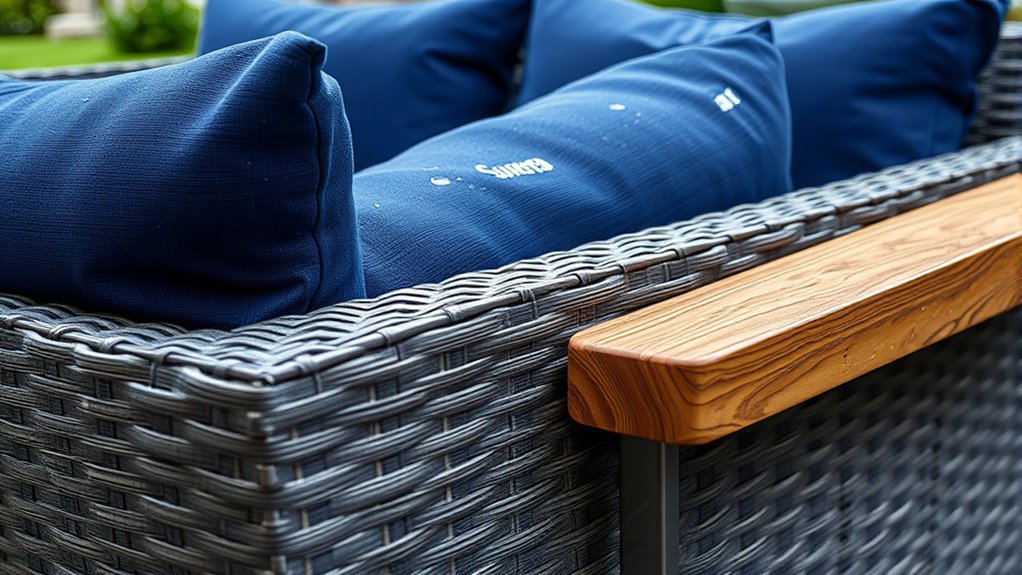
Designing furniture for weather resistance involves selecting materials and features that withstand sun, rain, and temperature fluctuations. You should incorporate outdoor lighting that’s durable and UV-resistant to prevent fading and ensure safety during nighttime use. Pest control measures, like using pest-resistant fabrics and sealed surfaces, help keep insects and critters at bay. Choose high-density polyethylene (HDPE) resin wicker and plastics that resist UV damage, warping, and fading, keeping your furniture looking new longer. Light-colored finishes reflect heat, keeping surfaces cooler, while weatherproof cushions with removable covers simplify maintenance. Proper drainage in design prevents water pooling, reducing mold risk. Selecting materials with high UV resistance further enhances durability, especially in areas with intense sunlight. Additionally, incorporating mold-resistant surfaces can significantly prolong the lifespan of outdoor furniture by preventing mold and mildew growth. By combining these strategies, your furniture remains resilient, functional, and stylish through all seasons.
Choosing the Right Frame Materials
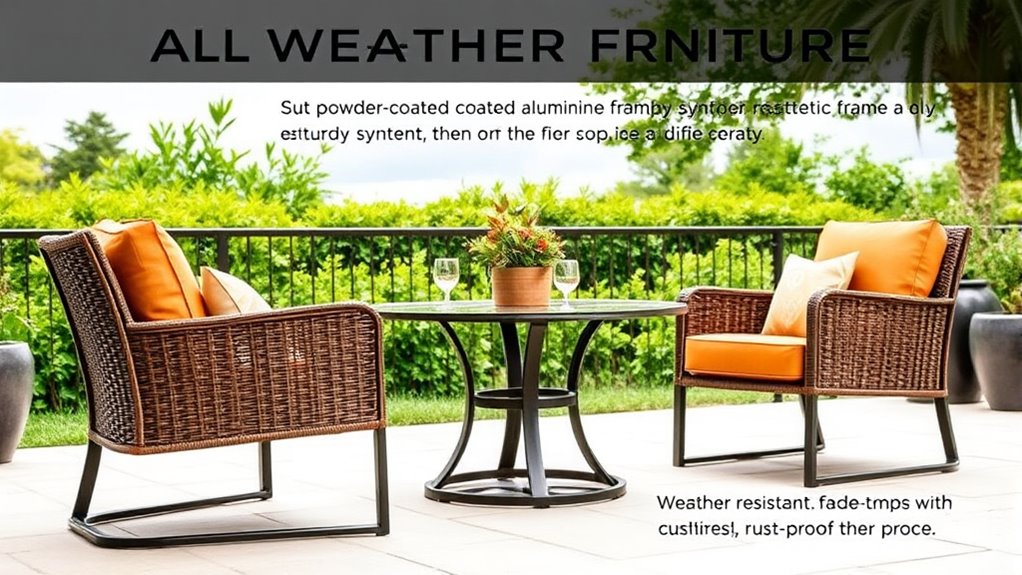
Choosing the right frame material depends on how much durability and resistance you need for your climate. You’ll also want to contemplate how much maintenance each option requires to keep your furniture looking its best. Understanding these factors helps you pick frames that will stand up to weather and last over time. Support strength and weight are important considerations, as some materials like aluminum are lightweight yet sturdy, making them easier to move and rearrange. Additionally, considering corrosion resistance can extend the lifespan of your outdoor furniture in harsh weather conditions.
Material Durability and Resistance
Selecting the right frame material is essential for ensuring your outdoor furniture withstands harsh weather conditions and lasts for years. Durability varies by material, so consider resistance to rust, rot, and UV damage. Metal options like wrought iron and stainless steel offer long-lasting stability, with powder coating enhancing corrosion resistance. Aluminum is lightweight, affordable, and resists rust, especially when powder-coated, and it offers a range of color options to match your style. Aluminum Frames are the most common outdoor furniture frame material due to their lightweight, durability, and cost-effectiveness, making them a versatile choice for many outdoor settings. Hardwood frames like teak and IPE are incredibly durable, naturally resistant to water and insects, and maintain their strength over time. Synthetic woven materials, such as HDPE wicker, resist moisture and UV rays while maintaining vibrant color options. An ergonomic design combined with durable materials ensures your furniture remains stylish, functional, and weatherproof for years to come. Incorporating corrosion-resistant materials can further extend the life of your furniture in varying climates.
Maintenance and Care Tips
Maintaining your all-weather furniture is key to prolonging its lifespan and keeping it looking its best. For aluminum frames, minimal effort is needed—just occasional cleaning and indoor storage during harsh winters help preserve their appearance. Steel frames, whether galvanized or powder-coated, benefit from periodic inspections of paint or coating integrity, and seasonal cleaning prevents rust. Wrought iron furniture requires regular protective finishes and should be stored indoors during winter to avoid chipping and corrosion. Synthetic resin and wicker frames are low-maintenance; gentle cleaning and indoor storage during off-seasons ensure longevity. Teak and other wood frames need periodic cleaning and oiling, especially if stored indoors during extreme weather. Proper care and seasonal cleaning are essential to keep all-weather furniture durable and attractive year-round. Additionally, water resistance features of certain materials help prevent damage from moisture and humidity, ensuring your furniture remains in excellent condition regardless of the season.
Fabric and Cushion Options for Outdoor Comfort
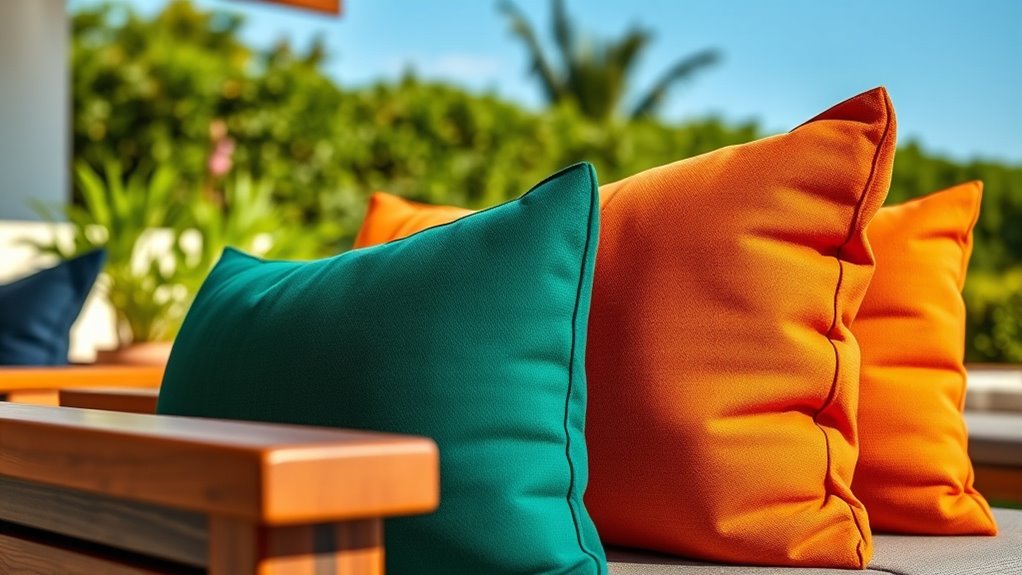
When selecting fabric and cushions for outdoor furniture, durability and weather resistance should be your top priorities. Olefin, solution-dyed acrylic, and vinyl-coated polyester each offer unique strengths to withstand rain, sun, and wear. Knowing how to care for these materials guarantees your furniture stays comfortable and vibrant for years to come. Olefin’s fibers are highly resistant to moisture, mold, and fading, making it an excellent choice for harsh outdoor environments. Regular maintenance and proper cleaning prolong the lifespan of these fabrics and maintain their weather-resistant qualities.
Weatherproof Fabric Choices
Choosing the right weatherproof fabric for your outdoor furniture guarantees year-round comfort and durability. Modern fabric innovation offers options that resist UV rays, water, and mildew while maintaining vibrant colors. Key choices include:
- Sunbrella fabric: Solution-dyed acrylic that excels in UV resistance, color fading prevention, and quick drying. It is widely regarded as the leading brand in outdoor performance fabrics. Its extensive color palette and fabric styles make it a versatile choice for various outdoor settings.
- Olefin: Water-resistant, moisture-wicking, and eco-friendly, perfect for wet conditions.
- Polyester: Cost-effective with moderate weather resistance; often treated for enhanced durability.
- Acrylic: Similar to Sunbrella, it provides excellent weather resistance and color retention.
- Marine-grade vinyl: Waterproof and stain-resistant, ideal for extremely wet environments.
These fabrics are designed to withstand the elements, reduce color fading, and offer long-lasting outdoor style. Their innovative features make them smart choices for all-weather furniture.
Cushion Durability Tips
Selecting durable cushions and fabrics plays an essential role in ensuring your outdoor furniture remains comfortable and long-lasting. Focus on outdoor fabric selection that resists UV damage, fading, and moisture. High-density foam cushions with water-resistant barriers provide better shape retention and resilience, while quick-dry foam speeds up drying after rain, extending lifespan. When cushions wear out, opt for cushion refill options that match your original foam specifications for excellent durability. Regular maintenance, like biannual deep cleaning and weekly dust removal, prevents dirt buildup and fiber degradation. Use breathable, mildew-resistant covers and store cushions off the ground in sealed containers when not in use. Protective covers and fabric guard sprays also shield cushions from environmental damage, ensuring your outdoor setup stays fresh and durable year-round. Additionally, choosing outdoor-rated materials designed specifically for all-weather conditions can further enhance longevity and appearance.
Maintaining and Caring for All-Weather Pieces
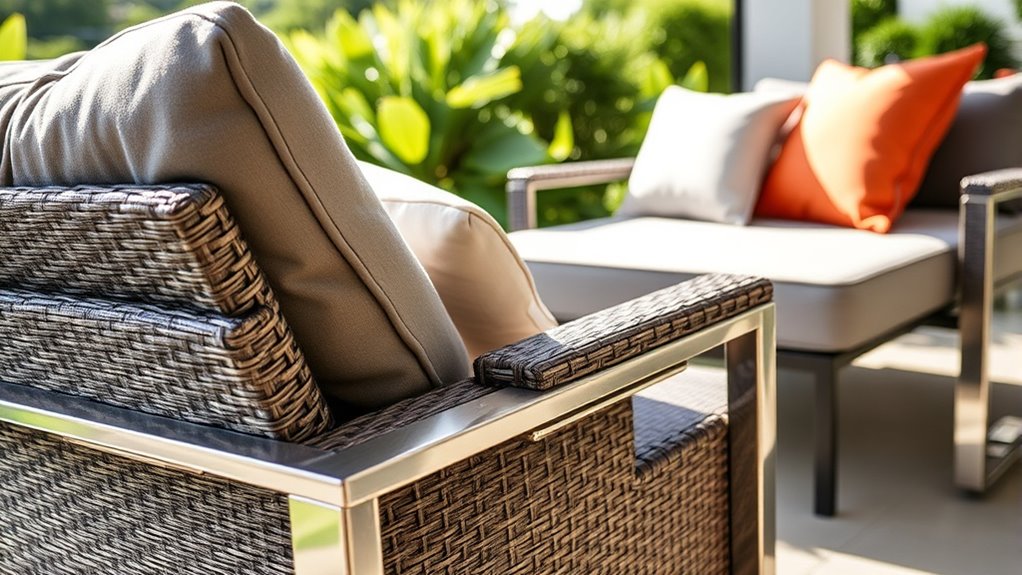
Maintaining and caring for all-weather furniture involves regular cleaning, inspections, and protective measures to keep your pieces looking their best and functioning properly. To prevent damage, use mild soap and warm water with a soft brush or cloth for routine cleaning, and avoid harsh cleaners or power washers. Frequently inspect for rust, mildew, fading, or loose parts, and address issues promptly. Dust off furniture regularly, especially during busy seasons or seasonal gardening, to prevent buildup. Remove cushions and store them in a cool, dry place when not in use, protecting them from moisture and sun damage. For metal pieces, remove rust with a wire brush and reapply rust-resistant coatings. Keep furniture dry and covered during winter to prolong its lifespan. Additionally, applying protective sealants seasonally can help maintain the appearance and durability of your all-weather pieces. Keep furniture dry and covered during off-seasons
Common Materials to Avoid Outdoors
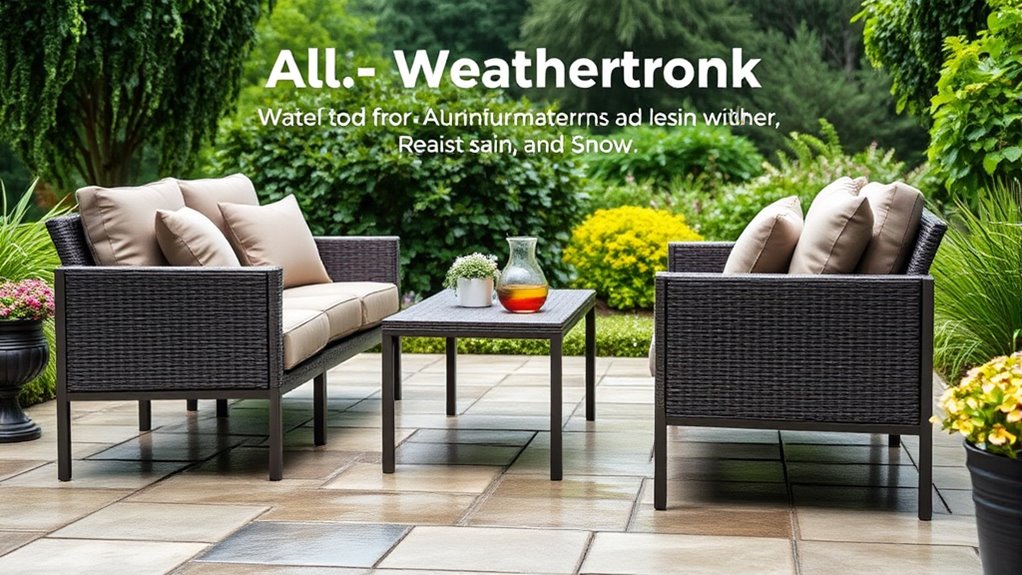
Outdoor furniture made from certain materials can pose health, durability, and environmental concerns. Avoid using PVC, rubber, or recycled plastics that emit VOCs or offgas unpleasant odors, impacting indoor decor and outdoor air quality. These materials degrade quickly when exposed to sun and weather, leading to cracks and brittleness. Metal options like wrought or cast iron rust easily without proper care, requiring constant maintenance—something not ideal if you want hassle-free outdoor aesthetics. Natural wicker and rattan look charming but deteriorate fast outdoors due to moisture and UV exposure, risking mold and rot. Untreated hardwood and inappropriate fabrics can also fall short in all-weather conditions, limiting their longevity and style compatibility. Here’s a quick overview:
| Material | Concerns | Alternatives |
|---|---|---|
| PVC & Rubber | VOCs, quick degradation | Synthetic or natural fibers |
| Recycled Plastics | Offgassing, durability issues | PET plastics, high-quality synthetics |
| Iron-based Metals | Rust, heavy, maintenance | Aluminum, rust-resistant alloys |
| Natural Wicker | Mold, rot, UV damage | UV-stabilized synthetic wicker |
Additionally, selecting materials with UV resistance can significantly extend the lifespan of your outdoor furniture.
Enhancing Longevity With Proper Assembly
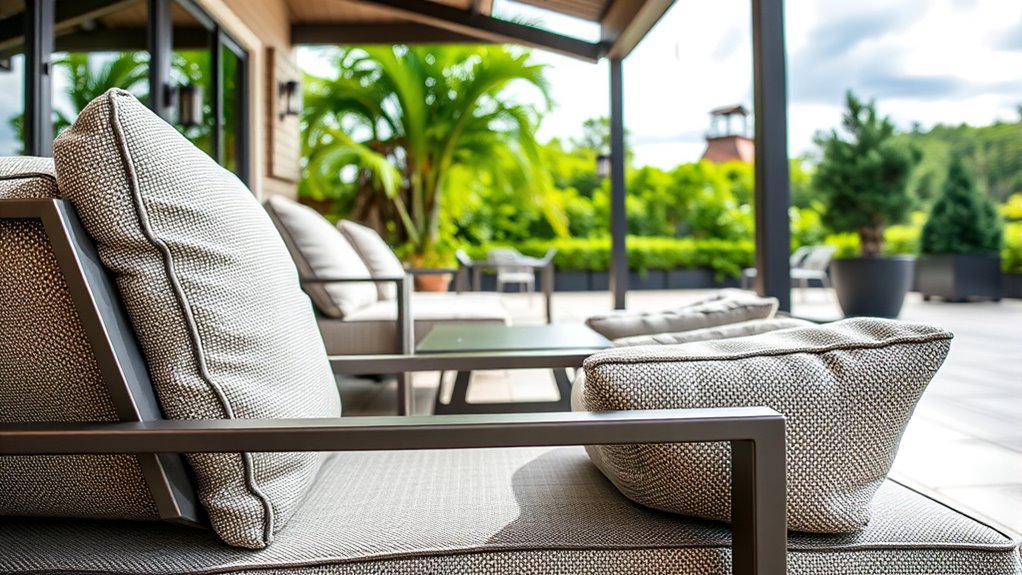
Proper assembly is essential for ensuring your furniture’s durability and weather resistance. When you assemble outdoor furniture, use the right tools, follow instructions carefully, and double-check each step. This attention to detail prevents loose joints, misaligned parts, and weak spots that can harm its longevity. To maximize the aesthetic appeal and withstand all seasons, consider these key tips:
- Unpack and organize components to avoid damage and loss
- Cross-check parts against the list before starting
- Finger-tighten bolts for easy adjustments
- Assemble on a flat, protected surface
- Perform a post-assembly inspection and tighten loose fasteners
Cost-Effectiveness of Weather-Resistant Materials
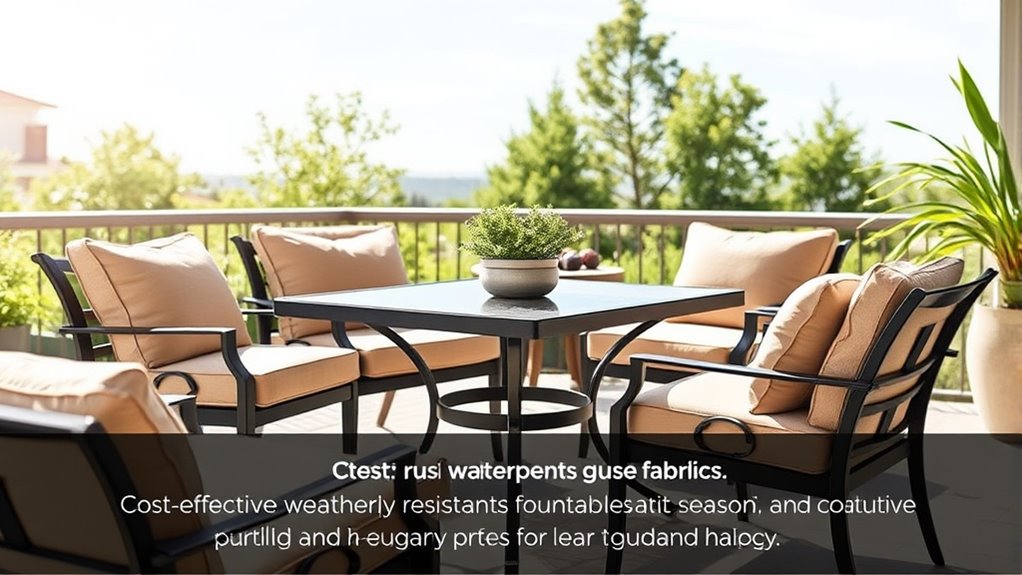
Choosing weather-resistant furniture can save you money over time, thanks to its durability and low maintenance needs. While some materials have higher upfront costs, they often require less frequent replacements and upkeep. Considering these factors helps you make smarter, long-term investments in outdoor furnishings. Additionally, selecting proper venting materials and ensuring safe installation can prolong the lifespan of outdoor furniture by protecting it from environmental damage.
Long-Term Savings Potential
Investing in weather-resistant furniture can lead to significant long-term savings by reducing the need for frequent replacements and repairs. Durable materials like aluminum, synthetic wicker, and HDPE resin offer longevity, making your investment worthwhile. With material innovation, you gain indoor elegance that withstands all seasons without compromising style. Proper planning can also help you avoid costly errors related to beneficiary designation and maximize your investment’s benefits.
Key benefits include:
- Extended lifespan of synthetic wicker and resin furniture
- Rust-resistant coatings maintaining appearance over time
- Hardwood durability offsetting higher initial costs
- Reduced repair and replacement expenses
- Cost-effective craftsmanship ensuring long-lasting quality
While some materials require a higher upfront investment, their resilience and reduced maintenance costs make them more economical in the long run. This approach guarantees your furniture remains stylish and functional, saving you money over the years.
Maintenance Cost Comparison
When evaluating the cost-effectiveness of weather-resistant furniture, it’s important to contemplate how different materials require varying levels of maintenance over time. Metal options like aluminum and stainless steel need minimal upkeep—occasional cleaning and repainting, especially if eco friendly finishes are used. Wrought iron demands regular maintenance, increasing long-term costs. Synthetic wicker and resin furniture offer low maintenance with infrequent repairs, thanks to UV resistance and moisture-proofing, which reduces maintenance scheduling efforts. Wood furniture, while durable, requires annual sealing and protective treatments, adding ongoing expenses. Plastic and polymer materials like HDPE involve simple cleaning, but less durable options like PVC may need more frequent replacements. Overall, choosing materials with eco friendly finishes and thoughtful maintenance scheduling helps minimize long-term upkeep costs. Additionally, selecting best oils for deep frying on keto diet can help maintain the appearance and longevity of metal furniture finishes by preventing corrosion.
Environmental Benefits of All-Weather Furniture
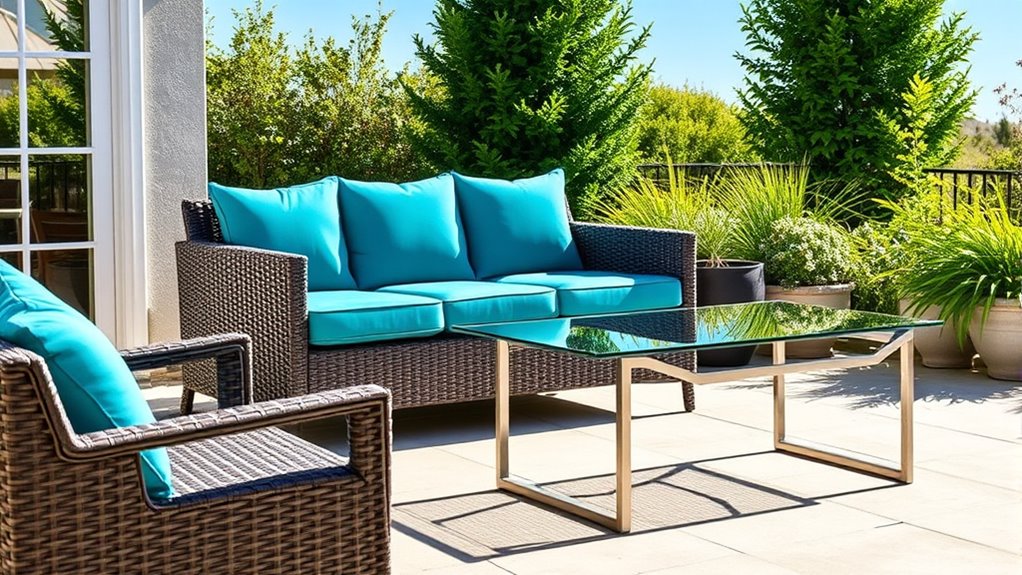
Have you ever considered how all-weather furniture benefits the environment? By using recycled plastics, metals, and reclaimed wood, you reduce landfill waste and conserve natural resources through eco friendly manufacturing. Many pieces incorporate over 97% recycled content, drastically lowering environmental impact. Here are some key benefits:
- Utilizes recycled and reclaimed materials, cutting down waste
- Enhances durability, minimizing furniture replacements
- Requires minimal maintenance and fewer chemical cleaners
- Promotes a circular economy by reusing waste materials
- Supports green manufacturing and sustainable resource use
- Incorporating energy-efficient design principles can further reduce environmental impact and extend furniture lifespan.
Choosing all-weather furniture aligns with eco-conscious values, helping you reduce your carbon footprint while enjoying stylish, long-lasting outdoor pieces. Its design prioritizes sustainability, making it a smart choice for eco-friendly living.
Trends in Stylish, Weatherproof Outdoor Living
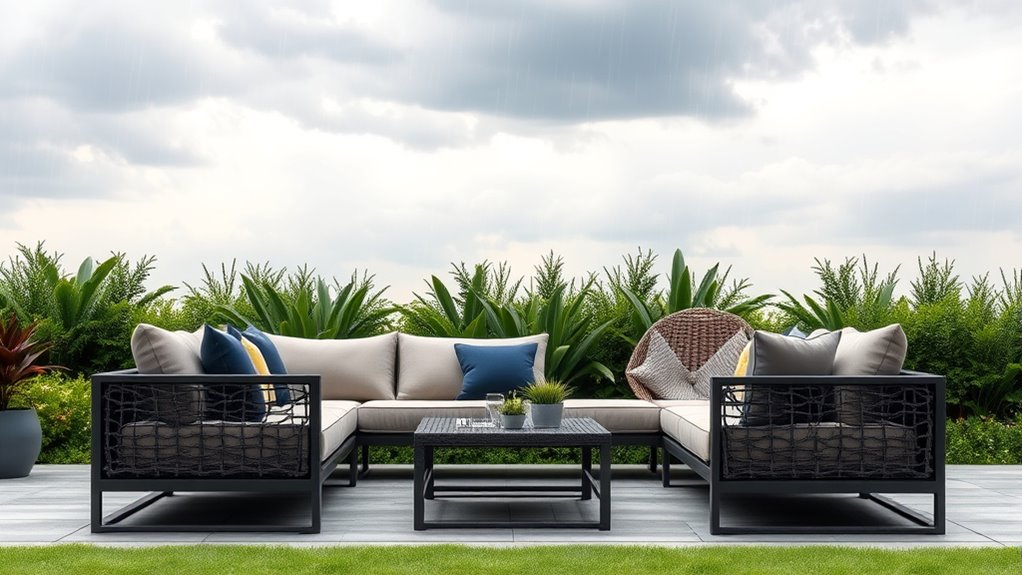
Modern outdoor living spaces are evolving beyond basic functionality to become stylish, smart, and highly adaptable environments. You can now create dynamic areas with weatherproof furniture that emphasizes color coordination and style versatility. Trendy designs combine materials like synthetic wicker, teak, and metal, allowing you to mix textures and hues for personalized spaces. Modular and flexible solutions let you reconfigure seating and tables for any occasion, saving space when needed. Bold colors such as lavender, terracotta, and olive add personality, while natural materials like bamboo and FSC-certified wood maintain a timeless appeal. Here’s a quick overview of current trends:
| Trend | Features | Benefits |
|---|---|---|
| Mix-and-Match Design | Combining diverse materials and textures | Unique, personalized aesthetic |
| Modular Solutions | Reconfigurable furniture for flexibility | Adaptable to different needs |
| Bold Colors | Vibrant palettes and color combinations | Enhanced visual appeal |
| Natural Materials | Eco-friendly, durable, organic finishes | Timeless style and resilience |
Additionally, incorporating weather-resistant coatings can prolong the lifespan of outdoor furniture and maintain its appearance over time.
Frequently Asked Questions
How Do I Identify Genuine Weather-Resistant Materials From Cheaper Alternatives?
To spot genuine weather-resistant materials, check for labels or descriptions highlighting “rust-proof,” “UV-resistant,” or “powder-coated.” Trust reputable brands known for material durability and high-performance fabrics like Nuvella or solution-dyed acrylic. Be wary of cheaper options with untreated metals, low-quality wicker, or fading fabrics. Authentic products usually come with warranties, clear maintenance guidelines, and sturdy frames, signaling they’re built to withstand outdoor conditions better than cheaper alternatives.
Can All-Weather Furniture Be Recycled or Environmentally Friendly?
Your concern about recycling options and eco-friendly materials is truly essential—our planet’s future depends on it. All-weather furniture made from recyclable, eco-friendly materials like HDPE, metal, and untreated wood can often be recycled, reducing waste and conserving resources. But, mixed materials and weathered cushions can complicate recycling efforts. Choosing furniture from sustainable sources and supporting brands that prioritize circular economy principles helps you make a positive environmental impact.
What Are the Best Storage Solutions to Extend Outdoor Furniture Lifespan?
To extend your outdoor furniture’s lifespan, invest in indoor storage options during harsh weather. Use high-quality furniture covers made from breathable, UV-resistant materials to protect against sun and moisture damage. Guarantee covers are secure with elastic hems or drawstrings. When possible, store cushions in airtight containers and disassemble larger pieces. Proper indoor storage and durable covers keep your furniture in top shape, ready for many seasons of outdoor enjoyment.
How Do Weather Conditions Influence the Choice of Outdoor Furniture Styles?
Weather conditions influence your outdoor furniture style choices by dictating suitable materials and designs. For hot, sunny climates, opt for UV-resistant fabrics and ergonomic designs that stay comfortable and vibrant with seasonal color trends. Coastal areas benefit from rust-resistant materials like aluminum, while high humidity zones need mildew-resistant wicker. Heavy, stable furniture suits windy spots, ensuring durability and style that adapts to your climate, keeping your outdoor space both functional and attractive year-round.
Are There Specific Maintenance Routines for Different All-Weather Material Combinations?
Remember, even the most modern gadgets once depended on diligent care. For your all-weather furniture, you should follow specific routines: regularly clean fabric with gentle fabric cleaning methods, and for metal, use non-abrasive cleaners and rust-resistant coatings. Maintain wooden parts with light sanding and teak oil, while protecting all components with covers during harsh weather. Regular inspections and prompt repairs ensure your furniture stays durable and beautiful year-round.
Conclusion
Investing in all-weather furniture means you’re truly getting your money’s worth—these pieces are built to weather any storm. With the right materials and proper care, your outdoor setup will stand the test of time, making every season a chance to enjoy your space. Don’t just wait for the good weather; seize the moment and make your outdoor living area a reflection of your style and resilience. When it comes to durability, you’re in safe hands.