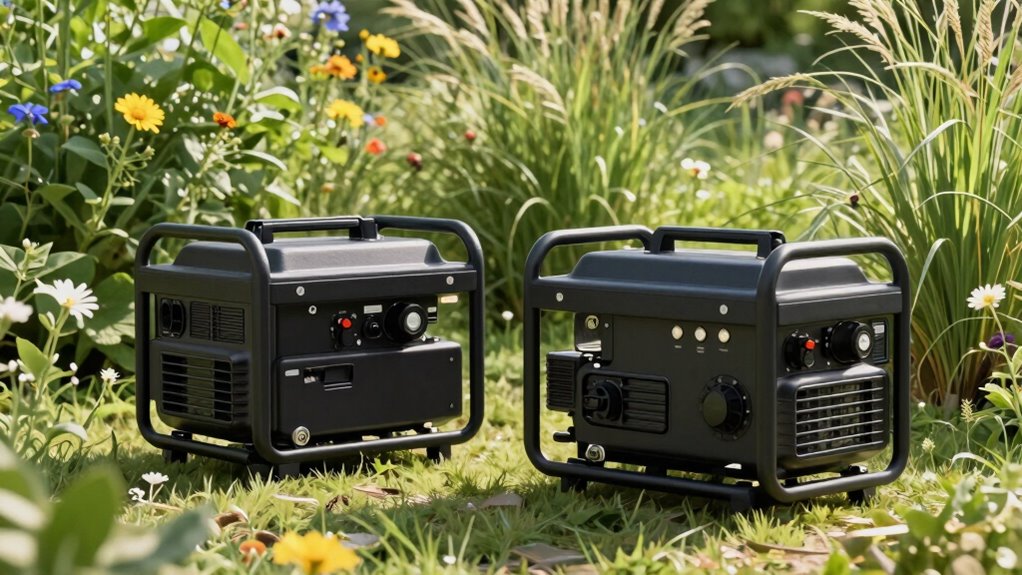
When you hear “quiet” in inverter generators, it means they run at sound levels around 50-60 decibels, comparable to normal conversation, unlike traditional models that can reach up to 80 decibels. This low noise level guarantees your outdoor activities, camping, or work in noise-sensitive areas stay peaceful and undisturbed. Plus, these generators are portable and lightweight, making them easy to move. Keep exploring, and you’ll discover exactly how these features can benefit you in different settings.
Key Takeaways
- “Quiet” typically means operating at 50-60 decibels, similar to normal conversation, significantly lower than traditional generators.
- Noise levels are specified by manufacturers; checking decibel ratings helps determine actual quietness.
- Portable inverter generators often feature noise-reducing technologies to minimize sound during operation.
- Portability features like lightweight design and wheels facilitate discreet setup in noise-sensitive areas.
- Lower noise operation enhances comfort, safety, and environmental respect during outdoor or remote use.
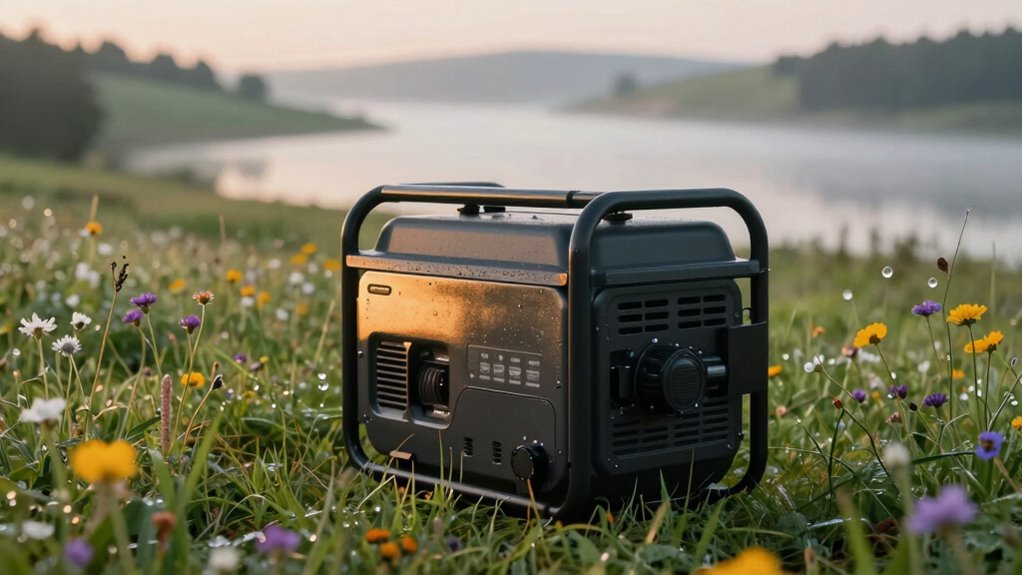
Quiet inverter generators offer a practical solution for those who need reliable power without the disruptive noise often associated with traditional generators. When you’re out camping, hosting outdoor events, or working at a remote job site, noise levels can make a significant difference in comfort and safety. Unlike older models that produce loud, droning sounds, modern quiet inverter generators operate at much lower noise levels, allowing you to enjoy your surroundings without constant background hum. This reduced noise isn’t just about comfort—it’s also about discretion. Whether you’re camping in a national park or setting up a backyard gathering, a quieter generator respects the environment and your neighbors. You’ll find that many models emit sound levels comparable to normal conversation, making them ideal for use in noise-sensitive areas.
Portability features are another key advantage of these generators. They’re designed with convenience in mind, featuring lightweight frames, ergonomic handles, and compact dimensions that make transportation effortless. You can easily carry them around, whether you’re moving them from your truck to your campsite or shifting them between job sites. Many quiet inverter generators also come with built-in wheels, so you don’t have to lift heavy equipment over long distances. This portability ensures you’re not tethered to a single spot, giving you flexibility wherever you need power. It’s especially helpful during emergencies when quick deployment is essential, or when you want to set up multiple locations without hassle. Plus, their small size means they won’t take up too much space in your vehicle or storage shed, making them a practical choice for those with limited storage options. Additionally, many models incorporate smart technology that optimizes fuel efficiency and reduces noise even further.
In terms of noise levels, manufacturers often specify decibel ratings, giving you a clear idea of just how quiet the generator is. Many models operate at around 50 to 60 decibels, which is noticeably quieter than traditional generators that can reach 70 or 80 decibels. This means you won’t have to shout over the sound or worry about disturbing others nearby. When selecting a quiet inverter generator, pay close attention to these noise specifications and the included portability features. Together, they ensure you get a device that’s both easy to transport and unobtrusively quiet during operation.

WEN Quiet and Lightweight 4800-Watt RV-Ready Portable Inverter Generator with Fuel Shut Off (56477i)
224cc engine generates up to 4800 surge watts and 4000 rated watts
As an affiliate, we earn on qualifying purchases.
As an affiliate, we earn on qualifying purchases.
Frequently Asked Questions
How Do Noise Levels Compare Between Different Inverter Generator Brands?
You’ll notice noise levels vary between inverter generator brands. In general, some brands prioritize quieter operation, resulting in lower noise comparison scores, while others may be louder. Brand differences stem from design features like engine construction and soundproofing. When choosing, compare decibel ratings and user reviews to find a model that suits your quiet operation needs. Expect premium brands to often offer the quietest options, but always check specific noise specs.
What Are the Best Practices for Maintaining a Quiet Inverter Generator?
Think of your inverter generator as a delicate musical instrument that needs tuning. To keep it quiet, use sound insulation around it and follow maintenance tips like regularly checking oil levels and cleaning air filters. I once insulated my generator with foam panels, and it drastically reduced noise. Consistent maintenance prevents loud vibrations, ensuring your generator stays whisper-quiet and performs smoothly when you need it most.
Do Quiet Inverter Generators Require Special Fuel or Oil?
No, quiet inverter generators don’t require special fuel or oil. You should check the fuel compatibility to verify you use the right type, like regular unleaded or ethanol-free fuel, as recommended by the manufacturer. Similarly, follow the oil requirements specified in your user manual, typically using 10W-30 or 5W-30 oil. Sticking to these guidelines helps keep your generator running smoothly and quietly.
Can a Quiet Inverter Generator Run Multiple Appliances Simultaneously?
Yes, a quiet inverter generator can run multiple appliances simultaneously. Its advanced inverter technology manages power efficiently, minimizing noise pollution and keeping sound levels low. The sound insulation built into many models further reduces noise, so you can operate several devices without disturbing your surroundings. Just guarantee your generator’s capacity matches the combined wattage of your appliances, and you’ll enjoy quiet, reliable power whenever you need it.
Are Quieter Generators More Energy-Efficient Than Louder Models?
Yes, quieter generators are often more energy-efficient because they use advanced sound insulation and inverter technology to optimize fuel use. Their reduced noise pollution means the engine runs smoothly without excessive strain, conserving energy. By minimizing noise, these models tend to operate more efficiently, saving fuel and reducing emissions. So, if you want an eco-friendly option, choosing a quieter generator benefits both your environment and your energy bills.

PowerSmart 4800-Watt Portable Inverter Generator with Wheels Handle Kit, CO Protect, Quiet, Camping, RV-Ready, Home use
4 Stroke 223 cc OHV engine generator with 4800 starting watt and 3600 running watt, inverter technology produce…
As an affiliate, we earn on qualifying purchases.
As an affiliate, we earn on qualifying purchases.
Conclusion
When it comes to choosing a generator, a quiet inverter model gently hums in the background, making your outdoor adventures or emergency power needs more enjoyable. It’s like having a peaceful companion that quietly supports your plans without stealing the show. Remember, what might seem like just a whisper of noise can make all the difference in creating a calm, comfortable environment. Embrace the subtlety of a quiet inverter generator — it’s your understated partner in power.

AMERISUN 2500-Watt Gas Powered Portable Inverter Generator, CO Sensor, Super Quiet for Home Backup, Emergency, Camping, EPA Compliant
HIGH POWER OUTPUT: The inverter generator produces 2500 peak watts and 1900 running watts, powerful energy in a…
As an affiliate, we earn on qualifying purchases.
As an affiliate, we earn on qualifying purchases.

Oxseryn Power Equipment 4400 Watts Inverter Generator Gas Powered, Portable Open Frame Generator, Low Noise with ECO Mode, RV Ready, Emergency Home Backup
𝗣𝗼𝘄𝗲𝗿𝗳𝘂𝗹 𝗢𝘂𝘁𝗽𝘂𝘁 – 4400 peak watts and 3400 running watts, perfect for RV camping and home backup
As an affiliate, we earn on qualifying purchases.
As an affiliate, we earn on qualifying purchases.