
To size a solar generator accurately, start by listing all devices you plan to power, noting their wattages and how long you’ll need them. Add up their power needs to determine your total energy requirement. Choose a generator with enough capacity to cover this, considering future expansion or unexpected needs. Think about port types and portability too. If you keep these factors in mind, you’ll select the right size for your situation—and learn even more about making the best choice.
Key Takeaways
- Calculate total wattage of all devices you’ll power simultaneously and their expected run times.
- Choose a solar generator with sufficient battery capacity to meet your energy needs without frequent recharging.
- Ensure the generator has enough ports and appropriate connection types (AC, USB, DC) for all devices.
- Consider portability features like weight and size, balancing capacity with outdoor usability.
- Match the generator’s power output and features to your specific use cases, including critical appliance support.
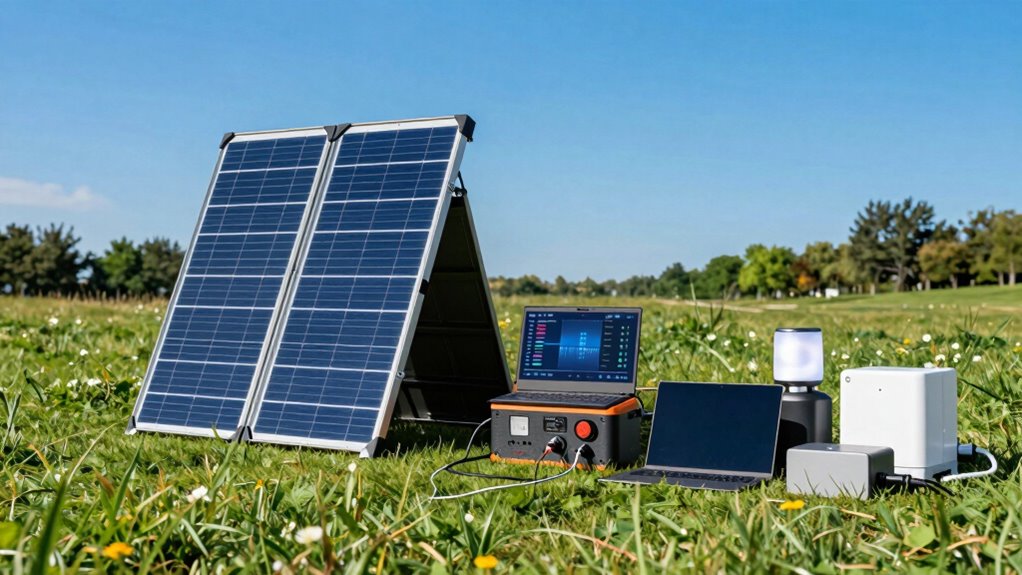
Are you looking for a reliable, eco-friendly way to power your devices during outages or outdoor adventures? Choosing the right solar generator starts with understanding how to size it correctly for your needs. One of the most vital factors is battery capacity. You need to determine how much energy you’ll require to keep your essential devices running. Think about the devices you plan to power, their wattages, and how long you’ll need them operational. For instance, if you want to charge your phone multiple times, run a small fridge, and keep a few lights on, you’ll need a generator with a higher battery capacity. Conversely, if you only need to power a couple of smartphones or tablets occasionally, a smaller capacity unit might suffice. Knowing your total energy requirements helps you avoid over- or under-sizing, which can either lead to unnecessary expenses or insufficient power during critical times.
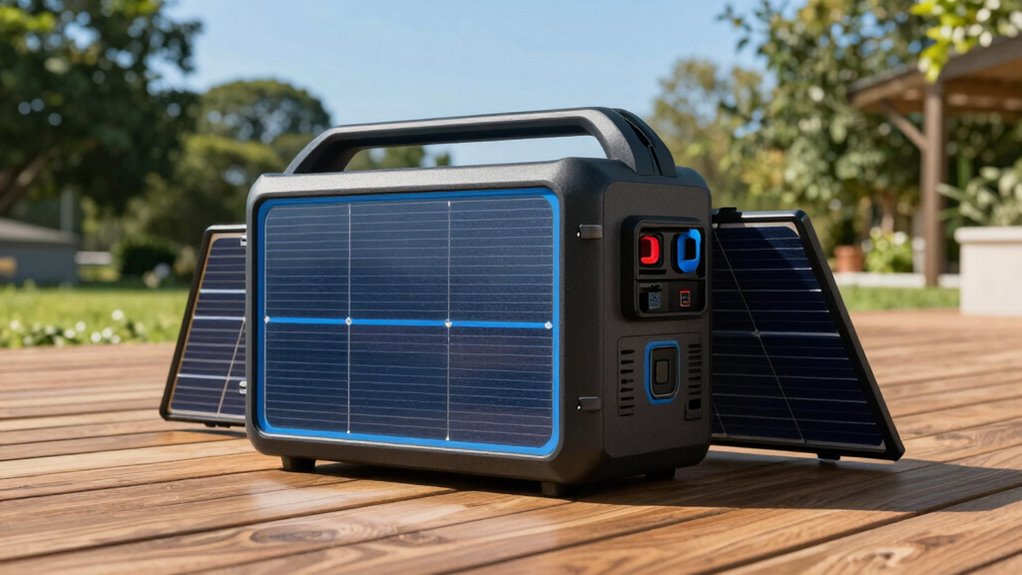
Port selection is another vital aspect when sizing your solar generator. Not all models come with the same types or numbers of ports, so consider what kinds of connections you’ll need. Do you require multiple AC outlets for larger appliances? Are USB ports enough for your charging needs, or do you need DC outputs for specific devices? The number and variety of ports directly impact how versatile and convenient your generator will be. If you plan to charge several devices simultaneously, look for a model with ample USB ports, multiple AC outlets, and perhaps even dedicated ports for specific gear like laptops or solar panels. The port selection should align with your intended use, ensuring you can connect everything without hassle. Keep in mind that more ports often mean a higher price, so balance your needs with your budget.
In addition to battery capacity and port selection, don’t forget to consider the overall power output, charging options, and portability. A generator with a larger battery is great, but if it’s bulky or heavy, it may not suit your outdoor activities. Look for models that offer flexible charging options—solar panels, wall outlets, or even car chargers—to guarantee you can keep it charged in various scenarios. To size your solar generator correctly, start by listing all your devices, their wattages, and how often you’ll need to use them. Match this with a generator that offers sufficient battery capacity and a port selection that can handle all your devices comfortably. This way, you’ll have a reliable, eco-friendly power source tailored precisely to your needs, whether during emergencies or outdoor adventures.

OUPES Mega 1 Portable Power Station 2000W (Surge 4500W), 1024Wh LiFePO4 Battery Solar Generator, Expandable to 5kWh, UPS, for Home Backup Power, Camping & Road Trips (Solar Panel Optional)
REVOLUTIONARY FAST-CHARGING TECHNOLOGY: Experience industry-leading recharge speeds with 0-80% capacity in just 36 minutes via AC, or an…
As an affiliate, we earn on qualifying purchases.
As an affiliate, we earn on qualifying purchases.
Frequently Asked Questions
Can Solar Generators Power My Entire Home During an Outage?
You can power your entire home during an outage with a solar generator, but it depends on your energy needs and the generator’s capacity. Consider the battery lifespan to make certain it lasts through extended outages, and always follow safety considerations to prevent hazards. Larger homes may require multiple units or a hybrid system. Evaluate your essential appliances and energy consumption to determine the right size for reliable backup power.
How Long Do Solar Generator Batteries Typically Last?
Your solar generator batteries typically last 5 to 15 years, depending on their quality and usage. To maximize their lifespan, follow a regular maintenance schedule, such as keeping the batteries charged within recommended levels and avoiding deep discharges. Proper care guarantees you get the most out of your investment and prolongs the battery lifespan, so you can rely on your solar generator during outages for years to come.
Do Solar Generators Require Regular Maintenance?
Your solar generator is like a trusty garden tool that needs occasional care. You don’t have to do much, but regular battery maintenance and inverter checks keep it running smoothly. Just check the connections, keep the batteries clean, and monitor performance. Routine maintenance prevents surprises and prolongs your setup’s lifespan. By staying on top of these simple tasks, you ensure your solar generator remains dependable whenever you need it most.
Are Solar Generators Safe to Use Indoors?
Yes, solar generators are safe to use indoors if you follow proper indoor safety and ventilation requirements. Make certain the area is well-ventilated to prevent heat buildup and avoid inhaling any fumes from battery components. Keep the generator away from water and flammable materials, and don’t block vents. By following these precautions, you can confidently use your solar generator indoors without risking safety.
Can I Upgrade or Expand My Solar Generator System Later?
You can definitely upgrade or expand your solar generator later, thanks to its modular design. This means you can add more capacity or features as your needs grow, making it a flexible choice. Just make certain your current system supports capacity expansion and check compatibility before adding new components. With this approach, your solar generator can evolve alongside your energy demands, providing reliable power for years to come.

MARBERO Portable Power Station 88Wh Camping Lithium Battery Solar Generator Fast Charging with AC Outlet 120W Peak Power Bank(Solar Panel Optional) for Home Backup Outdoor Emergency RV Van Hunting
EFFICIENT CHARGING: Use the adapter included in the package to charge the power station from 0 to 80%…
As an affiliate, we earn on qualifying purchases.
As an affiliate, we earn on qualifying purchases.
Conclusion
Choosing the right solar generator is like planting a sturdy tree—you’ll want the right size to support your needs and grow with you. By understanding your power requirements and considering future demands, you guarantee your setup won’t just survive but thrive. When you size it correctly, your solar generator becomes a reliable anchor, steady and dependable, weathering any storm. So, take the time to measure twice, and you’ll enjoy the sunshine of worry-free power for years to come.
MARBERO Portable Power Station 88Wh Camping Lithium Battery Solar Generator Fast Charging with AC Outlet 120W Peak Power Bank(Solar Panel Optional) for Home Backup Outdoor Emergency RV Van Hunting
EFFICIENT CHARGING: Use the adapter included in the package to charge the power station from 0 to 80%…
As an affiliate, we earn on qualifying purchases.
As an affiliate, we earn on qualifying purchases.