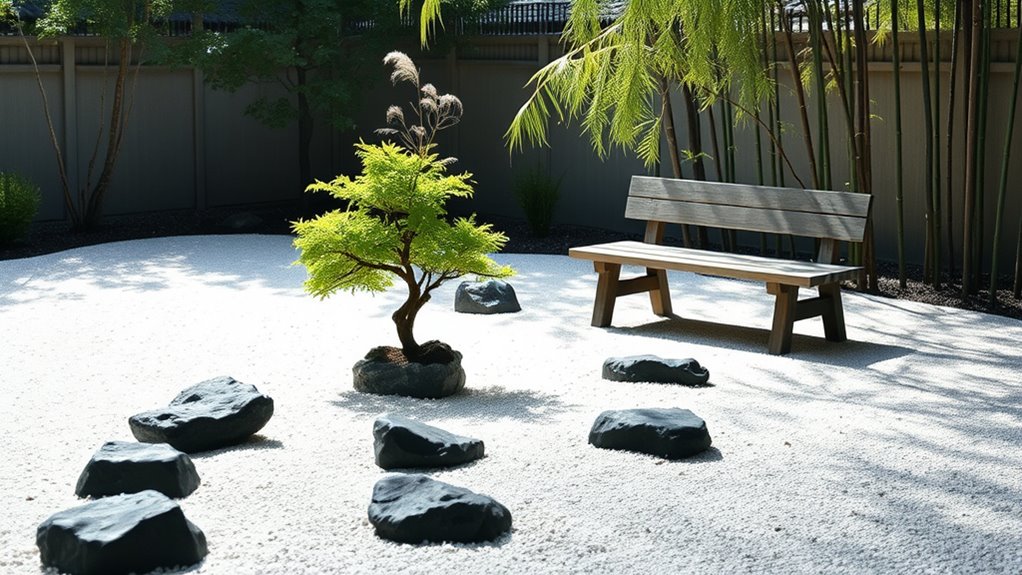

To create a relaxing Zen garden, choose a quiet, natural site away from noise, and select materials like weathered stones, gravel, and bamboo. Arrange elements asymmetrically to promote balance and harmony, placing larger stones first and grouping plants in odd numbers. Incorporate water features, patterns in gravel, and minimal plants like moss or bamboo for serenity. Regular maintenance keeps the space tranquil. Keep exploring to discover how to transform your outdoor space into a peaceful sanctuary.
Key Takeaways
- Select a quiet, natural site with balanced sunlight and minimal noise to create a tranquil environment.
- Incorporate natural materials like stones, gravel, and bamboo with asymmetrical arrangements for authenticity.
- Use water features and minimal plants to evoke harmony, calm, and symbolic representations of water and resilience.
- Create deliberate gravel and sand patterns with traditional tools, reflecting seasonal changes and fostering mindfulness.
- Maintain the garden regularly by raking, removing debris, and pruning to sustain serenity and aesthetic harmony.
Understanding the Core Principles of Zen Garden Design

To truly understand Zen garden design, you need to grasp its seven core principles that guide every element of the space. Rooted in ancient philosophies, these principles create a mindful environment emphasizing simplicity, austerity, and naturalness. Artistic symbolism plays a crucial role, with rocks symbolizing endurance and gravel representing water, fostering reflection and meditation. Asymmetry replaces symmetry, introducing dynamic beauty through intentionally uneven arrangements. The principle of naturalness ensures the garden appears spontaneous yet curated, blending natural elements with human touch. Austerity and simplicity eliminate clutter, highlighting subtle textures and forms. Designing a Zen garden involves careful placement of stones, gravel patterns, and minimal plants to support tranquility and focus. Additionally, understanding the family backgrounds of influential figures can provide deeper insight into cultural influences on design philosophies. Together, these principles cultivate a space that encourages quiet contemplation, where minimalism and symbolic elements work harmoniously, inviting you to experience serenity and deeper awareness in an environment grounded in timeless philosophical wisdom.
Selecting the Perfect Site and Natural Materials

Choosing the right site is essential for creating a peaceful Zen garden, so look for a quiet, flat area that’s easy to access and gets enough sunlight. Once you’ve found the spot, selecting natural materials like weathered stones, gravel, and bamboo will help establish a balanced, harmonious space. Focusing on these factors sets a strong foundation for a serene and enduring garden. Additionally, considering the climate and environment of your location will ensure that your garden materials and features are durable and suitable for long-term enjoyment. Incorporating natural elements in your design can further enhance the calming atmosphere and promote a connection with nature.
Ideal Location Selection
Selecting the ideal site for your Zen garden begins with finding a quiet, secluded space that offers tranquility and privacy. Look for a location away from noise sources like busy streets or neighbors, ensuring a peaceful retreat. The site should also shield from strong winds and be flat enough for stable construction. Consider these key points:
- Wildlife habitat—a natural spot that attracts minimal disturbance from animals, preserving serenity. Incorporating native plants can help maintain the local ecosystem and reduce maintenance.
- Modern adaptations—integrate features like screens or screens to enhance privacy and shield from wind.
- Sunlight and shelter—choose an area with balanced sun exposure and natural shelter for comfort.
- Views and access—select a site visible from your home that’s easy to maintain without disrupting the minimalistic aesthetic.
Prioritize harmony with your surroundings to create a calming, balanced space, and ensure the site has appropriate soil and drainage for any plants or moss you plan to include.
Natural Material Choices
Natural materials form the foundation of a tranquil Zen garden, enhancing its harmony and authenticity. You’ll want to select stones with varied textures—rough stones add rugged beauty, while smooth stones bring calmness. Use odd-numbered groups to maintain natural asymmetry and avoid Western symmetry. Choose stone colors that blend seamlessly—neutral tones like gray, white, or black create minimalism; earthy hues such as brown or green add warmth. Gravel color is equally important; light, neutral shades like gray, white, or cream promote a minimalist aesthetic. The gravel’s texture and color should complement the stones and overall garden theme. Mixing textures—rough, smooth, or mixed—adds visual interest and tactile depth. Carefully placing stones and selecting gravel colors that harmonize will help create a balanced, peaceful space. Selecting the right site is crucial; a well-chosen location will enhance the garden’s natural feel and ease of maintenance, emphasizing the importance of sound design principles like creating a cohesive and immersive environment.
Arranging Elements for Balance and Asymmetry

Arranging elements for balance and asymmetry in a Zen garden involves thoughtfully placing stones, plants, and features to create a harmonious yet natural appearance. You want to avoid rigid symmetry, instead favoring irregular arrangements that mimic nature. Consider these key ideas:
- Use stone placement to create visual weight, positioning larger stones first and offsetting them for balance. Stones symbolize strength, endurance, and stillness, and their deliberate placement contributes to the overall tranquility of the garden. Incorporating natural irregularities enhances authenticity and harmony.
- Group plants in odd numbers (like 3 or 5) to foster energy and avoid artificial symmetry.
- Leave space around each element, allowing visual appreciation and contributing to the garden’s breathing room (Ma concept).
- Arrange elements in irregular or triangular patterns, emphasizing natural flow and avoiding mirror-image pairs for authentic asymmetry. This irregularity reflects the Zen appreciation for imperfection, embracing the natural irregularities found in the environment.
Incorporating Water and Minimal Plant Life
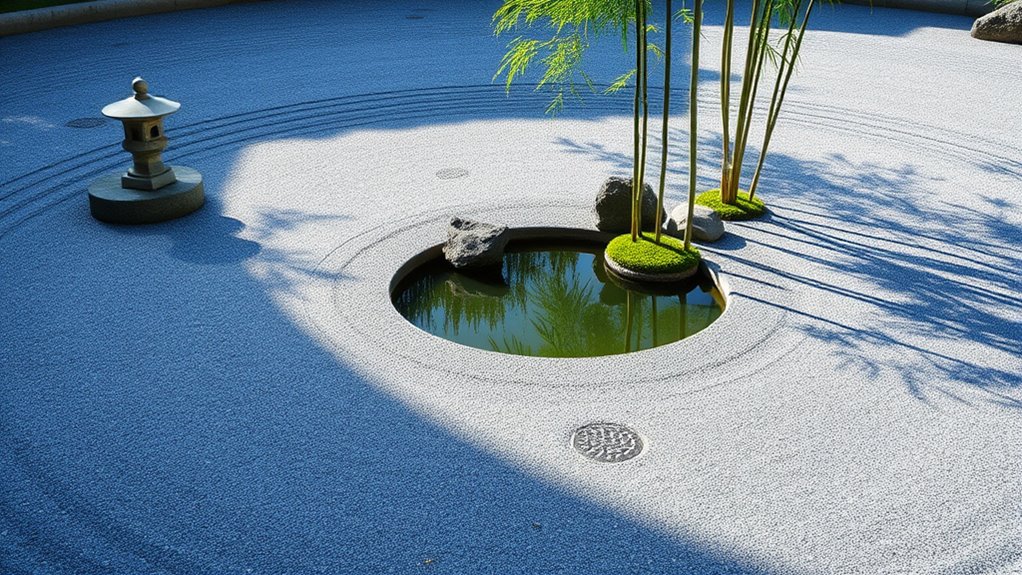
Have you ever noticed how water features and sparse plantings bring a sense of calm and clarity to a Zen garden? Water soundscapes created by gentle fountains, streams, or basins foster tranquility, symbolize purity, and encourage mindfulness. Instead of actual water, traditional gardens often use sand and gravel to represent it, emphasizing simplicity and the Zen principle of dry landscape design (karesansui). Minimal plant life, like moss, dwarf conifers, or bamboo, enhances serenity without clutter. Each plant’s symbolism—resilience, renewal, or humility—deepens the garden’s spiritual meaning. These elements work together to evoke natural harmony, promote relaxation, and support meditative reflection. Water features and minimal plant life embody the essence of nature and Japanese aesthetics, creating a space that promotes peace and contemplation. Incorporating these elements thoughtfully can also help manage stress, which is especially beneficial for women over 40 seeking balance. By carefully integrating water and minimal plant life, you craft a space that embodies tranquility and mindful simplicity.
Creating Meditative Patterns With Gravel and Sand
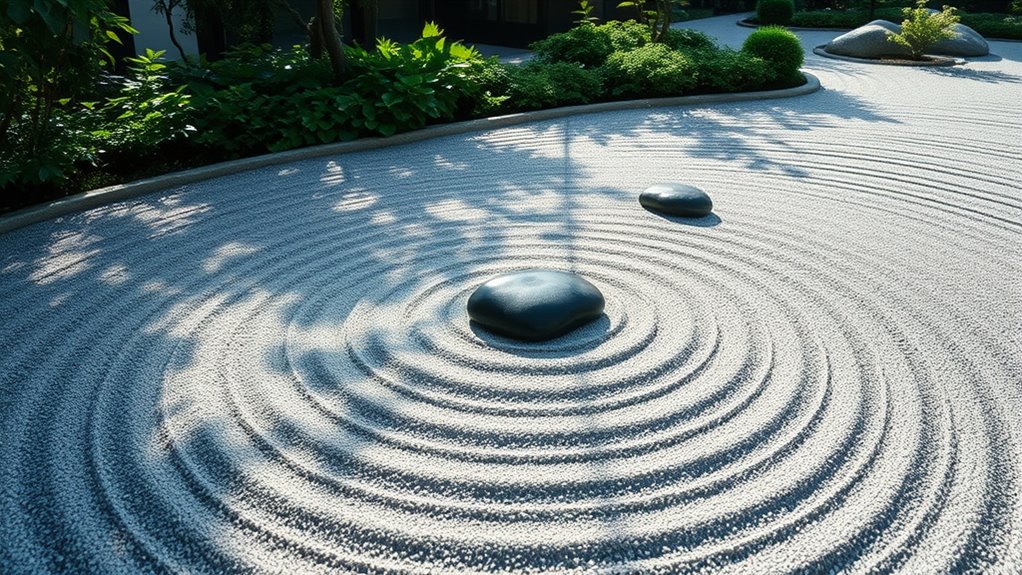
You can create calming patterns in your Zen garden by carefully raking gravel and sand, focusing on smooth, deliberate motions. Seasonal changes influence your designs, with ripples for summer or frozen wave patterns for winter, enhancing the garden’s mood. By intentionally shaping these patterns, you evoke water’s symbolism and foster a mindful, meditative experience. Gravel patterns are meticulously maintained to preserve their symbolic and aesthetic qualities, making the process both an art form and a reflection of traditional Japanese principles. Incorporating craftsmanship techniques ensures the patterns remain precise and meaningful over time.
Raking Techniques for Serenity
Raking techniques in Zen gardens are essential for creating calming, meditative patterns that foster tranquility. You’ll use materials like fine gravel, silica sand, or small pebbles to form stable, visually appealing designs. Choosing the right rake, often traditional bamboo, helps craft intricate wave-like patterns that symbolize water movement. To enhance serenity, focus on these key points:
- Carefully arrange stones to complement patterns and emphasize their symbolism.
- Use consistent, deliberate strokes to maintain visual harmony.
- Create wave patterns that mimic ripples, adding a sense of flow.
- Incorporate straight lines for balance and contrast with organic shapes.
These techniques promote mindfulness and deepen your emotional connection with the garden, turning raking into a meditative act.
Seasonal Pattern Variations
Seasonal variations transform the patterns you create in gravel and sand, reflecting the changing moods and symbolism of each time of year. Seasonal pattern symbolism guides your design choices—straight lines evoke winter’s stillness, while wavy lines suggest spring’s liveliness. Ripples and meandering streams symbolize the fluidity of water, shifting with seasons from flowing spring to autumn’s calm. Maintaining gravel patterns requires seasonal adjustments; winter patterns often need less upkeep due to frozen ground, whereas warmer seasons call for regular raking to preserve clarity. The scale and density of your designs also change—more intricate in spring and summer, simpler in autumn and winter—mirroring nature’s transient beauty. Incorporating Seasonal pattern symbolism into your design helps deepen the meditation on impermanence central to Zen practice.
Symbolic Water Representations
Have you ever noticed how different gravel and sand patterns evoke the essence of water in Zen gardens? These symbolic water designs use gravel patterns to embody tranquility and movement. Ripple patterns (Ren-mon) mimic calm water ripples, while stream patterns (Ryūsui-mon) depict flowing streams, symbolizing energy. Meandering stream patterns (Kyokusen-mon) resemble winding rivers, emphasizing natural water flow. Vortex patterns (Uzumaki-mon) create swirling motions, representing dynamic energy. To create these, you use specialized rakes to craft deliberate lines and curves, maintaining them regularly to preserve clarity. The symbolic water patterns foster meditation, encouraging silent reflection. By focusing on these gravel patterns, you evoke water’s calming, energizing, and natural qualities, capturing the essence of water’s symbolic role in Zen garden design. Additionally, understanding the regulatory guidelines helps ensure your design adheres to cultural and spiritual principles.
Maintaining Serenity Through Regular Upkeep
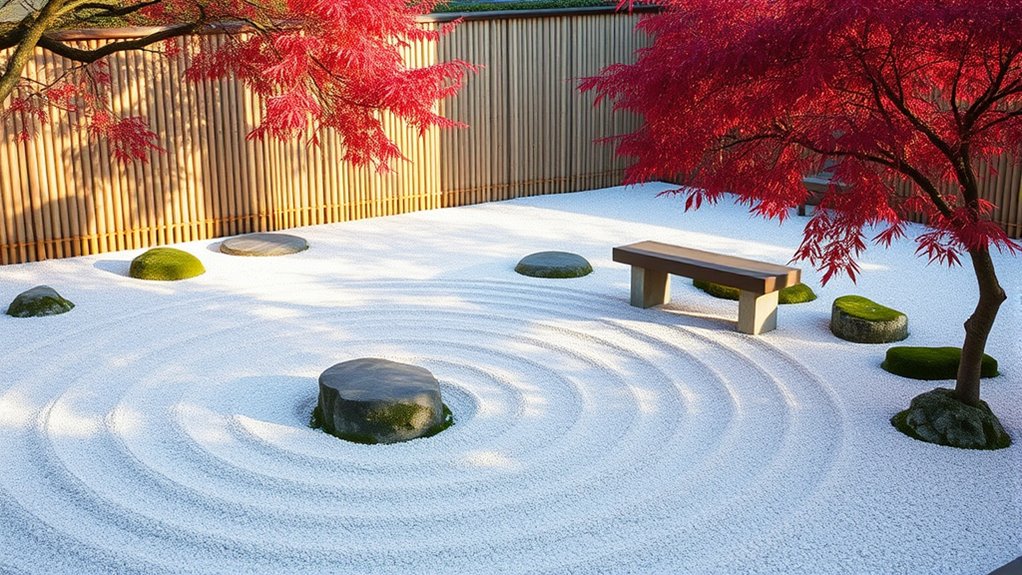
Regular upkeep is essential to preserve the peaceful ambiance of a Zen garden. Consistently raking the sand or gravel keeps the garden’s patterns smooth, enhancing its aesthetics and creating a meditative atmosphere. Regularly removing debris prevents disruptions to the visual harmony and helps manage pests naturally, avoiding harsh chemicals that could disturb the garden’s delicate balance. Hand-pulling weeds preserves the serenity and maintains a tidy appearance without soil disturbance. Using mulch acts as a natural weed barrier, supporting pest management efforts and strengthening garden aesthetics. Pruning plants and moss keeps everything looking neat and healthy, while cleaning stones and pathways ensures a pristine environment. Employing vetted gardening practices ensures your Zen garden remains a tranquil refuge. With attentive, gentle care, you sustain the tranquility and visual harmony that make your Zen garden a true sanctuary.
Embracing Cultural Significance and Spiritual Reflection
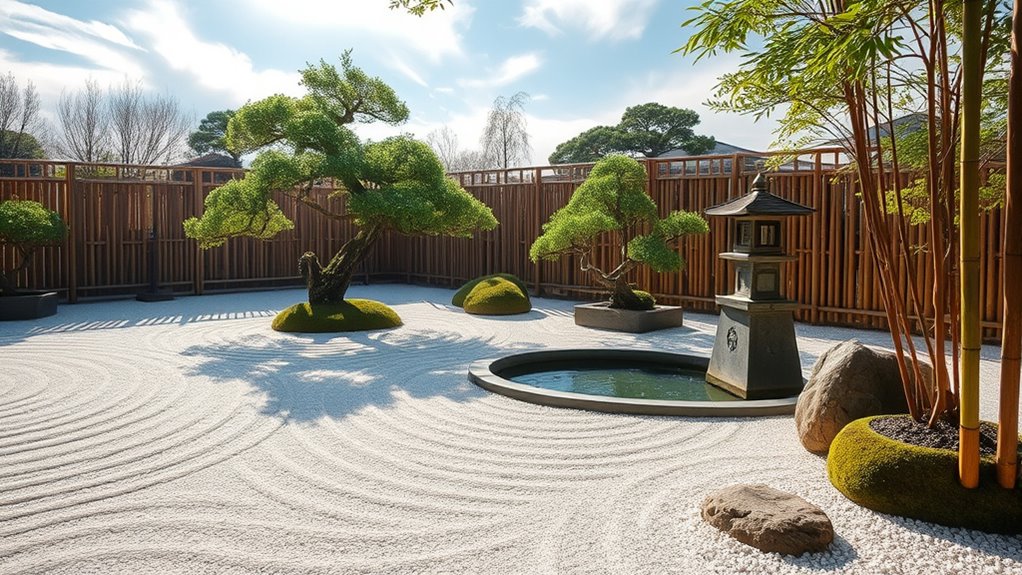
Embracing the cultural significance and spiritual reflection of Zen gardens allows you to connect deeply with centuries-old philosophies rooted in mindfulness and simplicity. These gardens embody cultural symbolism, with rocks representing mountains or spiritual anchors, and raked gravel symbolizing water or the flow of time. By engaging with these elements, you foster spiritual harmony and insight. To deepen this connection, consider:
- Recognizing the symbolic meaning behind each element.
- Practicing mindfulness while observing the garden’s minimalist design.
- Reflecting on the garden’s purpose as a meditative “koan” or puzzle.
- Appreciating its role as a cultural symbol blending myth, history, and spiritual practice.
- Incorporating natural signs and seasonal changes as part of the garden’s weather forecasting elements to enhance your understanding of natural cycles.
This intentional design cultivates a space for spiritual harmony, inviting reflection and a profound sense of calm rooted in tradition.
Frequently Asked Questions
How Can I Customize My Zen Garden to Reflect Personal Symbolism?
To reflect personal symbolism in your garden, you can incorporate meaningful ornaments that hold special significance to you. Choose stones that represent important life events or personal qualities, and create unique sand patterns that symbolize your philosophies. Add plants with emotional meaning and include water features or sculptures that speak to your beliefs. This personalization makes your garden a serene space that truly embodies your identity and values.
What Are Common Mistakes to Avoid When Designing a Zen Garden?
Think of your garden as a flowing stream—you don’t want obstacles blocking its gentle course. Avoid common mistakes like rigid pathway design with straight lines or unnatural rock placement that looks forced. Instead, opt for natural curves in pathways and rocks that are partially buried and asymmetrical, mimicking nature. Keep the design simple, balanced, and intentional, ensuring every element contributes to the garden’s peaceful, harmonious atmosphere.
How Do I Select the Right Size for My Outdoor Zen Garden?
To select the right size for your outdoor Zen garden, consider your garden layout and available space. A rectangular shape around 12 by 18 feet works well, but even small corners or indoor courtyards can be transformed. Focus on plant selection that suits the size—drought-tolerant, low-maintenance plants work best. Keep it simple to guarantee your garden remains tranquil and manageable, creating a peaceful retreat tailored to your space.
What Are Eco-Friendly Materials Suitable for Zen Garden Construction?
Think of your garden as a canvas, where eco-friendly materials paint a peaceful picture. You can use sustainable stone for pathways, blending seamlessly with nature, or recycled gravel to create calming water-like textures. These choices not only support environmental health but also add aesthetic charm. Incorporating these materials makes your space more harmonious and sustainable, turning your garden into a tranquil retreat that nurtures both mind and planet.
How Can I Incorporate Modern Elements Without Disrupting Traditional Harmony?
To incorporate modern elements without disrupting traditional harmony, you can add minimalist furniture that complements natural materials, maintaining simplicity and balance. Incorporate contemporary art pieces subtly, ensuring they blend with the garden’s serene aesthetic. Use muted colors and natural textures to unify traditional and modern styles. Small, modern sculptures or sleek benches can enhance the space while respecting its tranquil, timeless essence, creating a harmonious blend of old and new.
Conclusion
By designing your Zen garden with mindful intention, you create a tranquil sanctuary where every stone, ripple, and quiet corner invites reflection. As you tend to the gravel and choose your natural elements, you nurture a space that whispers serenity amidst life’s chaos. Let this garden be a mirror of inner calm, a place where moments of stillness bloom like delicate petals, reminding you that peace is found in simple, deliberate harmony with nature.