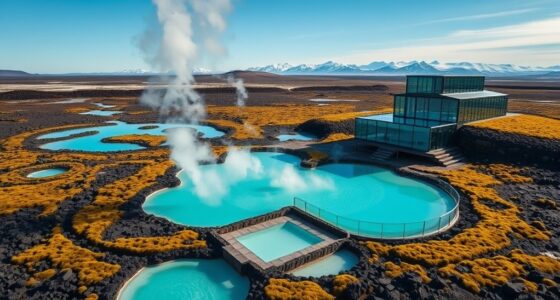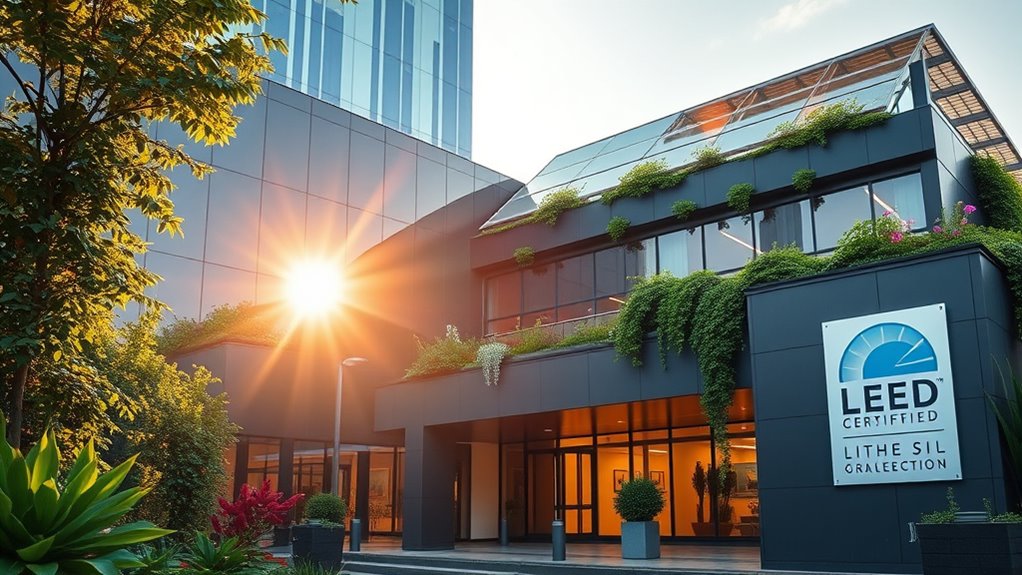

Green hotel certifications like LEED and EarthCheck set standards to guarantee you’re staying at environmentally responsible and sustainable accommodations. LEED, for example, requires buildings to meet strict criteria for energy efficiency, water conservation, and waste reduction, confirming eco-friendliness. Certifications help you identify hotels committed to reducing their environmental impact while supporting sustainable tourism. If you want to discover how these distinctions work and what others exist, you’ll get valuable insights by exploring further.
Key Takeaways
- LEED certification assesses energy efficiency, water conservation, waste reduction, and sustainable site development in hotels.
- Beyond LEED, certifications like Green Globe, EarthCheck, and Green Key also recognize eco-friendly hotel practices.
- Certification validates a hotel’s commitment to reducing environmental impact and implementing innovative, sustainable design features.
- Green certifications help guests identify hotels that prioritize eco-conscious practices and support sustainable tourism.
- These labels encourage hotels to adopt responsible resource management, renewable energy, and community engagement efforts.
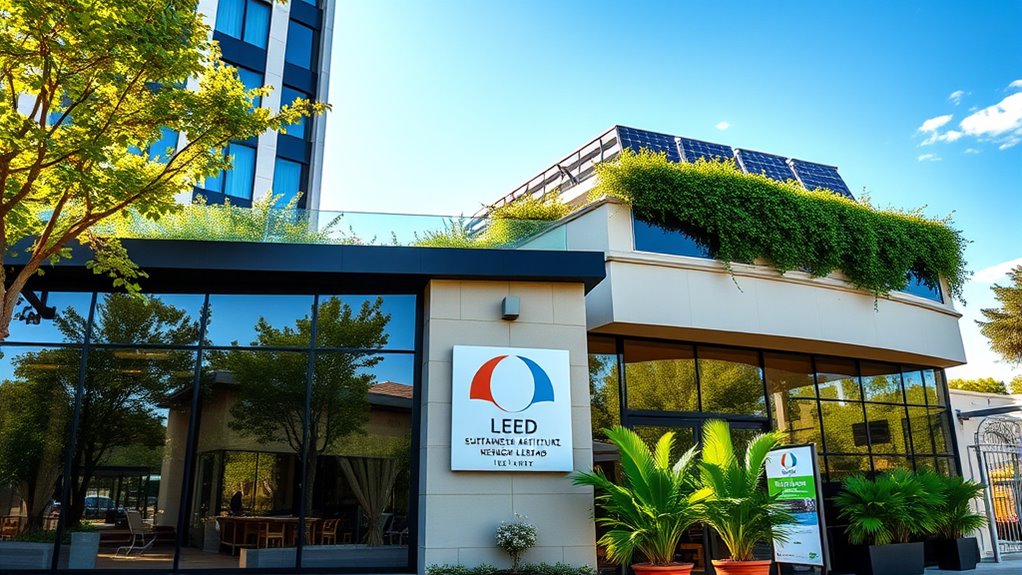
Are you wondering what distinguishes eco-friendly hotels from traditional ones? The key lies in their commitment to sustainable building and environmentally friendly practices. Sustainable building involves designing and constructing hotels in ways that reduce environmental impact, conserve resources, and promote overall ecological health. This means using energy-efficient systems, renewable materials, and innovative construction techniques that minimize waste and pollution. When you stay at an eco-friendly hotel, you’re supporting structures built with sustainability at their core—whether it’s through solar panels, water-saving fixtures, or sustainable insulation materials. These elements not only reduce the hotel’s carbon footprint but also create a healthier environment for guests and staff alike.
Eco friendly practices extend beyond just the building itself. They encompass operational procedures that prioritize conservation and responsible resource management. For instance, many green hotels implement recycling programs, use eco-certified cleaning products, and encourage guests to participate in conservation efforts like reusing towels and turning off lights when not needed. These practices demonstrate a hotel’s dedication to minimizing its environmental impact on a daily basis. When you book a stay at a certified green hotel, you can be confident that your choice supports sustainable tourism and helps preserve natural resources for future generations. Additionally, some green hotels participate in supporting local communities, further enhancing their positive environmental and social impact.
Green hotel certifications, such as LEED (Leadership in Energy and Environmental Design), serve as benchmarks for these environmentally friendly efforts. Achieving LEED certification requires a hotel to meet strict standards in areas like energy efficiency, water conservation, waste reduction, and sustainable site development. Hotels that earn this certification have demonstrated a comprehensive commitment to sustainability through innovative design, responsible resource use, and environmental stewardship. But LEED isn’t the only standard. Other certifications like Green Globe, EarthCheck, and Green Key also recognize hotels that implement eco-friendly practices and sustainable building principles.
What’s important for you is that these certifications are more than just labels—they’re proof of a hotel’s dedication to reducing its environmental footprint. When you choose a green-certified hotel, you’re making a conscious decision to support sustainable development, reduce waste, and promote environmentally responsible tourism. These hotels often go beyond compliance by integrating renewable energy sources, prioritizing local and eco-friendly materials, and fostering community engagement. So, next time you plan a trip, look out for these certifications. They ensure that your stay aligns with your values and helps protect the planet while you enjoy your travels.
Frequently Asked Questions
How Long Does It Typically Take to Get Certified?
Getting certified usually takes several months, depending on your sustainability strategies and the certification process. You’ll need time to prepare documentation, implement green practices, and complete inspections. The process can range from 3 to 12 months or more, so plan accordingly. By staying organized and proactive, you can streamline the certification process and achieve your green goals efficiently, showcasing your commitment to sustainability to guests and partners alike.
What Are the Costs Associated With Certification?
Sure, the certification costs are a breeze—if you enjoy surprises. The cost impact varies widely depending on your hotel’s size, location, and certification level. Expect an expense breakdown including application fees, consultant costs, and verification fees. Small hotels might spend a few thousand, while larger properties could see costs soaring into tens of thousands. So, prepare for a financial journey that’s as unpredictable as it is rewarding.
Can Existing Hotels Retroactively Apply for Certification?
Yes, existing hotels can retroactively apply for certification. You’ll face retrofit challenges, but the certification benefits often outweigh them by boosting your hotel’s appeal and operational efficiency. To succeed, you’ll need to assess current sustainability practices, plan upgrades carefully, and meet the certification standards. This process demonstrates your commitment to eco-friendliness, attracts environmentally conscious guests, and can improve your bottom line through increased marketability.
Are There Regional Differences in Certification Standards?
Yes, regional variations often influence certification benchmarks, meaning standards can vary depending on your location. You’ll find that some regions prioritize specific sustainability practices or have unique requirements based on local climate, resources, and regulations. These regional differences guarantee the certification process aligns with local environmental goals, so it’s essential to verify the specific standards and benchmarks applicable in your area to attain the appropriate green certification.
How Do Certifications Impact Hotel Occupancy Rates?
Certifications can boost your hotel’s occupancy rates by showcasing your commitment to sustainability benefits, which attracts eco-conscious travelers. When you earn recognized green certifications, you gain marketing advantages that set you apart from competitors. Guests appreciate your efforts to reduce environmental impact, leading to increased bookings and loyalty. Ultimately, your sustainability initiatives not only enhance your hotel’s reputation but also positively influence occupancy, making certifications a valuable investment.
Conclusion
So, don’t let the certification process seem intimidating. Achieving LEED or other green hotel standards might take effort, but it’s worth it—you’ll attract eco-conscious guests and reduce costs in the long run. Plus, you’ll be doing your part to protect the environment. Remember, every small step counts, and you don’t have to be perfect overnight. Start today, and watch your hotel become a beacon of sustainability and guest satisfaction.