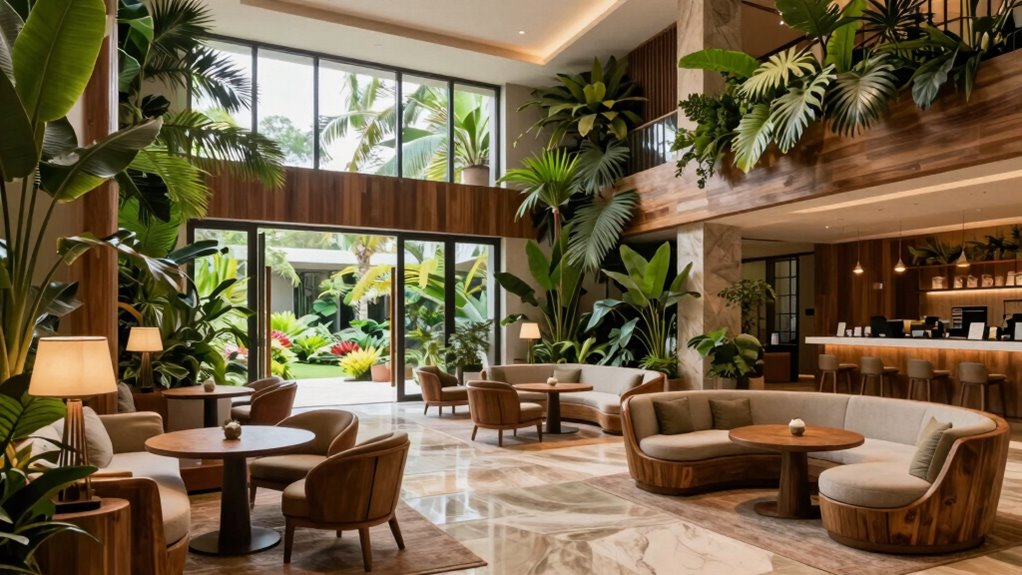

Regenerative design is transforming high-end hospitality by actively restoring and benefiting the environment beyond just reducing harm. You’ll find luxury hotels embracing sustainable materials, eco-friendly architecture, and practices that support local ecosystems. These resorts focus on creating spaces that give back to nature—like planting native flora and harvesting rainwater—while providing memorable experiences for guests. If you want to discover how this innovative approach is shaping a sustainable, interconnected future for luxury stays, keep exploring.
Key Takeaways
- Regenerative design transforms luxury hotels into ecosystems that actively restore and benefit local environments.
- Use of eco-friendly materials and passive architectural features reduces energy use and supports biodiversity.
- Hotels incorporate ecosystem preservation practices like rainwater harvesting and native planting to enhance local resilience.
- Guest experiences are designed to foster awareness, participation, and a deeper connection to sustainability efforts.
- The approach shifts focus from minimal harm to environmental healing, promoting ecological resilience and community well-being.
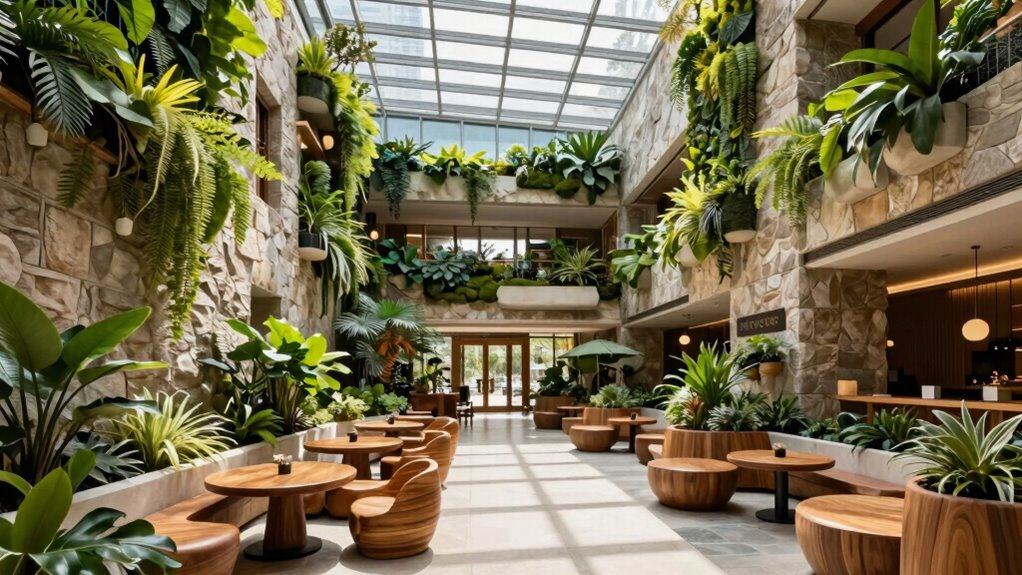
Have you ever wondered how luxury hotels are redefining sustainability? It’s no longer just about minimizing harm; today’s high-end hospitality is embracing regenerative design, transforming the guest experience while actively restoring the environment. This shift is driven by a desire to create spaces that don’t just reduce their footprint but actually give back to the land, water, and communities they touch. At the heart of this transformation is sustainable architecture, which integrates eco friendly materials and innovative building techniques to guarantee that new hotel developments are both luxurious and environmentally responsible.
Luxury hotels are now embracing regenerative design to restore and benefit the environment while providing unparalleled comfort.
When you stay at a hotel that employs regenerative design principles, you’re witnessing a commitment to more than just aesthetics or comfort. These properties prioritize eco friendly materials, choosing renewable, recycled, and locally sourced resources that lessen environmental impact. The use of sustainable architecture means designing structures that work with natural surroundings, rather than against them. For instance, buildings may feature natural ventilation, passive solar heating, or green roofs that support local biodiversity. Such features not only reduce energy consumption but also promote harmony with the environment, making your stay feel more aligned with nature.
More than just green building practices, regenerative design in high-end hospitality focuses on creating spaces that actively improve their environment. This could mean incorporating rainwater harvesting systems that replenish local water tables or planting native flora that supports local wildlife. You might notice that these hotels are often situated in ways that preserve existing ecosystems or even enhance them, rather than clearing land for development. The goal is to foster a sense of interconnectedness — where the hotel becomes part of the landscape rather than a disruptive intrusion. Incorporating regenerative principles can help ensure that development harmonizes with the surrounding ecosystem and promotes resilience.
Your experience in such a hotel isn’t limited to aesthetics; it’s embedded in how the building functions and interacts with its surroundings. From energy-efficient lighting to waste reduction systems, every element is designed with regeneration in mind. Guests are encouraged to participate in sustainability efforts, whether through educational programs or by simply engaging with eco-friendly practices encouraged on-site. The idea is to inspire a sense of responsibility and connection, making your stay memorable not just for luxury but for contributing to a healthier planet.
In essence, regenerative design in high-end hospitality is reshaping what it means to stay in a luxury hotel. It’s about creating environments that regenerate ecosystems, support local communities, and inspire guests to become part of a more sustainable future. This approach emphasizes the importance of biodiversity and the role sustainable architecture plays in restoring natural habitats, highlighting a bold move away from traditional hospitality that recognizes the importance of healing and restoring the planet while offering unparalleled comfort.
eco-friendly hotel building materials
As an affiliate, we earn on qualifying purchases.
As an affiliate, we earn on qualifying purchases.
Frequently Asked Questions
How Does Regenerative Design Impact Guest Experience?
Regenerative design enhances your guest experience by fostering deeper guest engagement and creating immersive experiences. You’ll notice guests feel more connected to the environment, inspiring a sense of purpose and well-being. By integrating sustainable practices and natural elements, you make every stay meaningful, encouraging guests to participate in the process of giving back to the community and environment. This approach transforms hospitality into a memorable, impactful journey rather than just a stay.
What Are the Initial Costs of Implementing Regenerative Features?
Imagine lush green roofs and solar canopies transforming your property, but initial costs can be steep. You’ll need a thorough cost analysis to understand expenses like eco-friendly materials and advanced systems. Investment strategies should focus on long-term benefits, balancing upfront costs with future savings and positive environmental impact. While regenerative features demand higher initial investment, they ultimately boost property value and guest appeal, making sustainability a smart, strategic choice.
How Do Hotels Measure the Success of Regenerative Initiatives?
You measure the success of regenerative initiatives by monitoring metrics like energy efficiency and the use of sustainable materials. You track reductions in energy consumption, waste, and water use, comparing them to baseline data. Guest satisfaction surveys and environmental certifications also help assess impact. By analyzing these indicators, you can determine whether your hotel genuinely contributes to ecological health and community well-being, ensuring your regenerative efforts are effective and meaningful.
Are There Specific Certifications for Regenerative Hospitality Projects?
You’ll find that regenerative hospitality projects often pursue specific certifications like Sustainable Certification and Eco Label Standards to showcase their commitment. These certifications act as gentle benchmarks, highlighting your efforts to go beyond mere sustainability. They validate your eco-friendly practices and help you stand out in the high-end market. Achieving such eco labels demonstrates your dedication to creating spaces that not only appeal to guests but also nurture the environment.
How Do Local Communities Benefit From Regenerative Design?
You benefit from regenerative design through active community engagement, which guarantees local voices shape the project, creating a sense of ownership. It promotes cultural preservation by respecting and showcasing local traditions, crafts, and histories. As a result, the community gains economic opportunities, enhanced social ties, and a stronger cultural identity. These projects foster sustainable growth, making the area more resilient and vibrant, enriching your experience and connection to the local environment.
Conclusion
Imagine stepping into a luxury hotel that not only offers comfort but actively restores its environment. Regenerative design proves this is possible, transforming hospitality into a force for good. It’s like planting a tree that grows stronger with each visit, enriching both guest experience and ecosystems. By embracing this approach, you’re not just a visitor—you become part of a cycle that heals and sustains, proving that high-end hospitality can truly make a positive impact.