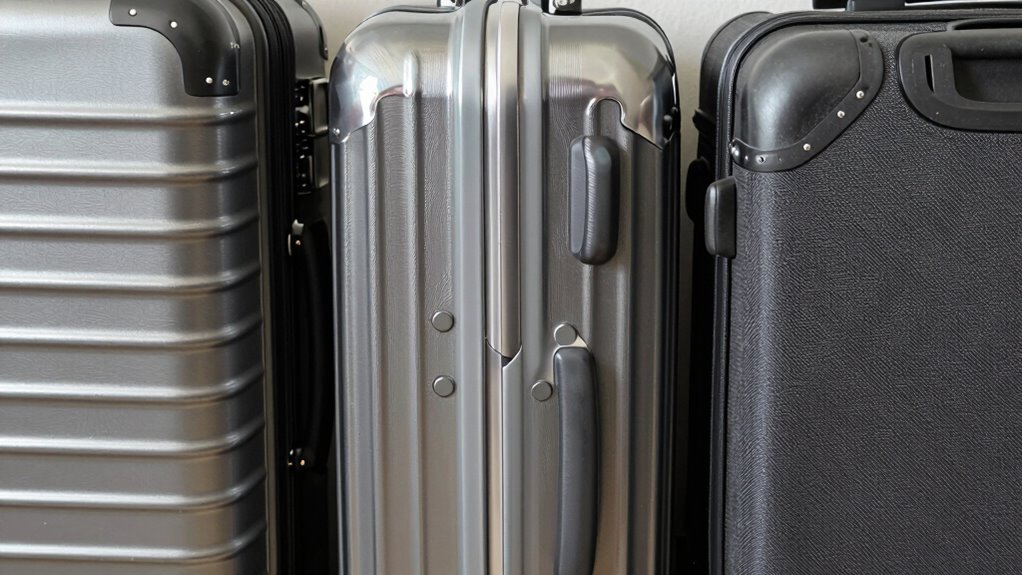

When choosing between aluminum, polycarbonate, and fabric luggage, consider your needs for durability, weight, and protection. Aluminum offers maximum impact resistance and durability but can be heavy, which may impact your baggage limits. Polycarbonate strikes a balance by being lightweight and strong, absorbing impacts well. Fabric luggage is lighter and flexible but less durable, making it suitable for shorter trips or gentle handling. Continue exploring to discover which material best fits your travel style.
Key Takeaways
- Aluminum luggage offers high durability and impact resistance, ideal for maximum protection during rough handling.
- Polycarbonate cases are lightweight, flexible, and resistant to scratches, making them suitable for frequent travelers.
- Fabric luggage is lightweight and often expandable but less durable and more prone to tears and abrasion.
- Aluminum is heavier, which may limit packing capacity and affect baggage weight limits.
- Polycarbonate balances durability with lightweight design, providing impact absorption and ease of maneuverability.
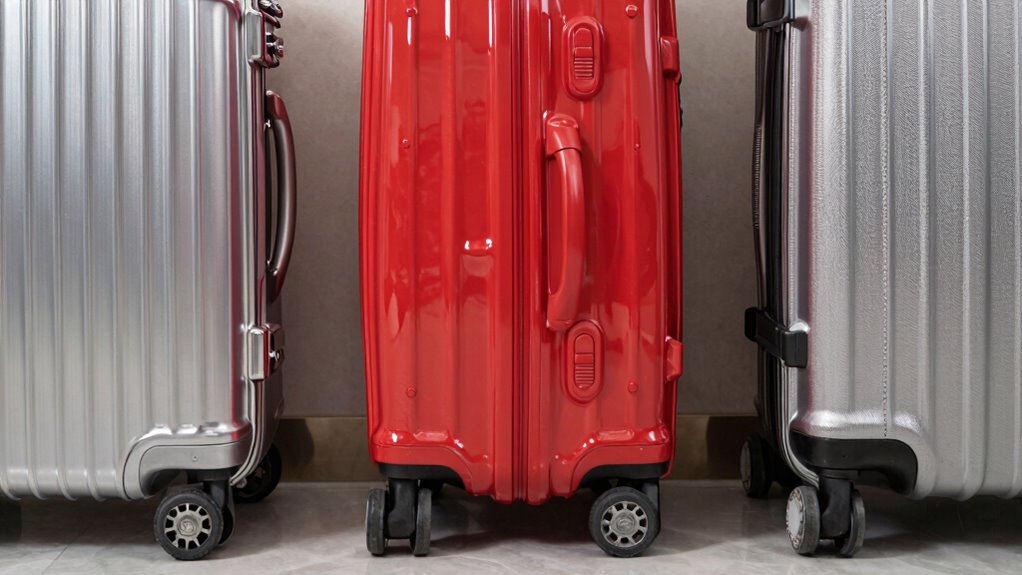
When choosing luggage, understanding the materials used is essential because they directly impact durability, weight, and style. Your decision affects how well your bag withstands travel wear and tear, how easy it is to carry, and whether it matches your aesthetic preferences. One of the key factors to consider is durability differences, which vary considerably among aluminum, polycarbonate, and fabric options. Aluminum cases are renowned for their strength and resilience. They can handle rough handling, resist dents, and protect fragile contents effectively. However, this durability often comes with a trade-off in weight. Aluminum luggage tends to be heavier, making it less ideal if you’re trying to keep your overall baggage weight low. Polycarbonate cases strike a balance between durability and weight. They’re flexible enough to absorb impacts without cracking or breaking, offering excellent protection for your belongings. While not as tough as aluminum, polycarbonate is resistant to dents and scratches, making it a popular choice for frequent travelers. Plus, polycarbonate luggage is generally lightweight, which makes it easier to maneuver and helps you stay within weight limits. Fabric luggage, typically made from nylon or polyester, offers a different set of advantages and disadvantages. While it may not be as durable as metals or polycarbonate, high-quality fabric options can withstand everyday wear and tear reasonably well. They’re lighter than aluminum and often come with additional features like expandable compartments, which increase storage capacity without adding substantial weight. That said, fabric luggage is more susceptible to tears, water damage, and abrasion, so it’s best suited for short trips or if you’re careful about handling. When weighing your options, consider how weight considerations impact your travel experience. If you frequently fly and need to minimize checked baggage weight, polycarbonate or fabric might be better choices. But if you prioritize maximum protection and don’t mind the extra weight, aluminum could be your go-to. Additionally, understanding material resilience can help you anticipate how your luggage will perform under various conditions. Ultimately, your choice should align with how much durability you need versus how lightweight your luggage can be while still offering the style and features you desire. To sum up, knowing the durability differences among aluminum, polycarbonate, and fabric helps you choose luggage that balances toughness, weight, and convenience. Think about your travel frequency, handling style, and personal preferences to pick the right material for your journeys.

HotWay All Aluminum Carry On Luggage, 20 Inch Hard Shell Suitcase with Spinner Wheels and TSA Lock, Luggage for Business Travel (22x14x9 Airline Approved)
OVERALL DIMENSION: The size of the 20 inch carry on luggage: 23×15.5×9 IN. Weight: 8.4 LB. Capacity: 40L…
As an affiliate, we earn on qualifying purchases.
As an affiliate, we earn on qualifying purchases.
Frequently Asked Questions
How Do Luggage Materials Affect Weight Restrictions?
Luggage materials markedly impact weight restrictions, as aluminum tends to be heavier but offers superior durability, while polycarbonate balances weight and strength, and fabric is the lightest but less durable. This affects how much you can pack without exceeding airline limits. Your choice also has cost implications; aluminum luggage is usually more expensive, while fabric options are more affordable. Consider durability and weight to optimize your packing and budget.
Are Certain Materials More Eco-Friendly Than Others?
You’ll find that fabric luggage often ranks as more eco-friendly because it’s typically made from sustainable or recycled materials, and it’s easier to recycle. Aluminum and polycarbonate, while durable, have higher environmental impacts due to resource extraction and manufacturing. To prioritize sustainability, look for eco-friendly alternatives, such as bags made from recycled fabrics or biodegradable materials, and choose brands committed to recycling and reducing their carbon footprint.
Which Material Offers Better Insulation Against Temperature Changes?
Think of your luggage as a cozy fortress against the wild weather outside. Polycarbonate offers better thermal insulation, acting like a warm shield that stabilizes temperature regulation inside. It absorbs and dissipates heat effectively, keeping your belongings safe from sudden temperature swings. Aluminum, by contrast, conducts heat quickly, making it less ideal for insulation. So, if you want a bag that guards against temperature changes, polycarbonate’s your best bet.
How Do Luggage Materials Impact Security Features?
Your luggage material substantially impacts security features and durability. Aluminum offers robust protection with built-in locks and tamper-proof designs, making it highly secure. Polycarbonate is durable and resistant to impacts, providing added security against rough handling. Fabric luggage often includes lockable zippers and hidden compartments, but may be less secure against theft or damage. Choosing a material with integrated security features and high durability ensures your belongings stay safe during travel.
Can Luggage Material Choice Influence Airline Baggage Fees?
Your luggage material choice can influence airline baggage fees, especially if it affects weight and durability. Aluminum cases are sturdy but heavier, potentially increasing fees for overweight bags. Polycarbonate offers a good balance of durability and lightweight design, possibly saving you money. Fabric luggage is usually lighter, reducing weight charges, but might not withstand rough handling. Consider durability and aesthetic appeal to optimize both protection and cost-efficiency on your travels.

Samsonite Omni 2 28-Inch Large Checked Hardside Luggage with 360° Spinner Wheels – Scratch Resistant Hardshell – TSA Lock – Expandable Polycarbonate Shell for Lightweight Travel – Nova Teal
The Perfect Fit – 28" Spinner Luggage that maximizes your packing power and is the ideal checked bag…
As an affiliate, we earn on qualifying purchases.
As an affiliate, we earn on qualifying purchases.
Conclusion
When choosing luggage materials, it all comes down to your travel style. Aluminum offers unmatched durability, polycarbonate strikes a perfect balance of strength and lightweight, while fabric gives you flexibility and style. Think of aluminum as the fortress of luggage — almost indestructible! Pick the one that suits your adventures best, and you’ll be ready to conquer the world with gear that’s as tough as a superhero’s shield. Your perfect travel companion is just a decision away!

BAGSMART Foldable Travel Bag, 37L Duffle Bag for Travel, Expendable Carry on Weekender Duffel, Lightweight Personal Item Bag, Black
✈️ Ready to Go: Airline-approved Bag, fits perfectly under the seat to avoid baggage fees as a personal…
As an affiliate, we earn on qualifying purchases.
As an affiliate, we earn on qualifying purchases.