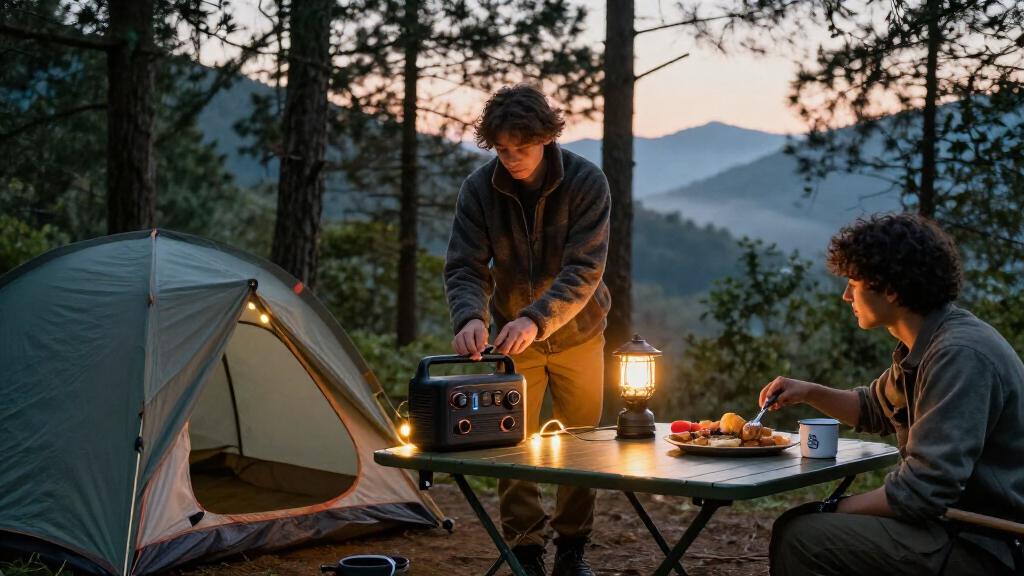

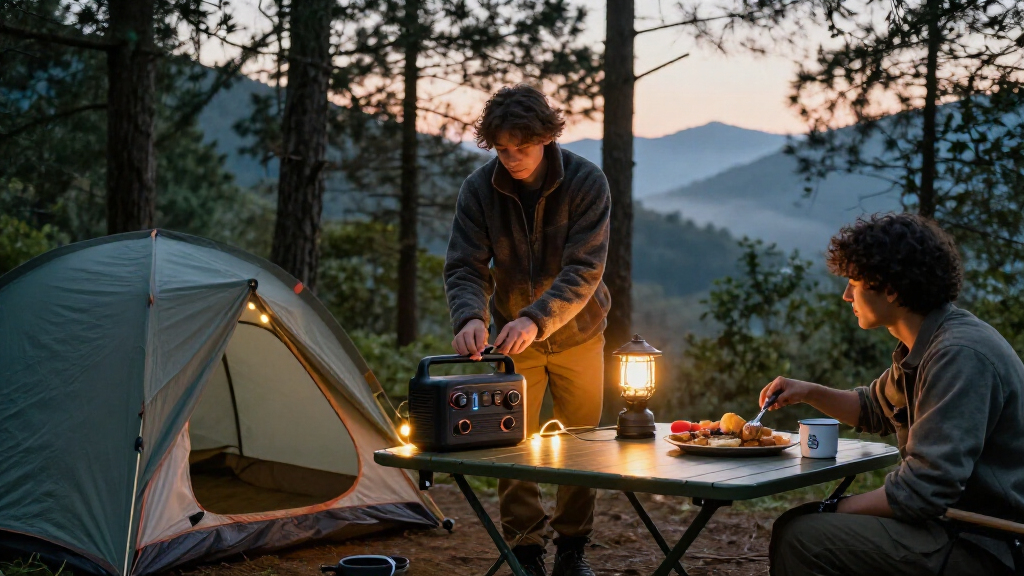
The best portable power stations balance usable battery capacity, AC output, charging options, and manageable size. My best overall pick is the BLUETTI Elite 300, whose 3,014Wh capacity is suited to longer backup needs; the Anker SOLIX C1000 Gen 2 and EcoFlow DELTA 3 Classic stand out as more compact 1,024Wh options. The main tradeoff is straightforward: larger stations can run more devices for longer, but they take up more space and are less convenient to move. Smaller models are easier to carry, though their limited energy reserves rule them out for extended outages. Read on for the full comparison and guidance on matching capacity to your real-world needs.

Get travel and outdoor gear delivered free with Prime
- Fast, free delivery on millions of items
- Prime Video, Amazon Music and more included
- Member-only deals all year
Complete the kit


Key Takeaways
- The BLUETTI Elite 300 models lead on capacity: both list 3,014Wh, making them the lineup’s largest battery options; the solar-generator bundle adds two 200W panels for buyers who want panels included.
- About 1,000Wh is the lineup’s central choice: the Anker SOLIX C1000 Gen 2, BLUETTI Elite 100 Mini, EcoFlow DELTA 3 Classic, EcoFlow DELTA 3, and Jackery Explorer 1000 v2 offer a middle ground between short trips and larger backup stations.
- Capacity and AC output are not interchangeable: the 2,048Wh Jackery Explorer 2000 v2 lists 2,200W output, while the 2,010Wh Anker SOLIX S2000 lists 1,500W; check both figures against the devices you plan to run.
- Portability spans a wide range: the 89.6Wh Daran is suited to small-device charging, while the 2,000Wh-plus models prioritize longer runtime over grab-and-go convenience.
- Included solar panels change the buying decision: the BLUETTI Elite 300 Solar Generator bundle comes with two 200W panels, whereas the other listed products are presented as power stations without bundled panels.


| portable power station | Weight | Battery chemistry | Battery capacity |
|---|---|---|---|
| BLUETTI Elite 300 Solar Genera | — | LiFePO4 | 3,014Wh |
| Anker SOLIX C1000 Gen 2 Portab | 11.3kg | — | 1,024Wh |
| BLUETTI Elite 30 V2 Portable P | About 9.5lb | — | — |
| Anker SOLIX S2000 Portable Pow | 35.7lb | LiFePO4 | 2,010Wh |
| Jackery Explorer 2000 v2 Porta | 39.5lb | LiFePO4 | — |
| BLUETTI Elite 100 Mini Portabl | 23.5 lbs | LiFePO4 (LFP) | 1004.8Wh |
| BLUETTI Elite 300 Portable Pow | 58 lbs | LiFePO4 | 3014Wh |
| EcoFlow DELTA 3 Classic Portab | 26.7 lb | LiFePO4 | — |
| MARSRIVA MP6 Plus Portable Pow | 15.7 lbs | LiFePO4 | 512Wh |
| Jackery Explorer 1000 v2 Porta | 23.4 lbs | LiFePO4 (LFP) | 1024Wh |
| EF ECOFLOW DELTA 3 Max Portabl | — | LiFePO4 (LFP) | 2,048Wh |
| EcoFlow DELTA 3 Portable Power | 12.5kg | LiFePO4 (LFP) | — |
| Daran Portable Power Station | 2.54 lb | LiFePO4 | 89.6Wh |
| Jackery Explorer 300 Portable | 7.5 lb | — | — |
| LIBRIDS C600 Portable Power St | 16.3 lb | — | — |
More Details on Our Top Picks
BLUETTI Elite 300 Solar Generator with Two 200W Solar Panels, 3014Wh LiFePO4 Battery
For buyers who want large stored capacity and RV-ready connections in one kit, the BLUETTI Elite 300 is the strongest fit here. Its 3,014Wh battery and 2,400W AC output can support more demanding backup loads than the Anker SOLIX C1000 Gen 2, while the TT-30 outlet and 12V/30A DC port connect more directly to RV equipment. Two 200W solar panels are included, giving off-grid users a starting point for replenishment, though the panels ship separately, so delivery may not be simultaneous. The tradeoff is scale: this capacity is better suited to a campsite or backup location than frequent short carries, and the listed runtime is only seven hours, so actual use will depend heavily on the devices connected. Choose it for RV-oriented power, not a lightweight travel kit.
Pros:- 3,014Wh LiFePO4 capacity offers more stored energy than the Anker SOLIX C1000 Gen 2.
- 2,400W AC output with 4,800W surge supports a broad range of essential appliances.
- Includes two 200W solar panels for off-grid charging.
- TT-30 outlet and 12V/30A DC port suit RV connections.
Cons:- The solar panels ship separately from the power station.
- The listed seven-hour runtime is not a universal estimate and depends on connected loads.
- Its large capacity makes it less suited to buyers prioritizing easy, frequent carrying.
Best for: RV owners and off-grid campers who need high capacity, dedicated RV ports, and included solar panels for recharging.
Not ideal for: People seeking a compact station for frequent carrying, or buyers who need the complete kit delivered at the same time because the panels ship separately.
- Battery capacity:3,014Wh
- Battery chemistry:LiFePO4
- Stated cycle life:6,000+ cycles
- AC output:2,400W
- Surge output:4,800W
- Solar panels included:2 × 200W; shipped separately
- RV connections:TT-30 outlet; 12V/30A DC port
- Charging sources:Solar, AC, car, lead-acid, generator
Our verdict“Choose the Elite 300 if RV-ready ports and substantial capacity matter more than a compact, immediately complete package.”
Anker SOLIX C1000 Gen 2 Portable Power Station, 1,024Wh LiFePO4 Battery
The Anker SOLIX C1000 Gen 2 suits buyers who need a mid-size backup station that can be replenished quickly between outages or trips. Its 1,024Wh capacity is far below the BLUETTI Elite 300’s 3,014Wh, but that smaller reserve comes with a more travel-friendly 11.3kg weight and a stated 49-minute AC recharge at 1,600W. The under-10ms UPS switchover also makes it a better fit than the Jackery Explorer 2000 v2 when minimizing interruption to connected equipment is a priority. Its 2,000W running output is substantial for this capacity class, yet it will not keep heavy loads running as long as the larger stations. Solar input tops out at 600W, and the specs list nine outlets while the description mentions powering up to ten devices, so outlet count is the clearer figure to use.
Pros:- 1,024Wh LiFePO4 battery paired with 2,000W running output.
- Stated AC recharge time of 49 minutes at 1,600W.
- Under-10ms UPS switchover for connected equipment.
- 11.3kg weight is more manageable than the larger-capacity BLUETTI Elite 300.
Cons:- Solar input is limited to 600W and 60V maximum.
- Its capacity is substantially lower than the BLUETTI Elite 300 and other 2kWh-class choices.
- Specifications list nine outlets, while the description refers to powering up to ten devices.
Best for: Campers and households wanting a manageable 1kWh-class station with rapid AC recharge and quick UPS switching for connected equipment.
Not ideal for: Buyers needing multi-day appliance backup or maximum solar input; its 1,024Wh capacity and 600W solar limit fall short of larger options.
- Battery capacity:1,024Wh
- Battery type:LiFePO4
- Running output:2,000W
- Peak output:3,000W
- AC recharge time:49 minutes at 1,600W
- Maximum solar input:600W; 60V maximum
- UPS switchover:Under 10ms
- Weight:11.3kg
- Outlets:9 listed in specifications
Our verdict“Pick the C1000 Gen 2 for quick recharging and UPS response in a more portable capacity class, not for extended high-load backup.”
BLUETTI Elite 30 V2 Portable Power Station, 288Wh, 600W
At about 9.5 pounds, the BLUETTI Elite 30 V2 is the easy choice in this group for buyers who value carrying comfort over long runtimes. Its 288Wh capacity is a fraction of the Anker SOLIX C1000 Gen 2’s 1,024Wh, so it is better for phones, laptops, lights, and shorter outings than sustained appliance backup. The 600W continuous output gives it more flexibility than a small device-only battery, while 140W USB-C PD can charge compatible laptops without taking an AC outlet. Fast wall charging is another advantage for short trips: the listed time reaches 80% in 45 minutes. Power Lifting Mode’s 1,500W figure is a boosted mode, not continuous output, and its modest capacity limits how long demanding devices can run. This is the portable-first pick, not the household reserve.
Pros:- About 9.5lb, with compact dimensions suited to carrying and packing.
- 600W continuous output supports more than small electronics alone.
- 140W USB-C PD can power compatible laptops directly.
- Reaches 80% charge in a stated 45 minutes using AC wall charging.
Cons:- 288Wh capacity limits runtime for high-power devices.
- The 1,500W Power Lifting figure is a boosted mode rather than continuous output.
- Standby and output power consumption can draw down a small reserve during extended use.
Best for: Solo campers, day-trip travelers, and remote workers who want a lightweight station for electronics, lighting, and brief backup.
Not ideal for: Households needing long appliance runtimes or RV owners who want a large energy reserve; 288Wh runs out much sooner than the Anker SOLIX C1000 Gen 2.
- Capacity:288Wh
- Continuous output:600W
- Surge/Power Lifting output:1,500W
- Weight:About 9.5lb
- Dimensions:9.8 × 7 × 6.6in
- AC wall charging:Up to 380W; adjustable to 200W
- Charging time:0–80% in 45 minutes; 0–100% in 70 minutes
- UPS switch time:≤10ms
- Power outlets:9
Our verdict“Choose the Elite 30 V2 for lightweight trips and electronics, but step up to the C1000 Gen 2 for longer runtimes.”
Anker SOLIX S2000 Portable Power Station, 2,010Wh, 1,500W
The Anker SOLIX S2000 stands out for a 2,010Wh LiFePO4 battery paired with a stated lifespan of up to 10,000 charge cycles. That cycle-life figure gives frequent users a reason to choose it over the Jackery Explorer 2000 v2, though the Jackery supplies more AC output at 2,200W compared with the S2000’s 1,500W continuous rating. The Anker offers eight outlets, six recharge methods, and an under-10ms UPS switchover, making it useful as a stationary home backup unit as well as a camping source. Its 35.7lb weight is fairly manageable for a station in this capacity range, but it is still a substantial carry. The main connection gap is the lack of a 12V DC port, and 400W maximum solar input means replenishment from panels is more limited than on some alternatives.
Pros:- 2,010Wh LiFePO4 capacity with a stated lifespan of up to 10,000 charge cycles.
- Eight outlets and six recharge methods support varied backup and camping setups.
- Under-10ms UPS switchover helps connected equipment stay powered during outages.
- 35.7lb weight and compact stated dimensions for a 2kWh-class unit.
Cons:- No 12V DC port for equipment that requires that connection.
- 1,500W continuous output is lower than the Jackery Explorer 2000 v2’s 2,200W.
- Solar input is limited to 400W.
Best for: Frequent users seeking a 2kWh-class LiFePO4 station with a stated long cycle life, multiple charging routes, and UPS backup.
Not ideal for: Buyers who need a 12V DC connection, stronger continuous AC output, or faster solar replenishment than the 400W input limit allows.
- Battery capacity:2,010Wh
- Battery chemistry:LiFePO4
- Stated cycle life:Up to 10,000 charge cycles
- Continuous output:1,500W
- Peak output:3,000W
- Maximum solar input:400W
- Outlets:8
- UPS switchover:Less than 10ms
- Weight:35.7lb
Our verdict“Choose the S2000 for cycle-life emphasis and flexible charging, unless your setup needs a 12V port or higher AC output.”
Jackery Explorer 2000 v2 Portable Power Station, 2042Wh, 2200W AC Output
The Jackery Explorer 2000 v2 is the better match for buyers whose backup plan depends on higher continuous AC output. Its 2,200W rating exceeds the Anker SOLIX S2000’s 1,500W, while the two stations offer similar stored energy: 2,042Wh for Jackery versus 2,010Wh for Anker. That makes the Jackery a stronger fit for compatible higher-wattage appliances, though it has only three AC ports and a 20ms UPS switchover rather than the Anker’s eight outlets and under-10ms switching. It also weighs 39.5lb, so it is portable in the power-station sense, not an effortless carry. Fast AC charging and a quiet mode add useful flexibility; solar charging can take as little as six hours with 400W panels, which are optional rather than included.
Pros:- 2,042Wh capacity and 2,200W AC output exceed the Anker SOLIX S2000’s continuous output.
- 100W USB-C PD port can charge compatible devices directly.
- AC fast charging is listed at 0–80% in 66 minutes.
- Silent charging mode operates below 30dB.
Cons:- Three AC ports provide fewer connection points than the Anker SOLIX S2000’s eight outlets.
- 20ms UPS switchover is slower than the under-10ms figure listed for the Anker SOLIX S2000.
- At 39.5lb, it is a heavy carry, and compatible solar panels are optional.
Best for: Campers and households who need roughly 2kWh of storage with higher AC output for compatible appliances and value quiet charging.
Not ideal for: Buyers who need many AC connections, the fastest UPS switchover, or solar panels included with the station.
- Capacity:2,042Wh
- AC output:2,200W
- AC ports:3
- USB-C PD output:100W
- Battery chemistry:LiFePO4
- Weight:39.5lb
- Solar charging:As little as 6 hours with 400W panels; panels optional
- AC fast charging:0–80% in 66 minutes
- UPS switchover:20ms
Our verdict“Pick the Explorer 2000 v2 for higher AC output and quiet charging, but choose the Anker S2000 for more outlets and faster UPS switching.”
BLUETTI Elite 100 Mini Portable Power Station, 1004.8Wh, 700W
The Elite 100 Mini pairs a roughly 1kWh battery with a compact vertical body, making it a better fit for a desk, vehicle, or small campsite than the much larger BLUETTI Elite 300. Its three AC outlets, 140W USB-C port, and several charging methods give it useful flexibility for phones, laptops, lights, and modest appliances. A 10ms UPS function can help keep sensitive essentials powered through a brief outage, while the built-in light adds practical value away from home. The tradeoff is its 700W continuous output: it cannot match the EcoFlow DELTA 3 Classic or Jackery Explorer 1000 v2 for higher-draw appliances. At 23.5 pounds, it is compact in footprint, not featherweight to carry for long.
Pros:- Compact vertical dimensions fit more easily on desks, counters, and in vehicles than the larger Elite 300.
- 1004.8Wh LiFePO4 battery is rated for more than 6000 cycles.
- Three AC outlets and 140W USB-C provide flexible charging for everyday gear.
- Multiple charging sources, app control, UPS backup, and built-in LED lighting broaden its usefulness.
Cons:- 700W continuous output rules out many high-draw appliances.
- At 23.5 pounds, it is heavy for extended hand carrying.
- Its 1004.8Wh capacity is far below the Elite 300’s 3014Wh for longer outages or RV use.
Best for: Apartment dwellers, remote workers, and car campers who want around 1kWh of backup in a small-footprint unit for electronics and lower-wattage devices.
Not ideal for: Buyers who need to run high-wattage appliances or carry a power station on long walks; its 700W output and 23.5-pound weight limit those uses.
- Battery capacity:1004.8Wh
- Battery chemistry:LiFePO4 (LFP)
- Surge output:1400W
- AC outlets:3
- USB-C output:140W
- UPS switchover:10ms or less
- Weight:23.5 lbs
Our verdict“Choose the Elite 100 Mini for compact, electronics-focused backup, but pick a higher-output model for appliances or longer power needs.”
BLUETTI Elite 300 Portable Power Station, 3014Wh
For buyers who need substantial stored energy and appliance-level output, the Elite 300 is the capacity leader in this group. Its 3014Wh battery and 2400W output give it a much wider operating range than the 1004.8Wh Elite 100 Mini, while the TT-30 RV outlet and 12V/30A DC connection suit compatible RV loads. AC charging can reach 80% in as little as 78 minutes, a helpful feature when a recharge window is short. The compromise is portability: 58 pounds makes this a lift-and-place unit rather than an easy carry. It also has only two total power outlets, so users with many AC devices may need a power strip. Choose it for capacity and RV connections, not frequent moving.
Pros:- 3014Wh capacity provides substantially more stored energy than the Elite 100 Mini and 1kWh-class models.
- 2400W output and 4800W surge support a broader range of loads than compact stations.
- TT-30 RV outlet and 12V/30A DC output suit compatible RV equipment.
- LiFePO4 battery rated for 6000+ cycles, with app control and 10ms UPS backup.
Cons:- At 58 pounds, it is difficult to move regularly without help.
- Only two total power outlets limit how many devices can connect directly.
- Its large capacity and size are excessive for buyers who only need phone, laptop, and light charging.
Best for: RV owners and households preparing for longer outages who need a large battery, strong AC output, and a TT-30 connection.
Not ideal for: Campers who move camp often, buyers with limited storage space, or anyone needing several built-in AC outlets; it weighs 58 pounds and has two total power outlets.
- Battery capacity:3014Wh
- Battery chemistry:LiFePO4
- Surge output:4800W
- RV outlet:TT-30
- DC output:12V/30A
- AC charging:0–80% in as little as 78 minutes
- Weight:58 lbs
Our verdict“Pick the Elite 300 when extended runtime and RV-ready connections matter more than easy carrying or abundant AC outlets.”
EcoFlow DELTA 3 Classic Portable Power Station, 1024Wh, 1800W
The DELTA 3 Classic stands out among the roughly 1kWh options for combining 1800W AC output with six AC outlets and fast charging. That output is well above the BLUETTI Elite 100 Mini’s 700W, giving this model more room for household devices and moderate appliances; the 3600W surge rating adds headroom for startup loads. It can reach 80% by AC in 45 minutes, and its under-10ms UPS transfer time suits backup for electronics that should stay on through brief interruptions. At 26.7 pounds, it is heavier than the Jackery Explorer 1000 v2, and its solar panel is optional. Buyers should also note that it does not support DELTA 2 or DELTA 3 Series Smart Extra Batteries, limiting those expansion paths.
Pros:- 1800W AC output and 3600W surge offer more appliance headroom than the Elite 100 Mini.
- Six AC outlets make it easier to power several devices without extra adapters.
- AC charging reaches 80% in 45 minutes, shortening recharge downtime.
- LiFePO4 battery, app controls, and under-10ms UPS transfer support backup use.
Cons:- Solar panel is optional, adding a separate purchase for solar recharging.
- Not compatible with DELTA 2 or DELTA 3 Series Smart Extra Batteries.
- At 26.7 pounds, it is less convenient to carry than the Jackery Explorer 1000 v2.
Best for: Homeowners and campers who want a roughly 1kWh station with strong AC output, several outlets, and rapid wall charging.
Not ideal for: Owners planning to expand with DELTA 2 or DELTA 3 Series Smart Extra Batteries, or buyers who need a solar panel included.
- Capacity:1024Wh
- Battery chemistry:LiFePO4
- AC output:1800W
- Surge output:3600W
- AC outlets:6
- AC charging:0–80% in 45 minutes
- UPS transfer time:Under 10ms
- Weight:26.7 lb
Our verdict“Choose the DELTA 3 Classic for fast-charging, high-output 1kWh backup, provided its battery expansion limits fit your plans.”
MARSRIVA MP6 Plus Portable Power Station, 512Wh LiFePO4 Battery, 600W Output
At 15.7 pounds, the MP6 Plus is the easiest option here to carry regularly, and its 512Wh capacity suits day trips, vehicle use, or short outages better than the heavier 1kWh stations. Its 600W rated output covers laptops, lights, and small appliances, while a 100W USB-C port can serve many laptops directly. A built-in MPPT controller supports solar input up to 300W, and the stated under-10ms UPS function adds a backup role at home. Compared with the BLUETTI Elite 100 Mini, it is lighter but offers roughly half the capacity; the Elite 100 Mini also has more rated AC output. Keep this unit in dry, ventilated conditions: it is not suited to rain or damp outdoor setups. Listed AC charge times also differ, so treat the timing claims cautiously.
Pros:- 15.7-pound weight makes it easier to carry than the 1kWh options in this roundup.
- 512Wh LiFePO4 battery is rated for 3000+ cycles.
- Built-in MPPT controller accepts up to 300W of solar input.
- 100W USB-C output and under-10ms UPS function support electronics and basic backup needs.
Cons:- 512Wh capacity is less than the Elite 100 Mini’s 1004.8Wh, limiting runtime.
- 600W rated output excludes many higher-draw appliances.
- Must be kept away from rain and moisture, and the listed AC charging times are inconsistent.
Best for: Car campers, day-trippers, and mobile workers who prioritize a manageable carry weight for charging electronics and low-wattage gear.
Not ideal for: People seeking multi-day home backup, higher-wattage appliance support, or a station exposed to wet outdoor conditions; its capacity and 600W rating are limited, and it must stay dry.
- Battery capacity:512Wh
- Battery chemistry:LiFePO4
- Peak output:1200W
- Solar input:300W
- USB-C output:100W PD
- UPS transfer time:Under 10ms
- Weight:15.7 lbs
Our verdict“Choose the MP6 Plus for lighter, dry-weather trips and electronics charging, not for heavy appliances or extended backup.”
Jackery Explorer 1000 v2 Portable Power Station, 1024Wh LiFePO4 Battery
The Explorer 1000 v2 is a balanced choice for buyers who want a 1kWh station without stepping up to the DELTA 3 Classic’s greater weight. At 23.4 pounds, it is lighter than EcoFlow’s 26.7-pound model, while its 1500W output can handle more than the BLUETTI Elite 100 Mini’s 700W. It provides a practical mix of AC, USB, and car charging ports, plus a 10ms UPS function and app-controlled charging. The optional emergency mode can charge from empty to full in 50 minutes, but it must be enabled in the app before each charge. The main limitation for off-grid use is that solar charging works only with Jackery panels, which are not included. Its two AC outlets are also fewer than the DELTA 3 Classic’s six.
Pros:- 1500W AC output gives it more appliance headroom than the Elite 100 Mini.
- At 23.4 pounds, it weighs less than the DELTA 3 Classic while keeping 1024Wh capacity.
- LFP battery is rated to retain over 70% capacity after 4000 charge cycles.
- 10ms UPS switchover and app-controlled charging modes add useful backup flexibility.
Cons:- Solar charging is compatible only with Jackery panels, which are not included.
- Two AC outlets provide fewer direct connections than the DELTA 3 Classic’s six.
- The 50-minute emergency charge mode must be enabled in the app before each charge.
Best for: Campers and households seeking a midweight 1kWh station with strong AC output, varied device ports, and app-based charging control.
Not ideal for: Buyers who want broad third-party solar-panel compatibility, several built-in AC outlets, or a solar panel included.
- Battery capacity:1024Wh
- Battery chemistry:LiFePO4 (LFP)
- AC output:1500W
- Peak output:3000W
- AC outlets:2 pure sine wave
- USB-C output:100W PD
- Default charging time:1.25 hours
- Weight:23.4 lbs
Our verdict“Pick the Explorer 1000 v2 for a portable, capable 1kWh station if its two AC outlets and Jackery-only solar compatibility suit your setup.”
EF ECOFLOW DELTA 3 Max Portable Power Station, 2048Wh LFP Battery, 2400W Output
The DELTA 3 Max pairs a 2,048Wh LFP battery with 2,400W rated output, giving it more reserve and appliance headroom than the 1,024Wh EcoFlow DELTA 3. Its standout advantage is recharge speed: the stated 0–80% time is about 1.13 hours, useful when an outage is brief or you can top up between trips. A less-than-10ms transfer time also suits backup setups where connected electronics should keep running through a power interruption, while app controls help track use remotely. The tradeoff is that the 3,400W X-Boost figure applies only to compatible appliances; it does not replace the 2,400W rated output. Solar panels are optional, and its larger capacity means more to carry than a compact station.
Pros:- 2,048Wh LFP capacity provides more stored energy than the 1,024Wh EcoFlow DELTA 3.
- Stated 0–80% recharge time of about 1.13 hours can shorten downtime between uses.
- Less-than-10ms transfer time supports backup for connected electronics.
- App monitoring and charging schedules help manage battery use.
Cons:- The 3,400W X-Boost figure is for compatible appliances, while rated output is 2,400W.
- Solar panel is not included.
- Its larger-capacity format is less convenient to carry than the smaller stations in this roundup.
Best for: Households and RV owners who need a fast-recharging station for short outages, electronics, and compatible higher-demand appliances.
Not ideal for: Campers prioritizing low carry weight or buyers who need sustained output above 2,400W or included solar panels.
- Battery capacity:2,048Wh
- Battery chemistry:LiFePO4 (LFP)
- X-Boost output:Up to 3,400W for compatible appliances
- Recharge time:0–80% in about 1.13 hours
- Transfer time:Less than 10ms
- Dimensions:9.4 × 12 × 19.44 in
- Warranty:5 years
Our verdict“Choose the DELTA 3 Max if fast recharging and 2,048Wh of backup reserve matter more than a lighter carry.”
EcoFlow DELTA 3 Portable Power Station, 1024Wh, 1800W
The EcoFlow DELTA 3 is a flexible middle ground: its 1,024Wh capacity and 1,800W AC output suit camping, RV use, and basic home backup without the larger reserve of the DELTA 3 Max. Its main differentiator is expansion to 5kWh with compatible EcoFlow batteries, letting buyers add storage later rather than starting with a much larger unit. The stated full-charge time is 56 minutes under specified input conditions, and its LFP battery is rated for 4,000 cycles to 80% capacity. With 13 outlets and 100W USB-C, it can serve several devices at once. That versatility comes with a dependency: the fastest charging requires the listed input conditions, and expansion means buying compatible extra batteries. It also offers less built-in capacity than the DELTA 3 Max.
Pros:- Expandable to 5kWh with compatible EcoFlow extra batteries.
- 1,800W AC output and 3,600W surge output cover a broad range of common devices.
- 13 outlets, including 100W USB-C, allow multiple devices to connect at once.
- LFP battery is rated for 4,000 cycles to 80% capacity.
Cons:- The 56-minute full-charge claim depends on access to the specified AC and solar input conditions.
- Expansion requires compatible EcoFlow battery packs.
- Its 1,024Wh starting capacity is half that of the DELTA 3 Max.
Best for: Campers, RV users, and homeowners who want a manageable 1kWh station now with the option to add compatible battery capacity later.
Not ideal for: Buyers who need around 2kWh of capacity out of the box or who do not want to rely on compatible add-on batteries for expansion.
- Capacity:1,024Wh
- AC output:1,800W
- Surge output:3,600W
- Battery chemistry:LiFePO4 (LFP)
- Cycle life:4,000 cycles to 80% capacity
- Maximum expandable capacity:5kWh with compatible EcoFlow batteries
- Maximum solar input:500W
- Weight:12.5kg
- USB-C output:100W
Our verdict“Pick the DELTA 3 if you want a mid-size station that can grow with compatible add-on batteries rather than a larger fixed-capacity unit.”
Daran Portable Power Station, 89.6Wh LiFePO4 Battery, 100W Output
At 2.54 lb and 89.6Wh, the Daran fills a different role from the larger stations here: it is a small source of power for phones, cameras, and other low-draw gear, not a mini home backup unit. Its 100W maximum output and seven ports give it more connection options than its size suggests, while the fanless design is useful in quiet rooms or tents. The built-in flashlight adds a practical emergency feature. Compared with the Jackery Explorer 300, it is substantially smaller and lighter, but its capacity and output are far lower, so it cannot support the same range or duration of device use. Buyers should check every device’s power draw against the 100W limit. Solar charging is possible, though the panel is optional and not included.
Pros:- At 2.54 lb, it is easier to carry than the 7.5 lb Jackery Explorer 300.
- Seven ports include two AC outlets and two USB-C ports.
- Fanless operation suits quiet indoor use and camping.
- LFP battery is listed for more than 3,500 cycles, with a built-in flashlight.
Cons:- The 89.6Wh capacity limits how long it can run connected devices.
- Maximum output of 100W rules out many larger appliances.
- Solar panel and cable are not included.
Best for: Minimalist campers, day-trip users, and photographers who need a lightweight source for phones, small electronics, and low-draw gear.
Not ideal for: Anyone planning to run larger appliances, power devices over 100W, or keep multiple electronics running for extended periods.
- Battery capacity:89.6Wh
- Battery chemistry:LiFePO4
- Maximum output:100W
- Peak output:200W
- Total output ports:7
- Charging time:0–80% in about 1.5 hours
- Weight:2.54 lb
- Dimensions:6.5 × 3.3 × 4 in
- Battery life:More than 3,500 cycles
Our verdict“Choose the Daran for light, quiet charging of small electronics when portability matters more than capacity or appliance output.”
Jackery Explorer 300 Portable Power Station, 292Wh
The Jackery Explorer 300 offers a useful step up from pocket-size stations without becoming a large backup unit. Its 292Wh capacity and 300W rated output can support travel electronics and other modest loads, while its 7.5 lb weight makes it easier to carry than the 16.3 lb LIBRIDS C600. Six ports, including USB-C PD and two AC outlets, cover common charging needs on a weekend trip. The tradeoff is limited appliance headroom: 300W rated output is well below the LIBRIDS C600’s 600W, and its capacity is less than half as large. Solar charging is supported, but panels are sold separately; the stated recharge times also depend on panel wattage. This is a portable electronics station, not a choice for running high-draw equipment.
Pros:- 7.5 lb weight and integrated handle make it easier to carry than the LIBRIDS C600.
- 292Wh capacity offers more reserve than the Daran’s 89.6Wh.
- Six ports include two AC outlets and a 100W USB-C PD port.
- Compatible with solar charging and rated for over 4,000 cycles before reaching 70% capacity.
Cons:- 300W rated output limits the appliances it can run.
- Solar panels are not included.
- Its 292Wh capacity is modest for extended backup or higher-energy devices.
Best for: Weekend campers and travelers who want to charge phones, laptops, cameras, and other modest-power devices without carrying a heavier station.
Not ideal for: Buyers who need more than 300W of continuous output, longer appliance runtime, or a solar panel included with the station.
- Capacity:292Wh
- Peak output:600W
- Weight:7.5 lb
- Battery cell type:Lithium-ion
- Ports:6: 2 AC, 2 USB-A, 1 USB-C PD, 1 car port
- USB-C PD output:100W
- Solar recharge time:About 80% in 2.8 hours with a 100W panel
Our verdict“Choose the Explorer 300 for portable weekend charging when low carry weight matters more than high output or long runtime.”
LIBRIDS C600 Portable Power Station, 640Wh, 600W
The LIBRIDS C600 stands out for buyers who need several AC connections in a portable mid-size unit: four AC outlets are more than the Jackery Explorer 300 offers, and its 640Wh capacity is also larger. A 600W rated output and 1,200W surge rating provide more headroom for compatible loads, while 10ms UPS switching can help keep connected electronics powered through an interruption. Its LFP battery is specified for more than 4,000 cycles while retaining over 80% capacity. The compromises are practical: at 16.3 lb, it is heavier to carry than the Jackery, and connected devices must stay within the 600W rated limit. The advertised 1.5-hour recharge requires combined AC and solar input, so it should not be assumed for ordinary AC-only charging.
Pros:- 640Wh capacity exceeds the Jackery Explorer 300’s 292Wh.
- Four AC outlets and eight total output ports support multiple connected devices.
- 10ms UPS switching and pure sine wave output suit backup for sensitive electronics.
- LFP battery is specified for more than 4,000 cycles while retaining over 80% capacity.
Cons:- Rated output is limited to 600W, so higher-demand devices are unsuitable.
- At 16.3 lb, it is heavier to carry than the Jackery Explorer 300.
- The stated 1.5-hour recharge uses combined AC and solar charging.
Best for: Campers and home-office users who want more capacity than a compact 300Wh-class station and need several AC outlets for compatible devices.
Not ideal for: Buyers who need to carry a station long distances, run loads above 600W, or rely on the advertised combined-input recharge time without solar access.
- Capacity:640Wh
- Surge output:1,200W
- Battery type:LiFePO4
- Output ports:8 total, including 4 AC outlets
- UPS switching time:10ms
- Weight:16.3 lb
- Dimensions:8.3 × 7.1 × 8.1 in
- Warranty:5-year limited warranty
Our verdict“Pick the LIBRIDS C600 if multiple AC outlets and 640Wh of reserve matter more than a lighter carry or higher output.”
How We Picked
I compared the 15 listed stations using buyer-relevant details supplied for each model: battery capacity, stated AC output, chemistry when specified, included solar equipment, and the practical fit suggested by their size class. I gave higher placement to models that pair substantial capacity with useful output or add a clear convenience advantage, such as a panel bundle. For smaller units, the ranking reflects their value as lightweight options for limited loads rather than as substitutes for outage-focused stations.
The order separates products by role instead of treating every station as interchangeable. The Elite 300 models rank highly for capacity, with the solar bundle distinguished by its included panels; the 1,000Wh class follows as a more versatile middle ground. Units around 2,000Wh offer longer runtime but vary in stated output, while compact models make more sense for light loads and easier carrying. Where the supplied specifications do not state details such as weight, charging speed, or port count, I avoid assuming them; buyers should verify those points before choosing.
| portable power station | Battery chemistry |
|---|---|
| BLUETTI Elite 300 Solar Genera | LiFePO4 |
| Anker SOLIX C1000 Gen 2 Portab | — |
| BLUETTI Elite 30 V2 Portable P | — |
| Anker SOLIX S2000 Portable Pow | LiFePO4 |
| Jackery Explorer 2000 v2 Porta | LiFePO4 |
| BLUETTI Elite 100 Mini Portabl | LiFePO4 (LFP) |
| BLUETTI Elite 300 Portable Pow | LiFePO4 |
| EcoFlow DELTA 3 Classic Portab | LiFePO4 |
| MARSRIVA MP6 Plus Portable Pow | LiFePO4 |
| Jackery Explorer 1000 v2 Porta | LiFePO4 (LFP) |
| EF ECOFLOW DELTA 3 Max Portabl | LiFePO4 (LFP) |
| EcoFlow DELTA 3 Portable Power | LiFePO4 (LFP) |
| Daran Portable Power Station | LiFePO4 |
| Jackery Explorer 300 Portable | — |
| LIBRIDS C600 Portable Power St | — |
Factors to Consider When Choosing Portable Power Stations
I’d start with the devices you need to power and the time you need them running, then use portability and recharging plans to narrow the field. A station’s headline capacity alone cannot tell you whether it will start an appliance or fit your travel setup.
Match Capacity to Runtime, Not Just Device Count
Battery capacity in watt-hours estimates how much stored energy is available, but real runtime depends on the load and conversion losses. Add up the watts of the devices you expect to run at the same time, then estimate how many hours you need them powered. A 1,024Wh station may suit phones, routers, lights, and occasional small appliances, while multi-day backup calls for more capacity or a plan to recharge. Avoid buying a large unit based on a long list of devices you will never run together. If your needs vary, leave room for unexpected loads rather than counting on every rated watt-hour reaching your devices.
Check Output Before Plugging In Appliances
Capacity governs how long a station can supply energy, while output in watts governs which devices it can run at once. Compare the station’s continuous AC output with the operating requirements of your equipment, and check whether appliances have a startup surge beyond their normal draw. This matters especially for devices with motors or heating elements, which can demand more power than phones and lights. Do not assume two stations with similar capacity can handle the same appliances: this roundup’s roughly 2,000Wh models list different AC output figures. If a manufacturer does not specify surge performance, verify it before relying on the station for that appliance.
Plan How You Will Recharge
Recharging plans can make a smaller station more useful or leave a large one depleted when you need it. Check which charging methods a model supports and the charging times for each method, since those details are not stated for every product here. Solar panels can help during longer trips or outages, but panel wattage, compatible input limits, weather, and available sunlight affect how quickly energy returns. A bundle that includes panels reduces the need to source them separately, but it does not guarantee a particular recharge time. For home backup, decide whether you can recharge from a wall outlet between outages; for camping, think through panel placement and daily sun exposure.
Treat Portability as a Practical Constraint
Portable does not mean equally easy to carry: a high-capacity station is usually a better match for a vehicle, fixed campsite, or home backup area than for frequent hand-carrying. Look up the listed weight and dimensions, then compare them with your storage space, vehicle access, and lifting comfort. Small stations such as the Daran or Jackery Explorer 300 are easier to place in a day bag or compact kit, but their capacity limits the loads they can support. Larger models can reduce how often you need to recharge, at the cost of space and handling convenience. Do not choose by battery size alone if you will move the unit often.
Compare Battery Chemistry and Long-Term Use
Battery chemistry can affect cycle life, weight, and how a station suits repeated use, but chemistry labels do not tell the whole story. Several products in this lineup specify LiFePO4 or LFP, while others do not state chemistry in the supplied product name. Compare the manufacturer’s cycle-life definition, warranty terms, storage guidance, and operating-temperature limits rather than assuming that products sharing a chemistry are identical. For frequent daily or seasonal use, those details can matter more than a modest capacity difference. For occasional emergency use, storage instructions and keeping the station charged appropriately may matter more than choosing the most feature-rich chemistry specification.
Pay for Features You Will Actually Use
Extra capacity and bundled panels make sense when they solve a real use case, but they add bulk and may go unused in a simple phone-and-light setup. Before paying for a larger station, identify the loads you need to run, their required output, and how long they need power. Before choosing the smallest option, account for devices that may be added later, such as a router or medical equipment, and check that the output suits them. Compare included accessories and supported charging methods, not just the station’s headline numbers. A practical match is usually better than buying the largest unit available or the cheapest-looking small one.
Frequently Asked Questions
How much capacity do I need to keep essential home devices running?
Start by listing the specific devices and their wattage, then estimate how many hours you need each one powered. A router, lights, and phone charging use far less energy than a refrigerator or space heater, so “essential devices” can describe very different loads. Add their energy needs together and leave a margin for conversion losses and unexpected use. The roughly 1,000Wh products in this roundup suit shorter, lighter backup plans, while the 2,000Wh and 3,014Wh options provide more stored energy. Check each appliance’s startup and continuous power needs as well as the station’s capacity.
Can a portable power station run a refrigerator during an outage?
It depends on the refrigerator’s running watts, startup surge, duty cycle, and the station’s AC output. A refrigerator cycles on and off, so its energy use over several hours is not the same as running at its rated wattage continuously. Compare the appliance’s specifications with the power station’s continuous output and surge capability, then estimate runtime using the fridge’s actual energy use where available. Larger-capacity models may provide more runtime, but capacity alone does not confirm that a station can start the compressor. If the product specifications do not state surge output, check with the manufacturer before relying on it.
Is a solar-panel bundle a better choice than buying a station by itself?
A bundle can be convenient if you plan to recharge from solar and want compatible panels included with the station. The BLUETTI Elite 300 Solar Generator package in this lineup includes two 200W panels, unlike the standalone station listing. That convenience does not automatically make it the right fit: consider panel storage, setup space, sunlight, and the station’s solar input limits. If you already own compatible panels, a standalone unit may avoid buying equipment you do not need. Compare the full charging setup and expected use rather than treating bundled panel wattage as a guaranteed recharge speed.
What is the difference between battery capacity and AC output?
Capacity, measured in watt-hours, describes how much energy a station stores and helps estimate how long it can run devices. AC output, measured in watts, describes how much power it can deliver at once and whether it can support a particular appliance. A high-capacity unit can still be unsuitable for a device that exceeds its output limit. This distinction appears in the lineup’s 2,000Wh-class models, which list different AC output ratings. Check both values against your intended appliances, including any startup surge requirement.
Should I choose a small station or a roughly 1,000Wh model for camping?
Choose based on what you need to power, how long you will be away from an outlet, and how often you will carry the station. A compact model such as the Jackery Explorer 300 or BLUETTI Elite 30 V2 is better suited to limited loads when easy handling matters most. A roughly 1,000Wh station can support a broader mix of devices or longer use, but it takes more room and may be less convenient to move. Write down your likely loads and trip length before deciding; occasional phone charging rarely calls for the same capacity as running a cooler or multiple devices overnight. Check weight and dimensions as well as battery size.
Conclusion
For the strongest mix of substantial capacity and practical backup potential, I’d choose the BLUETTI Elite 300 as the best overall option; choose its solar-generator bundle if you want two 200W panels included. My best middle-ground picks are the Anker SOLIX C1000 Gen 2 and EcoFlow DELTA 3 Classic, while the Jackery Explorer 2000 v2 is a compelling premium choice for buyers who need 2,042Wh capacity and its stated 2,200W AC output. Beginners with modest device needs should start with a compact model such as the Jackery Explorer 300, after checking that its capacity covers their planned loads. For very light charging, the Daran is the smallest-capacity fit; for longer backup, compare the 2,000Wh-plus stations and confirm output, weight, and recharge details. The right choice depends on your appliances, runtime target, and willingness to trade easy carrying for more stored energy.
Evergreen bestsellers Picks

Bose QuietComfort Headphones (2nd Gen) Wireless Noise-Cancelling Headphones, Black

KitchenAid Artisan 5-Quart Tilt-Head Stand Mixer, Almond Cream

Dyson Car+Boat Cordless Handheld Vacuum
As an affiliate, we earn on qualifying purchases.