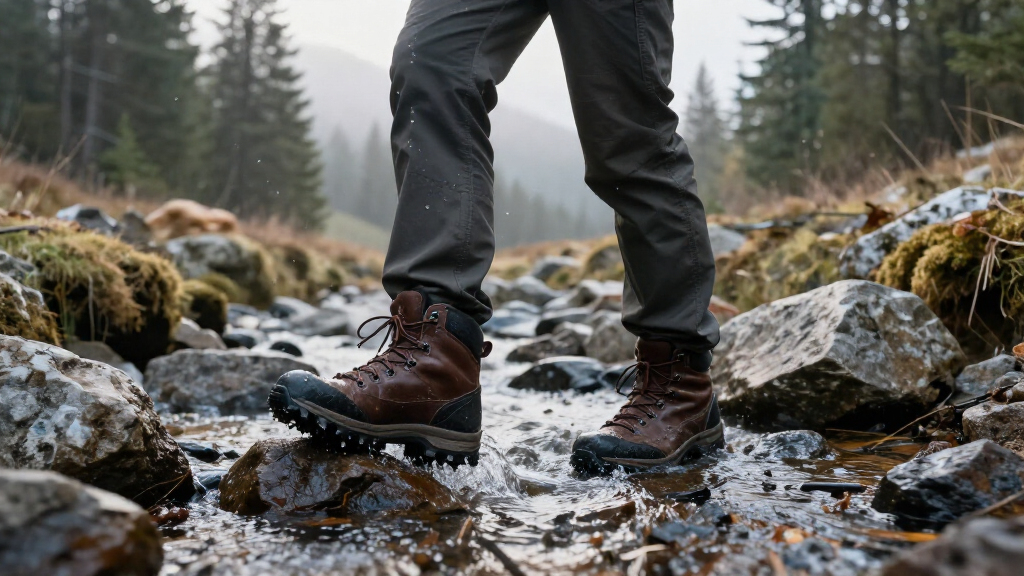

For most hikers seeking dependable wet-trail performance, I’d put the Oboz Men’s Sawtooth X Mid B-DRY at the top for its balanced mix of support and all-around trail use. The Columbia Men’s Peakfreak II Mid OutDry is a compelling choice for a lighter, more nimble feel, while the Danner Mountain 600 stands apart for buyers who want a more premium build. Waterproof boots still involve tradeoffs: more coverage can mean extra warmth, and a grippy-looking sole is no guarantee of secure footing on slick rock or mud. Fit, traction, support, and drying time matter as much as the waterproof membrane. Read on for the full breakdown and help matching a boot to your trails.

Get travel and outdoor gear delivered free with Prime
- Fast, free delivery on millions of items
- Prime Video, Amazon Music and more included
- Member-only deals all year
Complete the kit


Key Takeaways
- The Sawtooth X Mid B-DRY leads as the all-around pick because this lineup rewards balance: trail support and wet-weather protection without focusing only on lightness or heavy-duty construction.
- The Peakfreak II Mid OutDry is the nimble alternative for hikers who value a lighter, more flexible feel over the more substantial character of boots such as the Oboz Bridger Mid.
- The lineup spans distinct levels of structure: models such as the Danner Mountain 600 and Oboz Bridger suit buyers seeking a more substantial boot, while the Columbia Strata Trail Mid and Merrell Speed Strike 2 Mid lean toward a less bulky hiking feel.
- Value-oriented choices trade some refinement for accessibility; the NORTIV 8 is aimed at budget-minded buyers, while the Columbia Newton Ridge Plus II offers a familiar, traditional boot approach.
- Waterproofing does not solve every wet-trail problem: ankle coverage cannot stop water entering over the collar, and tread, fit, and drying time still affect comfort and confidence.
| Oboz Men’s Sawtooth II Mid B-Dry |  | Best for Support on Long Wet Hikes | Sole material: Rubber | Outer material: Waterproof nubuck leather and abrasion-resistant textile | Inner material: Mesh | VIEW ON AMAZON | See Our Full Breakdown |
| Columbia Men’s Newton Ridge Plus II Waterproof Hiking Boot |  | Best for Everyday Trail Versatility | Origin: Imported | Sole material: Rubber | Shaft height: Ankle | VIEW ON AMAZON | See Our Full Breakdown |
| Columbia Men’s Peakfreak II Mid Outdry |  | Best Lightweight Pick for Wet Trails | Origin: Imported | Sole material: Rubber | Shaft height: Ankle | VIEW ON AMAZON | See Our Full Breakdown |
| Oboz Men’s Sawtooth X Mid B-DRY Hiking Boots |  | Best for Structured Support on Demanding Wet Trails | Origin: Imported | Sole material: Rubber | Outer material: B-DRY waterproof membrane | VIEW ON AMAZON | See Our Full Breakdown |
| NORTIV 8 Men’s Waterproof Ankle-High Hiking Boots |  | Best for Light Hikes and Everyday Wear | Sole material: EVA and rubber | Shaft height: Ankle | Shaft circumference: 29.4 cm | VIEW ON AMAZON | See Our Full Breakdown |
| Columbia Men’s Newton Ridge Plus II Suede Waterproof Hiking Boot |  | Best Lightweight All-Rounder | Upper: Leather and suede | Waterproof construction: Seam-sealed | Closure: Lace-up | VIEW ON AMAZON | See Our Full Breakdown |
| Columbia Men’s Transverse Hike Waterproof Hiking Boots |  | Best for Breathable Wet-Trail Hikes | Upper: Leather and mesh | Shaft height: Ankle | Waterproof-breathable technology: OMNI-TECH | VIEW ON AMAZON | See Our Full Breakdown |
| Skechers Relment-Pelmo Men’s Waterproof Boots |  | Best for Comfort-First Versatility | Upper: Suede, synthetic, and mesh | Insole: Air-Cooled Memory Foam | Sole material: Synthetic | VIEW ON AMAZON | See Our Full Breakdown |
| Danner Mountain 600 Men’s Hiking Boots |  | Best for Wet-Rock Grip | Waterproofing: Danner Dry barrier | Outer material: Leather | Upper options: Full-grain leather or smooth suede | VIEW ON AMAZON | See Our Full Breakdown |
| Oboz Men’s Bridger Mid B-DRY Hiking Boots |  | Best for Support on Longer Hikes | Upper: Waterproof nubuck and textile | Membrane: Oboz B-DRY waterproof and breathable | Shaft height: Ankle | VIEW ON AMAZON | See Our Full Breakdown |
| KEEN Men’s Hightrail Mid Waterproof Hiking Boots |  | Best for Lightweight Day Hikes | Waterproof membrane: KEEN.DRY | Outer material: Leather | Shaft height: Ankle | VIEW ON AMAZON | See Our Full Breakdown |
| Columbia Men’s Strata Trail Mid Waterproof |  | Best for Lightweight, Mixed-Surface Trails | Waterproofing: OMNI-TECH | Cushioning: TECHLITE | Traction: OMNI-GRIP outsole | VIEW ON AMAZON | See Our Full Breakdown |
| Columbia Men’s Konos TRS Outdry Mid |  | Best for Slippery, Rain-Soaked Trails | Waterproofing: OUTDRY | Fit system: NAVIC FIT | Cushioning: OMNI-MAX PLUS with Techlite+ midsole | VIEW ON AMAZON | See Our Full Breakdown |
| Timberland Men’s White Ledge Mid Waterproof Hiking Boots | 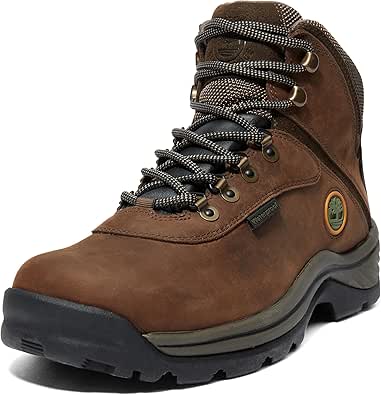 | Best for Leather Weather Protection | Upper: Waterproof Premium Timberland Leather | Construction: Seam-sealed | Tongue: Fully gusseted | VIEW ON AMAZON | See Our Full Breakdown |
| Merrell Men’s Speed Strike 2 Mid Leather Waterproof Hiking Boots |  | Best for Lightweight Leather Construction | Upper: Waterproof full-grain leather | Waterproofing: Waterproof membrane | Lining: 100% recycled breathable mesh | VIEW ON AMAZON | See Our Full Breakdown |
| waterproof hiking boots for wet trail | Sole material | Shaft height | Upper |
|---|---|---|---|
| Oboz Men’s Sawtooth II Mid B-D | Rubber | — | — |
| Columbia Men’s Newton Ridge Pl | Rubber | Ankle | Waterproof full-grain leather and mesh |
| Columbia Men’s Peakfreak II Mi | Rubber | Ankle | — |
| Oboz Men’s Sawtooth X Mid B-DR | Rubber | — | Oiled nubuck and abrasion-resistant mesh |
| NORTIV 8 Men’s Waterproof Ankl | EVA and rubber | Ankle | — |
| Columbia Men’s Newton Ridge Pl | Rubber | — | Leather and suede |
| Columbia Men’s Transverse Hike | Rubber | Ankle | Leather and mesh |
| Skechers Relment-Pelmo Men’s W | Synthetic | Ankle-high; 3 inches | Suede, synthetic, and mesh |
| Danner Mountain 600 Men’s Hiki | — | Ankle | — |
| Oboz Men’s Bridger Mid B-DRY H | Rubber | Ankle | Waterproof nubuck and textile |
| KEEN Men’s Hightrail Mid Water | Rubber | Ankle | — |
| Columbia Men’s Strata Trail Mi | Rubber | Short shaft (listed as Kurzschaft) | Suede and mesh with synthetic leather overlays |
| Columbia Men’s Konos TRS Outdr | Rubber | Ankle | — |
| Timberland Men’s White Ledge M | — | Ankle | Waterproof Premium Timberland Leather |
| Merrell Men’s Speed Strike 2 M | Rubber | Ankle | Waterproof full-grain leather |
More Details on Our Top Picks
Oboz Men’s Sawtooth II Mid B-Dry
The Sawtooth II Mid B-Dry is a strong choice for hikers who want more underfoot structure than a lightweight mesh boot provides. Its B-DRY waterproof membrane works with mesh vents for a balance of wet-weather protection and breathability, while the triple-density EVA insole and dual-density midsole add cushioning for longer days. A supportive, board-lasted mid-height build and grippy rubber outsole suit muddy, rocky routes where a steady platform matters. Compared with the lighter Columbia Peakfreak II Mid Outdry, this Oboz puts more emphasis on support and a leather-textile upper rather than a seamless mesh feel. The tradeoff is a stiffer break-in period, and its more substantial construction may not appeal to hikers prioritizing a flexible, lightweight boot.
Pros:- B-DRY membrane and mesh vents balance waterproof coverage with airflow
- Triple-density EVA insole cushions the heel and forefoot
- Board-lasted mid-height construction adds support on uneven ground
- Rubber outsole is suited to muddy, rocky, and varied surfaces
Cons:- Can feel stiff until broken in
- More structured construction may feel less flexible than the Columbia Peakfreak II Mid Outdry
Best for: Hikers who want mid-height ankle support and cushioned underfoot structure for long, mixed-terrain routes in wet weather
Not ideal for: Hikers who want a flexible boot straight out of the box or prioritize the light, seamless feel of a mesh-focused design
- Sole material:Rubber
- Outer material:Waterproof nubuck leather and abrasion-resistant textile
- Inner material:Mesh
- Waterproofing:B-DRY membrane
- Closure:Lace-up
- Insole:Triple-density EVA
- Midsole:Dual-density
- Construction:Mid-height, board-lasted
Our verdict“Choose the Sawtooth II Mid B-Dry for supportive cushioning and a steadier feel on long, wet hikes, provided you can allow time for break-in.”
Columbia Men’s Newton Ridge Plus II Waterproof Hiking Boot
The Newton Ridge Plus II suits hikers who want a familiar leather-and-mesh build for day hikes, muddy paths, and changing weather. Its waterproof full-grain leather and mesh upper pairs with a cushioned midsole to offer a practical blend of coverage and comfort, while the Omni-Grip outsole is described for varied terrain, including ice and snow. Compared with the more support-focused Oboz Sawtooth II Mid B-Dry, this Columbia is positioned as a lighter, ankle-height option rather than a more structured mid boot for long or demanding routes. The dual-zone tread adds wet-weather versatility, but the supplied fit guidance flags sizing as a possible complication. The product description also contains conflicting references to men’s and women’s footwear, so buyers should verify the exact listing and sizing before ordering.
Pros:- Waterproof full-grain leather and mesh upper
- Cushioned midsole is designed for extended comfort
- Omni-Grip rubber outsole is intended for varied terrain
- Dual-zone tread is described for ice and snow
Cons:- Sizing may require checking the chart carefully
- Product description has conflicting men’s and women’s footwear references
- Ankle-height design offers less coverage than mid-height options such as the Oboz Sawtooth II Mid B-Dry
Best for: Day hikers seeking an ankle-height leather-and-mesh boot for mixed trails and occasional icy or snowy conditions
Not ideal for: Buyers who need clearly specified sizing or substantial mid-height support for heavy loads and demanding hikes
- Origin:Imported
- Sole material:Rubber
- Shaft height:Ankle
- Shaft circumference:1 inch
- Upper:Waterproof full-grain leather and mesh
- Closure:Lace-up
- Outsole:Omni-Grip multi-terrain rubber
- Midsole:Lightweight, cushioned
Our verdict“Pick the Newton Ridge Plus II for a versatile ankle-height boot on mixed day-hike terrain, but confirm the listing’s fit and sizing details first.”
Columbia Men’s Peakfreak II Mid Outdry
For hikers who would rather keep their steps light than choose a leather-heavy boot, the Peakfreak II Mid Outdry is the mesh-focused pick in this group. Its OutDry waterproof-breathable membrane is paired with a seamless mesh upper, while TECHLITE+ cushioning and ADAPT TRAX traction target comfort and grip on wet or uneven ground. Compared with the more structured Oboz Sawtooth X Mid B-DRY, the Peakfreak II emphasizes a lighter, responsive feel over a reinforced nubuck build and more structured insole support. That makes it appealing for day hikes and fast-moving trail use, but the mesh construction may not hold up as well as leather alternatives, and its mid-cut design may feel inadequate under heavy packs. Choose it for wet-weather mobility, not maximum ankle support or upper durability.
Pros:- OutDry membrane provides waterproof-breathable protection
- TECHLITE+ cushioning is designed for responsive comfort
- ADAPT TRAX outsole targets grip on wet and slippery surfaces
- Seamless mesh design with NAVIC FIT is intended to provide a secure fit
Cons:- Mesh upper may be less durable than leather alternatives
- Mid-cut build may not provide enough ankle support for heavy loads
Best for: Day hikers who prioritize a lighter, breathable-feeling boot with wet-surface traction over a rugged leather upper
Not ideal for: Hikers carrying heavy loads or seeking the reinforced upper and more structured support of the Oboz Sawtooth X Mid B-DRY
- Origin:Imported
- Sole material:Rubber
- Shaft height:Ankle
- Outer material:Mesh
- Waterproofing:OutDry Superior Waterproofing
- Cushioning:TECHLITE+
- Traction:ADAPT TRAX
- Fit feature:NAVIC FIT
Our verdict“Choose the Peakfreak II Mid Outdry for lightweight movement and wet-trail grip, not for the toughest upper or maximum pack support.”
Oboz Men’s Sawtooth X Mid B-DRY Hiking Boots
The Sawtooth X Mid B-DRY is the more reinforced, more structured Oboz option here. Its oiled nubuck and abrasion-resistant mesh upper is backed by TPU heel reinforcement and micro-injected PU underlays, while the triple-density EVA insole adds a molded shell, deep heel cup, and medium-to-high arch profile. That combination makes it a better match for hikers wanting a supportive platform on rough, wet routes than the more lightweight Columbia Peakfreak II Mid Outdry. KINERTIA+ adaptive EVA cushioning and an 8 mm heel drop add further underfoot structure, and the rubber outsole is built for varied terrain. The added reinforcement and structured fit may feel like more boot than casual trail walkers need; the product details also do not specify a weight, so buyers focused on minimizing pack and footwear heft have less to compare.
Pros:- B-DRY membrane is designed to keep water out while allowing breathability
- Triple-density EVA insole has a molded shell, deep heel cup, and structured arch profile
- TPU heel counter and PU underlays reinforce the upper
- KINERTIA+ cushioning and rubber traction outsole support varied terrain
Cons:- Reinforced, structured construction may feel bulky to hikers seeking a lightweight boot
- Product details do not provide a weight for buyers comparing footwear heft
Best for: Hikers who want a reinforced mid-height boot with structured arch and heel support for demanding, uneven trails in wet weather
Not ideal for: Casual walkers or fast-and-light hikers who prefer a simpler, more flexible mesh boot such as the Columbia Peakfreak II Mid Outdry
- Origin:Imported
- Sole material:Rubber
- Outer material:B-DRY waterproof membrane
- Inner material:Textile
- Upper:Oiled nubuck and abrasion-resistant mesh
- Insole:Triple-density EVA with molded shell, deep heel cup, and medium-to-high arch profile
- Cushioning:KINERTIA+ adaptive EVA
- Heel drop:8 mm
- Additional reinforcement:TPU heel counter and micro-injected PU underlays
Our verdict“Choose the Sawtooth X Mid B-DRY if structured support and upper reinforcement matter more than a lightweight, flexible feel.”
NORTIV 8 Men’s Waterproof Ankle-High Hiking Boots
The NORTIV 8 Waterproof Ankle-High Hiking Boots are aimed at buyers who want basic wet-weather protection for light outings and daily use, rather than a boot built around demanding trail support. A waterproof lining, double-layer leather upper, and gusseted tongue help limit water and debris entry; the rubber toe cap adds protection against bumps, while the EVA midsole supplies cushioning. Compared with the more trail-oriented Oboz Sawtooth II Mid B-Dry, this NORTIV 8 has a simpler ankle-high profile and is explicitly described for light outdoor excursions. Its anti-slip rubber outsole and debris-blocking tongue make sense on easier wet paths, but the source description warns that the intended use may limit it on demanding terrain. Hikers tackling long, rough routes should favor a more supportive mid boot.
Pros:- Waterproof lining and double-layer leather upper help shield feet in wet conditions
- Gusseted tongue helps block sand and debris
- Rubber toe cap adds protection against impacts
- EVA midsole and anti-slip rubber outsole provide cushioning and traction
Cons:- Described for light outdoor excursions, limiting its fit for demanding terrain
- Ankle-high profile offers less coverage than the mid-height Oboz Sawtooth II Mid B-Dry
Best for: Casual hikers and everyday walkers who need waterproof coverage for easy trails, short outdoor outings, and routine wear
Not ideal for: Hikers planning steep, rough, or long-distance routes who need the support and trail-focused construction of the Oboz Sawtooth II Mid B-Dry
- Sole material:EVA and rubber
- Shaft height:Ankle
- Shaft circumference:29.4 cm
- Outer material:Leather
- Waterproof lining:Yes
- Midsole:EVA cushioning
- Outsole:Anti-slip rubber
- Toe protection:Rubber toe cap
- Tongue:Gusseted
Our verdict“Choose the NORTIV 8 for easy wet walks and everyday wear, but step up to a more supportive mid boot for demanding hikes.”
Columbia Men’s Newton Ridge Plus II Suede Waterproof Hiking Boot
The Newton Ridge Plus II Suede suits wet-trail hikers who want basic weather protection without a heavily built boot. Its seam-sealed leather and suede upper is designed to block water at the joins, while the cushioned midsole keeps the package focused on comfort over bulk. Compared with the Danner Mountain 600, it offers a simpler construction and fewer specialized comfort details; the Danner adds a named waterproof barrier and Vibram Megagrip outsole. The Newton Ridge instead makes sense for mixed outings where an adjustable lace-up fit and Omni-Grip traction across varied terrain are priorities. The description also mentions ice and snow, but gives no specific cold-weather rating or fit guidance. I’d choose it for general wet trails, not as a technical winter boot.
Pros:- Seam-sealed leather and suede construction is designed to help keep water out.
- Lightweight cushioned midsole supports comfort on day hikes.
- Lace-up closure allows fit adjustment.
- Omni-Grip outsole is described for varied terrain, including ice and snow.
Cons:- No specific fit or sizing details are supplied, making online fit selection less certain.
- The description does not give a temperature rating or specialized winter traction details.
- Compared with the Danner Mountain 600, it lacks named details such as a dedicated waterproof barrier and Vibram Megagrip compound.
Best for: Hikers seeking a lightweight, cushioned boot for day hikes on mixed wet trails, with lace-up adjustment and multi-terrain traction.
Not ideal for: Hikers who need stated sizing guidance, a documented cold-weather rating, or a more specialized wet-rock outsole.
- Upper:Leather and suede
- Waterproof construction:Seam-sealed
- Closure:Lace-up
- Outsole:Omni-Grip multi-terrain traction
- Sole material:Rubber
- Inner material:Cotton
- Waterproof:Yes
- Origin:Imported
Our verdict“Choose the Newton Ridge Plus II Suede for cushioned, general-purpose wet-trail hiking, but look elsewhere for detailed fit guidance or specialized winter performance.”
Columbia Men’s Transverse Hike Waterproof Hiking Boots
The Transverse Hike stands out for pairing a waterproof-breathable OMNI-TECH construction with lightweight TECHLITE cushioning. That combination is a practical fit for hikers who want protection from wet conditions without choosing a boot described as especially heavy or stiff. Its leather-and-mesh upper also sets it apart from the more suede-focused Newton Ridge Plus II Suede, though the supplied details do not establish which has the more durable upper. Underfoot, OMNI-GRIP is intended for rock, dirt, and gravel in wet and dry conditions, making this a versatile pick for changing trail surfaces. The tradeoff is its ankle-height shaft: hikers who want more coverage than a low-cut shoe get some support, but those needing a taller boot should compare other mid-cut options. Weight and fit specifics are not provided.
Pros:- OMNI-TECH construction combines waterproof protection with breathability.
- TECHLITE cushioning is designed for lightweight comfort and energy return.
- OMNI-GRIP traction is specified for rock, dirt, and gravel in wet and dry conditions.
- Leather-and-mesh upper balances structured material with mesh panels.
Cons:- Ankle-height shaft provides less coverage than a taller hiking boot.
- Specific boot weight and sizing details are not provided.
- Compared with the Danner Mountain 600, the supplied details do not name a dedicated wet-grip compound such as Vibram Megagrip.
Best for: Day hikers on mixed wet and dry routes who value breathable waterproof protection and lightweight cushioning in an ankle-height boot.
Not ideal for: Hikers who want a taller shaft for extra ankle coverage or need published weight and fit details before buying.
- Upper:Leather and mesh
- Shaft height:Ankle
- Waterproof-breathable technology:OMNI-TECH
- Cushioning technology:TECHLITE
- Traction technology:OMNI-GRIP
- Sole material:Rubber
- Origin:Imported
Our verdict“Pick the Transverse Hike for breathable waterproof coverage and light cushioning on varied day-hike terrain, provided ankle height suits your needs.”
Skechers Relment-Pelmo Men’s Waterproof Boots
The Relment-Pelmo takes a comfort-first approach to wet-weather footwear, pairing a waterproof upper with an Air-Cooled Memory Foam insole and a high-traction lug outsole. Its appeal is broader than hiking alone: the product is described for work and casual wear too, which makes it a flexible choice for buyers who want one ankle boot for multiple settings. Compared with the more trail-focused Oboz Bridger Mid B-DRY, it offers a named comfort insole and a versatile use case, while the Oboz lists more support components, including a TPU chassis and nylon shank. That difference matters on longer or rougher hikes, where the Skechers description gives less detail about structure. Its synthetic sole and ankle-high cut may suit everyday routes, but buyers seeking a technical hiking build should compare sturdier options. Fit details are limited.
Pros:- Waterproof upper is designed to help keep feet dry.
- Air-Cooled Memory Foam insole prioritizes cushioned comfort.
- High-traction rubber lug outsole is suited to varied everyday surfaces.
- Lace-up design and multi-use description suit work, casual wear, and hiking.
Cons:- The product details provide less structural support information than the Oboz Bridger Mid B-DRY.
- Ankle-high shaft offers less coverage than a mid-cut hiking boot.
- Fit guidance is limited, and the listed shaft circumference has no stated unit.
Best for: Buyers who want waterproof ankle boots with cushioned insoles for casual walks, work, and occasional hikes on established trails.
Not ideal for: Hikers planning long, rough outings who want clearly specified support components, or buyers who need precise fit information.
- Upper:Suede, synthetic, and mesh
- Insole:Air-Cooled Memory Foam
- Sole material:Synthetic
- Outsole:High-traction lug
- Shaft height:Ankle-high; 3 inches
- Shaft circumference:10 inches listed; unit not specified
- Closure:Lace-up
- Waterproof:Yes
- Origin:Imported
Our verdict“Choose the Relment-Pelmo for cushioned waterproof comfort across casual use and light hikes, not for demanding trails that call for a more specified support system.”
Danner Mountain 600 Men’s Hiking Boots
For hikers who put wet-surface traction near the top of the list, the Mountain 600 brings a clearly specified Vibram Fuga outsole with Megagrip compound alongside Danner’s waterproof barrier. That makes its wet-weather case more explicit than the Columbia Transverse Hike, whose OMNI-GRIP outsole is described for mixed terrain but not by a named wet-grip compound. The OrthoLite Triple-Density footbed and SPE rubberized EVA midsole add comfort details for longer outings, while the leather upper gives it a more substantial feel than the mesh-panel Columbia. Those materials and components make it a more feature-specific option, but the supplied listing does not state weight, fit, or detailed care needs. I’d favor it for slippery trail surfaces over buyers seeking the lightest, simplest boot.
Pros:- Danner Dry barrier is described as fully waterproof.
- Vibram Fuga outsole with Megagrip compound is specified for slip-resistant grip on wet and dry surfaces.
- OrthoLite Triple-Density footbed adds a defined cushioning and support component.
- Full-grain leather or smooth suede upper offers durable material options.
Cons:- Weight and fit details are not supplied.
- The feature-rich build may be more than casual, short-route hikers need.
- Compared with the Columbia Transverse Hike, it lacks a stated mesh-panel upper and named lightweight cushioning technology.
Best for: Hikers who regularly encounter wet rock or mixed wet and dry surfaces and want a named waterproof barrier and specialized outsole compound.
Not ideal for: Weight-conscious day hikers or buyers who need published fit and weight details before choosing a boot.
- Waterproofing:Danner Dry barrier
- Outer material:Leather
- Upper options:Full-grain leather or smooth suede
- Shaft height:Ankle
- Footbed:OrthoLite Triple-Density polyurethane
- Midsole:SPE rubberized EVA
- Outsole:Vibram Fuga with Megagrip compound
- Origin:Imported
Our verdict“Choose the Mountain 600 if wet-rock grip and a specifically named waterproof system matter more than minimal weight or simple construction.”
Oboz Men’s Bridger Mid B-DRY Hiking Boots
The Bridger Mid B-DRY is the most support-focused choice in this group, with a waterproof-breathable membrane, triple-density EVA insole, TPU chassis, and nylon shank. Those components give buyers more information about underfoot structure than the Skechers Relment-Pelmo, which emphasizes memory-foam comfort but lists fewer support parts. A molded toe cap and heel counter add protection and shape around the foot, while the multidirectional heavy-duty rubber tread is intended for varied terrain. At 19 ounces per half pair, its listed weight helps set expectations, though it is not the lightest-sounding option here. The layered support system may suit longer hikes better than casual walks, but the supplied product details list no specific drawbacks or fit guidance. I’d compare fit carefully before choosing it for all-day use.
Pros:- B-DRY membrane is designed to provide waterproof, breathable protection.
- Triple-density EVA insole, TPU chassis, and nylon shank specify a substantial support system.
- Molded toe cap and heel counter reinforce the upper.
- Heavy-duty multidirectional rubber tread is suited to varied terrain.
Cons:- Listed weight is 19 ounces per half pair, which may feel substantial to hikers seeking a lighter boot.
- The product details do not provide specific sizing or fit guidance.
- Compared with the Skechers Relment-Pelmo, its support-focused build may be more than casual walkers need.
Best for: Hikers seeking a mid-cut waterproof boot with defined support components for longer outings over varied terrain.
Not ideal for: Casual walkers who prefer a simpler, comfort-led ankle boot, or buyers who need detailed sizing and fit guidance.
- Upper:Waterproof nubuck and textile
- Membrane:Oboz B-DRY waterproof and breathable
- Shaft height:Ankle
- Weight:19.0 oz per half pair
- Insole:Triple-density EVA
- Midsole:Single-density EVA
- Chassis:TPU
- Shank:Nylon
- Sole material:Rubber
Our verdict“Choose the Bridger Mid B-DRY for waterproof protection and a clearly described support package on longer hikes, if its listed weight and fit work for you.”
KEEN Men’s Hightrail Mid Waterproof Hiking Boots
The Hightrail Mid pairs a breathable KEEN.DRY membrane with leather construction, giving wet-trail day hikers a balance of weather protection and manageable weight. Its 4 mm multidirectional lugs are suited to everyday trail surfaces, while a stability shank and removable cushioned footbed add support underfoot. Compared with the Columbia Konos TRS Mid, this boot has less emphasis on a specialized wet-grip system, but its more straightforward setup may suit hikers who want dependable day-hike features without extra fit technology. The ankle shaft offers less coverage than a taller boot, and the supplied care guidance calls for air drying away from heat. I’d choose it for routine hikes in rain, not as a high-ankle option for deep water or especially rough terrain.
Pros:- KEEN.DRY membrane pairs water protection with breathability
- 4 mm multidirectional lugs provide grip across common trail surfaces
- Stability shank and removable responsive footbed support underfoot
- Leather is sourced from Leather Working Group certified tanneries
Cons:- Ankle-height shaft gives less coverage than taller hiking boots
- Care instructions call for air drying away from heat
Best for: Day hikers who want a leather, waterproof boot with cushioning and trail traction for ordinary wet-weather routes.
Not ideal for: Hikers crossing deep puddles or seeking extra leg coverage, or those who need a specifically described advanced wet-surface traction system.
- Waterproof membrane:KEEN.DRY
- Outer material:Leather
- Shaft height:Ankle
- Sole material:Rubber
- Lug depth:4 mm
- Footbed:Removable responsive footbed
- Support:Stability shank
Our verdict“Choose the Hightrail Mid for supported, waterproof day hikes; pick the Konos TRS Mid if wet-surface traction is your leading priority.”
Columbia Men’s Strata Trail Mid Waterproof
The Strata Trail Mid makes a practical wet-trail pick for hikers moving between dirt, gravel, and rock. Its OMNI-TECH waterproof protection is designed to breathe, while TECHLITE cushioning helps soften repeated impacts. The OMNI-GRIP outsole is the standout for varied terrain, giving this model a broader-surface emphasis than the KEEN Hightrail Mid, whose description specifies multidirectional lugs but not a dedicated multi-terrain outsole system. A suede-and-mesh upper with overlays adds debris protection without making the boot all leather. The tradeoff is that its mid-height shaft may not provide enough ankle support for every hiker, and the supplied shaft-height data describes it only as short. I’d favor it for lighter hikes with changing surfaces, rather than routes where a higher, more enclosing boot is a priority.
Pros:- OMNI-TECH protection is designed to keep water out while allowing breathability
- TECHLITE cushioning absorbs impact on longer walks
- OMNI-GRIP outsole is specified for wet and dry rock, dirt, and gravel
- Suede-and-mesh upper includes overlays for durability and debris protection
Cons:- Mid-height design may feel short on ankle support for some hikers
- Suede-and-mesh upper is less fully leather-covered than the Timberland White Ledge
Best for: Hikers who want a cushioned waterproof boot for day hikes across a mix of wet rock, dirt, and gravel.
Not ideal for: Hikers who want substantial ankle coverage or prefer a predominantly leather upper for rough, abrasive trail use.
- Waterproofing:OMNI-TECH
- Cushioning:TECHLITE
- Traction:OMNI-GRIP outsole
- Upper:Suede and mesh with synthetic leather overlays
- Sole material:Rubber
- Shaft height:Short shaft (listed as Kurzschaft)
Our verdict“Pick the Strata Trail Mid for lightweight cushioning and mixed-terrain grip, but choose the White Ledge if leather coverage and a gusseted tongue matter more.”
Columbia Men’s Konos TRS Outdry Mid
For routes where slick footing is the main concern, the Konos TRS Outdry Mid puts traction and a secure fit at the center of its design. Columbia’s OUTDRY waterproofing is described for moderate to heavy rain or snow, while the ADAPT TRAX outsole targets wet and slippery terrain. The NAVIC FIT lace system and OMNI-MAX PLUS cushioning add fit security and shock absorption on uneven paths. That gives it a more wet-grip-focused profile than the Strata Trail Mid, which is pitched across a wider mix of surfaces. The listed shaft circumference of one inch is unusual and may be a data error, so I would verify the fit details before buying. It also has less leather-construction detail than the Timberland White Ledge.
Pros:- OUTDRY waterproofing is specified for moderate to heavy rain or snow
- ADAPT TRAX outsole is designed for wet and slippery terrain
- NAVIC FIT lace system supports a secure fit on uneven ground
- OMNI-MAX PLUS system with Techlite+ midsole provides cushioning
Cons:- Listed one-inch shaft circumference is unusual and may be a data error
- The supplied product details do not specify the upper material
- More feature-focused than a straightforward leather boot such as the Timberland White Ledge
Best for: Hikers who regularly encounter rain-soaked, slippery trails and want a secure lacing system with cushioned support.
Not ideal for: Buyers who need confidence in shaft-fit measurements before ordering or want a detailed leather upper specification.
- Waterproofing:OUTDRY
- Fit system:NAVIC FIT
- Cushioning:OMNI-MAX PLUS with Techlite+ midsole
- Traction:ADAPT TRAX
- Sole material:Rubber
- Shaft height:Ankle
- Listed shaft circumference:1 inch
Our verdict“Choose the Konos TRS Mid for wet-ground grip and fit security if you can confirm the unusual shaft measurement first.”
Timberland Men’s White Ledge Mid Waterproof Hiking Boots
The White Ledge Mid is the leather-focused choice here: its waterproof premium leather upper, seam-sealed construction, and fully gusseted tongue form a substantial barrier against trail moisture and debris. The EVA footbed and midsole provide cushioning, while multidirectional rubber lugs give it a practical footing setup. Compared with the Merrell Speed Strike 2 Mid Leather, the White Ledge supplies more construction detail around sealing and tongue coverage; the Merrell instead highlights recycled lining and a lightweight EVA midsole. The Timberland’s ankle-height shaft leaves more of the lower leg exposed than a taller boot, and its materials and construction are geared toward coverage rather than a specifically described advanced wet-rock outsole. I’d choose it for rainy day hikes where protective leather construction matters more than specialized grip claims.
Pros:- Waterproof premium leather upper with seam-sealed construction
- Fully gusseted tongue helps limit water and debris entry
- EVA footbed and midsole provide cushioning
- Rubber outsole uses multidirectional lugs
Cons:- Ankle-height shaft offers less leg coverage than taller boots
- Outsole description does not specify a dedicated wet-surface compound or system
- Leather-focused construction may be less appealing to hikers prioritizing recycled materials
Best for: Hikers who prefer a leather boot with seam-sealed construction and a gusseted tongue for rainy day trails.
Not ideal for: Hikers who need taller leg coverage or want an outsole specifically described for slippery wet terrain.
- Upper:Waterproof Premium Timberland Leather
- Construction:Seam-sealed
- Tongue:Fully gusseted
- Lining:ReBOTL fabric
- Footbed:EVA
- Midsole:EVA
- Outsole:Rubber with multidirectional lugs
- Shaft height:Ankle
- Lacing:Rustproof speed lace hardware with top lace hooks
Our verdict“Choose the White Ledge for sealed leather coverage and a gusseted tongue, rather than for maximum shaft height or specialized wet-grip features.”
Merrell Men’s Speed Strike 2 Mid Leather Waterproof Hiking Boots
The Speed Strike 2 Mid Leather combines a waterproof full-grain leather upper with a breathable membrane, aiming to keep rain out without trapping as much moisture inside. Its lightweight EVA midsole and removable foam footbed favor cushioning without a heavier, more built-up feel. Compared with the Timberland White Ledge, this Merrell puts more emphasis on reduced weight and recycled components, while Timberland gives clearer details about seam sealing and a fully gusseted tongue. The recycled mesh lining and partly recycled footbed are useful material choices, but the supplied product information does not specify lug depth or a wet-grip outsole system. That makes traction harder to compare against the Columbia Konos TRS Mid, which explicitly names ADAPT TRAX. I’d pick the Merrell for lighter leather day hikes, not as the most documented choice for slick terrain.
Pros:- Waterproof full-grain leather upper and membrane
- Breathable recycled mesh lining
- Lightweight EVA midsole provides cushioning
- Removable EVA footbed is 50% recycled
Cons:- Supplied details do not specify lug depth or a named wet-grip outsole system
- Seam-sealed construction and a gusseted tongue are not listed
- Limited product information makes direct durability comparison difficult
Best for: Hikers seeking a lighter-feeling leather boot with waterproof protection, breathable lining, and some recycled materials.
Not ideal for: Hikers choosing mainly by detailed wet-surface traction specifications or those who want seam-sealed construction explicitly listed.
- Upper:Waterproof full-grain leather
- Waterproofing:Waterproof membrane
- Lining:100% recycled breathable mesh
- Footbed:Removable EVA foam; 50% recycled
- Midsole:Lightweight EVA foam
- Sole material:Rubber
- Shaft height:Ankle
- Shaft circumference:4 inches
Our verdict“Choose the Speed Strike 2 Mid Leather for a lightweight, recycled-material-leaning leather boot, but favor the Konos TRS Mid when wet-surface traction details lead your decision.”

How We Picked
I compared these 15 boots around the demands of wet trails: keeping rain and shallow splash out, maintaining footing on variable ground, and offering enough support for the intended kind of hike. I also weighed fit adjustability, construction, weight and flexibility, likely warmth, and how practical each design is for everyday trail use. Waterproof claims alone did not decide the order; a boot that feels overly heavy or mismatched to a hiker’s terrain can be a worse choice than a lighter, more versatile option.
The ranking favors balanced performance first, then gives credit to clear strengths such as value, a lighter feel, or more substantial support. That places the Sawtooth X Mid B-DRY ahead as a versatile lead pick, while the Peakfreak II Mid OutDry and Danner Mountain 600 serve different priorities. Traditional, budget-focused, and more specialized options rank lower for broad use, not because they cannot suit the right person, but because their tradeoffs narrow the audience. Since fit varies by foot shape and waterproof construction cannot prevent water entering over the boot opening, I treat try-on fit and intended trail conditions as part of the decision.
| waterproof hiking boots for wet trail | Sole material | Shaft height |
|---|---|---|
| Oboz Men’s Sawtooth II Mid B-D | Rubber | — |
| Columbia Men’s Newton Ridge Pl | Rubber | Ankle |
| Columbia Men’s Peakfreak II Mi | Rubber | Ankle |
| Oboz Men’s Sawtooth X Mid B-DR | Rubber | — |
| NORTIV 8 Men’s Waterproof Ankl | EVA and rubber | Ankle |
| Columbia Men’s Newton Ridge Pl | Rubber | — |
| Columbia Men’s Transverse Hike | Rubber | Ankle |
| Skechers Relment-Pelmo Men’s W | Synthetic | Ankle-high; 3 inches |
| Danner Mountain 600 Men’s Hiki | — | Ankle |
| Oboz Men’s Bridger Mid B-DRY H | Rubber | Ankle |
| KEEN Men’s Hightrail Mid Water | Rubber | Ankle |
| Columbia Men’s Strata Trail Mi | Rubber | Short shaft (listed as Kurzschaft) |
| Columbia Men’s Konos TRS Outdr | Rubber | Ankle |
| Timberland Men’s White Ledge M | — | Ankle |
| Merrell Men’s Speed Strike 2 M | Rubber | Ankle |
Factors to Consider When Choosing 15 Best Waterproof Hiking Boots For Wet Trails
Boot choice depends on more than the waterproof label. I’d start with the conditions you actually hike in, then balance traction, support, warmth, and fit against how much boot you want to carry. These broader checks can help narrow the options before you compare individual models.
Match Traction to the Surface, Not the Word “Hiking”
Wet trails can mean slick rock, muddy soil, wet roots, or loose gravel, and each asks something different of a sole. A lugged tread can help bite into softer ground, but deep lugs alone do not promise reliable grip on smooth stone. Think about the surface you encounter most often and look for a sole design suited to it, rather than treating all-terrain claims as equal. For mixed routes, a balanced tread may be more useful than a highly specialized pattern. A common mistake is buying for muddy paths when most of your local hikes involve wet rock. No boot removes the need to shorten your stride and place your feet carefully on slick ground.
Waterproofing Has Limits at the Collar
A waterproof membrane can help keep rain and trail splash from passing through the boot’s upper, but it cannot stop water flowing over the top. Deep puddles, stream crossings, and soaked vegetation can leave feet wet even when the boot itself is intact. If your hikes regularly include crossings, compare boot height with the water depth you expect and consider gaiters where they make sense. A higher boot can add coverage, but it may also feel warmer and less flexible. Waterproof designs can dry more slowly after water gets inside, so moisture management matters on consecutive hiking days. Choose based on likely exposure, not the assumption that “waterproof” means fully submersible.
Choose Support for Your Load and Route
Boot stiffness and ankle coverage matter most when the route is uneven, the pack is heavy, or fatigue tends to affect your footing. A more supportive build can feel reassuring on rough terrain, but it may be unnecessary for short, smooth day hikes. Lighter and more flexible boots can feel less cumbersome, though they may offer a different level of underfoot structure. Consider the combination of your pack weight, trail surface, hike length, and ankle comfort rather than choosing the tallest or stiffest boot by default. If you are new to hiking, a boot that feels comfortable while walking naturally is often a better start than a rigid model that needs extensive adjustment. Try boots with the socks you plan to wear and check for heel movement as well as toe room.
Account for Warmth and Drying Time
Waterproof boots can trap more warmth than less-covered footwear, which is useful in cool rain but uncomfortable on hot summer trails. Your pace, climate, and sock thickness all affect how warm a boot feels. If your outings include both cold wet hikes and mild-weather walks, favor a balance rather than maximum insulation. Also think about what happens after a leak or stream crossing: a waterproof liner may slow moisture from escaping, so spare socks and time to dry boots become more relevant on multi-day trips. Avoid sizing up excessively to compensate for thick socks, since a loose heel can cause rubbing on descents. Match the boot and sock combination to the conditions you hike in most often.
Treat Fit as a Performance Feature
A well-fitting boot helps reduce blisters and gives your foot a steadier platform when the trail is slick. Check that toes have room to spread and do not strike the front on downhill steps, while the heel stays reasonably secure when laced. Width and volume can vary between brands, so the same labeled size may feel quite different across this lineup. Try boots later in the day if your feet tend to swell, and test them on an incline if possible. Do not rely on break-in to fix sharp pressure points or a heel that slips substantially. A comfortable waterproof boot is more useful than a feature-rich model that does not suit your foot shape.
Spend More Only for a Benefit You Need
A higher-end boot can make sense when you hike often, carry a heavier pack, or want construction suited to demanding routes. It is less compelling if your main use is occasional walking on maintained trails, where comfort and fit may matter more than a more substantial build. Value-oriented models can cover basic wet-weather needs, but their tradeoffs may show up in refinement, flexibility, or long-term wear. Compare the boot’s strengths with your actual routine rather than assuming a premium model is automatically more suitable. A useful test is to name the specific problem you expect a more expensive boot to solve. If you cannot identify one, a simpler option that fits well may be the wiser choice.
Frequently Asked Questions
Can a waterproof hiking boot keep my feet dry during stream crossings?
Not reliably if water rises above the boot collar. A waterproof membrane helps block water through the boot’s covered upper, but it cannot seal the opening around your ankle. For shallow crossings, check depth and footing before stepping in, and use gaiters when they suit the route. If frequent deep crossings are part of your plans, a boot’s waterproof label should not be the deciding factor. Also account for drying time if water gets inside during a multi-day hike.
Should I choose a lighter boot or a more supportive one for wet trails?
Start with your route and pack rather than a general preference for lightness or stiffness. Lighter, more flexible boots can feel easier on maintained trails and shorter hikes, while a more substantial build may feel steadier on rough ground or under a heavier pack. Neither choice guarantees better traction on wet surfaces; sole design and careful foot placement still matter. If you hike a mix of terrain, a balanced mid boot can avoid the extremes. Pay attention to comfort on downhill steps, where poor fit can become especially noticeable.
Are these boots suitable for hot-weather hikes in the rain?
They can work, but waterproof coverage may feel warmer than a less-covered hiking shoe, especially at a brisk pace. The more relevant question is how often rain or wet vegetation is likely on your routes and whether you tolerate warm footwear well. Choose breathable socks that fit the boot, and avoid sizing too tightly around the forefoot. If your hikes are mostly hot and dry with only occasional showers, a waterproof boot may bring more warmth than benefit. For cool, rainy conditions, that extra coverage can be a more useful tradeoff.
How much room should I leave in waterproof hiking boots?
Leave enough space for your toes to spread and avoid hitting the front of the boot on descents, but do not use extra length to compensate for a poor width or heel fit. Try the boots with your hiking socks, since sock thickness changes the fit. Walk on an incline if possible and check whether your heel lifts or your toes press forward. A snug, comfortable hold through the midfoot can help prevent sliding without pinching. Because fit varies across these models, compare them by feel rather than assuming your usual size will fit every pair the same way.
Which type of boot makes the most sense for a first-time wet-trail hiker?
A beginner is usually better served by a comfortable, versatile mid boot than by the stiffest or most specialized option. Focus on secure heel hold, enough toe room, manageable weight, and traction suited to local trails. The roundup’s Sawtooth X Mid B-DRY is the broad-use lead pick, while the Newton Ridge Plus II represents a more traditional approach; personal fit can change which is the better match. Try boots with the socks you will hike in and walk on an incline before committing. If your routes are short and well maintained, do not buy extra structure that you will rarely use.
Conclusion
For the broadest mix of wet-trail needs, I recommend the Oboz Men’s Sawtooth X Mid B-DRY as the best overall choice. The NORTIV 8 Men’s Waterproof Ankle-High Hiking Boots are the best value-oriented pick for buyers prioritizing basic coverage, while the Danner Mountain 600 is the premium option for hikers drawn to a more substantial build. Beginners should start by comparing the Sawtooth X with the traditional Columbia Newton Ridge Plus II and choose the one that fits their foot and local terrain best. For a lighter, more agile feel, look at the Columbia Peakfreak II Mid OutDry; for a more supportive direction, compare the Oboz Bridger Mid B-DRY. Whichever you choose, prioritize fit and the surfaces you hike most—waterproofing alone cannot make a boot right for every wet trail.
Columbus Day / Indigenous Peoples' Day Picks
long weekend sales
As an affiliate, we earn on qualifying purchases.