
This checklist is for backpackers choosing the pieces that make up a comfortable sleep system, from a sleeping bag to the shelter beneath it. Use it to think through how each item fits your trips and the rest of your gear.

Get travel and outdoor gear delivered free with Prime
- Fast, free delivery on millions of items
- Prime Video, Amazon Music and more included
- Member-only deals all year
The sections follow the listed picks: bag, pad, tent, pillow, liner, then the tent footprint pick. Each slot covers fit and compatibility alongside common details to check before buying.
Start with the conditions and space you expect on your trips, then compare the product details with your own needs. Check dimensions, packed size, and included features on the listing; product names alone do not answer every sizing or compatibility question.
Backpacking sleeping bag
A sleeping bag is the core of a sleep system, so this slot deserves a careful look at temperature needs and personal fit. The listed pick is the North Face One Bag 3-in-1 Insulated Sleeping Bag, 5°F. Before choosing it, check how the manufacturer explains its temperature rating and whether the bag’s shape and dimensions suit your height and preferred sleeping position.
A common mistake is treating the number in a product name as a guarantee of comfort in every situation. Read the full product information, including care instructions and what the 3-in-1 design includes. Confirm whether the configuration you want is practical for your trips, and compare packed dimensions with the space available in your pack. Also check the closure and hood details for ease of use and coverage. Verify the exact configuration before relying on the name alone.
What to look for:
- Check the full temperature-rating guidance and intended conditions.
- Compare bag length and shape with your height and sleep position.
- Confirm what the 3-in-1 configurations include.
- Review packed dimensions and care instructions.
- Inspect hood, closure, and coverage details.
The North Face One Bag 3-in-1 Insulated Sleeping Bag, 5°F

A versatile three-layer sleeping system designed for camping in conditions from 5°F to 40°F. It combines 800-fill recycled down with recycled Heatseeker insulation, a water-repellent nylon shell, and a fitted hood; the down layer can also be used as a standalone quilt.
Pros:
- Three-layer design supports adaptable comfort across a range of conditions
- Combines down and synthetic insulation for warmth, including when wet
- Down layer doubles as a standalone quilt
- Fitted hood accommodates a pillow
Cons:
- The regular version weighs 3 lbs 13 oz
- Temperature limits can vary with regional weather conditions
Best for: Backpackers seeking a sleeping bag with a 3-in-1 design
Not ideal for: Anyone who needs fit or warmth details not confirmed in the listing
Bottom line: Check the rating guidance, dimensions, and included configurations before deciding whether this bag matches your trips.
Inflatable sleeping pad
A pad separates you from the ground and is an important part of the overall sleep setup. The pick here is the Therm-a-Rest Basecamp Self-Inflating Camping Sleeping Pad. Check its dimensions and packed size against your tent floor and pack, and look up the maker’s guidance on insulation and intended use. The name identifies it as self-inflating, but the listing should clarify what setup steps are still required.
One frequent buying mistake is selecting a pad by type alone without checking how it fits the sleeper or tent. Compare the pad’s length and width with your body and the space available alongside other sleepers or gear. Review the valve, inflation instructions, repair guidance, and care information before heading out. If you are pairing it with another pad, confirm that the combined arrangement fits the tent and stays stable. Check compatibility in context rather than assuming a camping pad will suit every backpacking setup.
What to look for:
- Compare length and width with your body and tent floor.
- Check packed dimensions and weight for your pack.
- Read insulation and intended-use guidance from the maker.
- Review valve, inflation, and deflation instructions.
- Confirm repair and care information.
Therm-a-Rest Basecamp Self-Inflating Camping Sleeping Pad
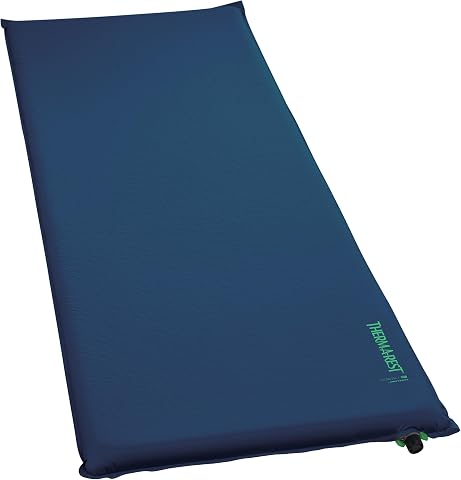
The Therm-a-Rest Basecamp is a self-inflating sleeping pad designed for camping, offering quick inflation with its WingLock valve and year-round insulation with a 6 R-value. It provides a warm, comfortable sleep surface with eco-friendly features and easy packing.
Pros:
- Fast self-inflation with WingLock valve
- Excellent insulation for year-round use
- Eco-friendly, PFAS-free coating
- Comfortable and spacious for XL size
Cons:
- Heavy for backpacking trips
- Requires 2-4 hours to fully inflate and acclimate
- Bulkier when packed compared to ultralight pads
Best for: Campers wanting a self-inflating pad
Not ideal for: Backpackers who have not confirmed its packed size for their setup
Bottom line: Match the pad’s dimensions and packed profile to your tent and carrying needs.
Backpacking tent
A tent needs to fit the people and gear sharing it while working with the rest of the sleep system. The listed pick is the OneTigris Stella 4-Season Camping Tent – Waterproof, Lightweight, Easy. Read the product page for capacity, dimensions, and setup details; the name alone does not establish how much usable room it provides or what is included.
A common mistake is focusing on season labeling without checking the manufacturer’s conditions and care guidance. Confirm the tent’s stated weather use, ventilation features, packed size, and weight, then compare its floor dimensions with your pad and sleeping bag arrangement. Check whether stakes, poles, or a storage bag are included and whether the setup process suits your trips. For shared use, consider how occupants and backpacks will fit at once. Measure your sleep setup against the listed interior dimensions before committing.
What to look for:
- Verify stated capacity and interior dimensions.
- Read the maker’s guidance for weather and seasonal use.
- Compare packed size and weight with your carrying plan.
- Check setup instructions and included components.
- Confirm your pads and gear fit within the usable space.
OneTigris Stella 4-Season Camping Tent – Waterproof, Lightweight, Easy Setup (30

The OneTigris Stella is a lightweight 2‑person dome tent made from 20D nylon with a silicone coating, weighing just 4.2 lb for easy backpacking. It offers a 3000 mm waterproof rating and a removable blackout outer layer, making it suitable for all weather conditions.
Pros:
- Lightweight at only 4.2 lb, easy to carry for backpacking
- High 3000 mm waterproof rating suitable for all weather
- Simple freestanding design with quick pole setup
- Ventilated mesh inner tent provides good airflow
Cons:
- Limited interior space may feel cramped for two occupants
- Only one room without a separate vestibule for gear storage
Best for: Backpackers considering a tent labeled for four-season use
Not ideal for: Anyone whose required capacity or weather guidance is unclear
Bottom line: Confirm dimensions, included parts, and use guidance before pairing this tent with your sleep system.
Camping pillow
A pillow can make the sleep system feel more familiar, but its shape and packed profile matter on a backpacking trip. The pick is the Klymit Drift Camping Pillow, Shredded Memory Foam Travel Pillow with R. Review the complete product listing to clarify the full product name and any features not visible in the shortened title.
Common mistakes include assuming a travel pillow will pack small enough or that its firmness will suit every sleeper. Check dimensions, weight, materials, and any compression or storage method described by the manufacturer. Consider whether you prefer a higher or lower pillow and whether the listed design can accommodate that preference. Read care guidance, particularly if the pillow uses materials that require specific cleaning. Compare the packed shape with your available pack space and try to determine whether it will stay in place on your pad. Fit and packability are personal, so use the listing details to judge both.
What to look for:
- Check the full product name and feature description.
- Compare pillow dimensions and weight with pack space.
- Review materials and care instructions.
- Look for details about compression or storage.
- Consider preferred loft, firmness, and stability on your pad.
Klymit Drift Camping Pillow, Shredded Memory Foam Travel Pillow with Reversible
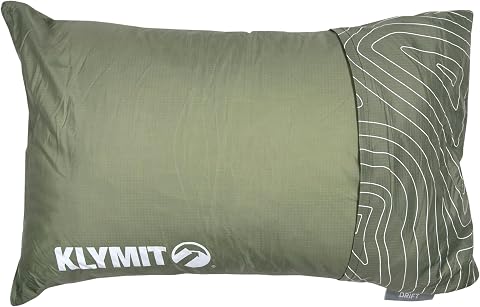
The Klymit Drift Camping Pillow is a versatile travel pillow filled with shredded memory foam, offering a balance of support and softness. It features a water-resistant, machine-washable outer shell and a jersey cotton inner cover, making it suitable for outdoor adventures and comfortable sleep on the go.
Pros:
- Supports a comfortable night’s sleep with shredded memory foam
- Water-resistant and machine-washable for easy cleaning
- Compact and lightweight for travel convenience
- Reversible cover offers versatility
Cons:
- Hand wash only, may require extra care
- Memory foam filling may require adjustment for optimal comfort
- Limited color options
Best for: Campers who want a dedicated travel pillow
Not ideal for: Packers who need a very compact item without confirming its packed size
Bottom line: Check the complete listing and packed dimensions to see whether this pillow suits your comfort and space needs.
Sleeping bag liner
A liner can add a layer between you and your sleeping bag, so check how the specific material and dimensions fit your plans. The pick is the Sea to Summit Silk Blend Sleeping Bag Liner. Read the maker’s description for fabric composition and intended use, since “silk blend” does not specify the exact blend or performance details.
A frequent mistake is assuming a liner will fit every sleeping bag or produce a particular warmth change without checking product guidance. Compare its dimensions and shape with your bag’s interior, and verify how it attaches or stays in place if the listing describes those details. Consider the packed size and care requirements, especially for trips where drying or washing options are limited. Check whether the liner’s opening and closure work with your sleeping habits. Confirm bag compatibility and care before adding it to your kit.
What to look for:
- Verify exact fabric composition in the listing.
- Compare liner dimensions and shape with your sleeping bag.
- Check any attachment or closure details.
- Review packed size and weight.
- Read washing and drying instructions.
Sea to Summit Silk Blend Sleeping Bag Liner

This sleeping bag liner adds warmth and a soft feel to a sleep system. Hollow-core Thermolite Pro fibers and infrared-absorbing ceramic pigments help retain warmth, while HeiQ odor control helps keep the liner fresh during extended use.
Pros:
- Adds warmth to a sleeping bag
- Soft, luxurious feel
- Odor control helps keep it fresh
- Adjustable footbox
Cons:
- Availability can vary
Best for: Sleepers looking to add a liner to their bag setup
Not ideal for: Anyone whose sleeping bag dimensions or liner care needs are unknown
Bottom line: Check the liner’s exact materials, shape, and care requirements against your bag and trip routine.
Trekking tent footprint
This slot’s supplied pick is named “Tent Stove Wood Stove with Oven – 2-in-1 Outdoor Camping Oven for Tent.” That name describes a stove and oven, so it does not establish that the item is a tent footprint. A footprint is a ground layer selected to match a shelter’s floor; verify the product category and intended use before treating this pick as one.
A common mistake is choosing an item based on a section heading without confirming what the product is. Check the listing for dimensions, materials, intended placement, and compatibility with the tent model. If the item is indeed a stove, review its separate instructions and suitability for the intended setting rather than using it as ground protection. For a footprint, look for a product explicitly identified for that function and compare its dimensions with the tent floor. Resolve the category mismatch before making a purchase decision for this slot.
What to look for:
- Confirm whether the listing identifies a footprint or a stove.
- For a footprint, compare dimensions with the tent floor.
- Check materials and intended ground use.
- Verify compatibility with the exact tent model.
- If it is a stove, consult its separate use and safety instructions.
Tent Stove Wood Stove with Oven – 2-in-1 Outdoor Camping Oven for Tent Cooking

This dual-use tent stove combines a wood stove and oven in one durable stainless steel unit, perfect for outdoor cooking and camping. It features efficient heat distribution, safety accessories, and a sleek design suitable for various outdoor setups.
Pros:
- Combines stove and oven functions in one unit
- Durable stainless steel construction
- Includes complete accessories for convenience
- Efficient heating with secondary air inlets
Cons:
- Potentially heavy and bulky for portable use
- Requires proper setup and ventilation
- May have a higher price point due to premium materials
Best for: Shoppers who can confirm the listing matches the footprint slot
Not ideal for: Anyone relying on the supplied name as proof of footprint compatibility
Bottom line: The supplied name describes a stove and oven, so confirm the actual product category before selecting ground protection.
Build your checklist in a practical order: first confirm the bag and pad fit your body and expected conditions, then make sure the tent accommodates both. Next check the pillow and liner against your comfort preferences and available pack space. Resolve the footprint product mismatch before treating that pick as ground protection.
Use manufacturer listings to fill in the details that product names leave open, especially dimensions, packed size, included components, care, and compatibility. A little checking helps you assemble a sleep system that fits your trips. Take it one item at a time, and you’ll have a clearer checklist for your next outing.


