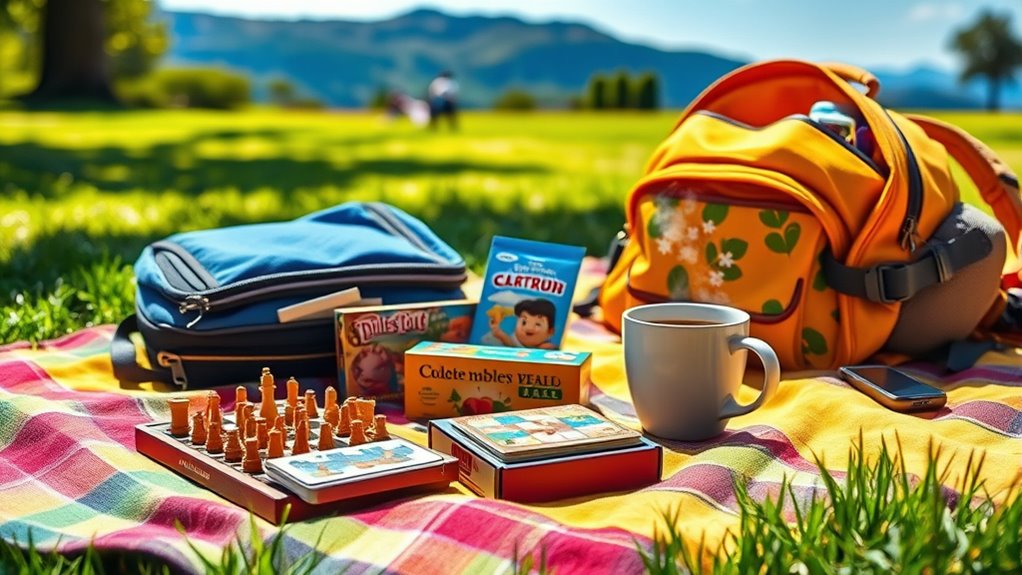

The best travel games and puzzles keep hands and minds busy without needing much space, loose equipment, or a long setup. I’d put Brain Games: Travel Games in the best-overall spot for its broad mix of portable activities, while ThinkFun Rush Hour World Tour is a stronger fit for focused solo play and SmartGames IQ Love for travelers who want structured challenges. The main tradeoff is variety versus compact, repeatable puzzle play: activity collections suit changing moods, while single-puzzle formats are easier to pick up and put away. Age, attention span, and whether you want to play alone or together matter as much as size. Read on for the full breakdown and help matching a game to your trip.

Get travel and outdoor gear delivered free with Prime
- Fast, free delivery on millions of items
- Prime Video, Amazon Music and more included
- Member-only deals all year
Complete the kit


Key Takeaways
- Brain Games: Travel Games earns the best-overall position because its activity-collection format offers more variety than a single-puzzle game; buyers should check the specific edition’s contents before choosing.
- Rush Hour World Tour is the clearest choice for a self-contained solo challenge, while its fixed puzzle format offers less variety than the Brain Games collections.
- SmartGames IQ Love stands apart for its 120 challenges, giving puzzle fans a defined progression, though it is less suited to group play than activity books.
- Kanoodle favors tactile, spatial problem-solving over word and paper activities, so it suits travelers who want a hands-on puzzle more than a mixed game collection.
- The two Brain Games to Go listings may overlap in format or contents; compare the exact edition and activity list rather than assuming the titles indicate different play experiences.
| Brain Games: Travel Games |  | Best for Family Variety | Product type: Travel games collection | Activities: Puzzles, trivia, and games | Intended use: Family entertainment while traveling | VIEW ON AMAZON | See Our Full Breakdown |
| Brain Games To Go: Travel Games and Puzzles |  | Best for a Simple Travel Activity Book | Product type: Travel games and puzzles collection | Activities: Games and puzzles | Intended use: Travel | VIEW ON AMAZON | See Our Full Breakdown |
| Educational Insights Kanoodle Brain Teaser Puzzle Game |  | Best Overall for Solo Puzzle Variety | Brand: Educational Insights | Model: EI-2978 | Players: 1 | VIEW ON AMAZON | See Our Full Breakdown |
| ThinkFun Rush Hour World Tour Magnetic Travel Puzzle |  | Best for Magnetic, Low-Fuss Play | Number of challenges: 40 | Suitable for: Kids and adults | Features: Magnetic pieces, portable design | VIEW ON AMAZON | See Our Full Breakdown |
| SmartGames IQ Love Travel Puzzle Game, 120 Challenges |  | Best Compact Pick | Age range: 7 years and up | Number of players: 1 | Challenges: 120 | VIEW ON AMAZON | See Our Full Breakdown |
| Brain Games to Go: Travel Games |  | Best for Road-Trip Variety | Puzzle and game count: Over 180 | Format: Travel game book | Activity types: Puzzles and road games | VIEW ON AMAZON | See Our Full Breakdown |
| travel games and puzzle | ASIN | Intended use |
|---|---|---|
| Brain Games: Travel Games | 1639385185 | Family entertainment while traveling |
| Brain Games To Go: Travel Game | 1645582124 | Travel |
| Educational Insights Kanoodle | — | — |
| ThinkFun Rush Hour World Tour | B0C153BTYN | — |
| SmartGames IQ Love Travel Puzz | — | — |
| Brain Games to Go: Travel Game | 1639389830 | Portable entertainment during travel |
More Details on Our Top Picks
Brain Games: Travel Games
Brain Games: Travel Games suits families who want a mix of puzzles, trivia, and games rather than a single challenge format. That variety can help keep different ages engaged during a trip, while a book-style collection is easier to pack than several separate game boxes. Compared with Educational Insights Kanoodle, which is a solo puzzle with a defined set of 228 challenges, this title points more toward shared entertainment and changing activities. The tradeoff is that the product information does not list the activities, age range, number of puzzles, or physical format, so I can’t judge how well it fits a particular child or travel setup. It’s a promising pick for flexible family play, but shoppers who need specific challenge counts should choose a better-documented option.
Pros:- Combines puzzles and trivia for more variety than a single-mechanic game
- Designed for family entertainment while traveling
- Can suit shared play better than the single-player Kanoodle and IQ Love puzzles
Cons:- The available product details do not identify specific activities or challenge counts
- No age guidance or physical dimensions are provided
- The unclear format makes it harder to judge how convenient it is for a small seat-back space
Best for: Families seeking a mix of trivia and puzzles to share during trips, especially when they prefer varied activities over one dedicated logic game.
Not ideal for: Buyers who need a confirmed challenge count, age recommendation, or exact activity list before packing a game for a specific child.
- Product type:Travel games collection
- Activities:Puzzles, trivia, and games
- Intended use:Family entertainment while traveling
- Player format:Family use
- Brand:Brain Games
- ASIN:1639385185
Our verdict“Choose this for family trips where a varied mix of puzzles and trivia matters more than a known challenge count or detailed age guidance.”
Brain Games To Go: Travel Games and Puzzles
Brain Games To Go: Travel Games and Puzzles is the broadest-sounding choice here for shoppers who want a portable collection rather than one self-contained puzzle. Its title promises both games and puzzles, which gives it a different role from Rush Hour World Tour, where magnetic pieces and 40 traffic-style challenges define the play. But the available product details do not say what activities are included, how many there are, or whether the collection works for solo or group play. That leaves less to go on than Brain Games: Travel Games, which at least specifies puzzles and trivia for family entertainment. I’d treat this as a general-purpose option for travelers who are comfortable with an unknown mix, not as a carefully matched pick for a particular age or play style.
Pros:- Designed specifically for travel
- Includes both games and puzzles according to the product description
- Collection format may offer more activity variety than a single-mechanic puzzle
Cons:- The included activities are not specified
- No challenge count, age recommendation, or player count is provided
- Materials and physical format are not detailed, making portability hard to compare
Best for: Travelers who want a general collection of games and puzzles and do not need a specified activity list or player format.
Not ideal for: Parents choosing for a particular age group, or puzzle fans who want a confirmed challenge count, theme, or solo-versus-group format.
- Product type:Travel games and puzzles collection
- Activities:Games and puzzles
- Intended use:Travel
- Activity details:Not specified in the available product data
- Materials:Not specified in the available product data
- ASIN:1645582124
Our verdict“Pick this if you want a general travel games-and-puzzles collection and can accept limited information about what is inside.”
Educational Insights Kanoodle Brain Teaser Puzzle Game
Kanoodle earns my best-overall spot for travelers seeking a substantial solo puzzle in a compact package. Its 228 challenges span 2D arrangements and 3D pyramid builds, with difficulty ranging from beginner to expert, so it offers more progression than Rush Hour World Tour and its 40 magnetic challenges. The case stores the 12 pieces and doubles as a playing surface, helping keep the game organized when there’s little room to spread out. It also beats IQ Love on stated challenge count, though both are single-player logic games with small pieces that can go missing. The central tradeoff is just that: Kanoodle is for one player, not a group activity, and its loose pieces call for care during travel.
Pros:- 228 challenges provide a long progression from beginner to expert
- Includes both 2D puzzles and 3D pyramid challenges
- Case doubles as a game board and stores the pieces
- Screen-free play works well for solo downtime
Cons:- Designed for one player, so it offers little shared play
- Small pieces can be lost during travel
- Plastic components may be less appealing to buyers seeking a paper-based activity
Best for: Solo puzzle fans aged 7 and up who want a wide difficulty range and both flat and 3D challenges in a portable case.
Not ideal for: Families looking for a shared game, or travelers who may struggle to keep small loose pieces together.
- Brand:Educational Insights
- Model:EI-2978
- Players:1
- Number of challenges:228
- Puzzle formats:2D and 3D
- Included components:12 puzzle pieces, 48-page illustrated puzzle book, carrying case
- Material:Plastic
- Recommended age:7 years and up
- Warranty:1 year against manufacturer defects
Our verdict“Choose Kanoodle for a solo traveler who wants the broadest stated challenge selection and a case that contains the playing pieces.”
ThinkFun Rush Hour World Tour Magnetic Travel Puzzle
Rush Hour World Tour is the practical choice when pieces that stay put matter more than having a large puzzle library. Its magnetic pieces suit moving vehicles and cramped tray tables better than the loose pieces in Kanoodle or IQ Love. The 40 challenges and travel theme give kids and adults a clear, contained activity, but the challenge count is notably lower than either of those alternatives: Kanoodle lists 228 and IQ Love lists 120. That makes Rush Hour easier to recommend for shorter sessions or casual puzzle solvers than for someone who wants months of increasing variety. Its difficulty may also fall short for advanced players. Choose it for secure, portable play; skip it if challenge depth is your priority.
Pros:- Magnetic pieces are suited to travel and reduce the chance of pieces shifting
- 40 challenges offer a defined set of puzzles for short play sessions
- Designed for kids and adults
- Global travel adventure theme adds context to the puzzle
Cons:- 40 challenges offer fewer puzzles than Kanoodle or IQ Love
- May feel too simple for advanced puzzle enthusiasts
- The product data does not specify dimensions or included storage details
Best for: Families with kids and adults who want a portable logic puzzle with magnetic pieces that are less likely to shift or scatter during a ride.
Not ideal for: Advanced puzzle fans seeking a large challenge library, or travelers who want a group game rather than a solo brain teaser.
- Number of challenges:40
- Suitable for:Kids and adults
- Features:Magnetic pieces, portable design
- Theme:Global travel adventure
- Player format:Not specified in the available product data
- ASIN:B0C153BTYN
Our verdict“Choose Rush Hour World Tour for travel-friendly magnetic play and approachable challenges, not for the deepest puzzle collection.”
SmartGames IQ Love Travel Puzzle Game, 120 Challenges
SmartGames IQ Love makes a strong case for travelers who want a self-contained logic puzzle that’s easy to pack and reset. Its transparent-lid board holds the 11 jewel-shaped pieces in place, a useful contrast with Kanoodle’s playing pieces, which need to be kept together in its case. With 120 challenges and solutions included, IQ Love offers more documented variety than Rush Hour World Tour’s 40 challenges, though fewer than Kanoodle’s 228. It’s still a single-player game, so the compact format does not make it a shared family activity. The small pieces can also be misplaced when the board is open. This is a good fit for solo downtime when containment and modest size matter more than a large piece count or group play.
Pros:- Compact board measures 5.63 x 1.1 x 5.67 inches
- Transparent lid helps contain the pieces between sessions
- 120 challenges include a range from easy to challenging
- Challenge booklet includes solutions
Cons:- Designed for one player
- Small pieces may be misplaced while the board is open
- Has fewer challenges than Kanoodle
Best for: Solo travelers aged 7 and up who want a compact logic game with a board that closes over its pieces.
Not ideal for: Families looking for a multiplayer activity, or puzzle enthusiasts who want more challenges than Kanoodle’s 228.
- Age range:7 years and up
- Number of players:1
- Challenges:120
- Included components:Game board with transparent lid, 11 jewel puzzle pieces, challenge booklet with solutions
- Material:Plastic
- Color:Multi-color
- Item weight:11.68 ounces
- Dimensions:5.63 x 1.1 x 5.67 inches
- Model:IQ Love (SG 302US)
Our verdict“Choose IQ Love for compact solo play with a lid that contains the pieces; choose Kanoodle if a larger challenge count matters more.”
Brain Games to Go: Travel Games
Brain Games to Go: Travel Games suits travelers who want a broad mix of activities in one portable format. Its 180-plus puzzles and road games offer more variety than a single-format challenge such as ThinkFun Rush Hour World Tour, which centers on one magnetic traffic puzzle. That range can help keep a trip’s downtime from feeling repetitive, especially for solo travelers or passengers willing to work through a book.
The tradeoff is that this is a travel game book, not a reusable tabletop puzzle with pieces or a magnetic board. Buyers looking for hands-on play may prefer SmartGames IQ Love or Rush Hour. The listing gives no details about puzzle types, difficulty levels, writing tools, or page durability, so I would choose it for activity variety rather than a specific challenge style.
Pros:- Includes more than 180 puzzles and road games.
- Book format is suited to portable entertainment during travel.
- A varied collection can offer more activity types than a single-puzzle game.
Cons:- Does not provide the physical pieces or magnetic board found in options such as Rush Hour World Tour.
- Available product details do not specify puzzle types or difficulty levels.
- Page durability and whether activities require writing tools are not stated.
Best for: Road-trip passengers and travelers who want many different puzzles and games in a portable book format.
Not ideal for: Buyers seeking a tactile, reusable puzzle with physical pieces, or those who need confirmed difficulty levels and specific puzzle types.
- Puzzle and game count:Over 180
- Format:Travel game book
- Activity types:Puzzles and road games
- Intended use:Portable entertainment during travel
- Product name:Brain Games to Go: Travel Games
- ASIN:1639389830
Our verdict“Choose this book if you want a large assortment of travel activities in one portable format, rather than a hands-on puzzle with reusable pieces.”

How We Picked
I compared these six options by how well their play formats suit travel: portability, setup and pack-away demands, how easily a player can resume after an interruption, and whether a product supports solo play, shared play, or both. I also weighed variety and replay potential against the clarity of each game’s core activity, since a broad collection and a focused puzzle solve different travel problems.
The order reflects those tradeoffs rather than treating every product as interchangeable. I ranked the Brain Games collection first for its flexible activity format, then gave dedicated puzzle products distinct places for solo challenge, tactile play, or a large set of structured puzzles. The duplicate-looking Brain Games to Go listings are not assumed to be different editions: buyers should verify the included activities and format before choosing between them. Product-specific details can vary by edition, so I focus on the described play style and practical fit rather than claims about materials or dimensions.
| travel games and puzzle | Intended use |
|---|---|
| Brain Games: Travel Games | Family entertainment while traveling |
| Brain Games To Go: Travel Game | Travel |
| Educational Insights Kanoodle | — |
| ThinkFun Rush Hour World Tour | — |
| SmartGames IQ Love Travel Puzz | — |
| Brain Games to Go: Travel Game | Portable entertainment during travel |
Factors to Consider When Choosing Travel Games And Puzzles
Choosing a travel game is less about finding the most activities and more about matching the format to the trip. I’d start with how the game will be played and stored, then weigh challenge level, interruptions, and the chance that more than one person will want to join.
Decide Between a Collection and a Focused Puzzle
A collection of short activities can suit trips where attention shifts often or different people want different kinds of play. A focused puzzle is easier to understand at a glance and can offer a more satisfying challenge for someone who likes working toward a solution. The common mistake is choosing by the number of activities alone: a large mix is not useful if the player only enjoys one type. Think about whether variety or depth is more likely to keep the intended player engaged. Collections generally suit mixed moods, while dedicated puzzles make a better match for a clear solo-play preference.
Match the Play Style to the Number of Players
Solo puzzles can keep one traveler occupied without needing an opponent, which is useful when companions have different schedules or interests. Group-oriented activities can make shared waiting time more social, but only if the game works for the number and ages of people who will actually play. Check whether instructions support independent use or depend on another person to run the activity. A product described as a game may still be mostly a solo puzzle, so the category label alone can mislead. If you want one purchase for a family, favor a format that can accommodate different skill levels or turns.
Plan for Interruptions and Limited Space
Travel play often happens in short bursts, with meals, announcements, or movement breaking up a session. Look for a format that can be paused without losing track of the challenge, and think about whether pieces or pages can be kept together during use. A compact box is not automatically convenient if its small components are easy to scatter or difficult to handle in a cramped seat. Paper-based activities can be simple to pause, while hands-on puzzles may need a secure surface. Choose around the actual setting—car, plane, waiting room, or campsite—rather than portability as an abstract feature.
Choose a Challenge That Can Grow With the Player
A beginner may enjoy clear rules and quick wins more than a puzzle with a steep learning curve. More experienced puzzle fans may prefer a sequence of challenges that changes difficulty and gives them a reason to return. Check whether a product explains how to begin and whether solutions or hints are available when play stalls. A very easy game can lose appeal quickly, but an overly demanding one may be abandoned after a few failed attempts. For a gift, match the challenge to the recipient’s interest in puzzles, not just their age.
Check Edition Details Before Buying
Similar product names do not guarantee identical contents, especially when a series includes multiple activity books or editions. Compare the exact title, edition information, included activity types, and any stated player or age guidance before deciding. This is particularly relevant for the two Brain Games to Go listings here, which may not represent clearly distinct play experiences based on their names alone. Avoid relying on a cover image or a shortened listing title to identify what is inside. If you already own one edition, checking the contents first can prevent an accidental duplicate.
Balance Variety Against Repeat Play
A broad set of activities gives travelers more ways to match a game to their mood, but each individual activity may offer less depth than a dedicated puzzle. A structured challenge set can reward repeated sessions, while a collection can be more useful when several people take turns choosing what to do. Consider how long the trip is and whether the game needs to last beyond one journey. A short trip may call for something easy to start; frequent travelers may value a format they can revisit. The best fit is the one whose replay style matches the player, not simply the one with the largest stated activity count.
Frequently Asked Questions
Which of these travel games is best if I want something for solo play?
I’d start with ThinkFun Rush Hour World Tour, SmartGames IQ Love, or Kanoodle, since these are presented as focused brain-teaser formats rather than broad collections. Choose Rush Hour for a guided puzzle-solving format, IQ Love if a large set of structured challenges appeals, and Kanoodle if you prefer hands-on spatial play. A collection such as Brain Games: Travel Games may still work for solo use, but its appeal is variety rather than one consistent puzzle mechanic. Check the edition’s instructions and age guidance to confirm it suits the player.
Are the two Brain Games to Go listings different enough to buy both?
The titles alone do not establish that they contain different activities, so I would not assume they are separate experiences. Compare the exact edition details and activity lists before purchasing, especially if you already own one of them. If the contents overlap, a dedicated puzzle such as Kanoodle or Rush Hour World Tour would add a more distinct play style to a travel kit. If the editions contain different activities, the choice depends on whether you want more variety from the same format.
What should I choose for a child who gets frustrated by difficult puzzles?
Look for clear instructions, short challenges, and a way to move on when a puzzle stops being fun. An activity collection may offer more chances to switch to a different task, while a structured puzzle can suit a child who enjoys steadily working through challenges. The best choice depends on whether frustration comes from difficulty itself or from being stuck on one activity. Check the product’s age guidance and whether solutions or hints are provided. For a gift, a familiar adult playing alongside the child at first can help make the rules feel manageable.
Which format is a better choice for a plane or other cramped setting?
Choose a format that needs little setup and can be paused without losing pieces or progress. Paper-based activities may be easier to manage on a small surface, while a hands-on puzzle can still work if its components stay contained during play. Do not rely on the word “travel” alone to judge convenience; look at the product’s actual components and how they are stored. If the traveler has limited tray space, avoid a game that needs several pieces spread out at once. The best choice can differ between a short flight and a long car ride where more room may be available.
Should I choose a game collection or a puzzle with many challenges for a long trip?
Pick a collection if the traveler likes switching between activity types or several people may take turns choosing what to play. A puzzle with many challenges is a better fit for someone who prefers a consistent mechanic and wants a progression of problems. A high challenge count can support repeat sessions, but it does not necessarily provide the variety of a mixed activity book. For a long trip with changing moods, variety may matter more; for a dedicated puzzle fan, a structured sequence can hold attention better. Consider who will play and how they prefer to spend downtime before choosing.
Conclusion
My best overall pick is Brain Games: Travel Games for travelers who want a flexible mix of activities; it is also my best value-style choice for variety, without relying on price claims. For beginners or mixed groups, that collection format is an easier place to start than a single demanding puzzle, though buyers should check the edition’s contents. I’d call SmartGames IQ Love the best premium-style pick for dedicated puzzle fans who want a substantial set of structured challenges, and choose Rush Hour World Tour for a more focused solo puzzle. Kanoodle is my pick for hands-on spatial play; for the Brain Games to Go listings, compare the editions before buying so you do not end up with overlapping activities. The right choice comes down to whether your traveler wants variety, a defined challenge sequence, or a tactile puzzle they can tackle alone.