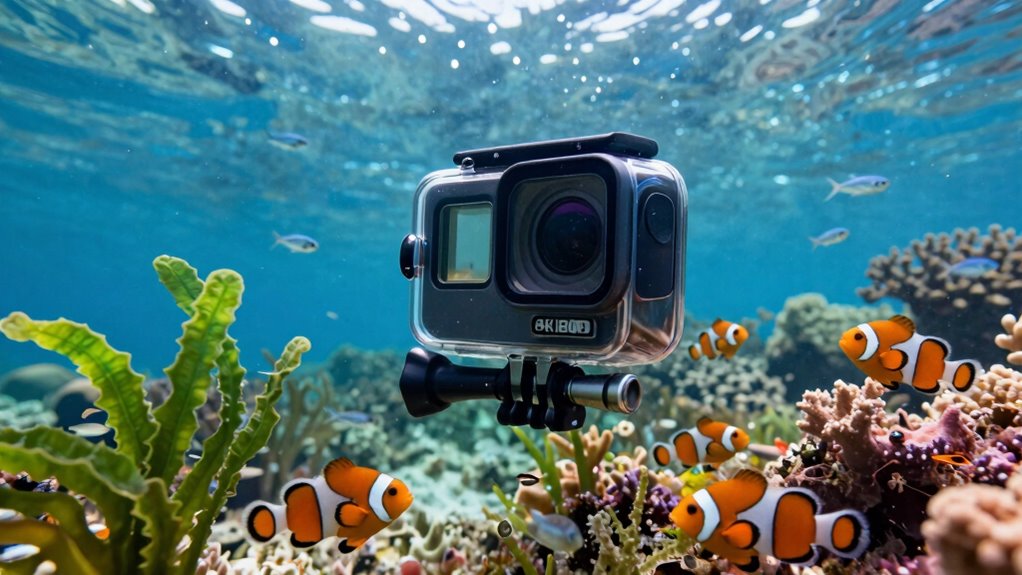

A waterproof 4K action camera should produce usable motion footage, withstand the planned depth, and remain easy to control around water. I rank the DJI Osmo Action 5 Pro Essential Combo as the best overall choice because its premium imaging, stabilization, and streamlined design form the strongest all-around package. The AKASO EK7000 Pro is my value pick for buyers who want a touchscreen and substantial accessory kit, while the ODDV 4K60FPS Action Camera stands out among lower-cost 4K60 options with its dual screens. The main tradeoffs are native waterproofing versus a separate housing, 4K30 versus smoother high-frame-rate recording, and dependable image processing versus a larger bundle of inexpensive accessories. Continue reading for the full ranking logic, buying guidance, and recommendations by buyer type.

Get travel and outdoor gear delivered free with Prime
- Fast, free delivery on millions of items
- Prime Video, Amazon Music and more included
- Member-only deals all year
Complete the kit


Key Takeaways
- I placed the DJI Osmo Action 5 Pro first because the comparison favors complete video performance over inflated resolution claims or oversized accessory bundles.
- The AKASO EK7000 Pro occupies the lineup’s value sweet spot: its touchscreen and 131-foot housing make it easier to recommend than the simpler EK7000 without reaching DJI pricing.
- Budget models from ODDV, Camlance, and icefox advertise 4K60 and high photo resolutions, but those numbers alone do not establish superior stabilization, low-light footage, or processing.
- The two DJI Osmo Action 4 listings mainly create a bundle decision: the Standard Combo favors a fuller ready-to-film setup, while the Essential Combo suits buyers who already own compatible gear.
- Across these 14 cameras, the deepest advertised housings add protection but also bring bulk, muffled audio, and slower control access, making native waterproofing more convenient for frequent surface-water filming.
| AKASO Brave 7 LE |  | Best for Self-Framing | Video resolution: 4K at 30fps | Photo resolution: 20MP | Waterproof depth: 131 feet with housing | VIEW ON AMAZON | See Our Full Breakdown |
| Camlance 4K 60FPS 48MP Waterproof Action Camera |  | Best Value Bundle | Video resolution: 4K at 60fps | Photo resolution: 48MP | Waterproof depth: 40 m with housing | VIEW ON AMAZON | See Our Full Breakdown |
| AKASO EK7000 Pro |  | Best for Beginners | Video resolution: 4K/30fps; 1080p/60fps | Photo resolution: 20MP | Waterproof depth: 131 feet with housing | VIEW ON AMAZON | See Our Full Breakdown |
| DJI Osmo Action 5 Pro Essential Combo |  | Best Overall | Video resolution: 4K | Sensor: 1/1.3-inch | Waterproof rating: IP68 | VIEW ON AMAZON | See Our Full Breakdown |
| Icefox 20MP 4K Action Camera |  | Best Budget Diving Pick | Video resolutions: 4K, 2.7K, 1080p, and 720p | Photo resolution: 20MP | Waterproof depth: 98 feet (30 m) with housing | VIEW ON AMAZON | See Our Full Breakdown |
| icefox 4K 60FPS 30MP Waterproof Action Camera |  | Best Battery Bundle | Video Resolution: 4K at 60 FPS | Photo Resolution: 30MP | Viewing Angle: 147° | VIEW ON AMAZON | See Our Full Breakdown |
| AKASO Brave 4 4K30 Action Camera |  | Best Framing Flexibility | Maximum Video Resolution: 4K at 30 fps | Alternative Video Resolution: 1080p at 60 fps | Photo Resolution: 20MP | VIEW ON AMAZON | See Our Full Breakdown |
| Action Camera 4K 30FPS Waterproof Underwater Camera |  | Best Ready-to-Record Kit | Video Resolution: 2160p at 30 FPS | Photo Resolution: 30MP | Sensor Type: CMOS | VIEW ON AMAZON | See Our Full Breakdown |
| ODDV 4K60FPS Action Camera with Dual Screens |  | Best for Self-Framing | Video Resolution: 4K at 60 FPS | Photo Resolution: 30MP | Waterproof Depth: 132 ft | VIEW ON AMAZON | See Our Full Breakdown |
| AKASO EK7000 4K30FPS 20MP WiFi Action Camera |  | Best No-Frills Pick | Maximum Video Resolution: 4K at 30 FPS | Alternative Video Resolution: 2.7K at 30 FPS | Photo Resolution: 20MP | VIEW ON AMAZON | See Our Full Breakdown |
| DJI Osmo Action 4 Essential Combo Waterproof 4K Action Camera |  | Best for Adventure Creators | Sensor: 1/1.3-inch with 2.4 μm pixels | Maximum Video Resolution: 4K at 120fps | Color: 10-bit with D-Log M | VIEW ON AMAZON | See Our Full Breakdown |
| DJI Osmo Action 4 Standard Combo Waterproof Action Camera |  | Best for Long 4K Shoots | Sensor: 1/1.3-inch | Maximum Video Resolution: 4K at 120fps | Battery Capacity: 1770mAh | VIEW ON AMAZON | See Our Full Breakdown |
| 4K Action Camera 20MP Touch Screen WiFi EIS 131FT Waterproof |  | Best Budget Pick for Deep Water | Video Resolution: 4K at 30fps | Photo Resolution: 20MP | Waterproof Depth: 131 feet with housing | VIEW ON AMAZON | See Our Full Breakdown |
| Action Camera 4K 60FPS 64MP Waterproof with Stabilization for Sports |  | Best Housing-Free Budget Option | Sensor Type: CMOS | Maximum Video Resolution: 4K at 60fps | Photo Resolution: 64MP | VIEW ON AMAZON | See Our Full Breakdown |
| waterproof action camera 4k | Waterproof depth | Photo resolution | Video resolution |
|---|---|---|---|
| AKASO Brave 7 LE | 131 feet with housing | 20MP | 4K at 30fps |
| Camlance 4K 60FPS 48MP Waterpr | 40 m with housing | 48MP | 4K at 60fps |
| AKASO EK7000 Pro | 131 feet with housing | 20MP | 4K/30fps; 1080p/60fps |
| DJI Osmo Action 5 Pro Essentia | — | — | 4K |
| Icefox 20MP 4K Action Camera | 98 feet (30 m) with housing | 20MP | — |
| icefox 4K 60FPS 30MP Waterproo | 98 ft (30 m) with IP68 case | 30MP | 4K at 60 FPS |
| AKASO Brave 4 4K30 Action Came | 131 ft (40 m) with case | 20MP | — |
| Action Camera 4K 30FPS Waterpr | Up to 131 ft | 30MP | 2160p at 30 FPS |
| ODDV 4K60FPS Action Camera wit | 132 ft | 30MP | 4K at 60 FPS |
| AKASO EK7000 4K30FPS 20MP WiFi | 131 ft | 20MP | — |
| DJI Osmo Action 4 Essential Co | 18 m, IP68 | — | — |
| DJI Osmo Action 4 Standard Com | 18 meters | — | — |
| 4K Action Camera 20MP Touch Sc | 131 feet with housing | 20MP | 4K at 30fps |
| Action Camera 4K 60FPS 64MP Wa | 20 meters without housing | 64MP | — |
More Details on Our Top Picks
AKASO Brave 7 LE
I rank the AKASO Brave 7 LE as the strongest choice here for travelers who regularly film themselves. Its dual-screen design makes framing a selfie, surf recap, or walking commentary easier than with the single-screen AKASO EK7000 Pro. The 4K/30fps ceiling is less fluid than the Camlance camera’s 4K/60fps mode, but EIS 2.0 helps reduce distracting shake during handheld recording. An included housing extends protection to 131 feet underwater, giving it more diving range than the 98-foot Icefox. I place it below the DJI Osmo Action 5 Pro because DJI offers stronger stabilization, longer battery life, and a larger sensor. The Brave 7 LE remains a balanced midrange pick, though its interface may feel busy and its two-hour runtime can limit long excursions.
Pros:- Front and rear screens simplify self-framing and conventional shooting
- Included housing supports underwater recording to 131 feet
- EIS 2.0 reduces visible shake in handheld footage
- Two included batteries provide a practical backup
Cons:- 4K recording is limited to 30fps
- Approximate two-hour battery life trails the DJI Osmo Action 5 Pro
- The control interface may be complicated for first-time users
Best for: Solo travelers, vloggers, and water-sports users who need a front screen for reliable self-framing
Not ideal for: Fast-action filmmakers who want 4K at 60fps or longer than two hours of recording per charge
- Video resolution:4K at 30fps
- Photo resolution:20MP
- Waterproof depth:131 feet with housing
- Displays:Dual screens; 2-inch main display
- Stabilization:EIS 2.0 digital stabilization
- Battery life:Up to 2 hours
- Connectivity:Wi-Fi and Bluetooth
- Weight:107 g
Our verdict“Choose the Brave 7 LE when a front display and deep-water housing matter more than high-frame-rate 4K.”
Camlance 4K 60FPS 48MP Waterproof Action Camera
The Camlance 4K 60FPS takes my value spot because it combines high-frame-rate recording with a 64GB card, two batteries, a remote, and mounting accessories. That package requires fewer immediate purchases than the AKASO Brave 7 LE, while 4K at 60fps can produce smoother footage of cycling, skiing, or fast-moving water than either AKASO model’s 4K/30fps output. Its vertical-recording option also suits short-form social video without a later crop. A 170-degree field of view captures more of the surroundings, though wide footage can appear distorted near the edges. Camlance does not match the DJI Osmo Action 5 Pro for sensor quality, stabilization, or housing-free waterproofing. Protection to 40 meters requires the bulky case, and both wireless control methods stop at roughly 10 meters. I see it as a feature-heavy starter package, not a premium imaging tool.
Pros:- 4K/60fps recording provides smoother fast-action footage than 4K/30fps models
- 64GB card and two batteries reduce added setup costs
- Supports both widescreen and vertical recording
- 40-meter housing suits recreational diving
Cons:- Water protection depends on using the external housing
- Wi-Fi and remote operation are limited to about 10 meters
- Imaging hardware and stabilization are less advanced than the DJI option
Best for: Budget-conscious cyclists, skiers, and social creators who want 4K/60fps plus storage and accessories in one purchase
Not ideal for: Serious low-light shooters or swimmers who want a waterproof camera without an external housing
- Video resolution:4K at 60fps
- Photo resolution:48MP
- Waterproof depth:40 m with housing
- Field of view:170 degrees
- Digital zoom:8X
- Stabilization:Electronic image stabilization
- Included storage:64GB memory card
- Batteries:2 rechargeable batteries
- Wireless range:Wi-Fi and remote control up to 10 m
Our verdict“Pick Camlance for an accessory-rich 4K/60fps kit when value outweighs premium image processing.”
AKASO EK7000 Pro
I give the AKASO EK7000 Pro the beginner role because its 2-inch IPS touchscreen offers a more direct learning path than the busier controls of the Brave 7 LE. It records 4K/30fps, adds electronic stabilization, and includes two 1350mAh batteries rated for up to 140 minutes each, so new users can cover a day in shorter clips without immediately buying a spare. The bundled housing reaches 131 feet, matching the Brave 7 LE and exceeding the Icefox’s 98-foot rating. The compromise is growth potential: Camlance offers 4K/60fps for smoother action, while the DJI Osmo Action 5 Pro has far stronger stabilization and low-light hardware. Some activities may also call for extra mounts beyond the supplied helmet accessories. For straightforward daylight adventures, I think its simple touchscreen workflow is more useful than chasing advanced controls.
Pros:- 2-inch IPS touchscreen is approachable for new users
- Two 1350mAh batteries offer up to 140 minutes each
- Included housing is rated to 131 feet
- Electronic stabilization helps smooth casual outdoor recording
Cons:- 4K capture tops out at 30fps
- Image and stabilization performance fall short of the DJI model
- Certain activities may require additional mounting accessories
Best for: First-time action-camera owners who want touchscreen controls, long dual-battery coverage, and a deep-water case
Not ideal for: Creators planning slow-motion crops, demanding low-light shoots, or fast action that benefits from 4K/60fps
- Video resolution:4K/30fps; 1080p/60fps
- Photo resolution:20MP
- Waterproof depth:131 feet with housing
- Screen:2-inch IPS touchscreen
- Stabilization:Electronic image stabilization
- Batteries:2 x 1350mAh rechargeable batteries
- Battery life:Up to 140 minutes per battery
- Digital zoom:5X
Our verdict“The EK7000 Pro is my beginner pick for easy touchscreen operation and generous battery coverage at 4K/30fps.”
DJI Osmo Action 5 Pro Essential Combo
The DJI Osmo Action 5 Pro ranks first for me because it addresses the areas that separate dependable footage from merely having a 4K label. Its 1/1.3-inch sensor and color-temperature sensor support better low-light and underwater color than the smaller-budget models, while 360-degree HorizonSteady keeps a tilted bike, ski, or handheld shot level. Unlike the housed Camlance and Icefox cameras, it carries an IP68 rating and can descend to 20 meters without a case. Dual OLED touchscreens make framing easier than on the single-screen EK7000 Pro, and battery life reaches four hours. Buyers pay for that refinement, and the advanced controls may take time to learn. The Essential Combo also omits the curved adhesive base found in other packages. Even with those drawbacks, I see its image quality, stabilization, and durability as the strongest overall mix.
Pros:- 1/1.3-inch sensor supports stronger low-light imaging than budget rivals
- 360-degree HorizonSteady corrects severe tilt and shake
- IP68 body is waterproof to 20 meters without a housing
- Four-hour maximum battery life leads this group
Cons:- Premium capability comes at a higher price than the AKASO and Camlance models
- Advanced settings can present a steeper learning curve
- Essential Combo omits the curved adhesive base included with some packages
Best for: Frequent divers, outdoor filmmakers, and vloggers who prioritize stable 4K footage, low-light quality, and case-free waterproofing
Not ideal for: Occasional users seeking a low-cost bundle with a memory card, numerous mounts, and minimal setup
- Video resolution:4K
- Sensor:1/1.3-inch
- Waterproof rating:IP68
- Underwater depth:20 m without housing
- Stabilization:360-degree HorizonSteady
- Displays:Dual OLED touchscreens
- Battery capacity:1950mAh
- Battery life:Up to 4 hours
- Color system:Color-temperature sensor
Our verdict“Buy the Osmo Action 5 Pro for the best balance of waterproof construction, stable 4K capture, and all-day usability.”
Icefox 20MP 4K Action Camera
I assign the Icefox 20MP 4K the budget-diving role because its included housing reaches 98 feet and its two 1350mAh batteries support longer outings without a premium price. The 5X zoom provides extra framing flexibility from shore, although digital magnification sacrifices detail and cannot replace moving closer. Compared with the Camlance model, Icefox has a shallower depth rating and lacks a stated 4K/60fps mode; compared with the DJI Osmo Action 5 Pro, it also needs a housing for serious submersion. Its Wi-Fi app control can simplify file transfers and remote framing, but the Snap-Pro app is not compatible with iOS 26. The supplied remote must also be waterproofed before entering the water. I would choose it for affordable 98-foot coverage, while Apple users and fast-action shooters should favor another option.
Pros:- Included housing supports underwater use to 98 feet
- Two 1350mAh batteries provide up to two hours of operation
- 20MP still capture accompanies multiple video-resolution choices
- Included mounts support several outdoor activities
Cons:- Snap-Pro app is incompatible with iOS 26
- Remote control requires added waterproofing before aquatic use
- Shallower housing rating and lower stated frame-rate capability than Camlance
Best for: Budget snorkelers and recreational divers who want two batteries, basic Wi-Fi control, and protection to 98 feet
Not ideal for: iOS 26 users or fast-action creators who need confirmed 4K/60fps recording and a water-safe remote
- Video resolutions:4K, 2.7K, 1080p, and 720p
- Photo resolution:20MP
- Waterproof depth:98 feet (30 m) with housing
- Digital zoom:5X
- Battery life:Up to 2 hours
- Batteries:2 x 1350mAh batteries
- Connectivity:Wi-Fi
- App:Snap-Pro; incompatible with iOS 26
Our verdict“Choose Icefox for inexpensive recreational diving, provided its app limitation and housing-dependent design fit your setup.”
icefox 4K 60FPS 30MP Waterproof Action Camera
I rank the icefox 4K 60FPS 30MP as the strongest battery-focused package here. Its two 2150mAh batteries claim up to five hours of combined recording, making it better suited to long outings than the ODDV 4K60FPS, which includes one nonstandard battery. It also records faster 4K action than the AKASO Brave 4 and EK7000, both capped at 30 fps, so rapid movement should retain more temporal detail. The 147° lens is less expansive than their wider alternatives, but it can keep peripheral distortion and unwanted scenery from dominating the frame. Buyers still face three compromises: waterproofing requires the IP68 case, the remote must remain dry, and the listing contains conflicting photo-resolution information. I see this as a practical endurance pick, not the safest choice for buyers who demand perfectly consistent documentation.
Pros:- Records 4K video at 60 fps for smoother rendering of fast movement
- Two 2150mAh batteries provide up to five hours of claimed combined recording
- IP68 housing supports filming down to 98 feet
- Dual-band Wi-Fi and the Snap-Pro app support transfers and basic editing
Cons:- Camera is waterproof only when installed in the included housing
- Remote control cannot be used underwater
- Photo-resolution information is inconsistent across the listing
Best for: Travelers, cyclists, and day-trip creators who need 4K60 recording with enough included battery capacity for extended outings
Not ideal for: Swimmers who want case-free waterproofing or buyers who require fully consistent imaging specifications
- Video Resolution:4K at 60 FPS
- Photo Resolution:30MP
- Viewing Angle:147°
- Image Stabilization:Digital EIS
- Waterproof Depth:98 ft (30 m) with IP68 case
- Battery:2 x 2150mAh rechargeable batteries
- Claimed Recording Time:Up to 5 hours combined
- Connectivity:2.4 GHz and 5 GHz Wi-Fi
Our verdict“I recommend this icefox model to buyers who value long recording capacity and 4K60 motion capture more than case-free waterproofing.”
AKASO Brave 4 4K30 Action Camera
I give the AKASO Brave 4 the framing-flexibility role because its 170°, 140°, 110°, and 70° settings let buyers adapt the composition to a trail, vehicle mount, or tighter subject. Neither the AKASO EK7000 nor the unnamed 4K30 camera offers that degree of listed angle control. Its 131-foot waterproof housing, gyroscopic stabilization, dual screens, and two-battery charging kit also form a balanced starter package. The narrower settings can reduce the exaggerated edges associated with very wide action-camera footage, while the front display helps with camera status. The main sacrifice is motion performance: 4K stops at 30 fps, whereas the icefox and ODDV models reach 60 fps. Dropping to 1080p60 helps with faster action, but buyers lose 4K detail. The wrist remote must also stay out of the water.
Pros:- Four viewing-angle settings provide unusually flexible framing
- Gyroscopic stabilization helps reduce shake during handheld or mounted recording
- Included housing is rated to 131 feet
- Two batteries and a USB dual charger support convenient swapping
Cons:- 4K recording is limited to 30 fps, reducing flexibility for fast action and slow motion
- Wireless wrist remote is not waterproof
Best for: Beginners filming varied activities who want adjustable fields of view, dual displays, and a complete two-battery kit
Not ideal for: Fast-sports creators who need 4K60 footage or divers who expect to operate the wrist remote underwater
- Maximum Video Resolution:4K at 30 fps
- Alternative Video Resolution:1080p at 60 fps
- Photo Resolution:20MP
- Viewing Angles:170°, 140°, 110°, and 70°
- Image Stabilization:Built-in gyroscope
- Waterproof Depth:131 ft (40 m) with case
- Displays:2-inch rear and 0.96-inch front screens
- Battery:2 x 1050mAh batteries, up to 90 minutes each
Our verdict“I favor the Brave 4 for buyers who value adaptable framing and a balanced accessory package over 4K60 recording.”
Action Camera 4K 30FPS Waterproof Underwater Camera
I reserve the ready-to-record spot for this 4K 30FPS underwater camera because it includes a 64GB card, two batteries, a remote, and the core mounting-ready features most beginners seek. By comparison, the AKASO EK7000 and ODDV require a separate memory-card purchase. Its 170° lens captures a broad scene, while electronic stabilization can make mounted footage easier to watch. A listed depth rating of 131 feet also matches the Brave 4 and EK7000, giving casual divers ample range. Yet the bundle leaves more unanswered questions than those AKASO alternatives: battery runtime is not specified, and no faster secondary video mode is listed. The 2-inch screen is adequate for framing but restrictive for checking focus or detail. I rank it for immediate convenience, not for buyers who prioritize clearly documented endurance or advanced recording controls.
Pros:- Includes a 64GB memory card for recording without a separate storage purchase
- Captures 4K30 video and 30MP still images
- 170° lens and electronic stabilization suit wide mounted footage
- Listed waterproof depth reaches 131 feet
Cons:- No battery-runtime figure is provided for planning longer sessions
- No video mode faster than 4K30 is specified
- Small 2-inch display limits detailed on-camera footage review
Best for: First-time action-camera buyers who want a memory card, two batteries, remote, and underwater housing in one purchase
Not ideal for: Long-session creators who need documented battery runtime or sports shooters seeking listed high-frame-rate recording modes
- Video Resolution:2160p at 30 FPS
- Photo Resolution:30MP
- Sensor Type:CMOS
- Lens Angle:170°
- Image Stabilization:Electronic image stabilization
- Waterproof Depth:Up to 131 ft
- Display:2 inches
- Included Storage:64GB microSD card
Our verdict“I would choose this bundle for a low-fuss first setup, provided documented endurance and 4K60 recording are not priorities.”
ODDV 4K60FPS Action Camera with Dual Screens
I place the ODDV 4K60FPS ahead for self-framing because its 1.4-inch front screen works with a 2-inch rear touchscreen, a more useful control arrangement than the smaller status-oriented displays listed for the Brave 4. It also matches the icefox model’s 4K60 and 30MP headline performance while widening the view to 170° and extending the listed depth rating to 132 feet. Those traits suit skiing, cycling, and underwater scenes where fast motion and broad coverage matter. Electronic stabilization adds another layer of usability, though buyers should not mistake it for mechanical stabilization. The purchasing drawbacks are substantial: no memory card is included, the lone battery uses a nonstandard format, and replacements may be less convenient to source than the icefox camera’s two-pack arrangement. Its wrist remote also has to remain dry despite the camera’s underwater focus.
Pros:- Front screen and rear touchscreen simplify self-framing and menu control
- 4K60 recording provides stronger motion handling than the 4K30 AKASO models
- Electronic stabilization supports smoother action footage
- Listed waterproof depth of 132 feet is the deepest in this five-product batch
Cons:- Nonstandard battery may be harder to replace or supplement
- MicroSD card must be purchased separately
- Wrist remote is not waterproof
Best for: Vloggers, solo travelers, and action-sports creators who need front-facing composition plus 4K60 capture
Not ideal for: Buyers who want standard replacement batteries, included storage, or underwater remote operation
- Video Resolution:4K at 60 FPS
- Photo Resolution:30MP
- Waterproof Depth:132 ft
- Displays:2.0-inch rear touchscreen and 1.4-inch front screen
- Viewing Angle:170°
- Image Stabilization:Electronic EIS
- Wi-Fi Range:Up to 10 m
- Storage Requirement:C10/V60 SD card; card not included
Our verdict“I recommend the ODDV for solo shooters who need dual-screen framing and 4K60 video and can accept extra spending on storage and batteries.”
AKASO EK7000 4K30FPS 20MP WiFi Action Camera
I assign the AKASO EK7000 the no-frills role because it covers the basic waterproof-action checklist without the extra displays or framing controls found on the Brave 4. It records 4K30, captures 20MP photos, adds electronic stabilization, and reaches a listed 131-foot depth. Wi-Fi transfers and the wrist remote make it easier to operate on a helmet or handlebar, provided the remote stays dry. Compared with the Brave 4, buyers give up dual screens, adjustable viewing angles, and a specified two-battery charging kit. The icefox and ODDV also have a clear advantage for rapid movement because both support 4K at 60 fps. A memory card is another added expense. I see the EK7000 as a straightforward choice for occasional recording, while demanding sports shooters will benefit from paying for higher frame rates or stronger on-camera controls.
Pros:- Records 4K30 video and 20MP photos
- Electronic image stabilization helps reduce visible shake
- Waterproof system is rated to 131 feet
- Wi-Fi and wireless remote support mounted-camera control
Cons:- 4K frame rate is limited to 30 fps
- MicroSD card is not included
- Remote control is not waterproof
Best for: Occasional cyclists, hikers, and vacationers who want straightforward 4K30 recording and already own a compatible microSD card
Not ideal for: High-speed sports shooters needing 4K60 or solo creators who rely on a front screen for composition
- Maximum Video Resolution:4K at 30 FPS
- Alternative Video Resolution:2.7K at 30 FPS
- Photo Resolution:20MP
- Image Stabilization:Electronic image stabilization
- Waterproof Depth:131 ft
- Wi-Fi Range:10 m
- Remote Control:Wireless wrist remote; not waterproof
- Storage:MicroSD supported; card not included
Our verdict“I recommend the EK7000 for uncomplicated occasional use, but 4K60 and front-screen buyers should choose the icefox or ODDV instead.”
DJI Osmo Action 4 Essential Combo Waterproof 4K Action Camera
I rank the DJI Osmo Action 4 Essential Combo highly for creators who need polished footage across water, snow, and changing light. Its large sensor and 4K/120fps recording offer better low-light detail and slow-motion flexibility than the 4K30FPS 20MP Action Camera. Direct DJI microphone support also makes this the stronger choice for narrated rides or travel videos. Compared with the Action 4 Standard Combo, the underlying imaging package is nearly identical, so the deciding factor is the included accessory bundle rather than video quality. The 18-meter housing-free rating handles swimming and shallow dives, while a case remains sensible for prolonged or high-pressure use. Buyers should also know that the widest 155° view disables stabilization, and vertical shooting requires the protective frame.
Pros:- Large 1/1.3-inch sensor supports stronger low-light footage
- 4K/120fps enables detailed slow motion
- Direct compatibility with DJI Mic 2 and Mic Mini transmitters
- Dual touchscreens and magnetic mounting simplify reframing
Cons:- The 155° field of view is limited to 4K/60fps with stabilization disabled
- Vertical recording depends on the included protective frame
- Prolonged or high-pressure underwater recording calls for a separate case
Best for: Adventure creators who film in mixed light and want slow motion, external wireless audio, and fast mounting changes
Not ideal for: Deep divers or vertical-first creators who do not want to add a housing or protective frame
- Sensor:1/1.3-inch with 2.4 μm pixels
- Maximum Video Resolution:4K at 120fps
- Color:10-bit with D-Log M
- Field of View:155° ultra-wide
- Waterproof Depth:18 m, IP68
- Battery:1770mAh, up to 150 minutes
- Displays:Front and rear full-color touchscreens
- Minimum Operating Temperature:-20°C (-4°F)
- Mounting System:Magnetic quick-release
Our verdict“This is my pick for serious adventure creators who value image quality and audio flexibility more than maximum diving depth.”
DJI Osmo Action 4 Standard Combo Waterproof Action Camera
The DJI Osmo Action 4 Standard Combo earns its place through a strong balance of recording quality and stated runtime. Its 160-minute battery rating is ten minutes longer than the Essential Combo’s listed figure, giving hikers and cyclists a little more margin between swaps. Both Action 4 packages share the large 1/1.3-inch sensor, 4K/120fps capture, 10-bit color, and D-Log M, so I would not choose between them on image quality. Instead, this version makes sense when its standard bundle better matches the buyer’s mounting needs or price. It still asks more of beginners than the simpler 4K30FPS 20MP model because its color profiles and stabilization choices reward setup knowledge. The 18-meter waterproof body is convenient, but extra accessories may be needed for a complete activity-specific kit.
Pros:- Up to 160 minutes of stated battery life
- Large sensor supports better footage in dim outdoor conditions
- 4K/120fps capture provides flexible slow-motion editing
- 10-bit color and D-Log M suit advanced color work
Cons:- Advanced recording and color settings create a steeper learning curve
- Activity-specific mounts and accessories may cost extra
- The 18-meter native depth trails cameras supplied with 131-foot housings
Best for: Hikers, cyclists, and travel filmmakers who want high-frame-rate 4K recording with the longer listed Action 4 runtime
Not ideal for: First-time buyers seeking simple controls and a fully equipped activity kit in one purchase
- Sensor:1/1.3-inch
- Maximum Video Resolution:4K at 120fps
- Battery Capacity:1770mAh
- Maximum Battery Life:160 minutes
- Waterproof Depth:18 meters
- Field of View:155° ultra-wide
- Stabilization:Three modes
- Color:10-bit with D-Log M
Our verdict“I would choose this Action 4 package for longer, image-focused outings when advanced controls are welcome rather than burdensome.”
4K Action Camera 20MP Touch Screen WiFi EIS 131FT Waterproof
For swimmers and recreational divers watching their budget, the 4K Action Camera 20MP offers the clearest role in this group: its housing reaches 131 feet underwater, far beyond the housing-free 18-meter limit of either DJI Osmo Action 4 package. The dual displays also make self-framing easier, while two 1350mAh batteries reduce reliance on a single pack. I place it below the DJI models for demanding video work because 4K tops out at 30fps, leaving less room for smooth slow motion, and no battery-runtime figure is supplied. It also competes closely with the AKASO EK7000 Pro, but its front display gives solo shooters another framing aid. Wi-Fi control is handy for transfers, though app dependence may add friction, and buyers must budget for a separate microSD card.
Pros:- Included housing supports depths down to 131 feet
- Front and rear displays help with self-framing
- Two 1350mAh rechargeable batteries are included
- Storage support reaches 256GB
Cons:- 4K recording is limited to 30fps
- No battery-runtime estimate is provided
- A microSD card must be purchased separately
Best for: Budget-conscious snorkelers and recreational divers who prioritize housing depth, dual screens, and spare-battery convenience
Not ideal for: Fast-sports filmmakers who need 4K60 or 4K120 slow motion and a clearly stated runtime
- Video Resolution:4K at 30fps
- Photo Resolution:20MP
- Waterproof Depth:131 feet with housing
- Rear Display:2-inch IPS touchscreen
- Front Display:1.4 inches
- Batteries:Two 1350mAh rechargeable batteries
- Storage Support:Up to 256GB microSD
- Connectivity:Wi-Fi
Our verdict“This is my budget deep-water choice for buyers who accept basic 4K30 capture in exchange for a 131-foot housing and two batteries.”
Action Camera 4K 60FPS 64MP Waterproof with Stabilization for Sports
I see the Action Camera 4K 60FPS 64MP as the practical budget choice for buyers who dislike putting a camera inside a case before every swim. Its body is rated to 20 meters without housing, two meters deeper than the DJI Osmo Action 4, while 4K60 capture provides smoother sports footage than the 4K30FPS 20MP camera. At 123 grams, it also remains easy to mount on compact gear. Those headline figures come with more uncertainty than DJI’s detailed imaging package: the listing names digital stabilization but does not confirm whether it works at 4K, and the unusual 9V battery specification may complicate replacement shopping. Storage also stops at 128GB rather than the competing 20MP model’s 256GB. I would treat the 64MP photo claim as secondary to its case-free convenience and frame-rate advantage.
Pros:- Waterproof to 20 meters without a separate housing
- 4K60 capture is better suited to fast movement than 4K30
- Dual screens support forward and selfie framing
- Light 123 g body is convenient for mounting
Cons:- The listing does not confirm stabilization availability at 4K
- Listed 9V battery format may make replacements less convenient
- 128GB storage ceiling is lower than some budget rivals
Best for: Casual swimmers and sports shooters who want affordable 4K60 recording without fitting an underwater housing
Not ideal for: Buyers who need verified stabilization at 4K, conventional spare-battery options, or professional color controls
- Sensor Type:CMOS
- Maximum Video Resolution:4K at 60fps
- Photo Resolution:64MP
- Waterproof Depth:20 meters without housing
- Image Stabilization:Digital
- Display Size:2 inches
- Weight:123 g
- Storage Support:MicroSD up to 128GB
- Connectivity:Wi-Fi
Our verdict“I would pick this for inexpensive housing-free swimming and 4K60 sports footage, provided the unclear stabilization support is acceptable.”

How We Picked
I ranked these cameras around the needs behind a waterproof 4K action camera search rather than treating every 4K label equally. My leading criteria were video performance, stabilization, waterproof design, low-light potential, control layout, battery practicality, and accessory usefulness. I gave extra weight to frame rates that support smooth motion, screens that remain useful during setup, and housings with clearly stated depth ratings. High megapixel counts received less weight because they reveal little about sensor quality, bitrate, color, or motion detail on their own.
The ranking places DJI’s premium models above the field for their stronger imaging foundation and more polished operation. AKASO models form the middle tier, with the EK7000 Pro leading on value, the Brave 7 LE favoring convenience, the Brave 4 suiting newcomers, and the basic EK7000 prioritizing low entry cost. I ranked the ODDV, Camlance, icefox, and generic cameras by the usefulness of their differentiators, including 4K60 recording, dual screens, included memory cards, dual batteries, zoom, and stated housing depth. When two models offered similar headline specifications, I favored the one with clearer controls, a more credible ecosystem, or fewer compromises between protection and everyday usability.
Factors to Consider When Choosing Waterproof Action Camera 4k
I would choose a waterproof 4K action camera by matching its protection, recording modes, and controls to the activity rather than buying the largest specification list. A camera for snorkeling has different needs from one mounted on a bike, helmet, or scuba rig. Reliable stabilization and sealing usually affect the finished footage more than extreme photo-resolution claims. The sections below explain where paying more helps and where a simpler model can still be the smarter purchase.
Separate Native Waterproofing From Housing Depth
A camera described as waterproof may rely entirely on a clear external case, while another model can enter shallow water without one. Native waterproofing is more convenient for rain, kayaking, pools, and quick shoreline clips because the camera remains compact and its controls are easier to reach. A rated underwater housing makes more sense for deeper snorkeling or scuba use, but it can muffle sound, trap condensation, and make touchscreen operation impossible. I would treat a 98-foot or 131-foot claim as a housing limit, not permission to ignore gasket condition or setup errors. Rinse the closed housing with fresh water after saltwater use, then dry it before opening so droplets do not reach the camera or card slot. Buyers who film underwater often should also check whether replacement seals and housings are readily available.
Choose a Frame Rate Before Chasing Resolution
4K30 is sufficient for travel clips, hiking, snorkeling, and footage played at normal speed. 4K60 captures motion at shorter intervals and allows a clean half-speed result on a 30fps timeline, which helps with cycling, skiing, waves, and fast pets. Premium 4K120 recording offers more slow-motion flexibility, but it consumes storage and battery power faster and may create more heat. I would not assume that a 48MP or 64MP budget camera beats a 20MP model, since the sensor, lens, compression, and processing shape the result. Check whether stabilization works at the highest advertised resolution and frame rate, because some inexpensive cameras limit it in demanding modes. If slow motion is not part of the plan, dependable 4K30 can be a better use of the budget than weakly processed 4K60.
Account for Stabilization Crop and Available Light
Electronic image stabilization can turn shaky helmet or handlebar footage into something watchable, but it does so by cropping the image and moving the usable frame within the sensor area. Stronger stabilization normally produces a narrower field of view, which can make trails and underwater scenes feel less expansive. It also works best in bright conditions, where the camera can use faster shutter speeds without adding heavy noise or blur. I would favor processing quality over an EIS label when the camera will face rough movement, since stabilization systems differ greatly despite similar marketing language. A secure mount still matters; software cannot fully correct a loose chest strap or a vibrating plastic extension arm. Buyers filming mostly from a tripod, boat rail, or calm handheld position can spend less on stabilization and direct more of the budget toward battery life or accessories.
Pay More for Low Light and Flexible Color
Underwater footage loses contrast and warm colors quickly, while forests, sunsets, and cloudy rides place extra pressure on a small sensor. The 1/1.3-inch sensor listed for the DJI Osmo Action 4 gives it a stronger low-light basis than generic models promoted mainly through megapixel counts. Its 10-bit and D-Log M options also provide more room for color work, though casual users may prefer finished-looking footage straight from the camera. I would pay for those tools when dawn, dusk, indoor sports, or color editing forms a regular part of the workload. For occasional sunny trips, that premium may produce less visible benefit than an extra battery, secure mount, or underwater light. At depth, an external light or correctly chosen filter can improve color more than moving from one budget camera to another with similar hardware.
Budget for Batteries, Storage, and Heat
Runtime claims rarely tell the full story because 4K60 recording, stabilization, screen brightness, Wi-Fi, and cold weather can shorten a session. A bundle with two removable batteries may offer more practical recording time than a camera with a slightly longer single-battery estimate. High-frame-rate 4K also fills cards quickly, so an included 64GB card is convenient but not a long-term storage plan for travel. I would choose a reputable high-speed microSD card that meets the camera maker’s stated speed and capacity requirements. Long uninterrupted clips can raise camera temperature, making shorter recordings and shade useful during hot-weather sessions. A charger that handles multiple batteries outside the camera also lets one battery recharge while another remains in service.
Judge Controls and Accessories by Real Use
A large accessory count can look valuable, yet one sturdy mount is worth more than several flexible pieces that wobble or crack. Touchscreens and front displays simplify framing on land, but wet screens and underwater housings often require physical buttons or a remote. Remotes help with helmet, handlebar, and vehicle mounting, though many are water-resistant rather than suitable for submersion. I would check whether the camera supports common action-camera mounts, replacement housings, spare batteries, and individual mounting parts. Beginners may benefit from a complete kit because it allows several mounting experiments before buying better accessories. Frequent users should place greater value on dependable buckles, secure battery doors, readable menus, and a stable companion app than on the raw number of pieces in the box.
Frequently Asked Questions
Can I Use Any of These Cameras Underwater Without a Housing?
No, the word waterproof does not always mean the bare camera can be submerged. Several lower-cost models in this roundup reach their advertised 98-foot or 131-foot depth only inside the supplied housing. I would use a camera without its case only when the manufacturer gives a clear native depth rating for that exact model. Native sealing is convenient for shallow activities, while a properly latched housing remains the safer choice for deeper or prolonged submersion. Check the door, gasket, and latch before every water session because a depth rating cannot protect against trapped debris or an incompletely closed seal.
Is 4K30 Enough, or Should I Buy a 4K60 Camera?
4K30 is enough for ordinary travel footage, snorkeling, walking, and clips shown at normal speed. I would choose 4K60 for fast sports, splashing water, vehicle mounts, or footage intended for half-speed playback. The extra frames require more storage, battery power, processing, and sometimes brighter light. A polished 4K30 camera can still produce better footage than an inexpensive 4K60 model with weak stabilization or aggressive compression. Buyers who rarely create slow motion should favor dependable image quality and operation over the higher number.
Should I Buy the DJI Osmo Action 4 Essential Combo or Standard Combo?
The camera platform matters more than the bundle name, so the choice comes down to what is included and what gear is already on hand. I would pick the Action 4 Essential Combo when its lower price leaves room for the exact batteries and mounts required for the activity. The Standard Combo makes more sense when its included mounting hardware matches the planned setup and costs less than buying those pieces separately. Both listings appeal to buyers who value the stated 1/1.3-inch sensor, 4K120 recording, low-light ability, and flexible color modes. Compare the current box contents line by line because similar bundle labels can hide meaningful accessory differences.
Is a Generic 4K60 Bundle Better Value Than an AKASO Camera?
A generic bundle may provide more headline specifications per dollar, including 4K60, high-resolution photos, a memory card, or two batteries. AKASO is the safer middle-ground choice when menus, replacement accessories, model identification, and a clearer product line matter more than the biggest numbers. I would choose a generic option for occasional daylight use when a strict budget outweighs ecosystem concerns. For repeated trips or a camera that must work with little preparation, the AKASO EK7000 Pro offers a more balanced value proposition. Whichever route fits, verify stabilization modes, card compatibility, return terms, and replacement-battery availability before buying.
Does a 131-Foot Waterproof Rating Make a Camera Scuba-Ready?
A 131-foot rating usually describes the maximum claimed depth of the supplied housing under controlled conditions. It does not account for an aged gasket, sand near the seal, impact damage, or a latch that was not fully closed. I would perform a water-only housing check without the camera before an important trip, especially after replacing or cleaning the seal. Scuba users should also favor large physical controls, a screen readable at depth, secure tether points, and access to replacement housings. For routine deep-water recording, serviceability and seal confidence matter more than choosing between two products that print the same depth on the box.
Conclusion
For the best overall waterproof 4K action camera, I recommend the DJI Osmo Action 5 Pro Essential Combo because it offers the strongest balance of imaging, stabilization, rugged operation, and everyday convenience. Buyers focused on creator-grade recording and flexible color should choose the DJI Osmo Action 4 Standard Combo as the premium editing-oriented option, while the Action 4 Essential Combo suits those who already own mounts and accessories. These DJI choices make the most sense when footage quality and reliable operation carry more weight than bundle size.
My best value pick is the AKASO EK7000 Pro, which adds a touchscreen and substantial underwater capability without premium pricing. Beginners should start with the AKASO Brave 4 for its approachable 4K30 setup and included waterproof case, while the Brave 7 LE is better suited to buyers wanting more control flexibility. For inexpensive 4K60 recording and front-facing composition, I would choose the ODDV dual-screen model; the icefox 4K60 is the stronger fit when dual batteries matter more than a second display. Buyers who only need occasional daylight footage can save with one of the card-inclusive generic bundles, but frequent underwater or high-motion users will gain more from AKASO’s middle ground or DJI’s stronger imaging platform.
Halloween Picks
halloween
As an affiliate, we earn on qualifying purchases.