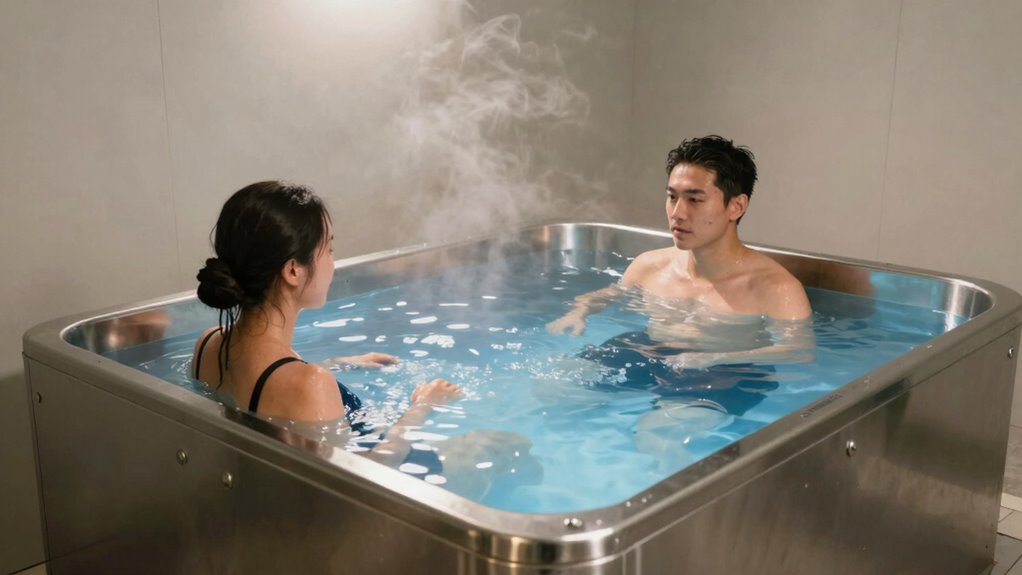

Ice baths involve colder temperatures (50-59°F) and typically require shorter sessions to handle the intense cold, making them ideal for rapid recovery after heavy exertion. Cold plunges are warmer (60-70°F), allowing for longer, more tolerable immersions suited for regular use. Both methods help reduce inflammation and support mental resilience, but choosing between them depends on your goals and tolerance. Keep exploring to discover how to optimize your recovery with either method.
Key Takeaways
- Ice baths use colder temperatures (50-59°F) for intense cold exposure, requiring shorter durations and mental resilience.
- Cold plunges are milder (60-70°F), allowing longer sessions (up to 20 minutes) with easier tolerability.
- Both methods reduce inflammation and speed muscle recovery, with ice baths offering rapid results and cold plunges providing gentler benefits.
- Ice baths boost mental toughness through cold shock, while cold plunges help calm the nervous system and promote relaxation.
- Alternating between both techniques maximizes recovery and mental resilience, depending on activity intensity and individual tolerance.
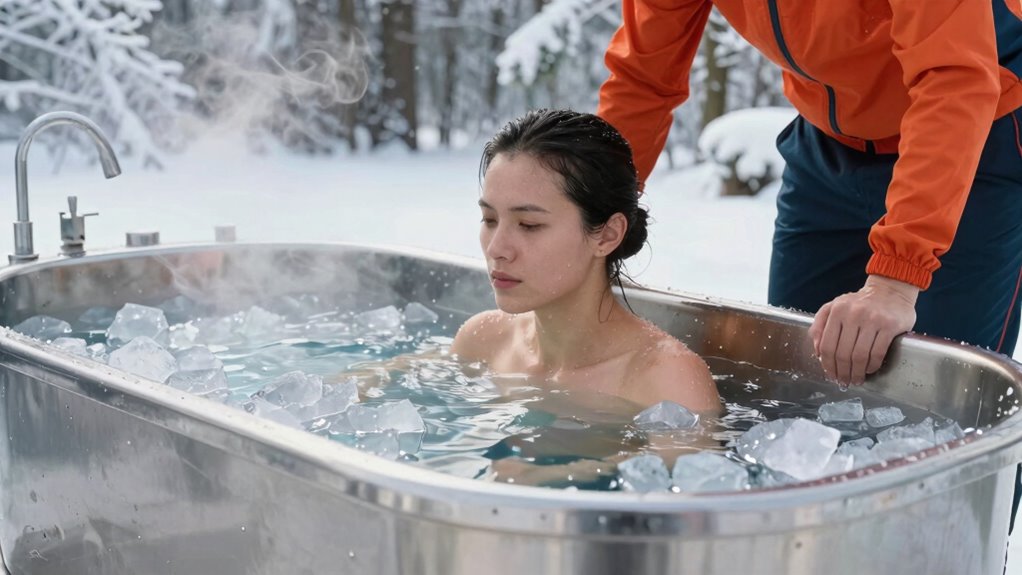
Ice baths and cold plunges are popular recovery methods for athletes and wellness enthusiasts, but many wonder how they differ and which might be more effective. Both involve immersing your body in cold water, yet they vary in temperature, duration, and potential benefits. Understanding these differences helps you optimize your recovery, enhance muscle recovery, and build mental resilience.
An ice bath typically involves submerging yourself in water cooled to around 50-59°F (10-15°C). Because of the lower temperature, ice baths are more intense and often used after heavy training sessions or competitions. The cold constricts blood vessels, reducing inflammation and swelling, which speeds up muscle recovery. When you step out, your body works to restore normal blood flow, flushing out metabolic waste and bringing fresh nutrients to tired muscles. This process can significantly decrease soreness and improve your ability to recover quickly for subsequent workouts. Additionally, braving the cold in an ice bath demands mental resilience. Enduring such low temperatures trains your mind to stay calm under stress, strengthening your mental toughness over time.
Ice baths involve submerging in 50-59°F water, reducing inflammation, speeding recovery, and building mental resilience.
Cold plunges, on the other hand, usually involve water around 60-70°F (15-21°C). They’re less extreme and can be more accessible for regular use. Because the water isn’t as cold, cold plunges tend to be more tolerable, allowing you to stay immersed longer—sometimes up to 15-20 minutes. This extended exposure can still promote muscle recovery but with a gentler approach. The moderate temperature helps reduce inflammation without causing the shock of colder baths, making it easier to incorporate into your routine consistently. Plus, cold plunges can be effective in calming your nervous system, helping you manage stress better and enhance mental resilience. They serve as a mental reset, calming a busy mind and preparing you for subsequent physical or mental challenges.
Choosing between an ice bath and a cold plunge often depends on your goals and tolerance. If you need rapid muscle recovery after intense activity, an ice bath might be more suitable. If you’re looking for a less intense way to boost recovery while building mental resilience, a cold plunge could be better. Both methods stimulate your nervous system and improve your body’s resilience to stress, but they do so differently. You might find that alternating between the two offers a balanced approach—using ice baths after major exertion and cold plunges for regular maintenance. In either case, consistency and proper timing are key to maximizing recovery benefits and strengthening your mental resilience over time.

Tomaje Upgrade 129 Gal XL Large Oval Ice Bath Tub for Athletes, Collapsible Cold Plunge Tub-Multiple Layered for Post-Exercise Recovery, Portable Bathtub for Home, Gyms, Indoor, Outdoor use
- Enhances Post-Exercise Recovery: Reduces muscle soreness and inflammation
- Large 129-Gallon Capacity: Over 4 ft. long with full leg extension
- Supports Up to 900 Pounds: Sturdy aluminum alloy frame with 16 detachable tubes
As an affiliate, we earn on qualifying purchases.
As an affiliate, we earn on qualifying purchases.
Frequently Asked Questions
Are Ice Baths Safer Than Cold Plunges for Everyone?
Ice baths aren’t necessarily safer for everyone, as they have differing risk profiles based on individual health considerations. If you have cardiovascular issues, diabetes, or nerve conditions, cold exposure could pose risks. Always consult your doctor before trying ice baths or cold plunges. While both methods can aid recovery, understanding your health status helps determine which option is safer for you, minimizing potential adverse effects.
Can Cold Exposure Improve Mental Health or Mood?
Cold exposure can boost your mental health and mood by triggering endorphin release and reducing stress. When combined with mindfulness meditation, it enhances mood enhancement and promotes mental clarity. You might notice improved resilience and a calmer outlook after regular cold exposure sessions. Just start gradually, listen to your body, and incorporate mindfulness practices to maximize mental benefits and support overall emotional well-being.
How Long Should I Stay in an Ice Bath or Cold Plunge?
You should aim for a duration of about 10 to 15 minutes in an ice bath or cold plunge, following recommended duration guidelines. For ideal timing, start with shorter sessions, around 5 minutes, and gradually increase as your body adapts. Listen to your body, and avoid staying longer than 15 minutes to prevent hypothermia or adverse effects. Always prioritize safety and proper recovery practices.
Do Ice Baths or Cold Plunges Help With Inflammation?
A stitch in time saves nine, so addressing inflammation early helps. Ice baths and cold plunges can markedly reduce muscle soreness and joint pain by constricting blood vessels and decreasing swelling. This quick cooling process helps flush out inflammatory substances, speeding recovery. If you’re battling inflammation, incorporating cold exposure into your routine can be a powerful tool to ease discomfort and promote healing effectively.
Is There a Difference in Recovery Benefits Between Cold Plunges and Ice Baths?
Yes, cold plunges and ice baths offer different recovery benefits. Cold plunges tend to promote better circulatory improvements, helping blood flow and nutrient delivery to muscles. Ice baths, on the other hand, may enhance muscle repair by reducing inflammation more effectively. Depending on your goals, you might prefer one over the other, but both can support recovery when used appropriately.
Conclusion
Whether you choose ice baths or cold plunges, both can boost recovery when used correctly. A recent study found that athletes experienced a 20% faster muscle recovery with cold immersion. Remember, timing and temperature matter—dipping for 10-15 minutes at 50-59°F is ideal. So, try incorporating these chilly techniques into your routine and see how they help you bounce back faster and perform better. Stay consistent, and the benefits will follow.