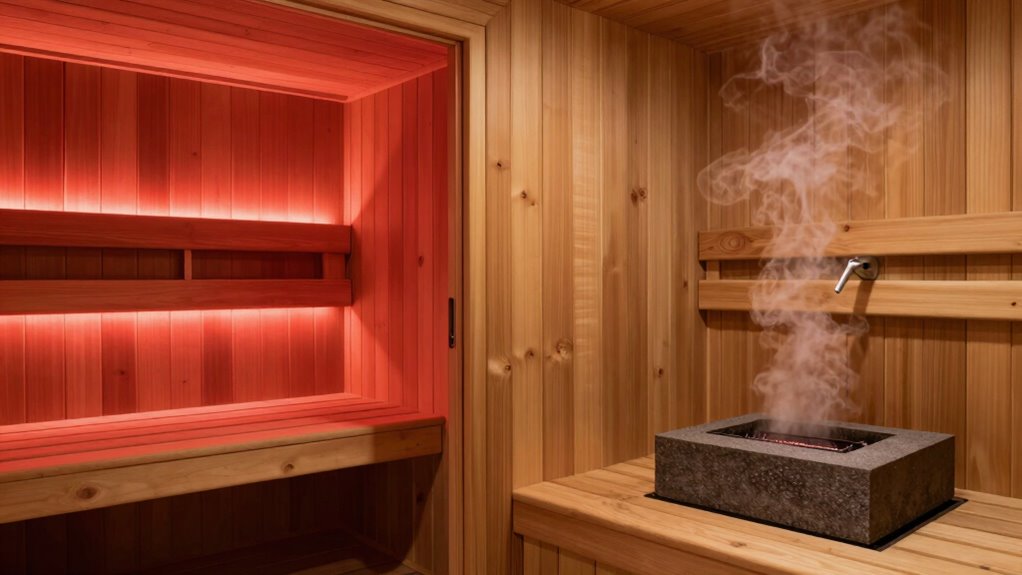

Infrared saunas heat your body directly with infrared light, allowing deeper tissue penetration at lower temperatures, making sessions more comfortable and longer. Traditional saunas warm the air to high temperatures, causing rapid sweating through convection, which offers a more intense experience. If you prefer gentler heat with deeper detox possibilities, infrared may suit you better. For a quick, vigorous sweat and social experience, traditional saunas are ideal. Explore more to discover which type aligns best with your wellness goals.
Key Takeaways
- Infrared saunas heat the body directly with infrared light at lower temperatures, while traditional saunas heat the air to higher temperatures for overall body warmth.
- Infrared heat penetrates deeper into tissues, promoting longer, gentler sweating, whereas traditional saunas induce rapid, heavy sweating through high ambient heat.
- Infrared saunas operate at lower temperatures, offering more comfort and longer sessions, while traditional saunas rely on intense heat for quick detoxification.
- Infrared therapy enhances circulation and muscle recovery with deep heat, whereas traditional saunas focus on cardiovascular relaxation and social experience.
- Choice depends on personal preference: infrared for gentler, prolonged sessions; traditional for intense heat and quick, vigorous sweating.
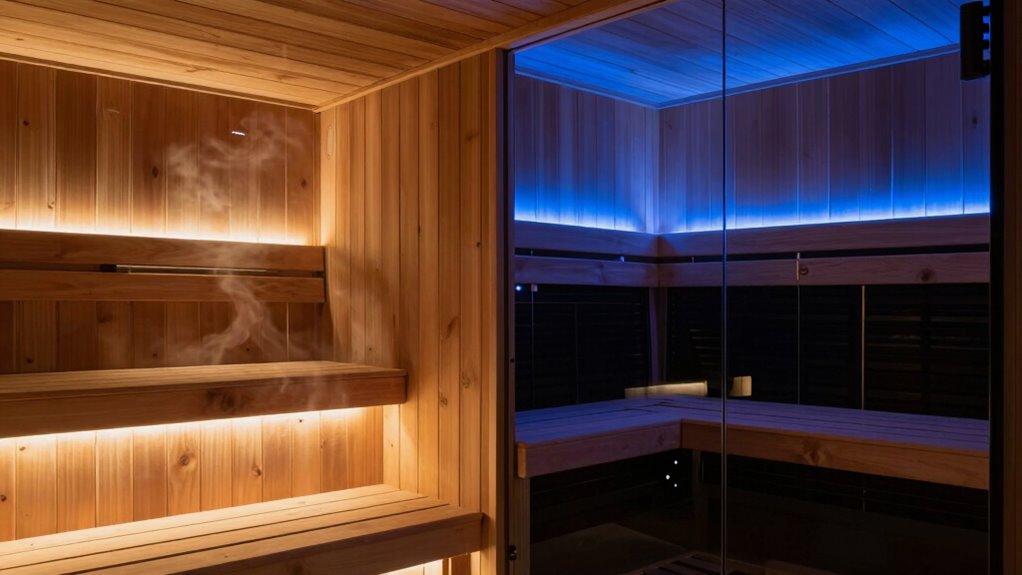
When it comes to relaxing and boosting your health, choosing between an infrared sauna and a traditional sauna can feel overwhelming. Both offer unique benefits, but understanding how they work can help you make an informed decision. One of the key differences lies in heat penetration. Infrared saunas use infrared light to directly heat your body, allowing the heat to penetrate deeper into your muscles and tissues. This means you often feel the warmth more intensely at lower temperatures compared to traditional saunas. On the other hand, traditional saunas heat the air to high temperatures, usually between 150°F and 185°F, which then heats your skin and muscles through convection and radiation. Because the heat in traditional saunas doesn’t penetrate as deeply, you might need to stay in longer to experience similar effects on your tissues.
Infrared saunas heat your body directly, penetrating deeper at lower temperatures than traditional saunas.
This difference impacts the detoxification process as well. When you sit in an infrared sauna, the deeper heat penetrates your skin, promoting sweating that can help release toxins stored in fat cells and tissues. Many users report that infrared saunas induce a more profuse sweat at lower temperatures, which some believe enhances detoxification. Conversely, traditional saunas cause you to sweat heavily due to the high ambient temperature, which can also aid in toxin release. However, the intense heat may make it harder for some people to stay in for extended periods, potentially limiting the detox benefits.
If your goal is detoxification, both types of saunas can be effective, but infrared units might offer a more comfortable experience at lower temperatures, encouraging longer sessions. This could translate into increased detoxification since longer sweating sessions typically help flush out more toxins. Additionally, infrared therapy is often promoted for its ability to improve circulation and reduce muscle soreness, thanks to its deep heat penetration. Traditional saunas, meanwhile, are valued for their ability to rapidly elevate your overall body temperature, promoting relaxation, cardiovascular health, and a quicker, more intense sweating response.
Ultimately, your choice depends on your preferences and health goals. If you prefer a gentler experience with deeper heat penetration and potentially more effective detoxification at lower temperatures, an infrared sauna might suit you best. If you enjoy the high heat and the social or traditional ritual of a sauna, then a traditional model could be more appealing. Both types can contribute positively to your health, but knowing how they operate helps you select the one that aligns with your needs.
Frequently Asked Questions
Which Sauna Type Is More Energy-Efficient?
You’ll find infrared saunas are more energy-efficient because they use less energy to produce heat, resulting in lower energy consumption. This efficiency not only saves you money but also reduces the environmental impact. Infrared heaters directly warm your body and surroundings more effectively, so they require less power overall. Choosing an infrared sauna helps you enjoy relaxation while being kinder to the environment and your utility bills.
How Do Maintenance Needs Differ Between Infrared and Traditional Saunas?
Imagine tending a gentle garden; your infrared sauna requires less frequent cleaning, thanks to its smooth surfaces that resist grime. Its components, crafted with durability in mind, demand minimal upkeep, so you spend more time enjoying relaxation. Conversely, traditional saunas may need more regular cleaning to remove moisture buildup, and their parts might require occasional maintenance due to exposure to heat and humidity. Your choice influences your maintenance routine and longevity.
Are There Specific Health Conditions Suited for One Type Over the Other?
If you have certain health conditions, infrared saunas might be better for you, especially for chronic pain or muscle recovery, thanks to their deeper heat penetration. Traditional saunas can benefit cardiovascular health and relaxation. However, check contraindications like low blood pressure or certain skin conditions before use. Always consult your healthcare provider to make sure the medical benefits outweigh potential risks for your specific health needs.
Can Both Sauna Types Be Used at the Same Time?
You can definitely use both sauna types during joint sessions if your health allows. Combining infrared and traditional saunas can enhance relaxation and detoxification, but it’s best to start with shorter sessions and listen to your body. Remember, alternating between the two provides varied benefits, so a joint usage approach can be quite effective. Always consult a healthcare professional if you have concerns or specific health conditions before trying combined sessions.
What Are the Long-Term Cost Differences Between Infrared and Traditional Saunas?
You’ll find that infrared saunas generally have a lower cost comparison over time because they consume less energy and are cheaper to operate. Installation expenses for infrared units tend to be minimal, often just requiring a simple power outlet, unlike traditional saunas which might need more extensive setup. While initial costs vary, infrared saunas usually save you money long-term due to lower energy bills and easier installation.
Conclusion
Imagine stepping into two different worlds: one where gentle sunlight warms your skin softly, and another where a roaring fire surrounds you with intense heat. Both saunas offer unique journeys—infrared feels like a delicate whisper, penetrating deeply, while traditional heats you like a blazing inferno. Your choice shapes your experience, much like selecting a favorite melody. Whichever you choose, you’re embracing a path to relaxation and wellness, each with its own vibrant dance of heat and comfort.