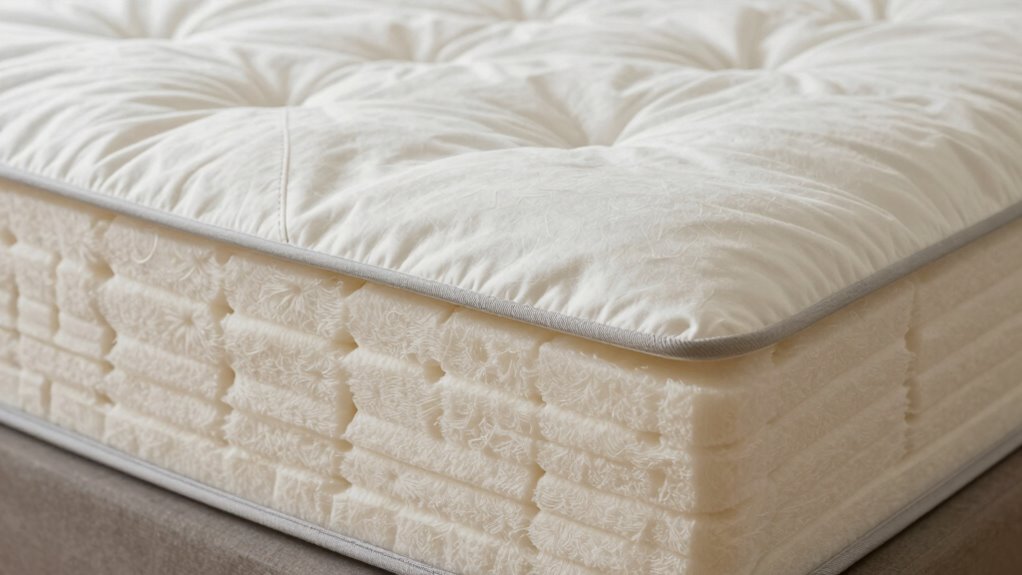

Many people overlook mattress thickness, yet it’s essential for proper support and spinal alignment. If your mattress is too thin or too thick for your sleep posture, you can wake up sore and stiff. Side sleepers need thicker, plush mattresses, while stomach sleepers should opt for thinner options. The right thickness helps prevent pressure points and reduces morning aches. Keep exploring to discover how choosing the right mattress specs can transform your sleep quality.
Key Takeaways
- Many overlook mattress thickness, which directly influences spinal alignment and pressure relief, causing morning soreness.
- Incorrect thickness—too thick or thin—can misalign the spine, leading to discomfort upon waking.
- Sleep position determines ideal mattress thickness; ignoring this can result in inadequate support and pain.
- Focusing only on firmness without considering thickness often results in poor support and soreness.
- Properly matching mattress thickness to your sleep posture enhances support, reduces stiffness, and improves sleep quality.
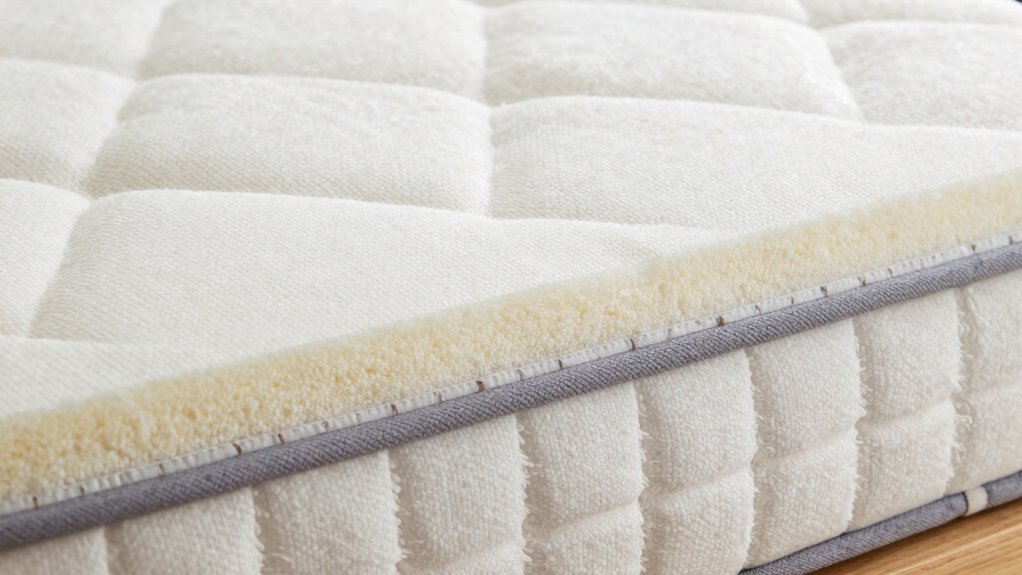
Are you familiar with the key mattress specs that can help you choose the right bed? If not, you might be unknowingly setting yourself up for restless nights and waking up sore. One of the most overlooked yet essential specs is mattress thickness, which directly impacts your sleep posture and overall comfort. Your sleep posture, whether you’re a side sleeper, back sleeper, or stomach sleeper, determines what kind of mattress thickness will support your body properly. For example, side sleepers typically need a thicker mattress—around 12 to 14 inches—to cushion the shoulders and hips, preventing pressure points. Conversely, stomach sleepers often prefer a thinner mattress—about 8 to 10 inches—so their hips don’t sink too deeply and cause spinal misalignment.
Choosing the right mattress thickness depends on your sleep position for proper support and comfort.
Your sleep posture influences how your body interacts with your mattress, and ignoring this factor can lead to discomfort and pain. If your mattress is too thin, it may not provide enough support for your natural curves, especially if you sleep in a position that requires more cushioning or support. This can cause persistent aches in your shoulders, hips, or back. On the other hand, a mattress that’s too thick might push your spine out of alignment, leading to soreness even if it initially feels plush. Finding the right mattress thickness tailored to your sleep posture helps keep your spine aligned, reducing pressure points and promoting restorative sleep.
Understanding the connection between sleep posture and mattress thickness helps you make more informed choices. For instance, if you sleep on your side, a thicker, plush mattress helps absorb pressure and keeps your shoulders and hips properly supported. If you’re a back sleeper, a medium-thickness mattress balances support and comfort, maintaining spinal alignment without sacrificing softness. Stomach sleepers benefit from a thinner mattress that prevents their hips from sinking too far, which can misalign the spine and cause pain over time.
Many people overlook the importance of mattress thickness because they focus solely on firmness or material type. However, thickness impacts how well your body is supported throughout the night, directly affecting your sleep quality. When you pick a mattress that aligns with your sleep posture, you’ll likely wake up feeling more refreshed and less sore. It’s worth taking the time to evaluate your preferred sleeping position and choose a mattress with the appropriate thickness. Doing so can prevent those mornings of stiffness and soreness, making your sleep more restorative and comfortable every night.

ZOOOBELIVES Inflatable Camping Sleeping Pad, 4-Inch Thick Full Air Support, No Bottoming Out for Side Sleepers, Camping & Backpacking Mattress with Built-in Foot Pump, Durable & Compact – Airlive2000
- Maximum Comfort for Side Sleepers: 4-inch full air chambers for even support
- Full Air Support Structure: Edge-to-edge air-filled design for even pressure
- Built-in Foot Pump: Easy manual inflation without batteries
As an affiliate, we earn on qualifying purchases.
As an affiliate, we earn on qualifying purchases.
Frequently Asked Questions
How Often Should I Replace My Mattress Based on Specs?
Imagine your mattress as a trusted partner that wears over time. Typically, you should replace it every 7-10 years, depending on firmness preferences and mattress lifespan. As it ages, it loses support and comfort, leading to sore mornings. Keep an eye out for sagging, uneven surfaces, or increased aches. Regularly assess these signs, and don’t hesitate to upgrade for better sleep and health.
Do Mattress Specs Vary by Sleep Position?
Yes, mattress specs do vary by sleep position. If you sleep on your side, look for a softer mattress with good pressure relief, often made from memory foam or softer foam materials. Back sleepers benefit from medium-firm mattresses that support the natural curve of your spine, while stomach sleepers need firmer mattresses with sturdy materials to prevent sagging. Your sleep posture directly influences the ideal mattress specs for comfort and support.
Are Higher-Spec Mattresses Always More Comfortable?
A higher-spec mattress isn’t always the dream ticket; it’s more like a treasure map with hidden pitfalls. Comfort depends on your unique sleep needs, not specs alone. Take advantage of sleep trials to test comfort, and check the mattress warranty for peace of mind. Sometimes, a mid-range mattress with the right support beats a high-end model that doesn’t suit your sleep style, making your nights much more restful.
How Do Mattress Specs Impact Allergy Sufferers?
Your mattress specs directly impact allergy relief by influencing allergen buildup. If you choose a hypoallergenic mattress with dust mite barriers and breathable materials, you’ll reduce allergen accumulation and improve sleep quality. Look for features like antimicrobial fabrics and easy-to-clean covers. These specs help keep allergens at bay, so you wake up feeling refreshed instead of stuffy or sore. Prioritizing allergen-resistant specs makes a noticeable difference for allergy sufferers.
Can Adjusting Mattress Specs Improve Sleep Quality Over Time?
Yes, adjusting your mattress specs can improve your sleep quality over time. Think of it as tuning a musical instrument—small changes to firmness or support can enhance your sleep cycle, making restful nights more consistent. When you optimize your mattress for comfort and alignment, it promotes better sleep and extends mattress longevity, ensuring you wake up refreshed rather than sore or restless, turning each night into a symphony of restorative sleep.
Conclusion
Don’t overlook those mattress specs—they’re the map to your best sleep. Ignoring them is like sailing without a compass, only to wonder why you wake up sore. By understanding the details, you steer toward comfort and wake up refreshed, ready to conquer your day. Remember, the right mattress isn’t just a purchase; it’s an investment in yourself. So, ask the questions, know the specs, and sleep soundly—because your best rest depends on it.