Poor indoor air quality can quietly ruin your sleep by causing allergies, respiratory issues, and restless nights. Dust, pollen, pet dander, and excess humidity make it harder to breathe and stay comfortable while you rest. Using an air purifier helps remove irritants, while controlling humidity prevents mold and dryness. Making these simple adjustments can transform your sleep environment, so you wake up feeling refreshed—keep going to discover how these tips can improve your nights even more.
Key Takeaways
- Use an air purifier to remove dust, pollen, pet dander, and pollutants that disrupt sleep quality.
- Maintain indoor humidity between 40-60% to prevent mold growth, dry skin, and nasal congestion.
- Regularly clean bedding and air filters to reduce allergens and airborne irritants.
- Monitor humidity levels with hygrometers and adjust with humidifiers or dehumidifiers as needed.
- Ensure good ventilation and minimize indoor pollutants for a healthier, more restful sleep environment.
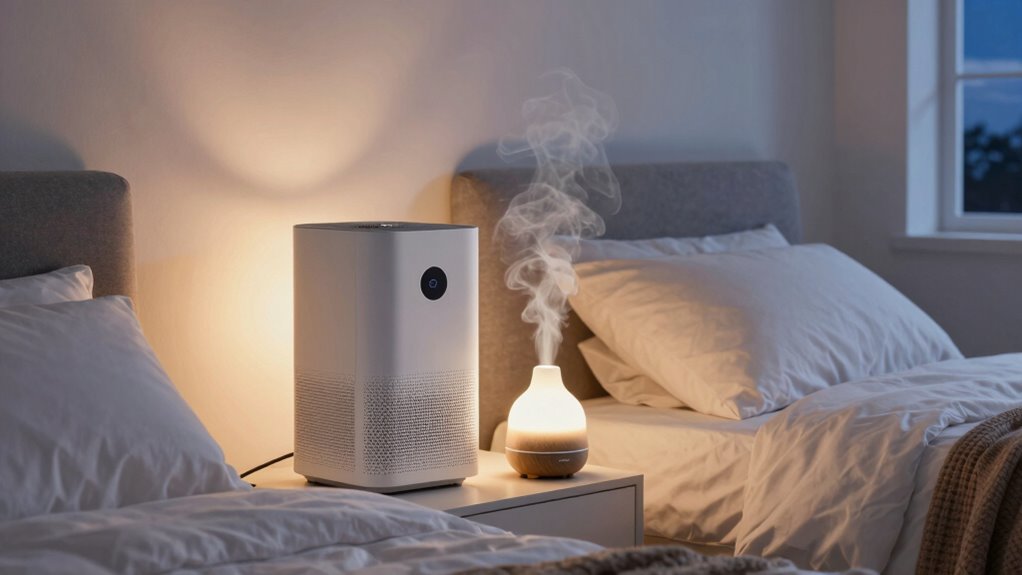
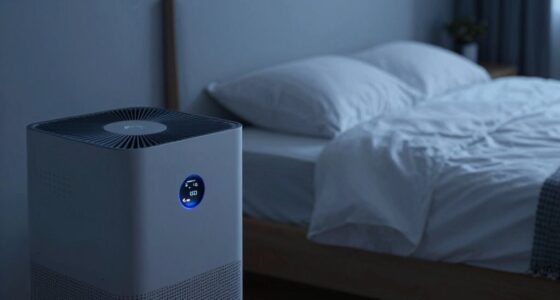
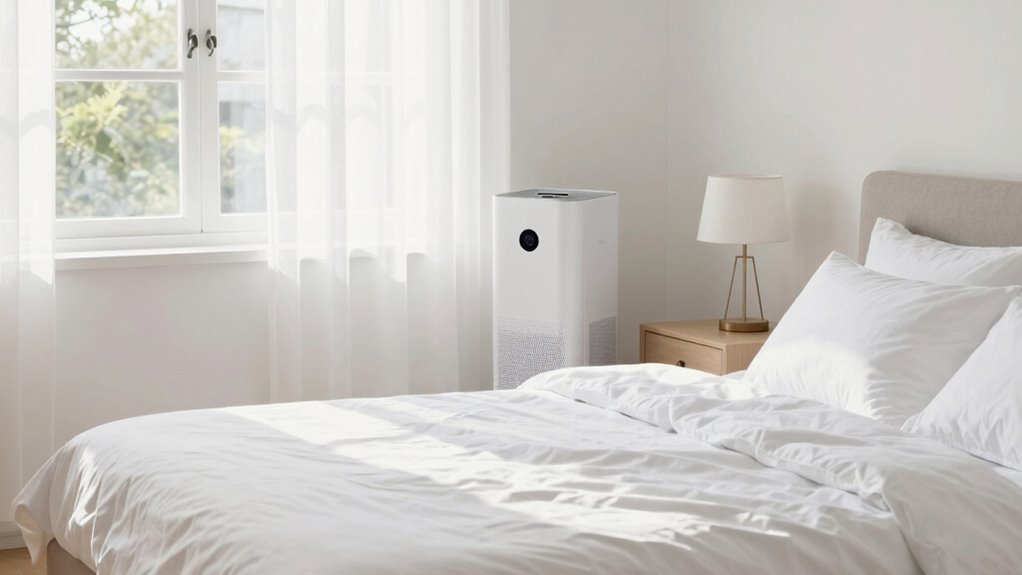
Your bedroom air quality directly impacts the quality of your sleep. When the air isn’t clean or properly balanced, it can lead to restless nights, allergies, and even respiratory issues. To improve your sleep environment, consider using air purifiers. These devices actively remove dust, pollen, pet dander, and airborne pollutants, ensuring that what you breathe is as clean as possible. Air purifiers are especially helpful if you suffer from allergies or asthma, as they substantially reduce irritants that can disrupt your sleep cycle. Keep the purifier running consistently, especially during sleep hours, so the air stays fresh and free of harmful particles.
Another essential aspect often overlooked is humidity control. Too much humidity creates a damp environment that promotes mold growth and dust mites, both of which can trigger allergies and worsen breathing problems. Conversely, overly dry air can cause throat irritation, dry skin, and congestion, all of which interfere with restful sleep. Using a humidifier or dehumidifier allows you to maintain ideal humidity levels—ideally between 40% and 60%. This balance keeps your nasal passages moist, reduces static electricity, and prevents the growth of mold and dust mites. It’s a simple but effective way to make your bedroom more comfortable and conducive to sleep.
Balancing humidity isn’t just about comfort; it’s about health. When your room’s humidity is too high, you might notice a musty smell or see condensation on windows, indicating excess moisture. A dehumidifier can help extract that moisture, creating a drier environment that discourages mold growth. On the other hand, if your room feels dry and your skin is flaky, a humidifier can add moisture back into the air. Many modern devices come with built-in hygrometers, so you can monitor and adjust humidity levels easily. Keeping the air at the right humidity level not only improves your breathing but also reduces the likelihood of respiratory infections and skin irritations that disturb sleep. Additionally, proper air quality management can prevent long-term health issues related to poor indoor air.
Incorporating air purifiers and humidity control devices into your bedroom setup isn’t complicated, but it makes a profound difference. Clear, clean air with proper moisture levels helps regulate your body temperature, eases breathing, and minimizes allergens that can cause nighttime discomfort. By creating an environment that’s both clean and balanced, you’re setting yourself up for deeper, more restorative sleep. No matter how comfortable your mattress or how dark your curtains are, if the air quality isn’t right, your sleep quality suffers. Fixing these issues is a straightforward step you can take today to enjoy better nights and more energized mornings.

LEVOIT Air Purifiers for Bedroom Home Dorm, AHAM VERIFIDE, 3-in-1 Filter Cleaner With Aroma Pad, Filters Smoke, Allergens, Pet Dander, Odor, Dust, Office, Desktop, Core Mini-P, White
𝗪𝗛𝗬 𝗖𝗛𝗢𝗢𝗦𝗘 𝗔𝗛𝗔𝗠 𝗩𝗘𝗥𝗜𝗙𝗜𝗗𝗘 𝗔𝗜𝗥 𝗣𝗨𝗥𝗜𝗙𝗜𝗘𝗥𝗦: AHAM (Association of Home Appliance Manufacturers) is an ANSI-accredited organization that sets…
As an affiliate, we earn on qualifying purchases.
As an affiliate, we earn on qualifying purchases.
Frequently Asked Questions
Can Indoor Plants Improve Bedroom Air Quality Effectively?
Indoor plants can improve your bedroom air quality effectively, but only if you maintain them properly. Regular plant maintenance, like watering and cleaning, helps them filter indoor air toxins better. While they do remove some pollutants, don’t rely solely on plants for air purification. Combine them with good ventilation and air purifiers to maximize benefits, creating a healthier sleeping environment and reducing indoor air toxins that could disrupt your sleep.
How Often Should I Change My Bedroom Air Filters?
You should change your bedroom air filters every 30 to 60 days, depending on the filter’s air filter lifespan and your household needs. It’s a coincidence that neglecting this schedule often coincides with poor sleep, as dirty filters reduce air quality. Regular filter replacement keeps pollutants out and maintains a healthy environment. Set reminders to stick to your filter replacement schedule, ensuring fresh, clean air for better sleep.
Do Air Purifiers Significantly Improve Sleep Quality?
Yes, air purifier benefits can considerably improve your sleep quality. By filtering out allergens, dust, and pollutants, an air purifier creates a cleaner, healthier environment in your bedroom. When you breathe cleaner air, your body relaxes more easily, reducing nighttime disturbances and promoting deeper sleep. Investing in a good purifier helps you wake up feeling refreshed and ensures your sleep isn’t disrupted by poor air quality.
Are There Specific Cleaning Products That Worsen Air Quality?
Yes, certain cleaning products can worsen your air quality. Products with strong chemical fumes and artificial fragrances often trigger fragrance allergies and release volatile organic compounds (VOCs) that pollute the air. To improve your bedroom environment, opt for fragrance-free, natural cleaners like vinegar or baking soda. Always ventilate well during and after cleaning to reduce chemical buildup, helping you breathe easier and sleep better.
What Symptoms Indicate Poor Bedroom Air Quality Affecting Sleep?
If you notice frequent coughing, sneezing, or itchy eyes, poor bedroom air quality might be affecting your sleep. You may experience respiratory discomfort or wake up congested. Airborne allergens like dust or pet dander can trigger these symptoms, making restful sleep hard to achieve. Keep an eye out for these signs, and consider improving ventilation, reducing allergens, and using air purifiers to breathe easier and sleep better.

Airthereal 2-in-1 Air Purifier & Humidifier Combo for Large Room up to 1200 ft², 3-Stage Filters, Air Quality Monitor and Quiet Sleep Mode, Evaporative Humidifier with Hygrometer, iF Design Award 2026
Air Purification: AEH300 efficiently purifies the air in rooms up to 1200 ft². Its advanced 3-stage filtration system…
As an affiliate, we earn on qualifying purchases.
As an affiliate, we earn on qualifying purchases.
Conclusion
Improving your bedroom air quality can truly transform your sleep. Imagine Sarah, who struggled with restless nights until she invested in an air purifier; her sleep became more restful, and she woke up refreshed. Don’t overlook your air; simple changes like opening windows or adding plants make a difference. By taking these steps, you’re giving yourself the gift of better sleep and overall well-being. Your peaceful nights are just a few air improvements away.

Dehumidifier, 95OZ Dehumidifier for Home 1000 Sq.Ft – Quiet with Auto Shut Off & Relaxing 7 Color Ambient Light,Ideal for Livingroom, Bedroom, Basement(Black)
Semiconductor dehumidifiers use thermoelectric cooling to remove moisture from the air. They create a drier, more comfortable environment…
As an affiliate, we earn on qualifying purchases.
As an affiliate, we earn on qualifying purchases.

Airhub Air Purifier for Bedroom Home, Covers Up to 880 Ft², True HEPA Quiet 3-in-1 Air Purifiers Filter, 20dB Sleep Mode, Air Cleaner, 360° Intake, Remove Dust, Smoke, Pet Dander & Odors, White
CLEANER AIR IN MINUTES: Designed for fast and efficient purification, this air purifier helps reduce common airborne pollutants…
As an affiliate, we earn on qualifying purchases.
As an affiliate, we earn on qualifying purchases.