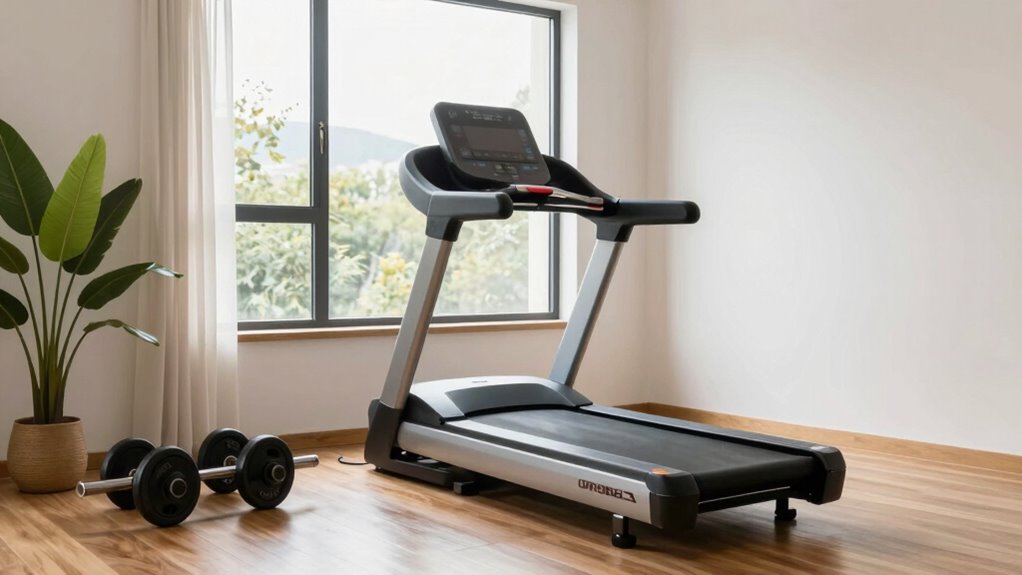

Good air quality in your home gym is more important than motivation for safe, effective workouts. Proper ventilation helps remove excess carbon dioxide, humidity, and airborne pollutants like dust, pet dander, and VOCs, preventing breathing issues and discomfort. It also reduces mold growth and bacteria. Ensuring continuous airflow and using ventilation devices keeps your space fresh and healthy. Keep going to discover ways to optimize your gym’s air system for maximum benefits.
Key Takeaways
- Proper ventilation ensures fresh air, reducing indoor pollutants and preventing buildup of dust, allergens, and VOCs during workouts.
- Good airflow maintains optimal humidity levels, preventing mold growth and bacteria that can harm respiratory health.
- Ventilation removes excess carbon dioxide generated during exercise, helping maintain clear breathing and energy.
- Combining natural and mechanical ventilation enhances air exchange, creating a safer, more comfortable workout environment.
- Proper air circulation supports better performance and reduces health risks linked to poor indoor air quality.
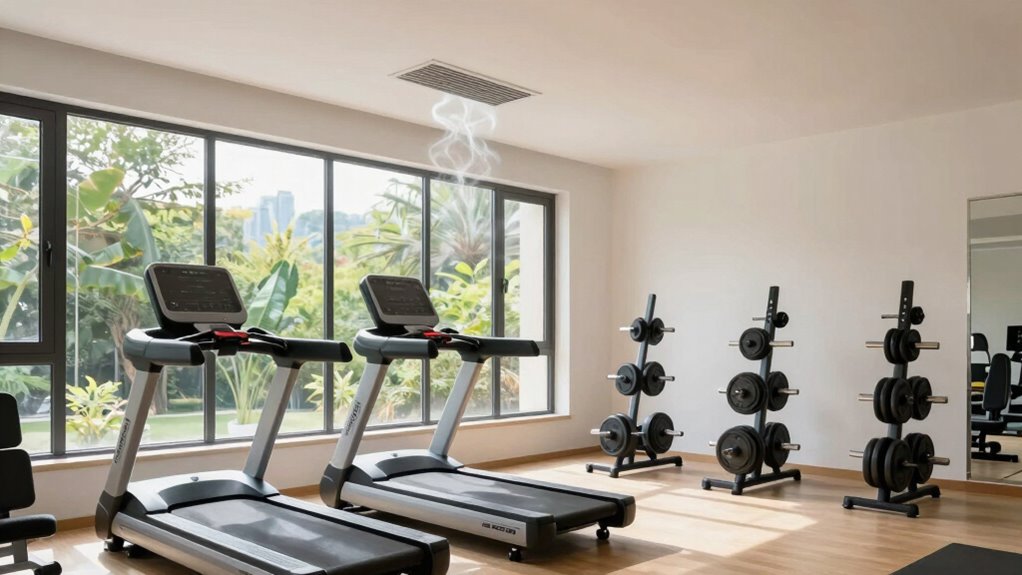
Creating proper ventilation in your home gym is vital to guarantee a comfortable and safe workout environment. When you exercise in an enclosed space, poor air quality can quickly become a problem, making it harder to breathe, decreasing your energy, and even increasing your risk of illness. Effective ventilation ensures good air circulation, which is key to maintaining a fresh space and preventing your gym from turning into a stagnant, unhealthy environment. By promoting continuous air movement, you help your body get the oxygen it needs and remove excess carbon dioxide. This process not only boosts your performance but also reduces the buildup of indoor pollutants that can accumulate from sweat, dust, and cleaning products.
Proper ventilation keeps your home gym fresh, safe, and healthy for effective workouts and better air quality.
One of the most important reasons to focus on ventilation is pollutant removal. During workouts, your body produces more heat and moisture, which creates a humid environment that can foster mold growth and bacteria if not properly ventilated. Additionally, indoor air can trap airborne contaminants like dust, pet dander, and VOCs (volatile organic compounds) from cleaning supplies or gym equipment. Without proper air circulation, these pollutants can linger, leading to discomfort, allergies, or even respiratory problems over time. Proper ventilation helps to dilute these contaminants, making the air safer to breathe and reducing the potential for irritation or health issues.
You can improve air circulation in your home gym by installing or upgrading your ventilation system. Mechanical options like exhaust fans, ceiling fans, or air purifiers with HEPA filters actively move air and trap pollutants before they circulate back into your space. If your gym is near a window, opening it during workouts can considerably enhance airflow, especially when paired with a fan to create a cross-breeze. For maximum pollutant removal, consider combining natural ventilation with air filtration devices, which can capture fine particles and VOCs that traditional ventilation might miss. Regularly cleaning your gym space also helps reduce dust and allergens, making the air cleaner and healthier.
Beyond just opening windows, integrating ventilation strategies that prioritize air exchange is vital. The goal is to keep fresh air flowing in and stale, polluted air flowing out. This continuous exchange helps prevent the buildup of airborne contaminants and keeps the environment healthy. Remember, good air circulation isn’t just about comfort—it’s about your health and safety. Proper air circulation strategies help ensure your home gym remains a safe and inviting space for your fitness routine. By ensuring proper ventilation, you create a space where you can work out effectively without worrying about pollutants or poor air quality, making your home gym a true sanctuary for fitness.
As an affiliate, we earn on qualifying purchases.
Frequently Asked Questions
How Does Poor Ventilation Affect Workout Performance?
Poor ventilation reduces air quality, making it harder for you to breathe freely during workouts. When your gym lacks fresh air, you might experience fatigue faster and struggle to maintain your workout efficiency. Low oxygen levels can impair your stamina and focus, diminishing overall performance. To maximize your workout results, guarantee proper ventilation, so fresh air circulates, and your body gets the oxygen it needs to perform at its best.
What Are the Signs of Inadequate Air Quality in a Home Gym?
You might notice poor air quality in your home gym through indicators like stuffy air, lingering odors, or excessive humidity. Ventilation signs include condensation on windows, visible dust, or foggy windows after workouts. If you feel breathless, dizzy, or overly tired during exercise, those are also signs your air quality isn’t ideal. Keep an eye on these air quality indicators and improve ventilation to breathe easier and boost your workout performance.
Can Ventilation Improvements Prevent Gym-Related Respiratory Issues?
Yes, ventilation improvements can prevent gym-related respiratory issues by reducing indoor pollutants and enhancing air circulation. You’ll breathe easier, lower exposure to airborne contaminants, and maintain better respiratory health. Proper air circulation flushes out dust, fumes, and bacteria, creating a safer workout environment. When you prioritize ventilation, you actively protect your lungs, support overall wellness, and foster a cleaner, healthier space for every workout.
Are There Specific Ventilation Systems Recommended for Home Gyms?
You should consider installing a dedicated ventilation system for your home gym, like an exhaust fan or an HVAC system with good filtration. These improve indoor air circulation and help eliminate pollutants. Types of ventilation systems include exhaust fans, air purifiers, and heat recovery ventilators (HRVs). Choose one based on your space size and budget to make certain of fresh, healthy air during your workouts.
How Often Should I Clean or Replace Ventilation Filters?
Like a car needs regular oil changes, your ventilation system requires consistent upkeep. You should clean or replace your air filters every 1 to 3 months, depending on usage and air quality. Follow your ventilation schedule to ensure peak air filter maintenance. This prevents dust, allergens, and odors from building up, keeping your home gym fresh and safe while you work out. Regular maintenance is key to a healthy workout environment.
Conclusion
Remember, good ventilation isn’t just about comfort—it can boost your workout performance and health. Studies show that poor indoor air quality can reduce your lung function by up to 30%, making it harder to breathe and stay energized. So, next time you hit your home gym, prioritize fresh air over just motivation. By keeping your space well-ventilated, you’ll breathe easier, feel better, and get the most out of every workout.