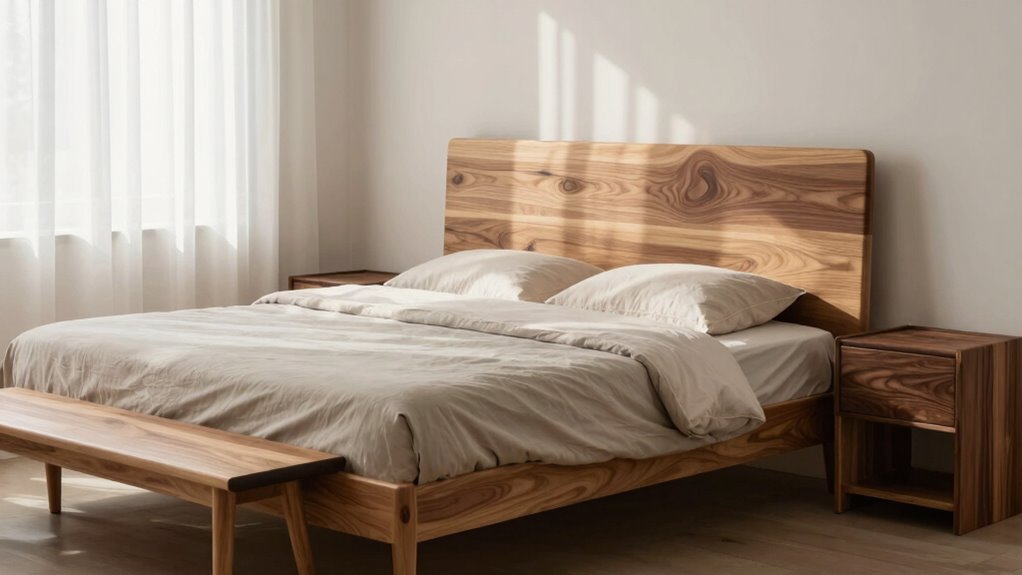

To master mixing wood tones in your bedroom, start by choosing a dominant wood tone like warm oak or rich walnut to create a neutral base. Balance light vintage pieces with dark modern accents, ensuring undertones match for harmony. Distribute different wood shades evenly across the space to avoid clumping. Incorporate varied textures and complementary accessories for added interest. Keep these principles in mind, and you’ll discover more ways to craft a cohesive, stylish bedroom.
Key Takeaways
- Choose a dominant wood tone to create a cohesive visual foundation in the room.
- Pair contrasting wood tones with shared undertones for balanced visual interest.
- Distribute different wood shades evenly throughout the space to ensure flow and cohesion.
- Incorporate varied textures and finishes to enhance visual depth and harmony.
- Use accessories and textiles that complement and unify the diverse wood tones for a polished look.
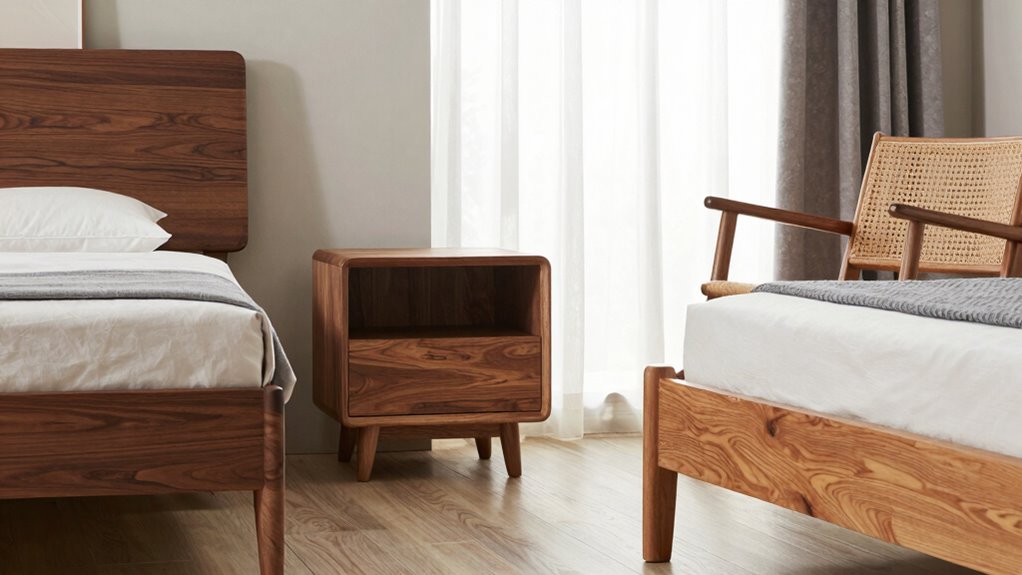
Mixing wood tones in bedrooms can add depth and visual interest to your space, but it requires a thoughtful approach to avoid a cluttered or mismatched look. If you’re incorporating vintage furniture alongside modern accents, your goal is to create harmony between old and new. Start by selecting a dominant wood tone—perhaps a warm oak or rich walnut—that anchors your room. This piece acts as a neutral base, grounding the space and providing a consistent element for your eye to follow.
When adding other wood tones, consider contrast carefully. For example, pairing a light, distressed vintage dresser with sleek, dark modern nightstands can create a balanced visual appeal. The key is to guarantee that these pieces share undertones—cool or warm—that tie them together. If your vintage furniture has a golden hue, look for modern accents with similar warm undertones, like honey-colored wood or warm metal finishes. Conversely, cooler-toned woods, such as ash or gray-stained pieces, work well with modern accents in shades of slate or brushed nickel.
Mixing wood tones also calls for mindful placement. Avoid clustering similar shades in one corner; instead, spread them throughout the room to create a cohesive flow. For instance, if your vintage wardrobe features a weathered gray finish, balance it with a modern bed frame in a matching tone or a sleek chair with similar wood accents. This distribution prevents the room from feeling disjointed and helps your eye move smoothly across different elements. Incorporating wood tone harmony is essential for achieving a cohesive look. Additionally, paying attention to visual balance can further enhance the overall aesthetic. Incorporating varied textures and finishes can also add visual interest and prevent the space from feeling monotonous. Being mindful of color coordination can further ensure that all elements work harmoniously together. To achieve a truly layered and dynamic look, consider integrating layered textures, such as soft textiles or matte and glossy surfaces, which can complement your wood tones beautifully.
Finally, consider your accessories to unify the space. Incorporate textiles, artwork, and decorative items that complement your wood tones. Soft, neutral bedding can serve as a backdrop that allows your furniture and accents to stand out. By paying attention to these details, you create a personalized bedroom that feels both curated and inviting, blending vintage charm with modern sophistication seamlessly.
As an affiliate, we earn on qualifying purchases.
Frequently Asked Questions
Can You Mix Different Wood Tones Without Clashing?
Yes, you can mix different wood tones without clashing by focusing on wood tone contrast and harmonizing wood textures. Use varying shades to create visual interest, but keep a consistent undertone, like warm or cool, to tie the look together. Combine smooth and textured woods thoughtfully, ensuring they complement each other. This balance helps your bedroom feel cohesive and stylish without overwhelming the space.
What Are the Best Wood Tones for Small Bedrooms?
For small bedrooms, opt for light wood tones like pale oak or maple, which can make the space feel larger and more open. These tones align with wood tone psychology, promoting calmness and simplicity. Modern wood finishes with smooth, matte textures add sophistication without overwhelming the room. Using a mix of these light tones with subtle darker accents creates contrast, making your small bedroom feel cozy yet airy.
How Do Lighting Conditions Affect Wood Tone Choices?
They say “lighting makes or breaks a room,” and it’s true. Natural light brings out warm undertones in wood, making lighter tones feel cozy, while artificial lighting can cast yellow or blue hues that change your perspective. To make the right choice, consider your room’s natural light during the day and your artificial lighting at night. Adjust your wood tones accordingly to create a balanced, inviting space that feels just right.
Are There Specific Wood Tones to Avoid in Bedrooms?
You should avoid overly dark or reddish wood stains for bedroom furniture, as they can make the space feel smaller or more intense. Also, steer clear of furniture that clashes sharply in contrast; instead, opt for complementary wood tones that create a balanced, cohesive look. Too much contrast can disrupt the relaxing atmosphere, so choose wood tones that harmonize, providing a calm, inviting environment.
How Can I Incorporate Painted Wood With Natural Tones?
You can incorporate painted wood with natural tones by choosing wall paint palettes that complement both. Opt for neutral or soft hues on the walls to create harmony with natural wood, and select furniture styles that blend modern painted pieces with rustic or organic natural wood. Keep a cohesive color theme across your room, and balance painted accents with natural wood elements for a stylish, unified look.
Conclusion
By mixing wood tones thoughtfully, you create a warm, inviting bedroom that feels personal and stylish. Don’t worry about matching every piece perfectly—think of it as layering different shades of the same color family for depth. For example, pair a dark walnut bed with lighter oak nightstands and a medium-toned dresser. This approach adds dimension without chaos, making your space feel cohesive yet lively. Embrace the variety, and your bedroom will look effortlessly chic.