
To test if your cookware works with induction, simply stick a magnet to its bottom. If the magnet clings firmly, your pot or pan is compatible, and you can use it safely. If it doesn’t stick, you’ll need to upgrade to ferromagnetic cookware made of cast iron or magnetic stainless steel. Knowing this before you buy helps guarantee energy-efficient cooking and avoids frustration. Keep exploring to find tips on choosing the best induction-compatible pots and pans.

Get travel and outdoor gear delivered free — and shop member deals
- Fast, free delivery on millions of items
- Access to Prime Big Deal Days deals on October 6–7
- Prime Video, Amazon Music and more included
Key Takeaways
- Use a magnet to test your cookware; if it sticks firmly, it’s induction-compatible.
- Not all stainless steel or cookware work; check for ferromagnetic properties before buying.
- Proper testing ensures efficient heating and prevents energy waste during cooking.
- Induction-compatible cookware includes cast iron and certain layered or magnetic stainless steel pans.
- Confirm compatibility beforehand to maximize performance, safety, and energy efficiency.
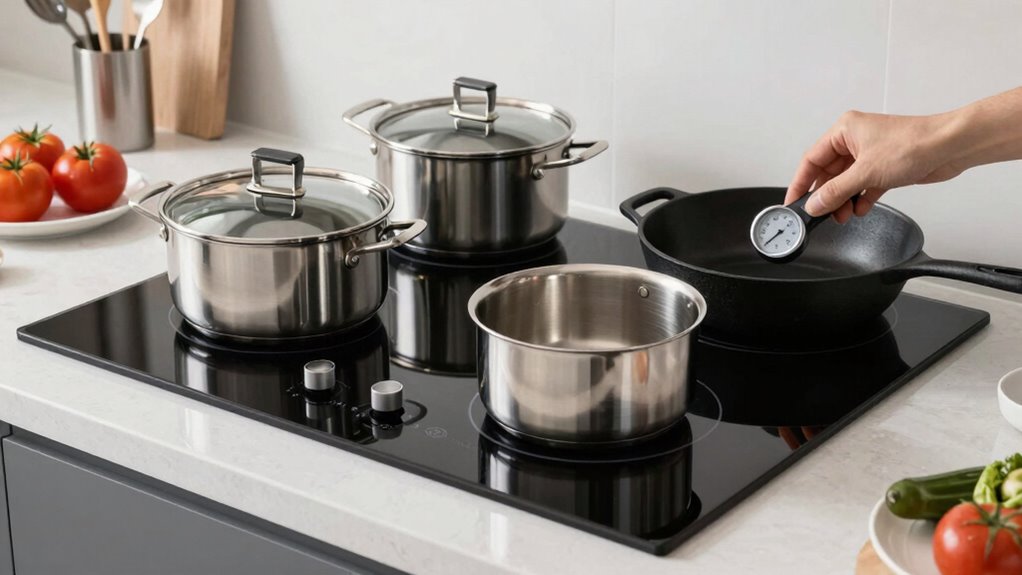
Have you ever wondered how induction cooking heats your food so quickly and efficiently? The secret lies in the way induction stoves generate heat directly in the cookware through magnetic fields. But before you invest, it’s vital to understand cookware compatibility. Not all pots and pans work with induction cooking. Unlike traditional burners, which heat the cookware indirectly, induction stoves require cookware made of ferromagnetic material—such as cast iron or certain stainless steels—that can respond to magnetic fields. To test your existing cookware, try sticking a magnet to the bottom. If it clings firmly, you’re good to go. If not, you’ll need to upgrade to compatible pieces. This step is essential because using incompatible cookware means your stove won’t heat properly, wasting energy and money. Ensuring your cookware is induction-compatible is crucial for optimal performance and efficiency.
Test your cookware with a magnet to ensure compatibility with induction cooking.
When considering induction cooking, energy efficiency is one of its biggest advantages. Since heat is generated directly in the cookware, there’s minimal heat loss compared to gas or electric stoves. This means you can cook faster and with less energy, saving you money over time. The efficiency also translates into a more responsive cooking experience; you can adjust the heat instantly, much like with gas, but without the open flame. This precise control minimizes wasted energy and reduces the risk of burning your food. Moreover, because heat is concentrated directly in the cookware, the surrounding area stays cooler, making your kitchen safer and more comfortable during meal prep.
However, to truly take advantage of this energy efficiency, you need to start with the right cookware. Using incompatible pots and pans not only prevents proper heating but also wastes your energy because the stove may struggle to generate heat or might turn off automatically to prevent damage. So, before you buy a new induction cooktop or additional cookware, do the magnet test and confirm compatibility. Investing in high-quality, induction-compatible cookware ensures you get the most out of the efficient heating process. Keep in mind that some cookware with a layered or aluminum core may not work unless a magnetic layer is added. Overall, properly matching your cookware to an induction stove maximizes energy efficiency, saving you time, energy, and frustration.
In the end, understanding cookware compatibility and the importance of energy efficiency can make your induction cooking experience smoother and more economical. By choosing the right pots and pans, you’ll enjoy faster cooking times, lower energy bills, and a safer kitchen environment.
induction compatible cookware set
As an affiliate, we earn on qualifying purchases.
As an affiliate, we earn on qualifying purchases.
Frequently Asked Questions
Can Induction Cookware Be Used on Gas Stoves?
Yes, induction cookware can be used on gas stoves, but you should verify its gas compatibility first. Most induction pots and pans are made from magnetic materials, so they work well with gas flames. However, avoid exposing the cookware to direct flame for extended periods, as flame exposure can damage the bottom or cause warping. Always confirm your cookware is suitable for gas stove use for safety and longevity.
Are All Stainless Steel Pots Compatible With Induction Cooking?
Not all stainless steel pots are compatible with induction cooking. To verify stainless steel compatibility, check if your cookware is made from induction cookware materials, which include a magnetic base. You can test this easily with a magnet—if it sticks, your stainless steel pots are suitable for induction. This way, you can confidently use your stainless steel cookware on induction stoves without any issues.
How Do I Clean Induction Cookware Properly?
To clean induction cookware properly, use gentle cleaning techniques to preserve its surface. Start by letting it cool, then wash with warm water and mild dish soap. For stubborn stains, create a paste with baking soda and water, gently scrub with a soft cloth or sponge. Avoid abrasive cleaners or steel wool. Regular cookware maintenance keeps your induction pots looking new and guarantees ideal performance.
Is Induction Cooking Energy-Efficient Compared to Traditional Methods?
Yes, induction cooking is more energy-efficient than traditional methods because it uses less energy consumption to heat your cookware directly through electromagnetic fields. This reduces wasted heat and shortens cooking times, which also lessens environmental impact. You’ll notice lower electricity bills and a smaller carbon footprint, making induction a smarter, eco-friendly choice for everyday cooking. Plus, it heats up quickly and offers precise temperature control, enhancing your cooking experience.
Can Non-Stick Pans Be Used on Induction Cooktops?
You can definitely use non-stick pans on induction cooktops, but there’s a catch. Not all non-stick cookware is compatible, so check for non-stick compatibility with induction. Keep in mind induction limitations—if the pan’s base isn’t magnetic, it won’t work. Think of it as hitting two birds with one stone: choose non-stick pans with a magnetic bottom for smooth sailing and reliable performance on your induction stove.
Conclusion
Now that you’ve tested your cookware, you’re ready to plunge into the world of induction cooking. Think of your new setup as a well-orchestrated symphony, where each piece plays its part perfectly. With the right cookware, you’ll turn your kitchen into a culinary masterpiece, bursting with flavor and efficiency. Trust your tests, pick wisely, and let your kitchen glow with the promise of effortless, sizzling success. Your perfect induction journey awaits—just hit play.
Fall Picks
fall essentials
As an affiliate, we earn on qualifying purchases.