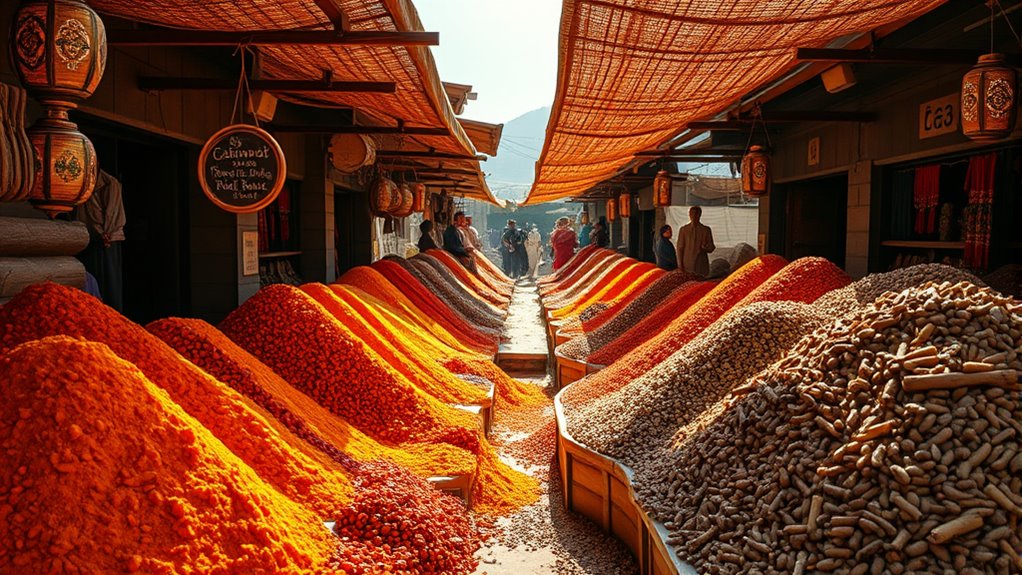

The Spice Routes revolutionized global history by connecting distant civilizations through trade of fragrant spices like cinnamon, pepper, and cloves. As you explore these routes, you’ll see how they not only fueled commerce but also fostered cultural exchange, spreading ideas, art, and beliefs across continents. These exchanges transformed societies and cuisines, shaping today’s interconnected world. Keep exploring, and you’ll uncover how these ancient routes continue to influence our modern cultural landscape.
Key Takeaways
- The spice routes connected distant civilizations, facilitating trade of key spices like cinnamon, pepper, and cloves across continents.
- They served as channels for cultural exchange, spreading art, beliefs, and innovations beyond mere commerce.
- Trade along these routes transformed cuisines and shared technological, religious, and societal practices among diverse societies.
- The routes laid the foundation for modern globalization, influencing culinary traditions and cultural identities worldwide.
- Overall, spice routes exemplify how trade networks fostered cultural interaction, societal growth, and interconnected human history.

Have you ever wondered how ancient traders connected distant civilizations through the exchange of fragrant spices? These routes weren’t just paths for trading herbs and seasonings; they were essential channels for cultural exchange and shaping world history. As traders carried spices like cinnamon, pepper, and cloves across continents, they facilitated more than just commerce—they sparked profound interactions between diverse peoples. This exchange impacted societies by spreading ideas, beliefs, and traditions, enriching cultures far beyond their borders.
Trade impacts from these routes went beyond economic gains. When traders stopped at markets, they brought with them new culinary practices, textiles, and even technologies. For example, the spread of spices often introduced new ingredients into local cuisines, transforming traditional dishes and culinary customs. As different civilizations encountered one another, they also shared artistry, religious beliefs, and philosophies. This cross-pollination helped create a more interconnected world, fostering mutual understanding and cooperation. The spice trade’s influence on cultural exchanges is undeniable; it broke down geographical barriers and built bridges between civilizations that might never have interacted otherwise.
The spice trade fostered cultural sharing, connecting civilizations through art, beliefs, and innovations beyond mere commerce.
Imagine walking through bustling marketplaces where merchants from distant lands barter goods and stories. This dynamic environment reflects how trade routes facilitated cultural exchanges that shaped societies. Traders didn’t just exchange commodities—they exchanged ideas, art, and even language. These interactions often led to innovations, such as new forms of craftsmanship or religious practices inspired by foreign influences. The spice routes served as arteries of cultural diffusion, spreading not only flavor but also knowledge and customs across continents. Additionally, the dissemination of technology along these routes contributed significantly to advancements in various fields.
Furthermore, the impact of these exchanges can still be felt today. Many modern culinary traditions trace their origins to these ancient routes, and cultural practices continue to reflect the diverse influences of traders and travelers. The interconnectedness established by the spice trade laid the groundwork for globalization, emphasizing how economic networks can drive cultural understanding. As you explore the history of spices, you realize that these routes weren’t just about trade but about building a world where ideas and cultures mingled freely, shaping societies in ways that continue to influence us.
In essence, the spice routes exemplify how trade impacts extend beyond goods, fostering cultural exchanges that leave a lasting legacy. They remind us that commerce often serves as a conduit for human connection, transforming the way civilizations grow, learn, and evolve. Through the fragrant journey of spices, you see a story of global interconnectedness—one that continues to influence our world today.

Soeos Organic Cinnamon Sticks, 8 oz (226g), 3.5" Length, 100% Raw, Non-GMO, Kosher Certified, Whole Cinnamon Sticks Seasoning Spice for Coffee, Baking, Cooking and Beverages
Whole Cinnamon Sticks: Carefully selected cinnamon sticks with a warm, sweet aroma and authentic flavor, perfect for elevating…
As an affiliate, we earn on qualifying purchases.
As an affiliate, we earn on qualifying purchases.
Frequently Asked Questions
How Did Spices Influence Ancient Trade Economies?
Spices shaped ancient trade economies by fueling the development of extensive spice trade routes and medieval spice monopolies. You can see how these routes connected distant regions, boosting commerce and wealth. As spices became highly valued, traders gained power, and economies thrived on their exchange. This demand encouraged exploration and established global networks, making spices essential to the growth of early international trade and economic prosperity.
What Are Some Rare Spices Discovered Along Historic Routes?
You’ll find rare spices along historic routes, like the exotic spice discoveries of grains of paradise and long-lost sumac. Lesser known spice origins, such as the mysterious grains of cardamom from the Himalayas and rare cinnamon varieties from Sri Lanka, highlight these routes’ importance. These discoveries reveal how ancient traders sought unique flavors, fueling global exchange and enriching culinary traditions across civilizations.
How Did Spices Affect Cultural Exchanges Between Civilizations?
You see, spices fueled cultural diffusion by encouraging trade and interaction among civilizations. As merchants traveled along historic routes, they exchanged not just flavors but also ideas, traditions, and beliefs. Religious influences often shaped how spices were used or valued, strengthening cultural ties. This exchange promoted mutual understanding and helped integrate different societies, making spices more than just flavorings—they became symbols of connection across diverse cultures.
What Modern Countries Still Produce Historically Significant Spices?
Imagine a tapestry woven with vibrant threads—today, countries like India, Indonesia, Sri Lanka, and Madagascar still produce historically significant spices. You’ll find sustainable spice farming thriving in these regions, fueling modern spice markets worldwide. These nations continue to nurture their rich heritage, ensuring the flavors that once sparked global exchanges remain vibrant. Embrace their efforts to preserve tradition while meeting modern demands, keeping the spice story alive and aromatic.
How Did Spice Trade Impact Global Culinary Traditions?
The spice trade routes massively influenced your culinary traditions by introducing diverse flavors and ingredients from different regions. As spices traveled along these routes, they created culinary fusion, blending tastes from Asia, Europe, Africa, and the Middle East. This exchange shaped your modern dishes, making them more vibrant and complex. The historical spice trade’s legacy is evident today in the rich, multicultural flavors that define global cuisine.

Amazon Grocery, Tellicherry Whole Black Peppercorn, 16 Oz
One 16-ounce bag of Tellicherry Whole Black Peppercorn
As an affiliate, we earn on qualifying purchases.
As an affiliate, we earn on qualifying purchases.
Conclusion
Now that you’ve explored the fascinating history of spice routes, you might think it’s just ancient trade talk. But these routes shaped the world’s cuisine and culture, connecting distant lands through flavor. So, next time you sprinkle some cinnamon or pepper, remember you’re tasting centuries of history. Don’t let the past feel distant—embrace it. After all, spices bring us together, turning simple meals into rich, global stories.

Badia Whole Cloves, 1.25 oz, Premium Spice for Baking, Cooking, Beverages, Aromatic & Flavorful
Premium Quality Whole Cloves: Enjoy the rich, aromatic flavor of Badia Whole Cloves, perfect for enhancing sweet and…
As an affiliate, we earn on qualifying purchases.
As an affiliate, we earn on qualifying purchases.

Hamilton Beach Fresh Grind Electric Coffee Grinder for Beans, Spices and More, Stainless Steel Blades, Removable Chamber, Makes up to 12 Cups, Black
REDUCE CLUTTER WITH HIDDEN CORD STORAGE: Hideaway cord storage under the base keeps cable neat, concealed when not…
As an affiliate, we earn on qualifying purchases.
As an affiliate, we earn on qualifying purchases.