
If your indoor air feels dry, has static electricity, or causes chapped lips, you need a humidifier to add moisture. If there’s a musty smell, visible mold, or dampness, a dehumidifier helps remove excess moisture and prevent damage. Choosing the right device depends on your specific needs, space, and humidity levels. Want to understand more about how to pick the perfect one? Keep exploring to find the best match for your home.
Key Takeaways
- Use a humidifier in dry environments or when experiencing static electricity, chapped lips, or sore throats.
- Opt for a dehumidifier if you notice mold, musty odors, or excessive dampness in your home.
- Check your indoor humidity levels; aim for 30-50% to determine whether to add or remove moisture.
- Choose energy-efficient models with automatic controls to maintain optimal humidity without wasting power.
- Proper device sizing and maintenance ensure effective, efficient indoor air quality management.

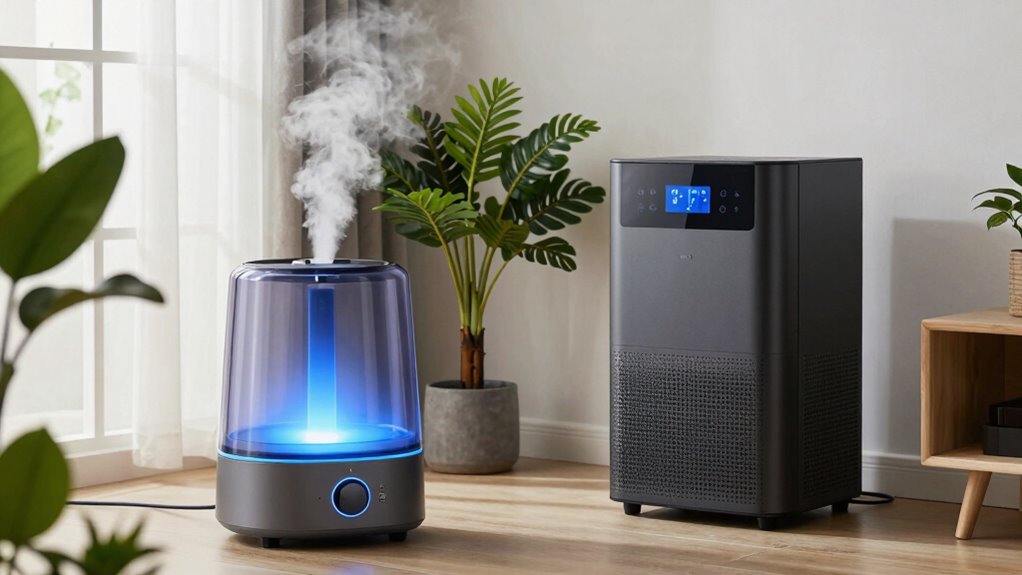
When it comes to maintaining a comfortable indoor environment, understanding the difference between a humidifier and a dehumidifier is essential. These devices directly impact your air quality and energy efficiency, helping you create a healthier, more comfortable space. A humidifier adds moisture to the air, which is especially helpful during dry winter months or in areas with naturally low humidity. Conversely, a dehumidifier removes excess moisture, reducing humidity levels that can lead to mold growth, dust mites, and other allergens. Knowing which device to use depends on your specific needs, but both play a crucial role in optimizing your indoor air quality.
Understanding humidifiers and dehumidifiers helps optimize indoor air quality and energy efficiency.
If your home feels dry, with static electricity, chapped lips, or sore throats, a humidifier can improve your air quality by increasing humidity levels. Proper humidity not only relieves discomfort but also helps your respiratory system, making breathing easier. However, it’s important to use these devices efficiently to avoid wasting energy. Modern humidifiers often come with adjustable settings or automatic humidity controls, allowing you to maintain ideal moisture levels without overworking the device. This focused operation boosts energy efficiency, ensuring you’re not consuming excessive power while improving air quality.
On the other hand, if your space feels damp, with musty odors or visible mold, a dehumidifier becomes necessary. It reduces excess moisture that can lead to health issues and property damage. Dehumidifiers also help prevent condensation on windows and walls, which can otherwise foster mold growth and compromise your home’s structural integrity. When selecting a dehumidifier, look for models with energy-efficient features such as automatic shut-off and adjustable humidity settings. These help minimize power consumption, making it easier to keep your air quality safe without markedly increasing your energy bills. Additionally, understanding the science behind humidity control can help you choose the most effective device for your needs.
Both devices influence your energy efficiency—humidiers and dehumidifiers that operate with modern technology can run effectively without consuming a lot of electricity. Proper maintenance, like cleaning filters and ensuring the device is appropriately sized for your space, also enhances energy efficiency. By choosing the right device based on your climate and indoor conditions, you enhance your air quality while keeping energy costs low. Remember, maintaining balanced humidity levels not only improves comfort but also reduces the need for frequent device operation, saving you money in the long run.
Frequently Asked Questions
Can a Device Serve as Both a Humidifier and Dehumidifier?
Yes, some devices offer dual functionality as both humidifiers and dehumidifiers, known as combined devices. These units can adjust humidity levels by adding moisture or removing excess, depending on your needs. You should consider a combined device if you want a space-saving solution that manages humidity effectively without buying separate units. Keep in mind, though, that these devices may not be as specialized as dedicated humidifiers or dehumidifiers for ideal performance.
Which Is Better for Allergy Relief: Humidifier or Dehumidifier?
If you want allergy relief, a dehumidifier is usually better because it improves air quality by reducing excess moisture that fosters mold and dust mites, which aggravate allergies. Some worry that humidifiers cause mold, but with proper cleaning, they can help maintain ideal respiratory health by adding moisture in dry environments. Consider your home’s needs and aim for balanced humidity to effectively manage allergy symptoms.
How Do I Clean and Maintain These Devices Properly?
You should clean and maintain your humidifier or dehumidifier regularly by following a proper cleaning schedule. Empty and dry the water tank daily, and disinfect it weekly with a mixture of vinegar and water. Replace filters as recommended by the manufacturer, usually every 1-3 months. This prevents mold and bacteria buildup, ensuring peak performance and healthy air quality. Regular maintenance keeps your device running smoothly and extends its lifespan.
Are There Energy Efficiency Differences Between Them?
Imagine your device as a diligent worker, quietly balancing your home’s air. Typically, dehumidifiers tend to sip energy more efficiently, focusing on removing moisture, while humidifiers might guzzle power to add humidity. Your choice impacts energy consumption and power efficiency; selecting an energy-efficient model reduces bills and environmental footprint. Pay attention to labels and features—opt for those designed to maximize performance with minimal power drain to keep your air comfortable and your energy bills in check.
Can They Be Used Simultaneously in the Same Room?
Yes, you can use a humidifier and dehumidifier simultaneously in the same room, but proper airflow circulation and device placement are key. Position the devices apart to prevent interference, ideally near vents or air pathways to promote even airflow. Doing this guarantees each device functions efficiently without conflicting, maintaining a balanced humidity level. Just monitor the room’s comfort and adjust placement as needed to optimize performance.
Conclusion
Choosing between a humidifier and dehumidifier depends on your needs, but did you know that maintaining indoor humidity levels between 30-50% can reduce allergy symptoms by up to 20%? By understanding your space, you can pick the right device to improve comfort and health. Remember, a humidifier adds moisture, while a dehumidifier removes excess. Make the right choice today, and enjoy a more comfortable, healthier home environment in less than a minute!