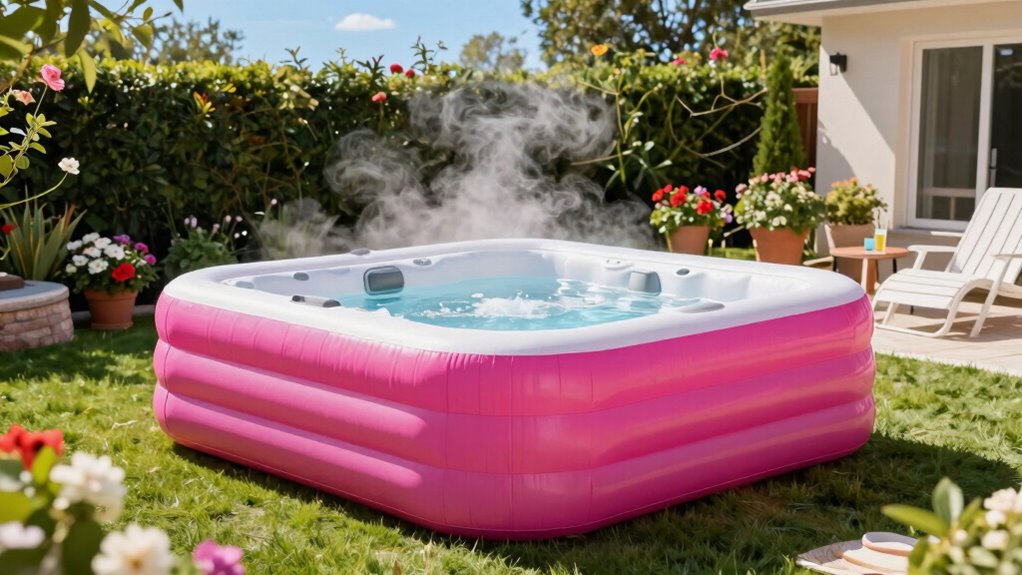
Inflatable hot tubs are worth it if you want a budget-friendly, quick-to-setup way to enjoy relaxing dips without the hassle of permanent installation. They work well for seasonal or occasional use but can be costly to operate due to higher energy consumption and less insulation, especially in colder climates. If you’re looking for a flexible option and don’t mind extra maintenance, they could be ideal—continue exploring to see if they fit your needs.
Key Takeaways
- Inflatable hot tubs are cost-effective and quick to set up but may have higher ongoing energy costs.
- They are ideal for seasonal or occasional use, not for continuous, year-round enjoyment.
- Proper insulation and covering can improve energy efficiency, especially in colder climates.
- Regular maintenance extends lifespan but may not offset increased energy expenses.
- Best suited for budget-conscious users prioritizing flexibility over long-term durability.
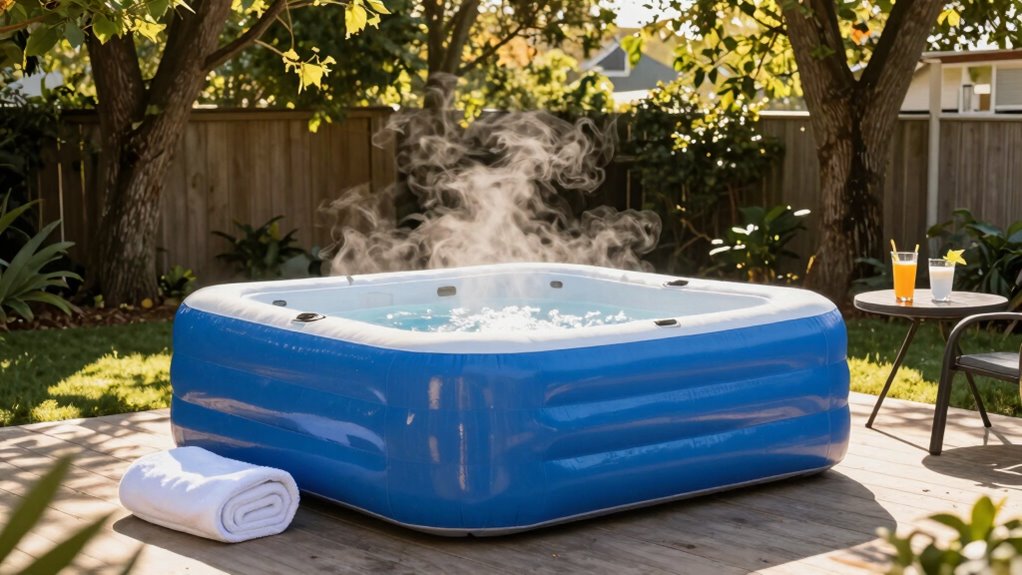
Inflatable hot tubs offer a convenient and affordable way to enjoy the luxury of a spa at home. One of the biggest advantages is the lower upfront investment compared to permanent models. When considering an inflatable hot tub, you’ll find installation costs are minimal—usually just a matter of choosing a flat, level spot and plugging it in. Unlike traditional hot tubs, which often require professional setup, plumbing, and permits, inflatable options eliminate those expenses, making them an attractive choice for budget-conscious buyers. However, it’s important to keep in mind that while the initial costs are lower, you should also consider energy efficiency. Inflatable hot tubs generally consume more power than built-in models because they lack the insulation and advanced heating systems designed to conserve energy. This means you might see higher utility bills over time, especially if you plan to use your hot tub frequently. Additionally, the lack of insulation can make maintaining consistent water temperature more challenging in colder climates. Energy efficiency is a significant factor when deciding if an inflatable hot tub is worth it for you. These hot tubs tend to have thinner walls and less insulation, which means they lose heat more quickly and require the heater to work harder to maintain your desired temperature. If you live in a cooler climate or want to use your hot tub year-round, this increased energy consumption could add up financially. On the flip side, inflatable hot tubs are portable and can be moved indoors or to a sheltered area if you’re concerned about winter heat loss, potentially saving on energy costs. Some models come with energy-saving features like insulated covers or adjustable temperature controls, which can help mitigate ongoing expenses. You should also consider the long-term costs and whether the convenience outweighs potential energy inefficiencies. If you plan to use your hot tub only seasonally or for occasional relaxation, the lower initial investment might be worth the extra energy costs. Conversely, if you’re looking for a long-term, cost-effective spa solution with minimal ongoing expenses, a more permanent installation might be a better choice. Remember, maintenance plays a role too—keeping your inflatable hot tub clean and covered can help improve its energy efficiency and lifespan. It’s also beneficial to select a model with proper sanitation systems and easy-to-use controls to ensure safe and efficient operation. Ultimately, inflatable hot tubs work best if you value flexibility, affordability, and ease of setup. Just be aware that their lower installation costs often come with higher energy usage, which could impact your budget over time. Weighing these factors carefully will help you decide if this type of hot tub fits your lifestyle and financial plans.
Frequently Asked Questions
How Long Do Inflatable Hot Tubs Typically Last With Proper Care?
With proper care, your inflatable hot tub typically lasts 3 to 5 years. Regular maintenance tips like cleaning filters, checking for leaks, and keeping the water balanced help extend its lifespan expectations. Avoid overinflating or exposing it to harsh sunlight for long periods. By following these care tips, you guarantee your hot tub stays in good condition longer, maximizing your investment and enjoying relaxing soaks for years to come.
Are Inflatable Hot Tubs Energy-Efficient Compared to Traditional Models?
Sure, inflatable hot tubs are the energy vampires of the backyard. They often guzzle more energy than traditional models because of their questionable insulation effectiveness. While they’re portable and budget-friendly, don’t expect them to sip energy quietly. If you’re aiming to save on energy consumption, a traditional hot tub with better insulation might be the smarter choice. Otherwise, prepare for some shocking electricity bills!
Can Inflatable Hot Tubs Be Used in All Weather Conditions?
Inflatable hot tubs aren’t suitable for all weather conditions. They handle weather durability well during mild seasons, but extreme cold, wind, or heavy snow can damage them or cause leaks. You should primarily use them seasonally or when the weather is stable. If you live in an area with harsh winters or unpredictable weather, a traditional hot tub might be a better choice for year-round enjoyment.
What Is the Maximum Weight Capacity of Most Inflatable Hot Tubs?
Think of your inflatable hot tub as a cozy island—its weight limit is the safety lighthouse guiding you. Most inflatable hot tubs have a maximum weight capacity around 200-300 pounds per person, with a total safety capacity typically between 600 and 1000 pounds. Always check the manufacturer’s specifications to guarantee everyone enjoys the warm waves safely, avoiding overloading your relaxing paradise.
Are Inflatable Hot Tubs Suitable for All Ages and Mobility Levels?
Inflatable hot tubs aren’t suitable for all ages and mobility levels. Young children need constant supervision, and some models lack mobility accessibility features. If you or your loved ones have limited mobility, check for tubs with easy entry and sturdy seating. Always review age restrictions provided by manufacturers, and consider accessibility options to guarantee everyone can enjoy safely and comfortably. If in doubt, consult with a healthcare professional.
Conclusion
Inflatable hot tubs are like a versatile toolbox—great for quick relaxation or entertaining friends, but not built for long-term, heavy-duty use. When you need a cozy retreat on a whim, they’re worth it, offering convenience and fun. But if you crave luxury and durability, it’s like choosing a sturdy, permanent fixture instead of a temporary tent. Know your needs, and pick the right fit, so your hot tub experience is always a relaxing oasis, not a fleeting bubble.