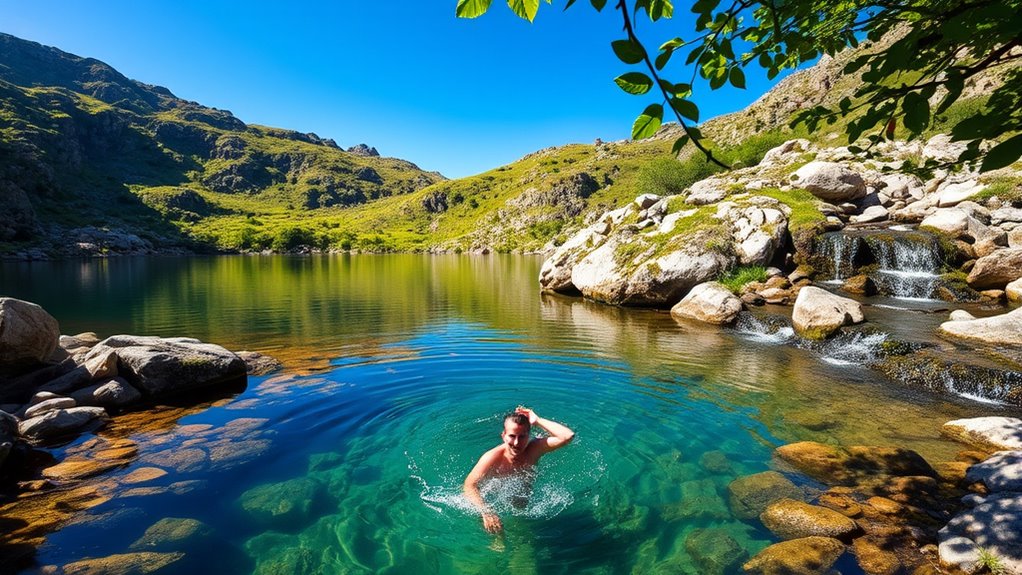

Wild swimming lets you enjoy lakes, rivers, and natural pools away from crowded spots, giving you a close connection to pristine, untouched waters. It offers a invigorating experience and a chance to appreciate unspoiled environments. However, you should be aware of hidden hazards like currents and rocks, and always prioritize safety. Respect nature by minimizing your impact and avoiding disturbance. If you keep exploring, you’ll discover how to swim responsibly and safely in these beautiful natural settings.
Key Takeaways
- Wild swimming offers immersive experiences in pristine lakes, rivers, and natural pools away from crowded, managed swimming facilities.
- Always assess water conditions and safety hazards like currents, rocks, and wildlife before swimming in natural waters.
- Use appropriate safety gear and avoid swimming alone to reduce risks associated with natural water environments.
- Respect and protect ecosystems by minimizing environmental impact, avoiding littering, and staying on designated paths.
- Engage responsibly with nature to preserve water quality, natural habitats, and ensure safe, sustainable wild swimming experiences.

Have you ever wondered what it’s like to plunge into a pristine, natural body of water away from crowded pools and beaches? Wild swimming offers that unique experience—immersing yourself in lakes, rivers, and natural pools where nature remains unspoiled. But before you dive in, it’s essential to consider water safety. Unlike managed swimming pools, natural waters can have hidden hazards, like strong currents, submerged rocks, or sudden drop-offs. You need to assess the environment carefully, check for signs of water quality, and never swim alone. Wearing appropriate gear, such as a wetsuit or buoyancy aid, can help keep you safe and comfortable. It’s also wise to get familiar with the local conditions—know how to spot rip currents or dangerous wildlife, and be prepared to get out if the water becomes too cold or choppy. Being vigilant about water safety ensures you enjoy the experience without unnecessary risks.
As tempting as wild swimming is, it’s equally important to think about the environmental impact. Your presence in these natural spots can unintentionally cause harm if you’re not cautious. Avoid disturbing wildlife or trampling fragile vegetation along the banks. Remember, these ecosystems rely on your respect and care. Carry out all your rubbish, and steer clear of soaps or detergents that could pollute the water. Staying on designated paths and avoiding over-crowding helps preserve the natural beauty for others and for future generations. Respecting the environment isn’t just about keeping things pretty; it’s about maintaining the water quality and habitat health that make wild swimming possible in the first place.
Natural waters are a precious resource, and your actions have a direct impact on their sustainability. When you swim in lakes, rivers, or natural pools, you’re connecting with nature in a profound way. This connection heightens your awareness of the importance of protecting these environments. By practicing responsible water safety and minimizing your environmental footprint, you help ensure these places remain pristine and accessible. It’s a balance—enjoy the thrill of swimming in the wild while being mindful of your surroundings. Your respect for the environment and your commitment to safety create a more rewarding experience, not just for you but for everyone who values the beauty of unspoiled waters. Engaging with nature through imagination can deepen your appreciation and inspire conservation efforts, ensuring these natural wonders are preserved for generations to come. In the end, wild swimming isn’t just about the splash—it’s about respecting the water, safeguarding its future, and immersing yourself in the purest elements of nature.

O'Neill Men's Reactor-2 3:2mm Back Zip Full Wetsuit, Lightweight Warmth with Good Flexibility for Surfing, Paddleboarding, Kayaking, Black/Black, Medium
- Versatile for Water Activities: Suitable for surfing, diving, paddle sports
- Easy Entry with Backzip: Water-resistant back zipper for convenience
- Flexible Ultra Stretch Neoprene: Soft, premium material for superior flexibility
As an affiliate, we earn on qualifying purchases.
As an affiliate, we earn on qualifying purchases.
Frequently Asked Questions
What Safety Equipment Should I Bring for Wild Swimming?
When wild swimming, you should bring safety equipment like a life jacket if you’re not a strong swimmer or planning to go into deeper waters. A waterproof phone case is essential to guarantee your phone safe in case of emergencies. Additionally, consider a whistle for attracting attention, a throw rope for rescue, and a waterproof map or compass. These items help make certain your safety while enjoying natural water environments.
Are There Specific Seasons Best for Wild Swimming?
The best seasons for wild swimming depend on seasonal considerations and water temperature. Summer offers warmer waters and longer days, making it ideal, but be cautious of increased crowds. Spring and early autumn can be great too, with cooler water and fewer people. Avoid winter, as seasonal water temperatures drop markedly, risking hypothermia. Always check local conditions and dress appropriately for the season to guarantee a safe, enjoyable experience.
How Do I Identify Safe Swimming Spots in Nature?
You can spot safe swimming spots by checking water quality reports from local authorities and observing clear, fresh water free of pollutants. Ignore those “secret” spots that look suspiciously perfect—local regulations often restrict access for good reasons. Trust your senses; avoid water with strange odors or visible debris. Remember, if it looks too good to be true, it probably isn’t safe. Prioritize safety over Instagram fame!
What Wildlife Should I Watch Out for While Swimming?
While swimming in nature, watch out for local wildlife that could pose potential hazards. Avoid disturbing or approaching animals like snakes, waterfowl, or fish, which might become defensive. Be cautious of insects such as mosquitoes or freshwater parasites. Always stay alert for signs of wildlife activity, and respect their habitat to stay safe. If you notice any aggressive animals or unusual behavior, exit the water calmly and avoid further contact.
Can Wild Swimming Help Improve Mental Health?
Imagine diving into a serene lake, feeling the cool water envelop you—wild swimming can boost your mental health like a natural reset button. It promotes mindfulness benefits and acts as outdoor therapy, helping reduce stress and anxiety. Many find that immersing in nature’s calm improves mood and clarity. You’ll discover that swimming outdoors isn’t just exercise, but a powerful way to reconnect with yourself and nature’s healing energy.
Conclusion
As you immerse yourself in wild swimming, remember that over 60% of enthusiasts say it boosts their mental well-being and reduces stress. With lakes, rivers, and natural pools offering invigorating escapes, you’re not just swimming—you’re reconnecting with nature and rejuvenating your mind. So, go ahead, embrace the adventure, and discover the incredible health benefits waiting beneath the surface. Wild swimming isn’t just a dip; it’s a revitalizing experience you’ll want to revisit again and again.