TL;DR

Get travel and outdoor gear delivered free — and shop member deals
- Fast, free delivery on millions of items
- Access to Prime Big Deal Days deals on October 6–7
- Prime Video, Amazon Music and more included
Portable camping lanterns light a shared space, while headlamps and flashlights direct light in one direction. Choose a lantern by comparing its brightness and runtime at the settings you expect to use, then check its size, charging options, water protection, and mounting style against your trip.
A lantern that promises a whole weekend of light can still go dim before bedtime if that runtime applies only to its lowest setting. When you’re cooking after sunset or searching for a dropped tent peg, the number on the box matters less than how the light performs in your hands.
This guide explains how to compare brightness, battery life, charging, and durability—and how to match those details to a tent, a car campsite, or a backpacking trip. A few smart checks can save you from carrying a heavy lantern you barely use or a tiny one that leaves dinner in the dark.
Compare runtime at the brightness you plan to use; a low-setting figure may not reflect a bright dinner-table setting.
Choose a dimmable lantern so you can light a large campsite and still use a comfortable glow inside a tent.
Treat a small solar panel as a backup unless the manufacturer’s charging time suits your trip.
Check the exact IP rating and mounting options instead of relying on a vague water-resistant label.
Keep lanterns securely placed and away from fabric, and supervise children around lights and campsite gear.
Choose a lantern that lights the whole campsite
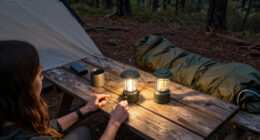
Portable camping lanterns spread light around a shared space, making them handy for a tent, picnic table, or cabin. Unlike headlamps and flashlights, which concentrate light in one direction, a lantern lets several people see the same map, meal, or card game. Think of it as a small table lamp that can travel in your pack.
Brightness is measured in lumens, but a higher number doesn’t always mean a better campsite. A diffuser softens the beam and spreads it out; where you hang the lantern matters too. A high setting can help illuminate a larger area, while a gentle setting may feel more comfortable in a small tent.
For example, a family eating around a picnic table might want a brighter setting than a solo camper reading beside a sleeping bag. Look for a lantern with dimming controls so one light can serve both jobs. If children are at camp, have an adult supervise around the light and keep it securely placed, away from tent fabric and where it cannot be knocked over.
Compare runtime at the brightness you’ll really use
Portable camping lanterns can run for very different lengths of time depending on brightness, battery size, and mode. The runtime printed on a package may describe the lowest setting, which casts a softer glow but may not suit a group campsite. Check the runtime at a setting close to the one you expect to use: a long low-mode figure tells you little about whether the lantern can cover dinner and evening cleanup at full output.
Picture a two-night trip where you switch the lantern to its brightest mode for dinner, then leave it on while everyone talks. That pattern will use more power than a few short bursts of light before bed, so advertised maximum runtime can create a false sense of reserve. A low mode can stretch the battery for quiet tasks, and a separate night-light setting can give you a dim glow without lighting up the whole tent. Dimming is a practical way to balance comfort and battery life, provided you’re willing to lower the light when you don’t need full brightness.
Use these checks before you pack:
- Estimate your nightly use: count the hours you’ll need light, rather than planning around a full day of constant use. This helps translate a runtime claim into the evenings your trip actually requires.
- Compare like with like: check runtime at similar brightness settings across models. Otherwise, a lantern may look longer-lasting simply because its figure was measured at a much dimmer level.
- Check the battery plan: see whether you can recharge the lantern, swap in fresh batteries, or do both. Rechargeable models can reduce the need to carry spares, while replaceable batteries offer a way to restore power when there’s no outlet.
- Plan a reserve: keep a headlamp or spare light for the walk to the toilet or a late-night tent search. A separate light also means you can switch off the lantern when the group no longer needs shared illumination.
A rechargeable lantern suits trips where you can top it up between outings; replaceable batteries can make sense when you’ll be away from power for several days. The best fit depends on whether reliable access to charging or the weight and space of spare batteries is the bigger constraint for your trip.
Pick charging features that fit your trip
Portable camping lanterns may charge through USB-C, use replaceable batteries, or include a solar panel. USB-C makes charging straightforward when you already carry a compatible cable and power bank. Replaceable batteries can be useful on a long trip with no outlet, while a model with both options gives you more flexibility. That flexibility can add cost or weight, so consider whether you’ll actually use both ways to power it.
Solar charging sounds reassuring, but a small panel can take a long time to refill a lantern, especially in cloudy weather or shade. Treat it as a backup option unless the manufacturer gives charging times that suit your conditions. A slow refill may maintain a little charge over several sunny days but cannot reliably replace a planned full charge between evenings. On a weekend car-camping trip, for instance, you might charge the lantern at home and use the panel to top it up at a sunny lunch stop.
Some lanterns can also charge a phone. That can help in an emergency, but phone charging draws energy that would otherwise power the light. Check the lantern’s battery capacity and USB output, and save the feature for when you need it. The tradeoff matters most on a multi-night trip: a lantern with a power-bank socket may be less useful than a modest one if charging your phone leaves you without light before morning. If your phone is important for navigation or emergencies, plan a separate power source instead of assuming the lantern can serve both roles for long.
“Solar charging is a useful backup, but check the maker’s charging time before you depend on it for a trip.”
Match the size, controls, and build to where you’ll camp
A good lantern is easy to carry, easy to place, and built for the weather you expect. For backpacking, low weight and a compact shape can matter more than a large battery or a phone-charging port, because every extra ounce competes with food, water, and shelter in a limited pack. At a drive-in campsite, the distance from the car is short, so you may welcome a bigger lantern with a handle, hook, or magnetic base that keeps it steady near the cooking area.
Mounting options change how useful a lantern feels. A hook can suspend it from a tent loop and spread light over the floor; a flat base keeps it stable on a picnic table; a magnet can hold it against a metal surface but is only useful where such a surface is available. Before your first trip, try the controls at home with the lights off. Gloves, sleepy fingers, and tiny buttons can make a simple light harder to use than it should be, and difficult controls can lead you to leave a bright setting on longer than needed.
Look for clear information about water resistance and the lantern’s IP rating. That rating describes tested protection under specific conditions; “water-resistant” alone doesn’t tell you whether a model can handle rain or submersion. Check the rating’s stated limits against the weather and placement you expect. If a shower rolls over your campsite, a lantern rated for splashes may be fine under a shelter, but it is not automatically safe to drop into a stream. More protection can offer peace of mind in wet conditions, though it may not be worth prioritizing over weight if you mostly camp in dry weather and store the lantern under cover.
For example, a hiker may prefer a fold-flat lantern that slips into a side pocket, while a weekend camper may choose a sturdier model that hangs above the table. The right tradeoff depends on whether you value pack space, longer runtime, weather protection, or ease of use most; choosing around your usual campsite keeps you from carrying features that add bulk without solving a real problem.
Use a lantern safely in a tent or around camp
LED lanterns generally produce little heat compared with fuel-burning lanterns, but they still need careful placement and proper battery care. Follow the maker’s instructions, charge the lantern with the recommended equipment, and keep it away from flammable materials. In a tent, hang it securely or set it on a stable surface where it cannot roll into fabric. A steady placement reduces the chance of a bump turning a useful light into a hazard, especially in a crowded or dark tent.
Fuel-burning lanterns need particular caution and may not be suitable for enclosed spaces. An LED model is a practical choice for tent lighting, but no light replaces adult supervision around children. Keep cords, loose gear, and lanterns out of walking paths so a child or tired camper doesn’t trip over them on the way to bed.
Before a trip, check the battery and test the buttons in daylight. Afterward, follow the manufacturer’s storage advice; some models with removable batteries may need them taken out for long storage. This can help prevent battery problems while the lantern is unused. If you’re flying to your campsite, check current airline and aviation-authority rules for your lantern’s battery type and capacity before you pack it.
Frequently Asked Questions
How many lumens do I need for camping?
It depends on how much space you want to light. A tent or bedside lantern can use a dimmer setting, while a group campsite may call for more output. Adjustable brightness helps one lantern handle both.
Can I use a camping lantern inside a tent?
Many LED lanterns work well in tents when you follow the maker’s instructions and place them securely. Keep the light away from fabric, and supervise children around it. Fuel-burning lanterns need particular care and may not suit enclosed spaces.
Can a solar lantern charge on a cloudy day?
It may charge slowly, but results depend on sunlight, panel size, and conditions. A small panel is usually best treated as a backup. Check the manufacturer’s charging time before you rely on solar power for a trip.
Can a camping lantern charge my phone?
Some lanterns include a USB output for phone charging. Check the lantern’s output and battery capacity, and remember that charging your phone leaves less energy for light.
Conclusion
Choose your lantern around the hours, brightness, and charging options you’ll actually need. Check the runtime at your likely setting, then make sure the lantern fits your pack and has a safe place to hang or sit.
When the campsite fades to black, the best light is the one that keeps dinner, cards, and the walk back to your tent comfortably in view.
Fall Picks
fall essentials
As an affiliate, we earn on qualifying purchases.