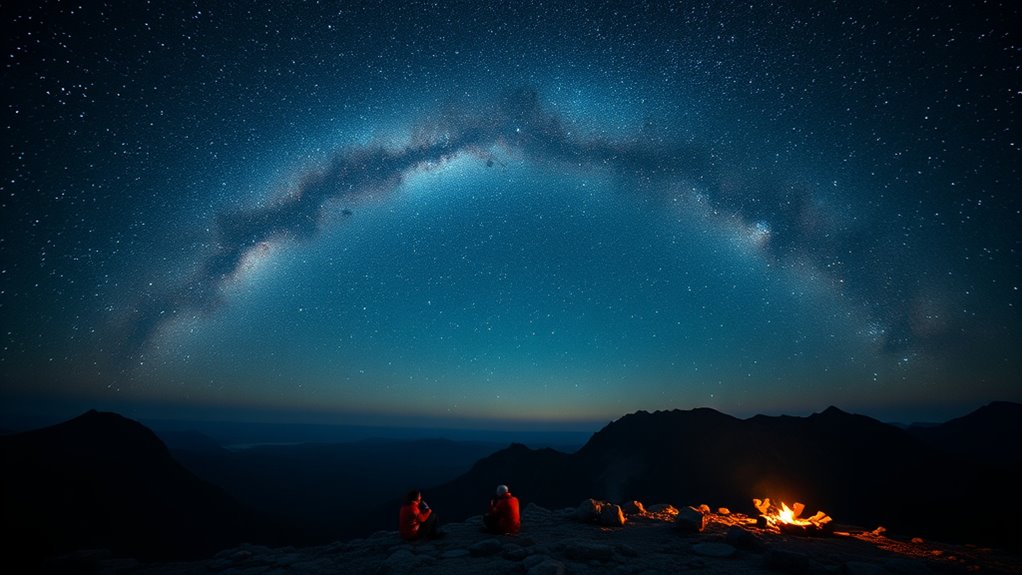

To get the best stargazing experience, visit dark sky parks and remote locations away from city lights. Places like Joshua Tree in California, Cherry Springs State Park in Pennsylvania, or Mauna Kea in Hawaii offer stunning, clear views of the night sky. Arrive early, bring a star map, and be patient to fully enjoy the cosmic display. Keep exploring to discover more top spots that’ll turn your night into a celestial adventure.
Key Takeaways
- Visit designated dark sky parks and remote rural areas to minimize light pollution for optimal stargazing.
- Use star maps or apps to identify celestial objects and plan viewing around astronomical events.
- Arrive early and allow time for your eyes to fully adjust to darkness for better visibility of faint stars.
- Bring comfortable seating, warm clothing, and red light sources to enhance the experience and preserve night vision.
- Attend guided stargazing tours or astronomy festivals for expert insights and immersive cosmic experiences.
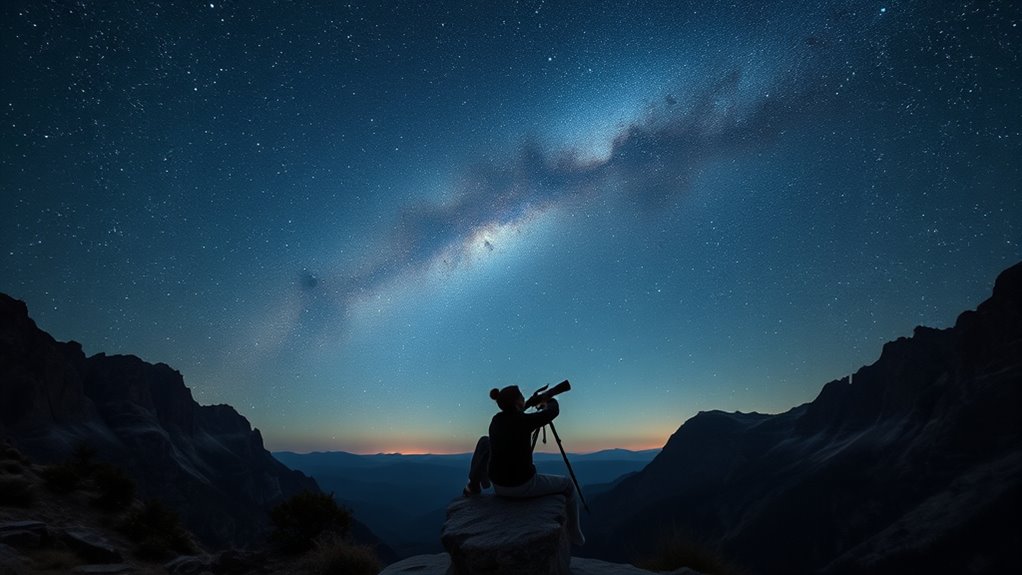
Finding the perfect spot for stargazing can turn an ordinary night into an unforgettable experience. When choosing a location, one of the most important factors to contemplate is light pollution. Cities and towns emit artificial lights that wash out the night sky, making it harder to see stars, planets, and other celestial objects. To truly enjoy the cosmos, you want to find a place far away from urban glow—ideally, a remote area or a designated dark sky park. These spots are often protected from excessive artificial lighting, allowing the stars to shine brighter and clearer. When you’re in such locations, you’re more likely to witness spectacular astronomical events like meteor showers, planetary alignments, or even the elusive auroras, as the darkness enhances visibility and detail.
Being in a dark sky area not only enriches your stargazing experience but also increases your chances of catching rare astronomical events. These occurrences—such as lunar eclipses, supermoons, or planetary transits—are often missed in brightly lit environments. Planning your trip around these events is key; many observatories and astronomy organizations publish calendars highlighting upcoming celestial phenomena. By choosing a location with minimal light pollution and timing your visit with these events, you’ll witness breathtaking sights that many people only see once in a lifetime. Plus, the clarity of the night sky at these sites reveals more stars than you’d ever see from your backyard or city park.
Dark sky locations enhance viewing of rare events like lunar eclipses and supermoons.
Once you arrive at your chosen spot, give yourself time to acclimate to the darkness. Allow your eyes to adjust, which may take about 20 minutes, so you can see the faintest stars and nebulae. Bring along a star map or a stargazing app to help identify constellations, planets, and other celestial objects. Remember, the best stargazing experiences happen when you’re patient and undistracted, so avoid using bright screens or flashlights that can ruin your night vision. A comfortable chair, warm clothing, and some snacks will make your experience even more enjoyable.
In essence, finding a quiet, dark location away from light pollution maximizes your chances of witnessing extraordinary astronomical events. It transforms an ordinary evening into a cosmic adventure, revealing the universe’s wonders in all their glory. Whether you’re an avid skywatcher or a casual observer, choosing the right spot makes all the difference. When you get it right, you’ll be rewarded with a mesmerizing view of the stars, planets, and celestial phenomena that remind us of the universe’s vast beauty and mystery. Additionally, understanding the impact of light pollution helps you appreciate the importance of preserving dark skies for future generations.
Frequently Asked Questions
What Equipment Is Recommended for Optimal Stargazing?
For ideal stargazing, you should consider a good binoculars review to find the best option, especially if you’re starting out. A telescope type like a refractor or reflector offers clearer views of planets and stars. Bring a red flashlight, a star chart, and extra batteries. These tools enhance your experience, making it easier to spot celestial objects and enjoy the night sky fully.
How Can Beginners Improve Their Night Sky Observation Skills?
Like learning to ride a bike, improving your night sky observation skills takes patience and practice. Start by using a star chart to familiarize yourself with constellations and celestial objects. Spend time observing different parts of the sky and take notes. Over time, your eyes will adapt, and you’ll recognize patterns more easily. Keep practicing, stay curious, and enjoy each moment under the stars as you slowly become more confident in your stargazing skills.
Are There Any Safety Tips for Night-Time Stargazing?
When night-time stargazing, stay safe by being aware of wildlife encounters and weather conditions. Wear appropriate clothing, carry a flashlight, and keep a safe distance from animals. Check the weather forecast beforehand to avoid storms or cold temperatures, and bring necessary gear like blankets or rain jackets. Always inform someone about your plans, and stay on designated paths to prevent accidents. Your safety guarantees a more enjoyable stargazing experience.
When Is the Best Time of Year to See Specific Celestial Events?
You’ll want to plan around moon phases and celestial event calendars for the best viewing. The best time of year to see specific celestial events varies, but generally, clear fall and winter nights offer the most spectacular views. Don’t worry if you miss a peak; celestial events like meteor showers and eclipses happen annually or semi-annually, so keep an eye on calendars to catch them when conditions align for ideal stargazing.
Do Local Regulations Restrict Access to Certain Stargazing Spots?
You should verify local restrictions before heading to any stargazing spot, as access limitations can vary. Some areas might have regulations that restrict nighttime access, especially in protected parks or private lands. Always research local rules and obtain necessary permissions if required. Ignoring these restrictions could lead to fines or denied entry, so planning ahead ensures you can enjoy the night sky without any issues.
Conclusion
As you step back from these celestial havens, remember, even Orion once gazed upon the same sky. Just like the explorers of old, you’re invited to lose yourself among the stars, discovering your own stories amid the constellations. Embrace the night’s quiet magic, for in those moments, you become part of a timeless dance—a reminder that the universe’s wonder is always waiting, just beyond the horizon, ready for you to explore.