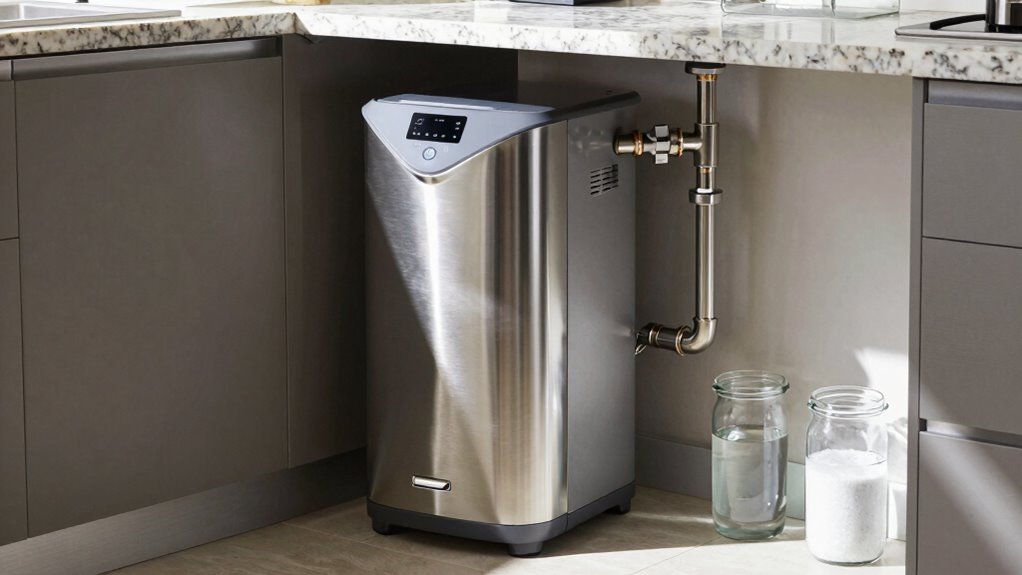

Choosing the right size for your whole-house water softener is key to effectively removing minerals like calcium and magnesium that cause hard water. An undersized unit won’t handle your household’s demand, while an oversized one wastes money and energy. Typically, a 40,000–48,000 grain capacity suits a family of 4-5. Sizing depends on your water usage and hardness level, and understanding these details helps guarantee your system works efficiently—if you look closer, you’ll discover what really makes a difference in softening your water.
Key Takeaways
- Proper sizing (grain capacity) ensures effective softening without over- or under-sizing the system.
- Whole-house water softeners remove minerals, preventing soap scum, mineral buildup, and scale in appliances.
- Sizing depends on household water usage, hardness level, and flow rate requirements for optimal performance.
- They extend the lifespan of plumbing and appliances by reducing mineral deposits and scale formation.
- Regular salt regeneration cycles maintain soft water quality and system efficiency.
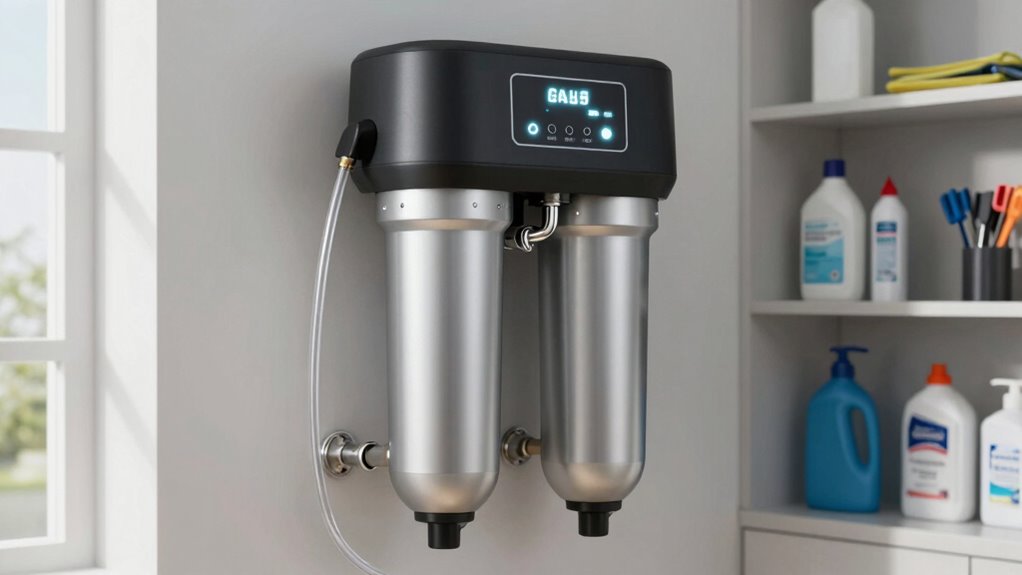
Have you ever noticed how hard water can leave your skin feeling dry or cause soap to not lather properly? That’s because hard water contains high levels of minerals like calcium and magnesium. When these minerals build up, they can cause soap to form soap scum, making it difficult to get a good lather, and leaving a film on your skin. Whole-house water softeners are designed to combat these issues by using salt regeneration cycles to replace mineral ions with sodium, effectively removing the hardness from your water. This process is called mineral removal, and it’s what makes your water softer and your home’s plumbing and appliances last longer.
Hard water causes soap scum and dry skin, but a water softener can effectively remove mineral buildup.
When choosing a water softener, sizing is critical. If your system is too small, it won’t handle your household’s water demand, leading to frequent regeneration cycles and less effective softening. Conversely, a system that’s too large might be unnecessary and wasteful, costing more upfront and running inefficiently. To size your system correctly, you’ll need to take into account your household’s water usage, the level of water hardness, and the flow rate required for your fixtures. Typically, a household with four to five people requires a unit rated for about 40,000 to 48,000 grains of capacity. This capacity indicates how much hardness the system can remove before needing a regeneration cycle.
The main thing that a whole-house water softener really changes is the quality of water throughout your home. It transforms hard, mineral-laden water into soft water, which feels better on your skin and hair, and also helps prevent mineral buildup on fixtures, appliances, and pipes. This means less soap scum, fewer clogged pipes, and less scale in your water heater. Additionally, soft water can extend the lifespan of your appliances because it reduces mineral deposits that can cause damage over time.
It’s worth noting that the salt regeneration process is key to maintaining a soft water supply. During regeneration, the system flushes out accumulated calcium and magnesium ions while replenishing the resin beads with sodium ions from the salt. This cycle typically happens every few days, depending on your water usage and the capacity of your unit. Proper maintenance, including using the right salt and periodically checking the system, guarantees your whole-house water softener continues to perform efficiently.
In the end, a properly sized whole-house water softener not only improves your water quality but also enhances your home’s plumbing health. It’s an investment that pays off by making everyday tasks easier and reducing long-term repair costs.
Frequently Asked Questions
How Often Should I Replace the Salt in My Water Softener?
You should replace the salt in your water softener every 4 to 6 weeks, depending on your household’s water usage. Keep an eye on the brine level and follow your maintenance schedule. Regular salt replenishment guarantees your softener works efficiently, reducing mineral buildup. If you notice salt bridging or reduced softening, it’s time to add more salt. Consistent maintenance keeps your system running smoothly and prolongs its lifespan.
Can a Water Softener Remove All Types of Contaminants?
A water softener primarily targets hardness minerals like calcium and magnesium, so it can’t remove all types of contaminants. Due to contaminant diversity and filtration limitations, substances such as bacteria, viruses, pesticides, and heavy metals often require additional treatment like reverse osmosis or activated carbon filters. You should consider these options if you want extensive water purification, as softeners alone don’t address all potential water quality issues.
What Are the Signs My Water Softener Needs Maintenance?
Spot signs your softener’s struggling—showing system alerts or salt level shortages. You might notice limescale buildup, reduced water softness, or unusual tastes and odors. Regularly check salt levels and listen for error messages or warning lights. If your softener isn’t regenerating properly or if water quality declines, it’s time for maintenance. Staying proactive prevents problems, prolongs your system’s life, and keeps your water wonderfully soft and safe.
Is a Water Softener Effective for Well Water?
Yes, a water softener effectively treats well water by reducing hardness minerals like calcium and magnesium, improving water quality. It’s a great choice for well water treatment, especially when you select a system optimized for salt efficiency, which saves you money on salt and maintenance. Regular maintenance guarantees your softener functions well, providing you with softer water and protecting your plumbing and appliances from mineral buildup.
How Much Space Is Required to Install a Whole-House System?
You’ll need about 10 to 20 square feet of installation space for a whole-house water softener. The system footprint varies based on the model and capacity, so measure your available area carefully. Keep in mind that you’ll also need enough space for easy access to service and maintenance. Ensuring proper installation space helps the system operate efficiently and makes future upkeep hassle-free.
Conclusion
A whole-house water softener can dramatically improve your home’s water quality, but sizing matters. Did you know that over 85% of households with hard water experience scale buildup and appliance damage? Properly sizing your system guarantees you get the maximum benefits, saving you money and hassle in the long run. By understanding what changes a softener brings, you can enjoy softer skin, cleaner dishes, and longer-lasting appliances—all tailored to your home’s needs.