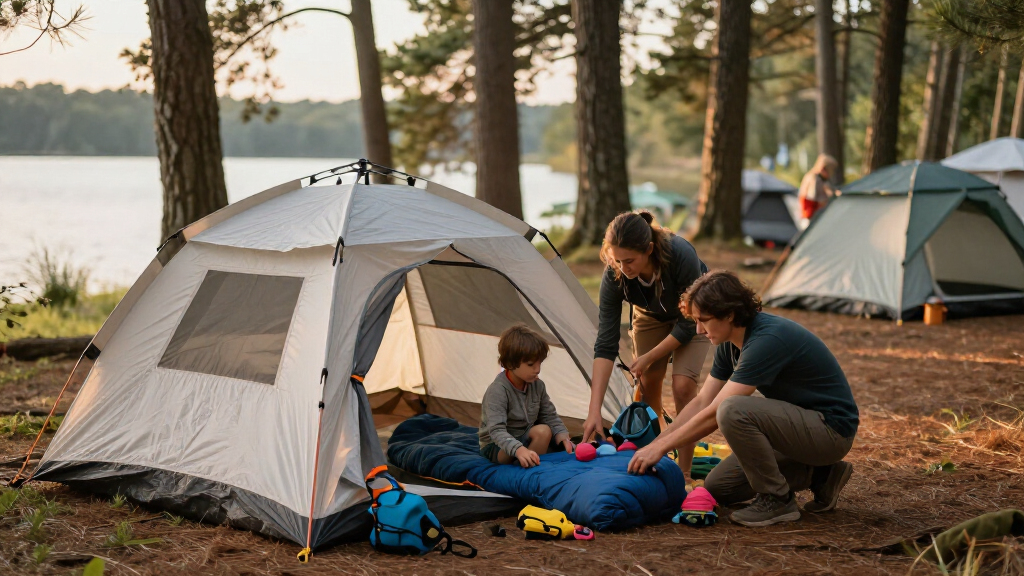
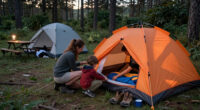
The best family camping tent is the CORE 10-Person Cabin Tent with Room Divider, thanks to its rare combination of true standing-height livability, a functional divider for sibling privacy, and dependable weather protection at a mid-tier price. If your priority is the fastest possible setup, the FanttikOutdoor Instant 6-Person Tent gets a camp pitched in minutes, while the CORE Instant Cabin Tent 18 x 10 ft is the pick when you need genuine multi-room space for a bigger crew. The core tradeoff in this category is simple: instant-setup poles and cabin-style headroom almost always mean more weight, more bulk, and more wind resistance, while dome-style tents like the Coleman Sundome shrug off weather better but feel cramped for a family of five. How much that tradeoff matters depends on how you camp — car campers can afford bulk, backpacking families cannot. Keep reading for the full breakdown of all 14 tents, including who each one is right for and which ones I’d skip.

Get travel and outdoor gear delivered free — and shop member deals
- Fast, free delivery on millions of items
- Access to Prime Big Deal Days deals on October 6–7
- Prime Video, Amazon Music and more included
Complete the kit

Key Takeaways
- Instant-pitch models (FanttikOutdoor, CORE 9-Person Instant, CORE 18 x 10 Instant) dominate on convenience but typically trade away packed compactness and wind stability compared with traditional pole tents like the Coleman Sundome.
- Divider walls were the single biggest livability differentiator in this lineup: the CORE 10-Person and CAMPROS 3-Room tents turned one open space into workable sleeping zones, while cheaply hung dividers in budget tents often sagged and were barely worth using.
- Advertised capacity is optimistic across the board — a ’10-person’ tent realistically sleeps a family of six with gear, so I treated 8-person models as the true family sweet spot for four to five people.
- Screen rooms and screen porches (UNP 8-Person Tunnel, PORTAL 8-Person) proved to be the most underrated feature for families with young kids, creating bug-free play and dining space without adding much cost.
- The sub-$150 segment (CAMPROS CP 8-Person, Wakeman Outdoors 10-Person) delivers real space for the money but cuts corners on floor material and rainfly coverage — acceptable for fair-weather campers, risky for storm-prone regions.
| CAMPROS CP 12-Person 3-Room Camping Tent with Rainfly |  | Best Overall for Big Families | Capacity: 12 people | Floor area: 180 sq. ft. (20′ x 9′) | Center height: 72 in | VIEW LATEST PRICE | See Our Full Breakdown |
| FanttikOutdoor Instant Camping Tent, 6-Person |  | Best for Speedy Setup | Capacity: Up to 6 sleeping; most comfortable for 3 with gear | Dimensions: 120 x 108 in | Center height: 66 in | VIEW LATEST PRICE | See Our Full Breakdown |
| CORE Instant Cabin Tent, 18 x 10 ft, Multi-Room |  | Best Premium Basecamp | Capacity: 6 with gear or 12 without | Dimensions: 18 x 10 ft | Center height: 80 in | VIEW LATEST PRICE | See Our Full Breakdown |
| UNP 6-Person Waterproof Family Cabin Tent with Rainfly |  | Best Value for Small Families | Capacity: 6 people | Dimensions: 10′ x 9′ x 78″ | Floor area: 90 sq ft | VIEW LATEST PRICE | See Our Full Breakdown |
| CAMPROS CP 8-Person Camping Tent with Room Divider and Rainfly |  | Best Mid-Size Balance | Capacity: 8 people | Center height: 72 in | Rooms: 2, with detachable divider | VIEW LATEST PRICE | See Our Full Breakdown |
| CORE 10-Person Cabin Tent with Room Divider |  | Best for Divided Family Sleeping | Sleeping capacity: Comfortably fits 5 with gear, up to 10 without gear | Dimensions: 14 x 10 ft | Center height: 86 in | VIEW LATEST PRICE | See Our Full Breakdown |
| UNP 8-Person Waterproof Tunnel Camping Tent with Screen Porch |  | Best Screened Porch Design | Capacity: 8 people | Dimensions: 20 x 9 x 6.67 ft (14 ft tent + 6 ft porch) | Peak height: 80 in | VIEW LATEST PRICE | See Our Full Breakdown |
| CORE 9-Person Instant Cabin Tent, 14′ x 9′, Green (40008) |  | Best Fast Setup | Sleeping capacity: Up to 9 without gear; comfortably 4 with gear | Dimensions: 14 x 9 ft | Center height: 78 in | VIEW LATEST PRICE | See Our Full Breakdown |
| WildFinder 10-Person Camping Tent with Rainfly |  | Best Long Layout for Big Groups | Capacity: Up to 10 people | Dimensions: 18 x 9 x 6.9 ft | Center height: 82.7 in | VIEW LATEST PRICE | See Our Full Breakdown |
| Wakeman Outdoors 10-Person Camping Tent with Rainfly, Navy |  | Best Budget Big-Cabin Value | Capacity: Up to 10 adults | Mattress capacity: Up to 4 queen-size mattresses | Dimensions: 168 x 120 x 84 in | VIEW LATEST PRICE | See Our Full Breakdown |
| 8-Person 3-Room Family Camping Tent with Rainfly |  | Best for Maximum Privacy | Capacity: Up to 8 people | Dimensions: 14 x 9 ft | Center height: 72 in | VIEW LATEST PRICE | See Our Full Breakdown |
| Coleman Sundome Camping Tent with Rainfly, 2–6 Person |  | Best Budget Starter Tent | Capacity: 2–6 people | Dimensions: 9 x 7 ft | Center height: 4 ft 11 in | VIEW LATEST PRICE | See Our Full Breakdown |
| UNP 10-Person Family Camping Tent |  | Best for Big Groups | Capacity: 10 people | Dimensions: 18 ft × 9 ft × 78 in | Fits: 10 sleeping bags or 3 queen air mattresses | VIEW LATEST PRICE | See Our Full Breakdown |
| PORTAL 8-Person Family Camping Tent with Screen Room |  | Best for Bug-Free Lounging | Capacity: 8 people | Dimensions: 20 ft (14 ft + 6 ft screen room) x 8 ft | Center height: 76 in | VIEW LATEST PRICE | See Our Full Breakdown |
| camping tents for familie | Capacity | Center height | Dimensions | Setup time |
|---|---|---|---|---|
| CAMPROS CP 12-Person 3-Room Ca | 12 people | 72 in | — | Under 10 minutes |
| FanttikOutdoor Instant Camping | Up to 6 sleeping; most comfortable for 3 with gear | 66 in | 120 x 108 in | Under 60 seconds |
| CORE Instant Cabin Tent | 6 with gear or 12 without | 80 in | 18 x 10 ft | 2 minutes or less |
| UNP 6-Person Waterproof Family | 6 people | 78 in | 10′ x 9′ x 78" | About 5 minutes for 2 people |
| CAMPROS CP 8-Person Camping Te | 8 people | 72 in | — | About 5 minutes for 2 people |
| CORE 10-Person Cabin Tent with | — | 86 in | 14 x 10 ft | — |
| UNP 8-Person Waterproof Tunnel | 8 people | — | 20 x 9 x 6.67 ft (14 ft tent + 6 ft porch) | ~15 minutes for 2 people |
| CORE 9-Person Instant Cabin Te | — | 78 in | 14 x 9 ft | 2 minutes or less |
| WildFinder 10-Person Camping T | Up to 10 people | 82.7 in | 18 x 9 x 6.9 ft | — |
| Wakeman Outdoors 10-Person Cam | Up to 10 adults | 86 in | 168 x 120 x 84 in | — |
| 8-Person 3-Room Family Camping | Up to 8 people | 72 in | 14 x 9 ft | — |
| Coleman Sundome Camping Tent w | 2–6 people | 4 ft 11 in | 9 x 7 ft | About 10 minutes |
| UNP 10-Person Family Camping T | 10 people | — | 18 ft × 9 ft × 78 in | About 10 minutes for 2 people |
| PORTAL 8-Person Family Camping | 8 people | 76 in | 20 ft (14 ft + 6 ft screen room) x 8 ft | About 15 minutes for 2 people |
More Details on Our Top Picks
CAMPROS CP 12-Person 3-Room Camping Tent with Rainfly
When a family of six or more heads out for a week at a campground, this is the tent I’d point to first. The 180 sq. ft. floor and 72-inch center height mean adults can stand and walk around comfortably, and the two removable dividers give parents a private sleeping space while kids get their own zone — something the smaller CORE Instant Cabin Tent also offers, but with a packed weight nearly double this model’s footprint cost. Color-coded poles keep setup under 10 minutes, which matters when you arrive at a site with restless kids and fading daylight. Compared with the CAMPROS CP 8-Person, the step up buys you a third room and room for three queen mattresses. The tradeoff is scale: this is a basecamp tent, not something you’d haul to a walk-in site, and it genuinely needs two adults to pitch.
Pros:- Huge 180 sq. ft. floor fits 3 queen air mattresses
- Two removable dividers create three private rooms
- Setup in under 10 minutes with color-coded poles
- Sealed seams, rainfly, and rain strips for real weather protection
Cons:- Requires two people to set up
- Oversized footprint limits which campsites can accommodate it
- Bulkier to store and transport than 6-person options
Best for: Large families of 6-10 who drive up to campsites and want separate sleeping rooms for parents and kids
Not ideal for: Backcountry campers or small families — the 20-foot footprint is overkill and hard to position on tight sites
- Capacity:12 people
- Floor area:180 sq. ft. (20′ x 9′)
- Center height:72 in
- Rooms:3, with two removable dividers
- Mattress capacity:3 queen or 5 full air mattresses
- Setup time:Under 10 minutes
- Fabric:185T polyester
- Ventilation:Mesh roof, door, and windows
Our verdict“The default choice for big families who camp by car and want standing height plus private rooms without a premium price.”
FanttikOutdoor Instant Camping Tent, 6-Person
Setting up camp with impatient children is where this tent earns its place: pre-installed poles deploy in under 60 seconds, faster than anything else in this lineup, including the CORE Instant Cabin Tent at two minutes. The mesh on all four sides plus floor vents and a mesh ceiling keep air moving on muggy nights, and thoughtful touches like a power cord entrance and interior pockets show it was designed around actual family camping habits. The honest caveat is capacity: while it’s rated for six, it’s most comfortable for three people with gear. The UNP 6-Person Cabin offers more usable room for the same headcount. Also note the inner mesh roof isn’t waterproof on its own — the rainfly is mandatory the moment clouds gather, and skipping it means a wet night.
Pros:- Pre-installed poles pitch in under 60 seconds
- Four-sided mesh windows, floor vents, and ceiling panel for airflow
- Power cord entrance and built-in storage pockets
- Includes stakes, guy lines, and drainage base for wet conditions
Cons:- Comfortable capacity is only about 3 people with gear
- Inner mesh roof is not waterproof without the rainfly
- At 16.8 lbs it’s heavier than comparable traditional 6-person tents
Best for: Small families of 3-4 who value fast setup and camp mostly in fair weather
Not ideal for: Families of five or six — the real-world capacity with gear is closer to three, and rainy climates demand consistent rainfly use
- Capacity:Up to 6 sleeping; most comfortable for 3 with gear
- Dimensions:120 x 108 in
- Center height:66 in
- Setup time:Under 60 seconds
- Weight:16.8 lbs
- Frame:Carbon steel with protective sleeves
- Wind resistance:Up to 35 mph
- Ventilation:4-side mesh windows, floor vents, mesh ceiling
Our verdict“Buy it for the one-minute pitch and airy design — just size up your family before trusting the 6-person rating.”
CORE Instant Cabin Tent, 18 x 10 ft, Multi-Room
This is the tent for families who treat camping as a week-long basecamp rather than a weekend escape. The 80-inch center height — the tallest in this batch — lets even tall parents move around without ducking, and the 18 x 10 ft floor swallows four queen air beds, something the CAMPROS CP 12-Person can’t quite match in mattress count. Two dividers create three rooms, and the 1200 mm waterproof-rated fabric with taped seams is a step above models like the UNP cabin, whose waterproof rating goes unspecified. The instant frame pitches in two minutes, though ‘instant’ here means pre-attached rather than effortless — you’re still wrangling an 18-foot structure. The real tradeoff is the 48 lb packed weight and 49-inch-long bag: this is a two-adult carry from the car, full stop, and it’s overkill for overnight trips.
Pros:- Tallest interior in the roundup at 80 inches
- Fits up to four queen-size air mattresses
- Two dividers create up to three separate rooms
- Pre-attached poles set up in 2 minutes or less
Cons:- Heavy at 48 lbs with a bulky 49-inch pack size
- Large footprint requires a spacious campsite
- Instant frame is fast but still needs two adults for smooth pitching
Best for: Families who camp for extended stretches and want true standing height, four queen beds, and multi-room privacy
Not ideal for: Solo parents or anyone without a second adult to help — at 48 lbs and 18 feet long, it’s a two-person job to move and position
- Capacity:6 with gear or 12 without
- Dimensions:18 x 10 ft
- Center height:80 in
- Setup time:2 minutes or less
- Room dividers:2 (up to 3 rooms)
- Water resistance:1200 mm fabric
- Pack size:49 x 16 x 12 in
- Weight:48 lbs
Our verdict“The closest thing to a portable cabin — worth the weight for long family trips, wrong for anything you have to carry far.”
UNP 6-Person Waterproof Family Cabin Tent with Rainfly
For a family of four doing a few weekend trips a season, this tent covers the basics without paying for capacity you won’t use. The 90 sq. ft. floor handles two air mattresses or six sleeping bags, and the 78-inch center height beats the FanttikOutdoor’s 66 inches by a full foot — a real difference for dressing and moving around inside. Where the FanttikOutdoor Instant wins on speed, this one wins on interior space and a ventilation layout of five mesh windows, a mesh door, and a mesh roof that keeps condensation down overnight. Setup takes about five minutes with two people, which is reasonable but not instant. The main gap is weatherproofing confidence: the polyurethane coating sounds adequate, but no specific hydrostatic rating is given, unlike the CORE Instant Cabin’s stated 1200 mm, so heavy sustained rain is a question mark.
Pros:- 78-inch center height allows most adults to stand fully upright
- Six mesh panels (door, roof, and 5 windows) minimize condensation
- Fits two air mattresses or six sleeping bags
- Two-person setup in about five minutes
Cons:- No specific hydrostatic waterproof rating provided
- 18 lb carry weight is cumbersome for one person
- Slower to pitch than instant-pole competitors
Best for: Families of 4-5 on a budget who want standing height and good ventilation for occasional weekend trips
Not ideal for: Families camping in rainy regions — the unspecified waterproof rating makes it a gamble in sustained wet weather
- Capacity:6 people
- Dimensions:10′ x 9′ x 78″
- Floor area:90 sq ft
- Center height:78 in
- Setup time:About 5 minutes for 2 people
- Ventilation:1 mesh door, 5 mesh windows, mesh roof
- Weight:18 lb
- Warranty:1 year
Our verdict“A sensible, roomy choice for fair-weather family weekends when interior space matters more than setup speed or storm readiness.”
CAMPROS CP 8-Person Camping Tent with Room Divider and Rainfly
This is the sweet spot between the cramped six-person models and the unwieldy 12-person giants. The straight-wall design with a 72-inch center height means usable floor space extends to the edges, not just a narrow peak — families will notice the difference when arranging mattresses. Compared with the CAMPROS CP 12-Person, you give up a third room and some mattress capacity, but you gain a footprint that fits standard campsites without negotiation. Weather protection is thorough for the price: sealed seams, waterproof strips, and a full rainfly. One clever detail: the detachable divider doubles as a projector screen for backyard movie nights. The weak point is a single door — with two rooms and eight sleepers, midnight exits mean climbing over someone, which the dual-access CORE and larger CAMPROS avoid.
Pros:- Straight walls maximize usable floor space at 72-inch height
- Full weather kit: sealed seams, waterproof strips, and rainfly
- Detachable divider creates two rooms or works as a projector screen
- Color-coded poles allow two-person setup in about 5 minutes
Cons:- Only one door despite two-room layout
- Two people recommended for setup
- Less interior space than similarly priced 10-person options
Best for: Families of 5-6 who want near-large-tent livability on a normal campsite footprint, plus a divider for privacy or movie nights
Not ideal for: Groups who split into rooms with separate exits — the single door creates a traffic jam for eight sleepers
- Capacity:8 people
- Center height:72 in
- Rooms:2, with detachable divider
- Setup time:About 5 minutes for 2 people
- Season:3 season
- Doors:1
- Windows:5
- Ventilation:Mesh top, doors, and windows
Our verdict“The best capacity-to-practicality compromise in the lineup for medium families who want two rooms without an oversized footprint.”
CORE 10-Person Cabin Tent with Room Divider
This option stands out for giving families two genuinely private sleeping spaces inside one tent, thanks to its removable room divider and nearly straight cabin walls. Parents can put kids to bed on one side and stay up on the other — something the WildFinder 10-Person can’t match, since it offers a single open layout. The 86-inch center height means most adults can walk around upright, and the 1200 mm fabric with sealed seams gives it a real weather edge over the Wakeman Outdoors 10-Person, whose rain performance is less proven on paper.
The tradeoff is mobility: at 32 pounds and a 29-inch packed length, this is a tent you drive to, not one you carry far. And like most big cabins, the 10-person rating is optimistic — plan on five people with gear for comfortable living.
Pros:- Room divider creates two genuinely private sleeping spaces
- Near-vertical walls and 86-inch center height allow standing and moving comfortably
- Sealed seams, taped rainfly, and 1200 mm fabric offer solid weather protection
- Storage pockets, gear loft, and adjustable lower vents add everyday convenience
Cons:- 32 lb weight and large packed size make transport and hauling awkward
- Realistically sleeps only 5 people comfortably once gear is inside
Best for: Families with kids who want separate sleeping zones and camp mostly at drive-up sites
Not ideal for: Backpackers or anyone carrying gear long distances — the 32 lb weight and bulky pack size rule it out
- Sleeping capacity:Comfortably fits 5 with gear, up to 10 without gear
- Dimensions:14 x 10 ft
- Center height:86 in
- Air bed capacity:Four queen-size air beds
- Water resistance:1200 mm fabric with sealed seams
- Room divider:Included, removable
- Pack size:29 x 13 x 13 in
- Weight:32 lbs
Our verdict“This pick makes the most sense for drive-in family campers who value interior privacy and standing room over portability.”
UNP 8-Person Waterproof Tunnel Camping Tent with Screen Porch
What separates this model from the CORE 9-Person Instant Cabin is livability beyond the sleeping area: the 6-foot screened porch gives families a bug-free place to eat, play cards, or store muddy shoes without letting mosquitoes in. The 20-foot tunnel layout fits two full air mattresses with room left over, and the mesh-heavy design — four windows, two doors, and a mesh ceiling — keeps air moving better than the more enclosed Wakeman Outdoors cabin.
The 1500 mm waterproof rating is the strongest coating in this batch, though it depends on steel poles that add to the 30 lb weight. Setup is realistic at about 15 minutes with two people, so solo campers with young kids may find the pitch stressful compared with a true instant tent.
Pros:- Screened porch adds a bug-free living and dining zone
- 1500 mm waterproof coating is the best rain protection in this batch
- Extensive mesh windows, doors, and ceiling deliver strong airflow
- Color-coded instructions simplify an otherwise involved setup
Cons:- 30 lb weight makes it cumbersome to carry from car to campsite
- Setup is designed for two people, not a solo camper
Best for: Families camping in buggy or warm climates who want a screened living space separate from the sleeping area
Not ideal for: Solo parents setting up alone with small kids — the two-person, 15-minute pitch is harder than instant alternatives
- Capacity:8 people
- Dimensions:20 x 9 x 6.67 ft (14 ft tent + 6 ft porch)
- Peak height:80 in
- Frame:8 steel leg poles
- Setup time:~15 minutes for 2 people
- Packed size:11.5 x 11.5 x 25.5 in
- Weight:30 lb
- Warranty:1 year
Our verdict“Choose this if your family trips happen in heat and insects and you want an outdoor room, not just a bedroom.”
CORE 9-Person Instant Cabin Tent, 14′ x 9′, Green (40008)
The headline here is the two-minute setup from pre-attached poles — a genuine advantage over the UNP 8-Person Tunnel, which asks two people for 15 minutes. For families arriving at a campsite late with restless kids, that difference is the whole ballgame. Compared with its sibling, the CORE 10-Person Cabin with Room Divider, this model gives up 8 inches of peak height and the privacy divider but compensates with speed and a slightly smaller footprint that fits tighter campsites.
The compromises are predictable: instant pole systems tend to be heavier and less rigid in serious wind than conventional frames, and the 9-person rating shrinks to four people with gear in real-world use. If you want both instant setup and a divider, you’ll need to step up to CORE’s larger multi-room model.
Pros:- Pre-attached poles deliver a sub-two-minute pitch
- Fits two queen-size air beds for comfortable family sleeping
- Taped rainfly and sealed seams provide dependable weather protection
- Adjustable ventilation and interior pockets add comfort and organization
Cons:- Realistic comfortable capacity is 4 people with gear, not the advertised 9
- Instant pole frames are typically less stable in high winds than conventional designs
Best for: Families who arrive late, camp frequently, or simply hate pitching tents and want the fastest possible setup
Not ideal for: Campers expecting true 9-person capacity — with gear, four people is the comfortable limit
- Sleeping capacity:Up to 9 without gear; comfortably 4 with gear
- Dimensions:14 x 9 ft
- Center height:78 in
- Setup time:2 minutes or less
- Material:Polyester
- Included:Rainfly, guylines, steel stakes
Our verdict“This model is better suited to families who prioritize setup speed above raw space and don’t need a room divider.”
WildFinder 10-Person Camping Tent with Rainfly
At 18 feet long, this tent’s stretched footprint creates a dorm-style row of sleeping spots that works well for larger families or mixed-age groups sharing one shelter — a different geometry than the squarer CORE 10-Person Cabin, which prioritizes standing room and a divider over length. The 82.7-inch center height sits between the CORE (86 in) and the CORE Instant (78 in), so most adults can still move around without stooping.
The honest weakness is vagueness: unlike the UNP 8-Person with its specified 1500 mm coating, WildFinder publishes no waterproof rating, so buyers planning trips in reliably wet climates are taking something on faith. The double-layer construction and included rainfly help, but the 1-year warranty and 24/7 support are the safety net rather than hard specs.
Pros:- 18-foot length accommodates a full row of sleepers or multiple pads
- Large mesh windows keep a big group’s air fresh through the night
- Double-layer construction with rainfly adds a buffer against weather
- Backed by a 1-year warranty with 24/7 customer support
Cons:- No published waterproof rating, unlike most competitors here
- Large footprint is awkward to transport and demands a spacious campsite
Best for: Larger families or group campers who want maximum linear sleeping space in one shared shelter
Not ideal for: Campers heading into wet, storm-prone regions — the unspecified waterproof rating is a real gamble
- Capacity:Up to 10 people
- Dimensions:18 x 9 x 6.9 ft
- Center height:82.7 in
- Ventilation:Multiple large mesh windows
- Design:Double-layer construction
- Included:Rainfly
- Warranty:1 year
Our verdict“A sensible pick for big groups in mostly fair weather, but verify your rain expectations before committing.”
Wakeman Outdoors 10-Person Camping Tent with Rainfly, Navy
For families who want four queen-size mattresses and an 86-inch ceiling without paying premium-cabin prices, this Wakeman delivers the core big-tent experience. It matches the CORE 10-Person Cabin on headline space — same mattress capacity, nearly the same height, plus a zippered room divider — while the extension cord port is a practical touch neither the WildFinder nor the CORE Instant offers for running power inside.
The differences show up in the details. The 800 mm water resistance is well below the UNP’s 1500 mm coating, so sustained rain is a riskier proposition. Wakeman also publishes no setup time, whereas the CORE Instant promises two minutes, and the fiberglass pole mix is lighter-duty than CORE’s steel. This is a fair-weather family shelter at a value price, not an expedition-grade one.
Pros:- Fits up to 10 adults or four queen-size mattresses at a value price
- Zippered room divider and organizer pockets keep the interior manageable
- Four screened windows and two D-style doors provide good cross-ventilation
- Extension cord port lets you run power inside conveniently
Cons:- 800 mm water resistance is well below the UNP’s 1500 mm for wet-weather use
- No published setup time, and fiberglass poles are less durable than steel
Best for: Budget-conscious families doing fair-weather, drive-up camping who want maximum space per dollar
Not ideal for: Families camping in rainy climates — the 800 mm rating is the weakest weather protection in this batch
- Capacity:Up to 10 adults
- Mattress capacity:Up to 4 queen-size mattresses
- Dimensions:168 x 120 x 84 in
- Center height:86 in
- Water resistance:800 mm Taffeta
- Packed size:25 x 12 x 12 in
- Weight:31.3 lbs
- Windows/doors:4 screened windows, 2 D-style doors
Our verdict“Skip the premium brands if you camp in clear weather and want maximum space for the money — this is that tent.”
8-Person 3-Room Family Camping Tent with Rainfly
Most family tents in this roundup offer a single open space or, at best, a two-room divider. This model goes further with a three-room layout and a divider that creates two genuinely private sleeping areas — a real advantage for families mixing kids and adults, or for trips with another couple. Compared with the CORE 10-Person Cabin Tent, the footprint is smaller, but the zoning is more flexible, and the divider even doubles as a projector screen for movie nights. The PU3000MM waterproof coating with sealed seams beats the water-resistant (rather than waterproof) fabric on the PORTAL screen-room tent below. The tradeoff: at 16 lbs with color-coded but multi-part assembly, it demands two adults and more patience than an instant-cabin design.
Pros:- Three-room layout with two private sleeping areas
- Holds up to three queen air mattresses
- PU3000MM coating, sealed seams, and double-layer rainfly for serious weather protection
- Mesh top and windows keep air moving in warm weather
Cons:- Setup is designed for two people and isn’t fast
- Heavier and bulkier than simpler dome tents like the Coleman Sundome
Best for: Families of six to eight who want separate sleeping zones for parents and kids, or groups sharing a tent with another family
Not ideal for: Solo parents or campers who pitch alone — the setup genuinely requires two people
- Capacity:Up to 8 people
- Dimensions:14 x 9 ft
- Center height:72 in
- Rooms:3
- Weight:16 lbs (7.3 kg)
- Ventilation:Large mesh windows and mesh top
- Included:Rainfly, room divider, carry bag
Our verdict“This pick makes the most sense for large families who prioritize privacy zoning and weather protection over fast setup.”
Coleman Sundome Camping Tent with Rainfly, 2–6 Person
Not every family needs a multi-room cabin. The Coleman Sundome is the simplest, most affordable entry point in this lineup, and its 35+ mph wind-rated frame actually outperforms several larger tents here when the weather turns gusty. Unlike the UNP 10-Person, which needs two adults and ten minutes, the Sundome pitches in about 10 minutes with a straightforward dome design that a first-time camper can manage. The compromises are obvious: at 9 x 7 ft with a 4 ft 11 in center height, adults will be crouching, and it fits just one queen airbed. But for weekend car campers with one or two kids, that simplicity is the point — fewer poles, fewer parts, fewer things to go wrong.
Pros:- Wind-tested frame holds up in 35+ mph gusts
- Fast, beginner-friendly 10-minute setup
- Large windows plus a ground vent for airflow
- E-Port lets you run a power cord inside safely
Cons:- Center height of 4 ft 11 in forces most adults to stoop
- Capacity varies by size, so the largest versions sacrifice interior comfort
Best for: Small families or first-time campers wanting an affordable, easy-pitch tent for weekend trips
Not ideal for: Taller families or groups over four — the low center height and single queen airbed capacity get cramped fast
- Capacity:2–6 people
- Dimensions:9 x 7 ft
- Center height:4 ft 11 in
- Material:Polyester
- Setup time:About 10 minutes
- Wind resistance:35+ mph
- Air bed capacity:1 queen-size air bed
- Warranty:1-year limited
Our verdict“Families testing the camping waters with a small crew will get the easiest, most forgiving start here — just don’t expect standing room.”
UNP 10-Person Family Camping Tent
When your crew genuinely hits double digits, most options here shrink in comparison. The UNP 10-Person offers an 18-foot footprint — longer than the 8-Person 3-Room tent above — with a 78-inch center height that lets nearly anyone walk upright down the middle. The two-room divider gives parents a modest privacy break, and the mesh roof means kids can fall asleep staring at the sky, a feature the Coleman Sundome can’t match at half the size. A rainfly with vestibular and extended awnings adds covered gear storage and shade. Be realistic about the downsides: this is a big shelter with a bulky carry bag, and the 10-minute setup figure assumes two coordinated adults. Compared with the CORE Instant Cabin line, you trade push-button convenience for raw space per dollar.
Pros:- Fits 10 sleeping bags or three queen air mattresses
- 78-inch center height allows most adults to stand
- Mesh roof and windows deliver airflow and sky views
- Vestibular and extended awnings add covered storage and shade
Cons:- Requires two people to hit the stated setup time
- Large, bulky carry bag is awkward to transport and store
Best for: Large families or multi-family groups of eight to ten who camp by car and need serious sleeping capacity
Not ideal for: Backpackers or small-car campers — the packed size and weight make it impractical to haul far
- Capacity:10 people
- Dimensions:18 ft × 9 ft × 78 in
- Fits:10 sleeping bags or 3 queen air mattresses
- Setup time:About 10 minutes for 2 people
- Fabric:185T polyester
- Ventilation:Mesh roof and windows
- Room layout:2 rooms with privacy divider
- Carry bag:25.6 × 10.2 × 10.2 in
Our verdict“If headcount is your limiting factor, this tent buys more sleeping space per dollar than nearly anything else in the lineup — just bring a second set of hands.”
PORTAL 8-Person Family Camping Tent with Screen Room
What sets the PORTAL apart from every other tent here is its dedicated 6-foot screened room — a bug-free porch where kids can play or the family can eat without swatting mosquitoes. Where the UNP 8-Person tunnel tent offers a similar screen porch concept, the PORTAL pairs it with a taller 76-inch ceiling and room for two full-size airbeds in the sleeping area. Six guylines and a removable rainfly give it respectable stability flexibility, though fiberglass poles are less robust than the steel frames on CORE’s cabins in sustained bad weather. The single-door design is the real frustration: with eight people sleeping inside, one door means clambering over sleeping bags for midnight bathroom trips. Still, for lakeside or wooded camping where insects rule the evening, that screen room changes the whole trip.
Pros:- Screen room creates a genuine bug-free living and dining area
- 76-inch center height fits standing adults
- Accommodates two full-size airbeds
- Color-coded poles and instructions simplify a 15-minute two-person setup
Cons:- Only one door for up to eight occupants
- Fiberglass poles are less durable than steel in strong winds
Best for: Families camping in buggy, warm-weather destinations who want a shaded, insect-free living space separate from sleeping quarters
Not ideal for: Campers in exposed, windy sites — fiberglass poles and a tunnel shape need careful guylining, and one door frustrates large groups
- Capacity:8 people
- Dimensions:20 ft (14 ft + 6 ft screen room) x 8 ft
- Center height:76 in
- Seasons:3-season
- Material:100% polyester
- Poles:Fiberglass, color-coded
- Doors / Vestibules:1 door, 1 vestibule
- Setup time:About 15 minutes for 2 people
Our verdict“This model is better suited to warm-weather families who value a screened living space over all-weather toughness — pick something sturdier for exposed sites.”

How We Picked
My ranking process started with a simple question: what actually ruins a family camping trip? The answers — a soaked sleeping bag, a 45-minute setup meltdown, and kids with nowhere to change clothes — shaped the four criteria I weighted most heavily: weather protection, setup speed and simplicity, livable space versus advertised capacity, and build quality where it counts (floor denier, rainfly coverage, pole materials, zipper quality). A tent could be enormous and still rank below a smaller one if its rainfly stopped at the seams or its floor felt like it would tear on the first pinecone.
From there, I separated the lineup into buyer-relevant tiers. Instant cabin tents were judged against each other on packed bulk and headroom, not against dome tents, because families shopping for speed aren’t comparing apples to apples with weather-first buyers. Budget models like the CAMPROS CP tents and Wakeman Outdoors weren’t penalized for thin specs alone — they were penalized only when the compromises crossed into reliability risk. Finally, value was scored relative to segment: a cheaper tent that nails the basics beat a feature-stuffed one that wobbles in wind or puddles at the door. That’s why the CORE 10-Person Cabin Tent sits at the top — it compromises the least across the most criteria.
Factors to Consider When Choosing Camping Tents For Families
Before settling on a specific tent, it helps to understand the structural decisions that shape every model in this category. These six factors are where families most often go wrong — usually by optimizing for the wrong thing entirely.H3: Real Capacity Versus the Number on the Box
Manufacturers calculate capacity by squeezing adult-sized sleeping pads edge to edge with zero gear and zero elbow room, which is a fantasy for actual families. A realistic rule of thumb: take the advertised number, subtract two, and that’s your comfortable sleeping count — with gear, subtract three. An 8-person tent is the honest sweet spot for a family of four or five because it leaves room for duffels, a diaper-changing corner, and a kid who rolls around at 2 a.m. Also pay attention to floor dimensions and shape, not just the person count: a 14′ x 9′ footprint gives you length for adult air mattresses, while a squarer footprint of the same square footage may leave tall parents sleeping diagonally. Cabin-style walls add usable floor near the edges, whereas sloped dome walls waste the perimeter. Finally, check the peak height — anything under 6 feet means most adults spend the trip hunched over, which gets old by day two.
H3: Weather Protection: Where Budget Tents Cut Corners
The most common mistake families make is judging a tent by its walls when the water comes from below and above. A tub-style floor with welded seams and at least 1000mm coating matters more than wall fabric, because groundwater and groundsheet condensation cause most wet-gear disasters. Rainfly coverage is the second tell: a fly that stops an inch above the tent walls will channel rain straight onto the zipper line, while a full-coverage fly that extends partway down creates a dry entry zone and protects the mesh. Bathtub floors, taped seams, and gear lofts positioned away from mesh panels are the quiet quality markers that separate a $120 tent from a $200 one with identical person counts. If you camp in the Pacific Northwest, Gulf Coast, or anywhere with afternoon thunderstorms, weight this factor above every other — a fast-setup tent that leaks is a slower, worse tent. Fair-weather campers in dry climates can legitimately deprioritize it and save money.
H3: Instant Poles Versus Traditional Poles
Instant tents use pre-attached telescoping poles that pop the structure into shape in a couple of minutes, and for parents arriving at a campsite with cranky kids at dusk, that convenience is genuinely transformative. The tradeoffs are real though: instant frames add weight (often 25–40 pounds), packed bulk that strains a sedan trunk, and more flex in sustained wind because the joints create hinge points. Traditional pole tents take longer to pitch but flex less, pack smaller, and are easier to repair in the field with a replacement pole section. A honest self-assessment helps here: if you camp fewer than four times a year and always in calm, established campgrounds, instant poles will probably never fail you. If you camp in exposed sites, near the coast, or in shoulder seasons with wind, the traditional frame’s stability earns its setup time. Splitting the difference, some families bring an instant tent for the main shelter and a small dome as a backup for windy trips.
H3: Room Layout: Dividers, Screen Rooms, and Doors
Once a tent sleeps more than four people, interior architecture starts to matter more than raw square footage. A room divider gives parents a separate sleeping zone and teens privacy — but check reviews and product details for how the divider actually attaches, because a clip-in fabric panel that sags and gaps at the edges provides sound and light separation but little else. Screen rooms and screened porches are the sleeper feature for families: they create a bug-free space for eating, playing cards, and corralling toddlers during mosquito hour, effectively adding a room you don’t have to heat or waterproof. Door count matters too — two doors mean nobody climbs over three sleeping people for a midnight bathroom run, which is worth more than most families expect. Finally, think about the vestibule or awning situation for muddy shoes and wet jackets; gear that comes inside the sleeping area is how tents start smelling like a locker room by day three.
H3: Ventilation and Condensation
With four-plus bodies breathing overnight, condensation is nearly inevitable unless the tent moves air, and wet sleeping bags on a cold morning feel exactly like rain leakage even when the weather was dry. Look for large mesh panels paired with adjustable windows on opposing walls, which create the cross-breeze that carries moisture out before it settles on the ceiling. Rainflies with vestibule vents or the ability to be guyed out an extra few inches dramatically improve airflow without letting rain in. This is one area where bigger is not automatically better: an oversized tent with poor ventilation accumulates more total condensation than a snug, well-vented one. Cabin tents with mostly fabric walls and small windows are the worst offenders in this lineup’s category, while tunnel and dome designs with generous mesh tend to breathe best. For summer campers in humid regions, ventilation should rank alongside weather protection in your decision.
H3: Durability, Repairability, and Total Cost of Ownership
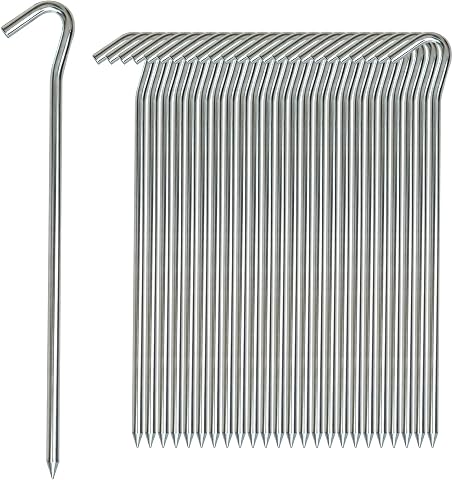
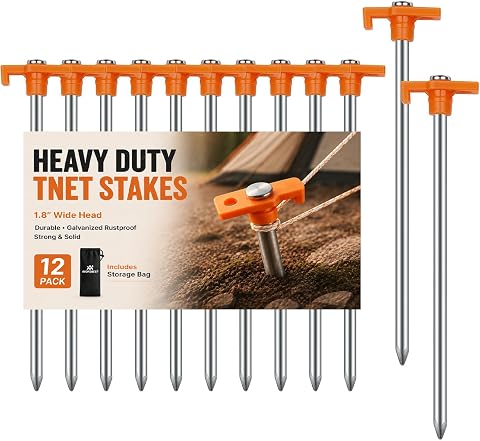
The upfront price tag is only part of the math. Thin 68D polyester floors wear through on gravel and pine needles, and a replacement footprint or tarp — which you should buy regardless — adds to the real cost. Zippers are the most common failure point on family tents because they’re opened hundreds of times per trip by small hands; large-toothed, double-sided zippers on the doors outlast the small coils found on budget models. Check whether replacement poles, rainflies, and stakes are available separately, because a tent that can’t be repaired becomes waste after one broken part. Stakes deserve a mention too: nearly every tent in this price range ships with flimsy aluminum or plastic stakes that bend in hard ground, so budget for a set of sturdy steel or forged stakes. A $250 tent that lasts eight seasons is cheaper per trip than a $120 tent replaced every two years — but only if you actually camp enough to justify it. Casual twice-a-year families can absolutely buy the budget option.
Frequently Asked Questions
Is a 6-person tent big enough for a family of four?
It can be, but it will feel snug. A 6-person rating assumes four to six adult pads wall-to-wall with no gear, so a family of four with duffels, a cooler-adjacent gear pile, and two kids who sprawl will fill it completely. It works well if your kids are small, you camp in mild weather with gear stored in the car, and you value a smaller packed footprint. If you plan to keep gear inside, use full-size air mattresses, or want any walking lane down the middle, step up to an 8-person model — the CORE 10-Person or UNP 8-Person give you breathing room without a dramatic price jump. The exception is the Coleman Sundome 6-Person, whose dome shape wastes perimeter space, making it feel tighter than its numbers suggest.
Are instant tents actually worth the extra weight for families?
For most car-camping families, yes — setup frustration is the number one reason parents give up on camping with young kids, and collapsing a tent in two minutes instead of twenty removes a genuine barrier. The weight penalty only matters if you’ll carry the tent any distance from the vehicle; at 25 to 40 pounds, instant models are trunk-only shelters. Where they genuinely underperform is sustained wind, because pre-attached frames have more flex at the joints, so a properly guyed traditional pole tent handles exposed sites better. The FanttikOutdoor 6-Person Instant and CORE 9-Person Instant make sense if you camp at established campgrounds in calm conditions. If your trips involve wind, coastal sites, or mountain weather, the setup-time savings aren’t worth the stability loss.
Do room dividers in family tents actually work?
They work for privacy, not for silence — set expectations accordingly. A hung fabric divider gives parents a separate sleeping zone and lets kids change clothes without a group effort, which on its own justifies the feature for many families. Quality varies a lot though: dividers that zip fully into the tent walls stay taut and gap-free, while clip-in panels can sag and leave open space at the ceiling, which means light and noise pass through freely. The CORE 10-Person Cabin Tent and the CAMPROS 3-Room models have the most functional divider systems in this lineup. If you’re choosing between two tents and one has a zipper-sealed divider, that detail is worth more than an extra foot of floor space for families with mixed-age kids.
Can these family tents handle rain, or do I need to treat them first?
Most tents in this category arrive rain-ready on paper but perform better with preparation. Before the first trip, seam-seal the floor and fly seams with a liquid seam sealer, because factory taping is sometimes incomplete, and consider a waterproofing spray refresh on older tents once water stops beading. Inside the tent, always use a footprint or tarp cut slightly smaller than the floor — a tarp that extends past the edges will actually funnel water underneath. During rain, keep the rainfly guyed out so it doesn’t touch the mesh, and crack a vent to reduce condensation, which families often mistake for a leak. Models with full-coverage flies like the UNP tents and CORE cabin tents handle sustained rain best; budget models with minimal fly coverage are fine for showers but not for an all-day soaker.
What size tent should I get if my kids are teenagers?
Bigger than you think, because teens bring both gear and a strong preference for their own space. Two parents plus two teens is functionally a six-sleeper household with luggage, which pushes you toward a 10- or 12-person tent or a true multi-room layout. The CORE 18 x 10 Instant Cabin or the CAMPROS CP 3-Room give teens a door or a divided zone of their own, which dramatically reduces the friction that ends family camping trips as kids get older. If your teens are tall, verify the floor length supports a 75- to 80-inch mattress placed lengthwise rather than crosswise. A screen porch model like the UNP 8-Person Tunnel also helps at this age, giving teens a hangout space that isn’t the sleeping area and isn’t the picnic table.
Conclusion
The right pick depends on the trip you actually take, not the one you imagine. For the best overall balance of space, weather protection, and livability, the CORE 10-Person Cabin Tent with Room Divider is the one I’d point most families toward — it’s the tent that compromises the least where it counts. For the best value, the CAMPROS CP 8-Person delivers genuine family-sized space with a usable divider at a budget price, accepting thinner materials in exchange. The premium pick for big crews and multi-day trips is the CORE 18 x 10 Instant Cabin, which offers true multi-room living and near-effortless setup for the price of extra bulk. Beginners and occasional campers should start with the FanttikOutdoor Instant 6-Person or CORE 9-Person Instant — fast setup removes the biggest barrier to falling in love with camping. For specific needs: bug-heavy regions call for the UNP 8-Person Tunnel or PORTAL with their screen porches, fair-weather families on a tight budget can grab the Wakeman Outdoors 10-Person, and anyone wanting a do-everything classic at low cost will be well served by the Coleman Sundome. Match the tent to your family size, your climate, and how many minutes of setup you’ll tolerate — and you’ll land on the right one of these fourteen.
Fall Picks
fall essentials
As an affiliate, we earn on qualifying purchases.