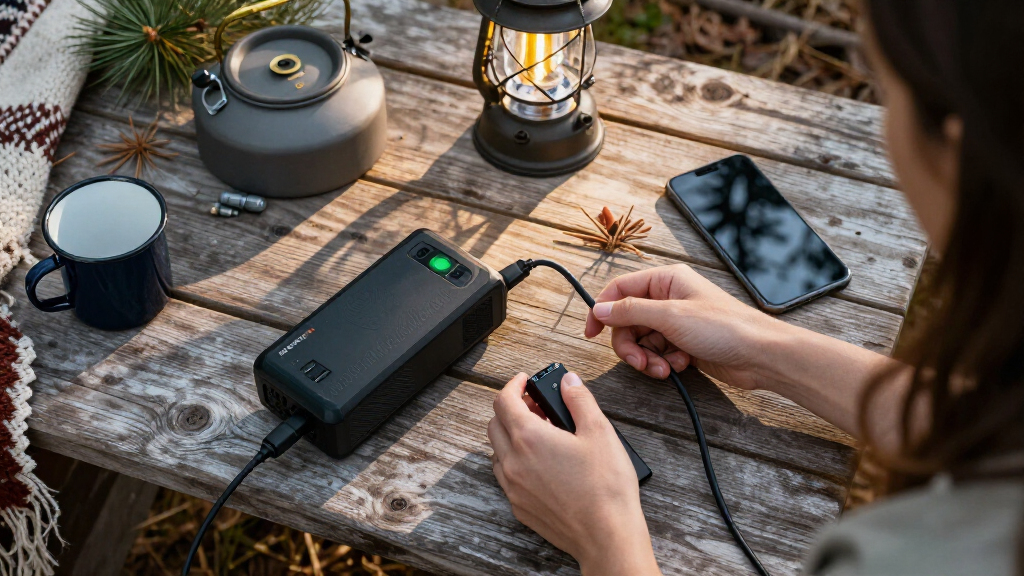

Portable camping power stations range from pocket-sized 88Wh units that top off a phone to 1,000Wh-plus beasts that run a mini-fridge all weekend, and picking the wrong size is the most common (and costly) mistake campers make. My top pick, the Jackery Explorer 1000 v2, stands out for its 1070Wh capacity and 1500W output — enough to power real appliances on multi-day trips while staying car-camp portable. For lighter needs, the Anker SOLIX C300 brings modern USB-C-first charging in a compact frame, and the GRECELL 500W hits a sweet spot of capacity and value for weekend campers. The core tradeoff in this category is simple: more capacity means more weight and money, while ultra-light units sacrifice run time and often can’t run AC appliances at all. Keep reading for the full breakdown of all 15 models.

Get travel and outdoor gear delivered free — and shop member deals
- Fast, free delivery on millions of items
- Access to Prime Big Deal Days deals on October 6–7
- Prime Video, Amazon Music and more included
Complete the kit


Key Takeaways
- Capacity in this lineup spans a huge range — from 88Wh (MARBERO, HOWEASY) to 1070Wh (Jackery Explorer 1000 v2) — and the right size depends almost entirely on trip length, not brand preference.
- LiFePO4 battery chemistry appeared in 10 of 15 models, signaling the category’s shift away from older lithium-ion; the non-LiFePO4 picks need more careful longevity expectations.
- Output wattage was the biggest hidden differentiator: several sub-150W units (ZeroKor 120W, HOWEASY, MARBERO) can charge laptops and cameras but physically cannot run kettles, heaters, or most AC kitchen gear.
- The mid-capacity 230–300Wh class (VTOMAN FlashSpeed 300, Anker SOLIX C300, GRECELL 330W, ALLWEI 300W) is the most crowded and competitive segment, so small features like 100W USB-C charging and detachable camp lights decided rankings there.
- Bundled value played a real role: the ZeroKor 300W with its included 60W foldable solar panel was the only pick where you get a complete off-grid charging loop out of the box.
| Jackery Explorer 300 Portable Power Station, 292Wh |  | Best Lightweight Pick | Capacity: 292Wh | Output: 300W (600W peak surge) | Weight: 7.1 lbs | VIEW LATEST PRICE | See Our Full Breakdown |
| Jackery Explorer 1000 v2 Portable Power Station, 1070Wh |  | Best Overall | Capacity: 1070Wh | AC Output: 1500W (3000W surge peak) | Battery Type: LFP (LiFePO4), 4,000 cycles | VIEW LATEST PRICE | See Our Full Breakdown |
| Anker SOLIX C300 DC Portable Power Station, 288Wh |  | Best for USB-C Power Users | Capacity: 288Wh (90,000mAh) | Output: 300W (DC/USB only) | Ports: 2x 140W USB-C, 1x 100W USB-C, 1x 15W USB-C, 2x USB-A, 1x 120W car socket | VIEW LATEST PRICE | See Our Full Breakdown |
| Portable Power Station 300W, 600W Surge, 192Wh LiFePO4 Solar Generator |  | Best Budget Value | Capacity: 192Wh | Output: 300W (600W surge) | Battery Type: LiFePO4, 4,000+ cycles | VIEW LATEST PRICE | See Our Full Breakdown |
| Anker SOLIX C300 Portable Power Station, 288Wh |  | Best Fast-Charging All-Rounder | Capacity: 288Wh | Output: 300W (600W surge) | Ports: 3 AC, 3 USB-C (2x 140W), 1 USB-A, 1 car socket | VIEW LATEST PRICE | See Our Full Breakdown |
| ATGIH Portable Power Station 198.4Wh with LiFePO4 Battery and Detachable Camping Light |  | Best for Multi-Device USB Charging | Capacity: 198.4 Wh (62,000mAh) | Battery Type: LiFePO4 | Cycle Life: 4,000+ cycles | VIEW LATEST PRICE | See Our Full Breakdown |
| GRECELL Portable Power Station 330W, 230.88Wh Solar Generator |  | Best for CPAP and Sensitive Electronics | Capacity: 230.88 Wh | Output: 330W (600W surge) | Waveform: Pure sine wave | VIEW LATEST PRICE | See Our Full Breakdown |
| MARBERO Portable Power Station 88Wh, 120W Surge Peak, Solar Generator |  | Best Ultra-Light Camp Pick | Capacity: 88 Wh / 24,000mAh | Continuous Output: 80W (120W surge) | Total Outlets: 8 | VIEW LATEST PRICE | See Our Full Breakdown |
| ZeroKor 120W Portable Power Station with AC Outlet |  | Best Budget Emergency Backup | Capacity: 97.6 Wh / 26,400mAh | Output: 120W | AC Outlets: 2x 110-120V (60 Hz) | VIEW LATEST PRICE | See Our Full Breakdown |
| ALLWEI 300W Portable Power Station with 256Wh LiFePO4 Battery |  | Best Battery Longevity Value | Capacity: 256 Wh | Battery Chemistry: LiFePO4 (LFP) | Continuous Output: 300W (600W peak) | VIEW LATEST PRICE | See Our Full Breakdown |
| GRECELL Portable Power Station 500W, 519Wh Solar Generator with 2 AC Outlets and 60W USB-C PD |  | Best for CPAP and Multi-Device Camping | Capacity: 519Wh / 140,400mAh | AC Output: 2 x 110V pure sine wave, 500W | USB-C: 1 x PD 60W | VIEW LATEST PRICE | See Our Full Breakdown |
| ZeroKor 300W Portable Power Station with 60W Foldable Solar Panel | 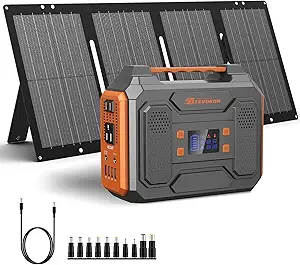 | Best Solar Bundle for Beginners | Output Power: 300W max | AC Outlets: 2 x 300W max | Solar Panel: 60W monocrystalline, 20.5% efficiency (included) | VIEW LATEST PRICE | See Our Full Breakdown |
| Portable Power Station, 198.4 Wh, 100W USB-C Charging, LiFePO4 Battery and Detachable Camping Light |  | Best DC-Only Pick for Fast Charging | Capacity: 198.4Wh / 62,000mAh | Battery Chemistry: LiFePO4 | USB-C Output: 2 ports, up to 100W each | VIEW LATEST PRICE | See Our Full Breakdown |
| HOWEASY Portable Power Station 120W (240W Peak), 88Wh Solar Generator |  | Best Ultralight Backup for Short Trips | Capacity: 88Wh | Output: 120W continuous, 240W peak | Total Ports: 8 (2 AC, 1 USB-C, 3 USB-A, 2 DC) | VIEW LATEST PRICE | See Our Full Breakdown |
| VTOMAN FlashSpeed 300 Portable Power Station, 300W, 230Wh LiFePO4 Battery |  | Best Balanced Compact Station | Capacity: 230Wh | Output: 300W continuous, 600W peak | Battery Type: LiFePO4, 3,000+ cycles | VIEW LATEST PRICE | See Our Full Breakdown |
| portable camping power station | Capacity | Output | Weight | Ports |
|---|---|---|---|---|
| Jackery Explorer 300 Portable | 292Wh | 300W (600W peak surge) | 7.1 lbs | 2 AC, 1x 100W USB-C PD, 2 USB-A, 1 car port |
| Jackery Explorer 1000 v2 Porta | 1070Wh | — | 23.8 lbs | 3x AC, 2x USB-C, 1x USB-A, 1x DC car port |
| Anker SOLIX C300 DC Portable P | 288Wh (90,000mAh) | 300W (DC/USB only) | — | 2x 140W USB-C, 1x 100W USB-C, 1x 15W USB-C, 2x USB-A, 1x 120W car socket |
| Portable Power Station 300W | 192Wh | 300W (600W surge) | 8.8 lbs | — |
| Anker SOLIX C300 Portable Powe | 288Wh | 300W (600W surge) | — | 3 AC, 3 USB-C (2x 140W), 1 USB-A, 1 car socket |
| ATGIH Portable Power Station 1 | 198.4 Wh (62,000mAh) | — | — | 2x 100W USB-C PD, 2x 18W USB-A QC |
| GRECELL Portable Power Station | 230.88 Wh | 330W (600W surge) | — | 1x AC, 1x USB-C PD 60W, 1x USB-C 18W, 2x USB-A QC 18W, 1x car port |
| MARBERO Portable Power Station | 88 Wh / 24,000mAh | — | 2.3 lbs (1.04 kg) | 2x AC, USB, USB-C PD, DC car port |
| ZeroKor 120W Portable Power St | 97.6 Wh / 26,400mAh | 120W | 2.2 lbs | — |
| ALLWEI 300W Portable Power Sta | 256 Wh | — | 6.4 lbs | 1x AC, 2x DC5521, 1x car port, 1x USB-A 18W, 1x USB-C 60W PD |
| GRECELL Portable Power Station | 519Wh / 140,400mAh | — | — | — |
| ZeroKor 300W Portable Power St | — | — | — | — |
| Portable Power Station | 198.4Wh / 62,000mAh | — | — | — |
| HOWEASY Portable Power Station | 88Wh | 120W continuous, 240W peak | 2.3 lbs | — |
| VTOMAN FlashSpeed 300 Portable | 230Wh | 300W continuous, 600W peak | ~7.4 lbs | — |
More Details on Our Top Picks
Jackery Explorer 300 Portable Power Station, 292Wh
At just over 7 pounds, the Explorer 300 is the easiest station in this lineup to actually carry into a campsite, and that alone justifies its place here. Compared with the Jackery Explorer 1000 v2, you give up roughly two-thirds of the capacity and most appliance-running ability, but you also give up 16 pounds of pack weight — a trade backpackers and paddlers will make gladly. The LiFePO4 chemistry rated for 4,000+ cycles means this unit should outlast cheaper lithium-ion options by years of seasonal use. With six ports it can keep a phone, headlamp, camera, and laptop alive simultaneously. The honest limit is the 300W ceiling: anything with a heating element is off the table, and the solar panel costs extra.
Pros:- Featherweight 7.1 lbs with an integrated handle that fits one hand
- LiFePO4 battery rated for 4,000+ cycles for years of seasonal use
- Six simultaneous ports, including a 100W USB-C PD for laptops
- Solar recharge to 80% in roughly 2.8 hours with a 100W panel
Cons:- Solar panel sold separately, adding real cost to an off-grid setup
- 300W output cannot handle high-draw appliances like coffee makers or hair dryers
Best for: Backpackers, paddlers, and minimalist car campers who prioritize carry weight over capacity
Not ideal for: Anyone hoping to run a portable fridge, blender, or any heating appliance — the 300W limit rules those out
- Capacity:292Wh
- Output:300W (600W peak surge)
- Weight:7.1 lbs
- Battery Type:LiFePO4
- Charge Cycles:4,000+ to 70% capacity
- Ports:2 AC, 1x 100W USB-C PD, 2 USB-A, 1 car port
- Dimensions:9.1 x 5.2 x 7.8 inches
Our verdict“This pick makes the most sense for campers who count ounces but still want modern battery longevity and fast USB-C charging.”
Jackery Explorer 1000 v2 Portable Power Station, 1070Wh
If one station has to cover weekend camping, road trips, and home backup, the Explorer 1000 v2 earns the top spot through sheer versatility. Its 1,500W output handles fridges, electric pots, and even small AC units — things the Jackery Explorer 300 and the Anker SOLIX C300 simply cannot touch. The standout feature is charging speed: 0-100% in one hour in emergency mode, though you must re-enable that mode in the app every time, which gets old. Default charging still completes in 1.7 hours, faster than most rivals. The tradeoffs are real: at 23.8 lbs it’s a two-handed carry, and the ecosystem is walled — only Jackery solar panels work, and none are bundled.
Pros:- 1,500W output (3,000W surge) runs fridges, hot plates, and small AC units
- Charges from empty to full in as little as one hour via emergency mode
- LFP battery rated for 4,000 cycles / 10+ years of service
- Three pure sine wave AC outlets plus 100W USB-C PD for sensitive electronics
Cons:- Solar panel sold separately and only Jackery panels are compatible
- One-hour charging requires manually enabling emergency mode in the app each use
- Heaviest unit in this batch at 23.8 lbs
Best for: Families and overlanders who need real appliance power plus emergency home backup in one unit
Not ideal for: Hikers and ounce-counters — at 23.8 lbs this is a car-camping tool, not a pack item
- Capacity:1070Wh
- AC Output:1500W (3000W surge peak)
- Battery Type:LFP (LiFePO4), 4,000 cycles
- Full Charge Time:1 hour (emergency mode) / 1.7 hours (default)
- Weight:23.8 lbs
- Ports:3x AC, 2x USB-C, 1x USB-A, 1x DC car port
- Extras:App control, LED light, 30 dB quiet charging mode
Our verdict“The strongest all-around choice for buyers who want a single station that bridges campsite and home-emergency duty.”
Anker SOLIX C300 DC Portable Power Station, 288Wh
The SOLIX C300 DC takes a different bet than the Jackery models: it skips AC outlets entirely and pours everything into USB-C performance, with two 140W two-way ports that can charge a full-size laptop at maximum speed — or recharge the station itself over USB-C. Compared with the Anker SOLIX C300 (the AC version), this DC variant suits gadget-heavy travelers who never plug in a wall-powered device, and it’s about 30% smaller than comparable stations. Reaching 80% in an hour is quick for this class. The friction points: no wall charger or shoulder strap ships in the box, activation only works through specific USB-C ports, and it rejects several Anker solar panel models — check compatibility before adding panels.
Pros:- Two 140W two-way USB-C ports for full-speed laptop charging and station recharging
- Roughly 30% smaller than comparable capacity power stations
- Fast recharge to 80% in about an hour
- LiFePO4 battery backed by a 3-year guarantee
Cons:- No wall charger or shoulder strap included
- Initial activation only works through USB-C2 and USB-C3 ports
- Incompatible with several Anker solar panel models (PS30, PS200, PS400)
Best for: Digital nomads and photographers who charge laptops, drones, and cameras and rarely need AC outlets
Not ideal for: Campers who need AC outlets for fans, lights, or small appliances — there are none here
- Capacity:288Wh (90,000mAh)
- Output:300W (DC/USB only)
- Ports:2x 140W USB-C, 1x 100W USB-C, 1x 15W USB-C, 2x USB-A, 1x 120W car socket
- Battery Type:LiFePO4
- Charge Time:1.5 hours (80% in ~1 hour)
- Recharge Options:USB-C, solar panel, car
- Warranty:3-year battery guarantee
Our verdict“The right pick if your camp kit runs on USB-C and you value pocketable size over outlet versatility.”
Portable Power Station 300W, 600W Surge, 192Wh LiFePO4 Solar Generator
This unbranded 192Wh station earns a slot by packing features the big names reserve for pricier models: pure sine wave output, a UPS switchover under 10ms, and an MPPT solar charge controller. That UPS function alone gives it a second life as a desktop backup that keeps a router or CPAP running through a power blink — something the Anker SOLIX C300 DC can’t do without AC outlets and the Jackery Explorer 300 doesn’t offer at all. The 0-80% recharge in an hour is respectable. Realism is required, though: 192Wh is the smallest capacity in this batch, so it drains fast with multiple devices, and the solar panel and car charger cost extra. Treat it as a phone-and-laptop station, not an appliance station.
Pros:- Pure sine wave output safe for sensitive electronics
- Built-in UPS function switching in ≤10ms for uninterrupted device power
- Fast 0-80% AC recharge in one hour
- LiFePO4 battery rated for 4,000+ cycles with a multi-mode emergency LED light
Cons:- Smallest capacity in this batch at 192Wh drains quickly under multi-device loads
- Solar panel and car charger sold separately
- Requires a recharge every 1-2 months in storage to protect the battery
Best for: Budget-conscious campers and home-office users who want pure sine wave power and UPS backup without paying brand premiums
Not ideal for: High-wattage users — hair dryers, coffee makers, and rice cookers are beyond its reach
- Capacity:192Wh
- Output:300W (600W surge)
- Battery Type:LiFePO4, 4,000+ cycles
- Outlets:2 AC, 1x 65W USB-C PD, 2 USB-A, 1 car outlet
- UPS Switch Time:≤10ms
- Recharge Time:0-80% in 1 hour (AC)
- Weight:8.8 lbs
Our verdict“A smart low-cost entry point for light-duty camping and desk backup, provided you accept its limited runtime.”
Anker SOLIX C300 Portable Power Station, 288Wh
The AC-equipped SOLIX C300 splits the difference between the USB-C-only SOLIX C300 DC and the heavier Jackery units: it offers three AC outlets alongside its 140W USB-C ports, so you can run a small fan and charge two laptops at once. Its party trick is wall recharging — 80% in 50 minutes, the fastest in this batch — which matters when you’re topping up between trips. A five-year warranty beats the DC version’s three-year guarantee and signals real confidence in the 3,000-cycle battery. Drawbacks mirror its sibling: the shoulder strap costs extra, some Anker solar panels won’t work with it, and the 300W ceiling keeps it firmly in the device-charging class rather than appliance territory.
Pros:- Reaches 80% charge in just 50 minutes from a wall outlet
- Eight ports including three AC outlets and dual 140W USB-C
- Whisper-quiet operation at 25 dB for tent-adjacent use
- Five-year warranty, the longest coverage in this batch
Cons:- Shoulder strap sold separately despite the compact design
- Not compatible with several Anker solar panel models
- 300W output can’t run heating or high-draw appliances
Best for: Weekend campers who want AC outlets for small gear plus the fastest possible wall recharge before leaving
Not ideal for: Buyers planning solar-heavy off-grid setups — panel compatibility is limited and the strap is an add-on purchase
- Capacity:288Wh
- Output:300W (600W surge)
- Ports:3 AC, 3 USB-C (2x 140W), 1 USB-A, 1 car socket
- Battery:LiFePO4, 3,000 cycles
- Recharge to 80%:50 minutes via wall outlet
- Noise Level:25 dB at 3.3 ft
- Warranty:5 years
Our verdict“The best middle path for buyers who want AC flexibility, laptop-speed USB-C, and near-instant turnarounds between trips.”
ATGIH Portable Power Station 198.4Wh with LiFePO4 Battery and Detachable Camping Light
What makes this ATGIH unit interesting is that it skips AC outlets entirely and doubles down on USB-C performance — two 100W PD ports means it can fast-charge two full-size laptops at once, something the GRECELL 330W with its single 60W USB-C port can’t match. The LiFePO4 chemistry with 4,000+ cycles also outlasts the standard lithium cells in the GRECELL and MARBERO, so this pick will still be holding most of its capacity a decade from now. The detachable camping light with SOS mode is a genuinely useful bonus for tent campers. The tradeoff is real, though: no AC outlet means no mini-fridge, no CPAP via wall plug, no car accessories. And note that fast charging requires a 100W charger that isn’t included — budget for one.
Pros:- Two 100W USB-C PD ports charge laptops and multiple devices simultaneously
- LiFePO4 battery rated for 4,000+ cycles with a 10+ year lifespan
- Fast recharge to 100% in 2.5 hours
- Detachable 4-mode camping light with SOS is genuinely useful around camp
Cons:- No AC output port — cannot run any wall-plug appliances
- 100W charger required for fast charging is not included
- Heavier and bulkier than a basic power bank of similar capacity
Best for: USB-first campers who mainly charge laptops, phones, cameras, and drones and want a battery that lasts a decade
Not ideal for: Anyone who needs to run AC appliances like mini-fridges, fans, or CPAP machines via a wall outlet
- Capacity:198.4 Wh (62,000mAh)
- Battery Type:LiFePO4
- Cycle Life:4,000+ cycles
- Ports:2x 100W USB-C PD, 2x 18W USB-A QC
- Recharge Time:80% in 2 hours, 100% in 2.5 hours
- Camping Light:Detachable, 4 modes (Low/High/Spotlight/SOS)
- AC Output:None (DC/USB only)
- Operating Temperature:14°F to 140°F
Our verdict“A long-lived USB charging hub for gadget-heavy campers who never need an AC outlet.”
GRECELL Portable Power Station 330W, 230.88Wh Solar Generator
The GRECELL 330W earns its spot with pure sine wave output, which delivers the clean, stable power that CPAP machines, laptops, and other sensitive electronics prefer — the MARBERO and ZeroKor in this lineup use modified sine wave output, which is fine for basic gear but riskier for medical devices. With six ports including a true AC outlet and a 60W USB-C port that charges more than twice as fast as standard USB-C, it covers more use cases than anything else at this size. Three recharge methods — wall, car, and solar with built-in MPPT — make it a flexible base for a small solar setup. The main limitation is the 330W ceiling: fine for phones, laptops, and mini-fridges, but a blender or kettle is out of the question, and the solar panel is a separate purchase.
Pros:- Pure sine wave output is safe for CPAP machines and sensitive electronics
- Six ports including AC outlet, 60W USB-C PD, and car port for versatile charging
- Solar, AC, and car recharging with built-in MPPT optimization
- Compact and light enough for car camping and road trips
Cons:- 330W output limit rules out higher-wattage appliances
- Solar panel sold separately
- Lithium chemistry offers fewer cycles than the LiFePO4 batteries in the ALLWEI or ATGIH
Best for: CPAP users and campers running laptops or a mini-fridge who need clean sine wave power in a compact footprint
Not ideal for: Anyone planning to run appliances above 330W, like electric kettles, blenders, or hair dryers
- Capacity:230.88 Wh
- Output:330W (600W surge)
- Waveform:Pure sine wave
- Ports:1x AC, 1x USB-C PD 60W, 1x USB-C 18W, 2x USB-A QC 18W, 1x car port
- Recharge Methods:AC outlet, solar panel, car outlet
- Solar Controller:Built-in MPPT
- Safety:BMS with overload, overcharge, and short-circuit protection
- Cooling:Dual built-in silent fans
Our verdict“The safest small station here for medical devices and electronics, provided your gear stays under 330W.”
MARBERO Portable Power Station 88Wh, 120W Surge Peak, Solar Generator
At 2.3 pounds and roughly the size of a large hardcover book, the MARBERO M82 is the lightest full power station in this roundup — the ALLWEI 300W weighs nearly three times as much. For backpack-adjacent camping, bike touring, or tossing in a car console, that weight difference matters more than raw capacity. Despite its size, it packs eight simultaneous output ports, pass-through charging so you can use it while it recharges, and an LED flashlight that runs up to 68 hours on its lowest setting — a nice emergency-backup touch the GRECELL lacks. Be realistic about the ceiling, though: 80W continuous output handles phones, cameras, tablets, and a small fan, but not a mini-fridge for more than an hour or two, and the 88Wh tank drains fast under AC load.
Pros:- Featherweight 2.3 lb build with a genuinely grabbable size
- Eight ports usable simultaneously for phones, small appliances, and car accessories
- LED flashlight with SOS runs up to 68 hours on level 1
- Pass-through charging lets you power devices while it recharges
Cons:- 80W continuous output won’t support most higher-power appliances
- 88Wh capacity gives very limited AC runtime
- Solar panels sold separately
Best for: Weight-conscious campers, road-trippers, and day-hikers who need phone, camera, and small-device power without the bulk
Not ideal for: Overnight fridge runners or anyone expecting laptop-plus-appliance runtime — 88Wh runs dry quickly
- Capacity:88 Wh / 24,000mAh
- Continuous Output:80W (120W surge)
- Total Outlets:8
- Ports:2x AC, USB, USB-C PD, DC car port
- Weight:2.3 lbs (1.04 kg)
- Dimensions:6.5 x 4.6 x 3.1 inches
- Charging Time:0-80% in 2 hours
- LED Runtime:Up to 68 hours (level 1)
ZeroKor 120W Portable Power Station with AC Outlet
The ZeroKor 120W occupies the same lightweight niche as the MARBERO M82 but takes a different approach: slightly more capacity (97.6Wh vs 88Wh) and two AC outlets instead of one, which makes it more useful as a home-outage backup for a router, lamp, or phone hub during a blackout. At 2.2 pounds with a carrying handle, it’s every bit as portable, and the 12-month warranty plus full BMS protection stack gives it credibility for storage in an emergency kit. Compared with the GRECELL 330W, it gives up sine wave output, capacity, and charging speed — but it also costs far less to keep in a closet as insurance. The 120W ceiling and low surge rating are the honest limits: motor-driven devices like air compressors may not start at all, so test your gear before you rely on it.
Pros:- Dual AC outlets are rare at this size and price, ideal for outage scenarios
- Featherlight 2.2 lb build with carrying handle
- Three recharge options including solar panel compatibility
- Full BMS protection suite with cooling fan and 12-month warranty
Cons:- Hard 120W cap rules out most kitchen and heating appliances
- Low starting wattage may fail to launch motor-driven devices
- Solar panel not included
Best for: Households wanting a cheap, stashable blackout kit for routers, lights, and phones, plus occasional car-camping use
Not ideal for: Campers with power-hungry appliances — coffee makers, hair dryers, and compressors are all off the table
- Capacity:97.6 Wh / 26,400mAh
- Output:120W
- AC Outlets:2x 110-120V (60 Hz)
- Total Outlets:6
- Weight:2.2 lbs
- Dimensions:5.7 x 4.4 x 4.1 inches
- Recharge Methods:USB-C wall adapter, car USB, solar panel (not included)
- Safety:BMS: short circuit, over-current, over-voltage, overload, overheating protection
Our verdict“Cheap, light insurance for short outages and light camping duty — just know the 120W ceiling is firm.”
ALLWEI 300W Portable Power Station with 256Wh LiFePO4 Battery
The ALLWEI 300W splits the difference between the GRECELL 330W and the bigger Jackery Explorer 300 in this roundup, and its standout card is chemistry: a LiFePO4 battery rated for 3,000 cycles, roughly triple the working life of the GRECELL’s standard lithium cells. Capacity of 256Wh is enough for a weekend of laptop, phone, drone, and fan charging, and the dual AC-plus-solar recharge mode cuts refill time to 2–2.5 hours when you pair a wall plug with a panel — a flexibility the ZeroKor and MARBERO simply don’t offer. The 5-year warranty also signals confidence the budget picks can’t match. Tradeoffs: at 6.4 pounds it’s far from the MARBERO’s featherweight class, the 300W output still blocks high-draw appliances, and like nearly everything here, the solar panel costs extra.
Pros:- LiFePO4 chemistry rated for 3,000 charge-discharge cycles
- Dual AC-plus-solar recharging cuts refill time to 2–2.5 hours
- Six ports handle a multi-device campsite at once
- 5-year warranty is among the longest in this lineup
Cons:- 300W continuous output limits higher-power appliances
- Solar panel sold separately
- At 6.4 lbs, notably heavier than sub-3-lb competitors like the MARBERO or ZeroKor
Best for: Weekend car campers who want a battery that outlasts the average unit and can pair with solar for faster dual recharging
Not ideal for: Minimalists counting grams — at 6.4 lbs it’s nearly triple the weight of the ultra-light picks here
- Capacity:256 Wh
- Battery Chemistry:LiFePO4 (LFP)
- Continuous Output:300W (600W peak)
- Ports:1x AC, 2x DC5521, 1x car port, 1x USB-A 18W, 1x USB-C 60W PD
- Cycle Life:3,000 charge-discharge cycles
- Recharge Methods:AC, 12V car, solar, and AC + solar dual
- Weight:6.4 lbs
- Warranty:5 years
Our verdict“The smart buy if you camp often and want a battery chemistry that won’t fade after a couple of seasons.”
GRECELL Portable Power Station 500W, 519Wh Solar Generator with 2 AC Outlets and 60W USB-C PD
Among the mid-size options in this lineup, this GRECELL stands out for its 519Wh capacity, which is nearly double what the VTOMAN FlashSpeed 300 or the Jackery Explorer 300 offer. That extra stored energy is what makes it the pick here for overnight CPAP use — a device many smaller units in this guide can only run for a night at best. The pure sine wave AC output matters too: sensitive electronics like CPAP machines and laptops run cleaner and safer than on the modified sine wave units cheaper stations sometimes use.
The tradeoff is recharge patience. Six to nine hours on a 100W panel means this is a slow solar refiller compared with the USB-C-charged picks in this guide, and it lags far behind the Jackery Explorer 1000 v2 for raw appliance power despite sharing a similar bulk class. The AC inverter also needs to be manually switched off, or the battery trickles away overnight.
Pros:- 519Wh capacity roughly doubles the runtime of 230-290Wh rivals in this guide
- Pure sine wave AC is safe for CPAP machines and laptops
- Ten simultaneous outputs including 60W USB-C PD and a wireless charging pad
- Three recharge methods with built-in BMS safety protection
Cons:- 500W ceiling excludes most kitchen appliances
- 6-9 hour recharge times are slow for the capacity
- AC inverter drains the battery if left on with no loads connected
Best for: Campers and CPAP users who need two to three nights of device power without a recharge
Not ideal for: Anyone hoping to run a kettle, coffee maker, or other 500W-plus appliance — the inverter ceiling rules those out
- Capacity:519Wh / 140,400mAh
- AC Output:2 x 110V pure sine wave, 500W
- USB-C:1 x PD 60W
- USB-A:3 x QC 3.0 (18W)
- Wireless Charger:1 x 10W
- Wall Recharge Time:6-7 hours
- Solar Recharge Time:6-9 hours (100W panel, not included)
Our verdict“This pick makes the most sense for campers whose priority is long runtime for medical devices and laptops rather than appliance power.”
ZeroKor 300W Portable Power Station with 60W Foldable Solar Panel
Most stations in this roundup ship without a panel, which means the real cost of going solar lands later. The ZeroKor bundle solves that by including a 60W foldable monocrystalline panel in the box, making it the most complete entry point to off-grid power here. Compared with the HOWEASY 88Wh, you get a far larger capacity ceiling and the panel to keep it fed; compared with the GRECELL 500W, you trade half the storage for a genuinely self-sufficient kit.
The compromises are real. A 300W ceiling means no coffee makers or water pumps, and the included panel’s junction box isn’t waterproof — a genuine limitation given that rain and camping go together. The battery also dislikes being left idle for months, so this is a kit you’ll want to cycle regularly rather than stash in a closet as a forgotten backup.
Pros:- 60W foldable solar panel included, unlike most rivals in this lineup
- Multiple AC, DC, and USB outputs with Quick Charge support
- Built-in BMS with automatic cooling fan
- SOS flashlight adds emergency utility
Cons:- 300W ceiling rules out pumps, kettles, and most cooking appliances
- Solar panel junction box is not waterproof
- Requires regular charge/discharge cycles to stay healthy
Best for: First-time solar campers who want station and panel in one purchase without piecing a system together
Not ideal for: Weekend-preppers who plan to store it unused — long idle periods can trigger the battery’s protection state
- Output Power:300W max
- AC Outlets:2 x 300W max
- Solar Panel:60W monocrystalline, 20.5% efficiency (included)
- USB Ports:3 x 5V/3A, 1 x Quick Charge
- DC Port:1 x 9V-12.6V/10A max
- Solar Input:DC5521 13V-23V with MPPT
- Flashlight:Reading and SOS modes
Our verdict“The smart choice for buyers who want a complete solar starter kit rather than a bare station and a separate panel purchase.”
Portable Power Station, 198.4 Wh, 100W USB-C Charging, LiFePO4 Battery and Detachable Camping Light
This model skips AC outlets entirely, and that decision is its whole value proposition. With two 100W USB-C PD ports, it fast-charges laptops, cameras, drones, and phones faster than the GRECELL 500W’s single 60W port, and its 2.5-hour full recharge embarrasses the 6-9 hour refill times of larger AC units here. The LiFePO4 chemistry rated for 4,000+ cycles also outlasts the HOWEASY’s 1,500-cycle rating several times over — this is a buy-once battery for a decade of trips.
The detachable four-mode camping light is a thoughtful touch the Anker SOLIX C300 DC competes with directly. But no AC means no CPAP, no fan, no electric blanket, and no way to plug in anything with a wall plug. It also arrives without a charger, and fast input demands a 60W-plus brick most people don’t have spare.
Pros:- Two 100W USB-C PD ports charge laptops at full speed
- LiFePO4 battery rated for 4,000+ cycles
- Reaches 80% charge in about 2 hours
- Detachable camping light with four modes including SOS
Cons:- No AC output at all
- Charger not included in the box
- Fast input charging requires a separate 60W+ adapter
Best for: Laptop-and-gadget campers who want DC fast charging, huge battery lifespan, and a built-in lantern
Not ideal for: Anyone who needs to plug in a wall-powered device — the lack of AC output is disqualifying for CPAP or appliance users
- Capacity:198.4Wh / 62,000mAh
- Battery Chemistry:LiFePO4
- USB-C Output:2 ports, up to 100W each
- USB-A Output:2 ports, up to 18W each
- USB-C Input:Up to 80W
- Charge Time:~2 hours to 80%, 2.5 hours to full
- Cycle Life:4,000+ cycles
- Light:Detachable, 4 modes (Low, High, Spotlight, SOS)
Our verdict“A better fit for tech-heavy minimalists than for traditional campers — buy it for USB devices and light, not for wall outlets.”
HOWEASY Portable Power Station 120W (240W Peak), 88Wh Solar Generator
At 2.3 lbs with a hidden carry handle, the HOWEASY is the lightest way in this roundup to get actual AC outlets into a backpack. The MARBERO 88Wh unit competes in the same weight class, but the HOWEASY counters with eight output ports including USB-C and QC 3.0, letting a whole tent’s worth of small devices charge at once. For an overnighter where you just need a phone, a camera, and maybe a small fan topped up, it covers the basics without the 7-plus-pound burden of the VTOMAN FlashSpeed 300.
The limits arrive quickly. An 88Wh capacity is a single night of modest use, and the 120W ceiling excludes even a mid-size electric cooler. The 1,500-cycle battery rating also trails the 3,000-4,000 cycle LiFePO4 units elsewhere in this guide, so this is a short-trip tool rather than a decade-long investment. A 24-month warranty softens that slightly.
Pros:- Featherweight 2.3 lb build with space-saving hidden handle
- Eight ports including 2 AC, USB-C, and QC 3.0 USB
- AC, solar, and car recharging options
- Built-in LED light with SOS mode
Cons:- 120W continuous output excludes most appliances and coolers
- 88Wh capacity suits only short trips
- 1,500-cycle battery life lags LiFePO4 rivals
Best for: Backpackers and solo overnight campers who want AC power at under 2.5 pounds
Not ideal for: Extended off-grid trips or families — 88Wh runs dry after roughly one night of shared use
- Capacity:88Wh
- Output:120W continuous, 240W peak
- Total Ports:8 (2 AC, 1 USB-C, 3 USB-A, 2 DC)
- Weight:2.3 lbs
- Dimensions:6.6 x 4 x 3 inches
- Cycle Life:1,500+ cycles
- Warranty:24 months
Our verdict“Choose this when pack weight matters more than runtime — it’s the AC-outlet option you’ll actually carry.”
VTOMAN FlashSpeed 300 Portable Power Station, 300W, 230Wh LiFePO4 Battery
The FlashSpeed 300 hits a sweet spot several picks here miss: real AC outlets plus modern charging flexibility in a still-portable frame. Its 100W USB-C input/output means it recharges from a laptop-style charger or power brick — a convenience the GRECELL 500W can’t match with its slow barrel-jack refills — while the 600W peak output gives brief headroom above the ZeroKor’s hard 300W ceiling for motor-starting devices. Seven simultaneous outlets edge out the Jackery Explorer 300’s port count for shared tent use.
Still, the 300W continuous ceiling keeps kettles and heaters off the menu, and the inconsistent listed weight (7 lbs versus 7.4 lbs across the listing) is a small but telling detail worth noting before you pack. Compared with the DC-only 198.4Wh pick, you gain AC versatility; compared with the GRECELL, you give up half the runtime.
Pros:- LiFePO4 battery rated for over 3,000 cycles
- Four recharge methods including 100W USB-C input
- Charges up to seven devices simultaneously
- 600W peak output handles brief surges above the 300W rating
Cons:- 300W continuous ceiling limits appliance use
- Listed weight is inconsistent between product description and specs
- Heavier than small-capacity rivals at roughly 7.4 lbs
Best for: Campers who want one do-it-all compact station with AC outlets, long battery life, and USB-C recharging
Not ideal for: Buyers who need to run heating or cooking appliances — 300W sustained won’t handle them
- Capacity:230Wh
- Output:300W continuous, 600W peak
- Battery Type:LiFePO4, 3,000+ cycles
- USB-C:100W input/output
- Outlets:7 total (2 AC, 3 USB-A, 1 DC, USB-C)
- Weight:~7.4 lbs
- Recharging:Wall outlet, solar panel, vehicle outlet, USB-C
- LED Light:Steady, strobe, SOS
Our verdict“This model is better suited than most here to buyers who want a single versatile station that balances capacity, lifespan, and charging flexibility without going big.”
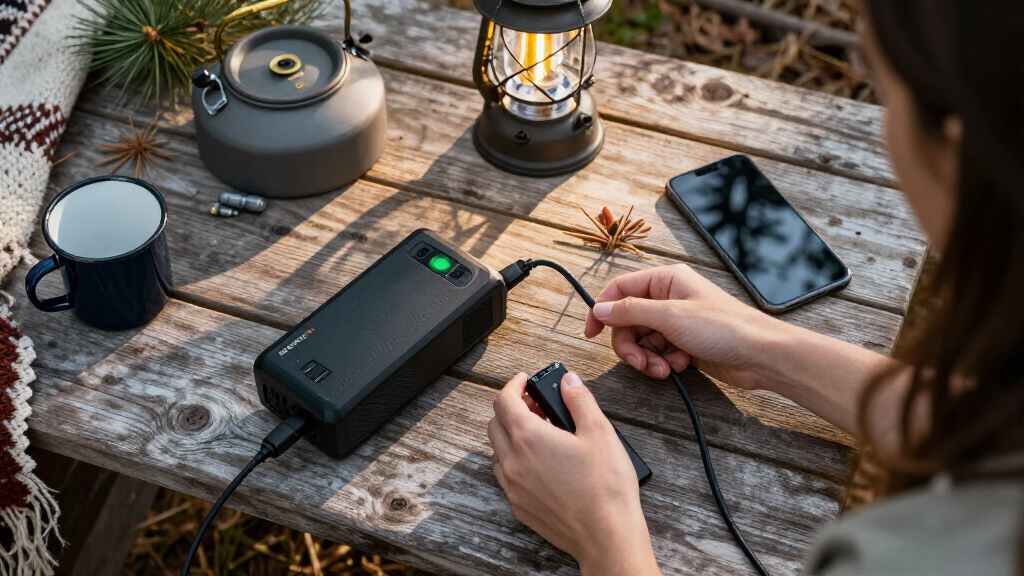
How We Picked
I evaluated these 15 portable camping power stations against the factors that actually decide a purchase: usable capacity versus weight, output wattage, battery chemistry, charging flexibility, and thoughtful camping-specific features. Capacity alone means little if a unit weighs as much as a cooler full of food, so I weighed watt-hours against portability. Output wattage determined whether each model could realistically run AC appliances or was limited to phones, cameras, and laptops — a make-or-break distinction for many campers. LiFePO4 chemistry earned extra credit for its longer cycle life compared with standard lithium-ion.
Ranking also reflected who each product is for. A 292Wh Jackery Explorer 300 isn’t competing with the Explorer 1000 v2; it’s competing with the Anker SOLIX C300 and VTOMAN FlashSpeed 300, and I judged it in that class. Budget models like the MARBERO and HOWEASY 88Wh units were held to a different standard — value and portability for minimal-power campers — rather than penalized for missing features their buyers don’t need. Every pick earned its place by doing one job better than its closest rivals, and every pick carries a real drawback that’s spelled out in the reviews.
Factors to Consider When Choosing Portable Camping Power Stations
Before settling on a specific model, it helps to understand the category-wide decisions that shape every purchase. These are the factors I weighed across all 15 products — and the common traps that catch first-time buyers.Size Your Capacity to Trip Length, Not to Ambition
The most common mistake in this category is overbuying capacity. A 1000Wh station makes sense for multi-day trips with a 12V fridge or CPAP machine, but for a two-night tent trip charging phones, a camera, and a headlamp, 250–300Wh is plenty — and saves you roughly 15 pounds of pack weight plus a lot of money. A practical rule of thumb: list every device you’ll charge, multiply its wattage by hours of use, add 20% for inefficiency, and buy to that number. Also remember that advertised watt-hours don’t translate one-to-one into usable power; inverters and conversion lose 10–15% along the way. Campers who consistently overestimate end up hauling a station they never drain below 80%, which is the most expensive way to carry dead weight.
Output Wattage Is the Spec People Forget to Check
Capacity tells you how long a station runs; wattage tells you what it can run at all. A 120W unit can never power a 600W kettle, no matter how full its battery is — the inverter simply shuts down. Before buying, check the running wattage of your hungriest device (electric blankets, portable kettles, and coffee makers are frequent surprises at 500–1000W+) and confirm the station exceeds it. Surge ratings matter too, because some devices briefly spike above their running draw at startup. Several ultra-compact models in this class are deliberately AC-outlet-in-name-only — fine for USB gear, misleading for anyone expecting to run a blender. Matching wattage to your actual devices is cheaper than discovering the limitation at the campsite.
LiFePO4 Chemistry Changes the Long-Term Math
Battery chemistry isn’t spec-sheet trivia — it determines how many years your investment lasts. LiFePO4 batteries typically tolerate 2,000–3,000 charge cycles before degrading, while older lithium-ion chemistries fade noticeably after 500–800. For a once-a-month camper, that difference can stretch a station’s useful life from three years to a decade. LiFePO4 also handles heat better, which matters when a station sits in a hot car or tent all day. The tradeoff is weight per watt-hour, which is why some ultra-light budget models still use older chemistry. If you camp more than a few times a year, I’d treat LiFePO4 as non-negotiable; if you need the absolute lightest unit for occasional use, the older chemistry in the smallest picks is a defensible compromise.
Charging Speed and Solar Readiness
How fast a station recharges dictates whether it’s a one-trip device or a renewable part of your kit. Models with 100W USB-C PD input can refill from a wall outlet or a car’s USB-C port quickly, while slower units can take most of a day. Solar input ratings vary widely too — some 300Wh-class stations accept 100W or more of panel input, while budget units trickle-charge and can’t keep up with daily use off-grid. If you plan to pair panels with your station, check the maximum solar input wattage before buying either component. A common trap: buying a cheap 60W panel for a station that caps solar input at 40W wastes a third of the panel’s output. Bundled kits sidestep the mismatch problem entirely.
Weight, Form Factor, and Campsite Realism
Spec sheets flatter weight; campgrounds don’t. A 25-pound station rated “portable” is fine from trunk to picnic table, but miserable on a quarter-mile carry to a backcountry site, and hopeless for canoe or motorcycle campers. Check physical dimensions too — some stations with handles still won’t fit alongside gear in a compact trunk. Smaller units in the 88–200Wh range often disappear into a backpack, which is exactly the point. Think honestly about your carry scenario: if the station will only ever move from car to table, weight is nearly irrelevant and capacity should dominate your decision. If you walk your gear in, every pound competes with water and food.
Where Budget Models Earn Their Keep — and Don’t
The sub-$150 tier of this category is genuinely useful for a narrow buyer: minimal-power campers who need phone charges, camera batteries, and maybe a laptop top-up. What you give up beyond capacity is refinement — slower charging, no app control, shorter warranty coverage, and sometimes opaque surge ratings. I’d avoid the cheapest units for anything involving medical devices or expensive camera gear, because budget inverters often deliver dirtier power. A middle path many campers miss: buying a quality mid-capacity station (the 230–300Wh class) instead of two cheap small ones, which gets you better chemistry and one thing to manage rather than two. Reserve true budget picks for backup, kids’ trips, and emergency kits rather than primary camping power.
Frequently Asked Questions
Is a 300Wh power station enough for a weekend camping trip?
For most tent campers, yes — with conditions. A 300Wh station will recharge a smartphone roughly 20 times, a camera battery a dozen times, and run a laptop for a full workday, which covers the typical two-night trip with room to spare. It starts to feel tight if you add high-draw items like an electric blanket (which can eat 300Wh in a single night) or a 12V cooler running continuously. The 230–300Wh class also can’t run most kettles or hot plates due to inverter limits, so plan a camp stove for cooking. If your weekend includes refrigeration or heating, step up to the 500Wh-plus tier instead.
Can I run a portable fridge or CPAP machine on these power stations?
A CPAP is very manageable: most draw 30–60W without a humidifier, so even a 230Wh unit covers a full night, and a 300Wh LiFePO4 model handles two nights comfortably. Portable fridges are the harder case — an efficient 12V compressor fridge averaging 40W uses roughly 300–400Wh per day in warm weather, meaning a 300Wh station needs daily recharging, ideally from a solar panel. For fridge-powered expeditions, the Jackery Explorer 1000 v2 at 1070Wh is the only model in this lineup sized for multiple fridge-days without sun. Also verify the fridge’s startup surge against the station’s peak rating, since compressors spike briefly when cycling on.
Do I need to buy a solar panel separately, or are the bundles worth it?
It depends on how far off-grid you go. For car campers near an outlet, solar is optional — you can recharge at home between trips and skip the expense. For dispersed camping beyond hookups, solar is what turns a one-trip battery into an indefinite power source, and matching panel wattage to your station’s input limit matters more than brand. In this lineup, the ZeroKor 300W bundle with its 60W foldable panel is the one true out-of-the-box off-grid kit; every other model requires buying panels separately. A 60W panel realistically delivers 30–45Wh per hour of good sun, so expect a full day of clear weather to substantially recharge a 250Wh station. Cloudy forecasts make a bigger battery the safer bet than a small panel.
Why do some stations use LiFePO4 and others regular lithium-ion — does it matter?
It matters most for longevity and safety, and less for day-one performance. LiFePO4 cells typically last 2,000–3,000 cycles versus 500–800 for standard lithium-ion, meaning the station keeps most of its capacity for years of regular use instead of noticeably fading after a couple of seasons. LiFePO4 is also more thermally stable, a real advantage when a unit bakes in a car between trips. The cost is energy density: LiFePO4 stations weigh more per watt-hour, which is why the featherweight 88Wh budget models often stick with older chemistry. If you camp regularly, that extra weight is worth carrying; occasional users storing the unit most of the year may not notice the difference either way.
What’s the smallest station that’s still genuinely useful for camping?
The practical floor is around 200Wh — enough for roughly ten phone charges, several camera batteries, and a laptop session, with a real AC outlet for small items. Below that, the 88Wh units (MARBERO, HOWEASY) work as emergency top-ups and kids’ trip power banks, but a single weekend of family phone charging can drain them. The 198Wh class with 100W USB-C input, like the ATGIH and its twin 198.4Wh model, hits a smart minimum: fast recharging plus a genuinely useful capacity in a backpack-friendly size. The detachable camping light on those models also replaces a separate lantern, saving pack space. Go smaller only if weight is your absolute priority.
Conclusion
After comparing all 15 models, the right choice comes down to matching capacity class to your camping style — not brand loyalty. Best overall goes to the Jackery Explorer 1000 v2: 1070Wh and 1500W of output make it the only pick here that genuinely runs appliances across a multi-day trip, and its premium is justified by capability nothing else in the lineup matches. Best value is the GRECELL 500W at 519Wh, which delivers fridge-and-CPAP-class capacity without the flagship price, with the ZeroKor 300W solar bundle as the value pick for off-grid campers who want panels included. Best for beginners is the Anker SOLIX C300 — its USB-C-first design mirrors how people already charge devices, removing the learning curve entirely. Best premium beyond the Jackery belongs to the Explorer 300 for build quality in the compact class. For specific needs: ultralight and budget campers should look at the MARBERO or HOWEASY 88Wh units, laptop workers get the most from the 100W USB-C models like the VTOMAN FlashSpeed 300, and the ATGIH’s detachable camp light makes it the pick for families wanting one less thing to pack. Whatever you choose, size honestly against your real device list — the best portable camping power station is the one whose capacity you actually use.
Fall Picks
fall essentials
As an affiliate, we earn on qualifying purchases.