Noise canceling bone conduction headphones are usually designed to reduce background noise picked up by the microphone, not to silence the world around you. My best overall pick is the SHOKZ OpenComm2 UC 2025 for its work-focused boom mic and call controls; the SHOKZ OpenRun Pro 2 is a stronger fit for sport, while the OpenComm2 2025 Upgrade targets mobile and PC meetings. The main tradeoff is clear: open-ear designs preserve awareness, but they cannot provide the isolation of sealed noise-canceling earbuds. I compare call features, fit, battery claims, water resistance and intended use so you can match the headset to your routine. Read on for the full breakdown and a guide to choosing between work-first and workout-first designs.

Get travel and outdoor gear delivered free with Prime
- Fast, free delivery on millions of items
- Prime Video, Amazon Music and more included
- Member-only deals all year
Complete the kit


Key Takeaways
- The SHOKZ OpenComm2 UC 2025 leads for calls because its boom-mic format and mute control suit work better than sports-first models.
- OpenRun Pro 2 is the sport-oriented standout in this lineup, while the Orange and Black listings appear to be color variants rather than distinct performance options.
- Noise canceling here mainly refers to microphone noise reduction; none of these open-ear designs should be treated as a substitute for noise-isolating headphones.
- Several generic listings advertise Bluetooth 6.0, long battery life or waterproofing, but buyers should verify fit, return terms and exact specifications before relying on those claims.
- Role matters more than a long feature list: a boom mic and mute button help in meetings, while a lightweight, sweat-resistant fit matters more for running.




| noise canceling bone conduction headphone | Water resistance | Weight | Battery life | Design |
|---|---|---|---|---|
| SHOKZ OpenComm2 UC 2025 Wirele | IP55 | 35 g | — | — |
| Open Ear Headphones with IPX7 | IPX7 | — | Up to 36 hours total | — |
| New Bone Conduction Headphones | IP65; not intended for swimming | 25 g | Up to 10 hours | Bone conduction, open-ear, flexible neckband |
| Bone Conduction Open-Ear Headp | IPX5 stated in title | 29 g | Eight hours in title; up to 10 hours in description | Open-ear bone conduction |
| SANOTO Bone Conduction Headpho | — | 33 g | — | Open-ear bone conduction |
| SHOKZ OpenRun Pro 2 Bone Condu | IP55 | — | Up to 12 hours | Open-ear bone and air conduction |
| SHOKZ OpenMove Open-Ear Blueto | Water resistant | — | Up to 6 hours | — |
| Raycon Bone Conduction Open-Ea | IP68 | 5.6 ounces | — | — |
| SHOKZ OpenRun Pro 2 Bone Condu | IP55 | 30.3 g | Up to 12 hours | — |
| Bone Conduction Headphones | IP55 | 22 g | Up to 10 hours | Open-ear bone conduction |
| OpenComm2 2025 Upgrade | IP55 | 35 g | — | Open-ear bone conduction |
| Bone Conduction Headphones | — | — | Up to 10 hours | Wireless open-ear bone conduction |
More Details on Our Top Picks
SHOKZ OpenComm2 UC 2025 Wireless Bone Conduction Headset with Boom Mic
The OpenComm2 UC is the clearest fit here for people who mean microphone noise reduction when they search for noise-canceling bone conduction headphones. Its boom mic is designed for calls, and PC/Mac compatibility plus Zoom certification make it a more work-focused choice than the sport-oriented SHOKZ OpenRun Pro 2. The 16-hour talk-time claim and quick charge can also help cover a meeting-heavy day without a long charging break. Its open-ear design leaves the ear canals unblocked, but it does not cancel surrounding noise for the listener; the product data lists no active noise-control mode. I’d skip it for immersive music or noisy commutes, where open-ear playback has limited isolation. At 35 g, it is also heavier than the 25 g Bluetooth 6.0 running model in this group.
Pros:- Boom microphone with noise-canceling capability is aimed at clearer calls
- PC and Mac compatibility with Zoom certification
- Up to 16 hours of talk time and a five-minute quick charge for two hours of talk time
- IP55 water resistance for sweat and light exposure
Cons:- Does not provide listener-side active noise cancellation or strong environmental isolation
- Open-ear sound may not suit buyers who prefer in-ear fit or fuller bass
- At 35 g, it is heavier than the 25 g running model in this roundup
Best for: Remote and hybrid workers who take frequent calls on a PC or Mac and want to keep their ears open.
Not ideal for: Commuters seeking quiet listening or music fans who want strong bass and isolation; the open-ear design does not block ambient sound.
- Weight:35 g
- Water resistance:IP55
- Connectivity:USB-C and Bluetooth
- Talk time:Up to 16 hours
- Listening time:Up to 8 hours
- Quick charge:Five minutes provides up to two hours of talk time
- Microphone:Boom mic with noise-canceling capability
- Compatibility:PC and Mac; Zoom Certified
Our verdict“Choose the OpenComm2 UC for call-focused work across PC and Mac, not for blocking noise while listening.”
Open Ear Headphones with IPX7 Waterproof, Bluetooth 5.4, 36H Battery Life, Noise Cancelling Mic, Sports Earbuds
Among these five, this is the sports-oriented pick for buyers who put water resistance and long combined battery life ahead of strict bone-conduction design. Its description identifies open-ear headphones with earhooks, 36 hours total battery life, and an IPX7 rating, but does not specify bone-conduction drivers; I would not treat it as a direct substitute for the SHOKZ OpenComm2 UC or the Bluetooth 6.0 bone-conduction models. The dual noise-canceling microphones target call clarity, while the open fit keeps the ear canals uncovered and leaves outside sounds audible. That same fit means no listener-side noise cancellation and limited isolation, so it is a poor match for noisy transit or bass-focused listening. For runners or gym users who need a rain-ready open-ear option, its water rating is the clearest differentiator here.
Pros:- IPX7 water-resistance rating suits sweat and rainy training
- Up to 36 hours of total battery life
- Dual noise-canceling microphones for calls
- Bluetooth 5.4 and earhook design for a stable sports-oriented fit
Cons:- Product data does not specify bone-conduction drivers, unlike the other bone-conduction picks
- Open-ear design offers limited noise isolation and no stated listener-side noise cancellation
- Open fit may not deliver deep bass for music-focused listeners
Best for: Runners and gym users who want an open-ear fit, strong water resistance, and long combined battery life for outdoor training.
Not ideal for: Buyers specifically seeking bone-conduction drivers, active noise cancellation for listening, or sealed isolation for travel.
- Bluetooth version:5.4
- Battery life:Up to 36 hours total
- Charging:15 minutes provides up to two hours of playback
- Driver size:14.2 mm
- Microphones:Dual noise-canceling microphones
- Compatibility:iOS and Android devices
- Water resistance:IPX7
- Fit:Open-ear with ergonomic earhooks
Our verdict“Pick these for wet-weather workouts and long battery coverage, but choose a named bone-conduction model if that driver type is a must.”
New Bone Conduction Headphones Bluetooth 6.0, Open Ear Headphones with Mic, 3 EQ Modes, Anti-Leak Audio, Dual Pairing, 10H Playtime, 25g Lightweight, IP65 Waterproof for Running, Cycling & Hiking
At 25 g, this is the lightest clearly specified bone-conduction option among these five, making it the most compelling choice for runners and cyclists who dislike noticeable headset weight. It adds three EQ modes and dual-device connection, features the SHOKZ OpenComm2 UC does not emphasize; switching between a phone and laptop may suit mixed work-and-training days, while the EQ presets offer some sound adjustment without sealing the ears. The 10-hour playtime is shorter than the OpenComm2 UC’s stated talk time, and its IP65 rating is below the IPX7 rating on the open-ear sports headphones in this group. The anti-leak claim does not make the design private or noise-canceling: ambient sound remains audible, and some audio can still escape. I’d rank it for lightness and versatility, not quiet listening.
Pros:- 25 g weight is the lowest stated weight among these five products
- Bluetooth 6.0 with dual-device connection
- Three EQ modes for vocal, bass, and balanced listening
- IP65 rating and up to 10 hours of playtime
Cons:- Open-ear design does not cancel ambient noise for the listener
- IP65 is not a swimming rating and is below the IPX7 rating of the sports open-ear option
- Ten-hour playtime is less than the OpenComm2 UC’s stated 16-hour talk time
Best for: Runners, cyclists, and hikers who prioritize a very light bone-conduction frame and want to pair two devices.
Not ideal for: Listeners who need noise isolation, swimming headphones, or the longest battery coverage for extended days.
- Weight:25 g
- Bluetooth version:6.0
- Battery life:Up to 10 hours
- Water resistance:IP65; not intended for swimming
- Charging:USB-C
- EQ modes:Vocal, Bass, and Balanced
- Device connection:Dual-device connection
- Design:Bone conduction, open-ear, flexible neckband
Our verdict“Choose this model for a lightweight, dual-connected training headset, not for noise cancellation or swimming.”
Bone Conduction Open-Ear Headphones, Bluetooth 6.0, IPX5 Waterproof, 8H Playtime, Lightweight & Comfortable Sports Earphones for Running, Gym, Cycling, Workout
This model keeps the pitch straightforward: bone conduction, an open-ear fit, and a lightweight sports design for running, cycling, and gym sessions. Compared with the 25 g Bluetooth 6.0 model, it is listed at 29 g and offers no EQ presets or dual-device pairing in the supplied details. Its stated battery life is up to 10 hours in the description, although the title says 8 hours; I’d treat runtime as uncertain rather than assume the higher figure. The IPX5 rating can suit sweat and splashes, but it is less protective than the IPX7 rating on the other open-ear sports option here. Neither rating nor open-ear construction gives the listener noise cancellation. This is a simpler alternative for buyers who want situational awareness without extra sound settings, but the limited isolation and possible sound leakage are real compromises.
Pros:- Bone-conduction open-ear design keeps ear canals uncovered
- 29 g listed weight supports a lightweight sports setup
- IPX5 rating is suited to sweat and splashes
- Type-C fast charging
Cons:- Battery life conflicts between the title and description, which list eight and up to 10 hours
- IPX5 offers less water protection than the IPX7 sports open-ear model
- Limited isolation and potential sound leakage mean it cannot provide listener-side noise cancellation
Best for: Casual runners and gym users who want a basic open-ear bone-conduction headset for workouts and outdoor awareness.
Not ideal for: Buyers who need verified long runtime, stronger water protection, detailed sound controls, or quiet listening in noisy spaces.
- Bluetooth version:Bluetooth 6.0 stated in title; Bluetooth 5.4 stated in specs
- Battery life:Eight hours in title; up to 10 hours in description
- Weight:29 g
- Water resistance:IPX5 stated in title
- Charging:Type-C fast charging
- Microphone:Yes
- Design:Open-ear bone conduction
Our verdict“Choose this for a simple awareness-friendly workout headset, but skip it if reliable runtime or noise isolation matters most.”
SANOTO Bone Conduction Headphones with Mic, Bluetooth Open Ear Headset with Noise Canceling & Mute
The SANOTO is the call-focused alternative to the 25 g running headset: it trades that model’s lighter build and EQ options for dual microphones, wind protection, and a mute function. Those details point to outdoor calls, driving, and work use rather than sound isolation for music. Its multipoint pairing lets it connect to two devices at once, a useful advantage over products whose supplied specs list no multi-device support. The important distinction is that its noise reduction is described for the microphone; the open-ear design does not cancel noise reaching your ears. At 33 g, it is heavier than the lightweight Bluetooth 6.0 model, and its six-hour listening time may fall short for long shifts. I’d choose it when call handling matters more than workout weight or longer listening endurance.
Pros:- Dual microphones with windproof foam cover and noise reduction for calls
- Mute function is useful for work conversations
- Multipoint pairing connects to two devices simultaneously
- Open-ear design supports awareness of surrounding sounds
Cons:- Up to six hours of listening time may be short for extended use
- At 33 g, it is heavier than the 25 g Bluetooth 6.0 running model
- Microphone noise reduction does not provide listener-side noise cancellation or strong isolation
Best for: Drivers and outdoor workers who take calls in breezy settings and need mute control plus two-device pairing.
Not ideal for: Long-distance listeners, music fans seeking strong bass, or anyone who expects active noise cancellation for what they hear.
- Weight:33 g
- Bluetooth version:5.3
- Talk time:Up to 8 hours
- Listening time:Up to 6 hours
- Microphone:Dual mic with windproof foam cover
- Device connection:Multipoint pairing for two devices
- Design:Open-ear bone conduction
- Controls:Mute function
Our verdict“Pick the SANOTO for outdoor calls and multipoint convenience, not for quiet music listening or all-day playback.”
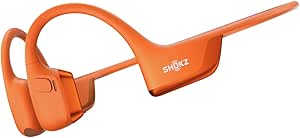
SHOKZ OpenRun Pro 2 Bone Conduction Bluetooth Sport Headphones, Orange
The OpenRun Pro 2 is the strongest fit here for runners who want open-ear awareness without giving up as much listening time or call clarity. Its bone-and-air-conduction drivers aim for fuller sound than the bone-conduction-only OpenMove, while up to 12 hours of battery life gives it twice the stated playback time of that model. A memory-wire frame and ear hooks also suit workouts where a loose fit would distract. Dual wind-resistant microphones with AI noise reduction are a useful extra for calls outdoors, though they do not cancel noise for the listener. Like every open-ear option in this roundup, it cannot isolate you from traffic or gym noise. Choose it over the Raycon if longer battery life and call features matter more than its IP68 rating.
Pros:- Up to 12 hours of stated battery life supports longer outings than the OpenMove.
- Bone-and-air-conduction drivers are designed to provide fuller sound than bone conduction alone.
- Memory-wire frame and ergonomic ear hooks are made to stay secure during exercise.
- Wind-resistant microphones with AI noise reduction support clearer calls outdoors.
Cons:- Open-ear playback does not block surrounding noise.
- IP55 protection is less extensive than the Raycon’s stated IP68 rating.
- The orange product title conflicts with the supplied note about silver model-bundle details.
Best for: Runners and cyclists who want a secure open-ear fit, longer playback, and clearer outdoor calls.
Not ideal for: Commuters seeking quiet listening or strong noise cancellation; the open design leaves ambient sound audible.
- Model:OpenRun Pro 2 (S820)
- Design:Open-ear bone and air conduction
- Battery life:Up to 12 hours
- Fit:Memory-wire frame with ergonomic ear hooks
- Water resistance:IP55
- Microphones:Dual wind-resistant microphones with AI noise reduction
- Connectivity:Bluetooth
- Warranty:2 years
Our verdict“Choose the OpenRun Pro 2 for long workouts and outdoor calls, but skip it if sound isolation is your priority.”
SHOKZ OpenMove Open-Ear Bluetooth Sport Headphones – Bone Conduction Wireless Earphones, Sweatproof with Sticker Pack (Grey)
The OpenMove is a straightforward entry into bone-conduction listening: it keeps the ears uncovered, uses a lightweight titanium frame, and supports Bluetooth playback for music, calls, and podcasts. Its main compromise is endurance. Six hours of battery life is half the stated run time of the SHOKZ OpenRun Pro 2, so it suits shorter workouts and daily commutes better than long training days. It also lacks the Pro 2’s combined bone-and-air-conduction drivers and wind-focused call features, making it the simpler choice rather than the more capable one. The open design preserves awareness, but it does not cancel ambient noise, and bass may feel restrained beside conventional in-ear headphones. I would pick it for basic, moderate-duration use, not noisy environments where isolation matters.
Pros:- Open-ear design keeps the ear canals uncovered for environmental awareness.
- Lightweight titanium frame is intended to stay secure during activity.
- USB-C charging and Bluetooth support everyday playback and calls.
- Two-year warranty matches the stated coverage of the SHOKZ OpenRun Pro 2.
Cons:- Six-hour stated battery life is notably shorter than the OpenRun Pro 2’s 12 hours.
- No active noise cancellation or isolation from surrounding sounds.
- Bass may be less pronounced than with traditional in-ear headphones.
Best for: First-time bone-conduction buyers who want a simple, lightweight headset for shorter runs, workouts, and commutes.
Not ideal for: Long-distance athletes or listeners in loud settings who need extended battery life, stronger bass, or noise isolation.
- Model:OpenMove (S661)
- Audio driver:Bone conduction
- Battery life:Up to 6 hours
- Battery charge time:2 hours
- Connectivity:Bluetooth
- Frame:Titanium frame
- Water resistance:Water resistant
- Warranty:2 years
Our verdict“Pick the OpenMove for uncomplicated, shorter workouts; choose the OpenRun Pro 2 for longer battery life and more call-focused features.”
Raycon Bone Conduction Open-Ear Headphones, Gray
The Raycon’s clearest distinction is its IP68 water-resistance rating, which gives it the strongest stated protection in this group for buyers who expect heavy exposure to sweat or rain. Its adjustable open-ear fit and built-in microphone cover the basics for exercise and everyday activity. The tradeoff is a sparse feature set: the supplied data lists no noise control, and the description warns that performance may fall short in noisy settings. Compared with the SHOKZ OpenRun Pro 2, it also has a shorter one-year warranty and no stated wind-noise microphone processing or battery-life figure. That makes it a more water-focused pick than an all-round sport headset. Choose it for wet conditions, not for blocking sound or prioritizing calls.
Pros:- IP68 rating is the highest stated water-resistance level among these five products.
- Adjustable open-ear fit can accommodate different wear preferences.
- Built-in microphone supports calls without adding a separate headset.
- Open design leaves the ears uncovered for awareness of surroundings.
Cons:- No noise control is listed, and the open fit does not block outside sound.
- No battery-life duration is provided in the supplied specifications.
- One-year warranty is shorter than the two-year coverage listed for both SHOKZ models.
Best for: People exercising in frequent rain or dealing with heavy sweat who value a high stated water-resistance rating and adjustable fit.
Not ideal for: Listeners who need noise isolation, reliable performance in loud surroundings, or a clearly stated long battery life.
- Model:RBB842-24E
- Audio technology:Bone conduction
- Fit:Open ear, adjustable
- Water resistance:IP68
- Weight:5.6 ounces
- Battery charge time:2 hours
- Noise control:None
- Warranty:1 year
Our verdict“Choose the Raycon for wet-weather use and its IP68 rating, but favor the OpenRun Pro 2 for stated battery life and call-noise features.”
SHOKZ OpenRun Pro 2 Bone Conduction Bluetooth Sport Headphones, Black
This black OpenRun Pro 2 earns a distinct place for buyers who exercise while taking calls: its dual wind-resistant microphones with AI noise reduction are aimed at making speech clearer in breezy conditions. The combination of bone and air conduction also sets it apart from the bone-conduction-only OpenMove, while up to 12 hours of battery life suits longer training days. It shares the orange OpenRun Pro 2’s core platform, so the meaningful difference between those listings is the stated color, not a different listening experience. The open fit keeps surroundings audible, which is helpful outdoors but poor for anyone seeking noise cancellation. EQ customization depends on the companion app, another layer that buyers who want simple onboard controls may not want.
Pros:- Dual wind-resistant microphones with AI noise reduction target clearer calls outdoors.
- Up to 12 hours of battery life exceeds the OpenMove’s stated six hours.
- Lightweight 30.3 g frame with Ni-Ti alloy memory wire and ergonomic ear hooks.
- IP55 water resistance suits sweat and light exposure during workouts.
Cons:- Open-ear design provides less sound isolation than sealed headphones.
- EQ customization depends on the companion app.
- Its core features match the orange OpenRun Pro 2, leaving color as the main stated distinction.
Best for: Outdoor athletes who take calls while running or cycling and want wind-focused microphone processing with long stated battery life.
Not ideal for: People seeking passive or active noise isolation, or those who prefer EQ adjustment without a companion app.
- Model:OpenRun Pro 2 (S820)
- Audio technology:Bone and air conduction
- Battery life:Up to 12 hours
- Weight:30.3 g
- Frame material:Ni-Ti alloy memory wire
- Water resistance:IP55
- Microphones:Dual wind-resistant microphones with AI noise reduction
- Warranty:2 years
Our verdict“Choose this OpenRun Pro 2 for outdoor calls and extended exercise, but skip it if you need noise isolation or app-free EQ control.”
Bone Conduction Headphones, Ultra-Lightweight Sport Headset with Mic, Bluetooth 6.0, 10H Battery, IP55 Waterproof for Running, Cycling & Gym
At a stated 22 grams, this headset is the lightest option here by the supplied weight figures, making it a fit-focused alternative for buyers who dislike a heavier frame during long sessions. It also lists 10 hours of battery life, landing between the SHOKZ OpenMove’s six hours and the OpenRun Pro 2’s 12. Bluetooth 6.0, Type-C fast charging, and IP55 protection cover useful basics for workouts. The limitation is how little else is specified: there are no details on fit materials, EQ, or microphone noise processing, so it is harder to compare call and audio performance with SHOKZ. Like the other open-ear models, it does not provide sound isolation. I would choose it for low weight and stated runtime, not for buyers who need proven call-focused features.
Pros:- Stated 22 g weight is lighter than the 30.3 g SHOKZ OpenRun Pro 2.
- 10-hour battery life exceeds the OpenMove’s stated six hours.
- Bluetooth 6.0 and Type-C fast charging are listed for connectivity and charging.
- IP55 protection is specified for water and sweat resistance.
Cons:- Open-ear design does not provide noise isolation.
- No details are supplied for EQ options or microphone noise processing.
- Battery life may vary with usage.
Best for: Runners and gym users prioritizing a very light headset, 10-hour stated battery life, and Type-C charging.
Not ideal for: Buyers who need detailed audio and microphone specifications, noise isolation, or clearly documented fit features.
- Weight:22 g
- Battery life:Up to 10 hours
- Water resistance:IP55
- Bluetooth version:6.0
- Charging:Type-C fast charging
- Design:Open-ear bone conduction
- Microphone:Built-in
Our verdict“Choose this model if low weight and a 10-hour stated runtime lead your priorities, but select the OpenRun Pro 2 for more detailed call features.”
The OpenComm2 2025 Upgrade is the work-focused pick here: its noise-canceling microphone is designed to reduce surrounding noise for the person on the other end of a call, not to silence your own surroundings. That distinction matters because its open-ear bone conduction design leaves you aware of nearby conversation and traffic, unlike noise-isolating headphones. Compared with the sports-oriented Bluetooth 5.3 waterproof bone conduction headphones in this roundup, this model prioritizes call handling, multipoint pairing, and up to 16 hours of talk time over an explicitly rugged outdoor brief. At 35g, it is suited to long meetings, and USB-C quick charging helps between calls. The tradeoff is limited listening time of eight hours and IP55 protection, which is not a promise of suitability for swimming or heavy rain.
Pros:- Noise-canceling microphone is aimed at clearer speech on calls
- Multipoint Bluetooth pairing supports switching between two connected devices
- Up to 16 hours of talk time suits long workdays
- 35g weight and USB-C quick charging support frequent, extended use
Cons:- Open-ear design does not provide noise cancellation for the wearer
- Listening time is listed as eight hours, shorter than the talk-time figure
- IP55 protection is not intended for swimming or heavy rain
Best for: Remote and hybrid workers who move between a computer and phone, take frequent calls, and want to keep their ears open to their surroundings.
Not ideal for: Listeners seeking headphones that cancel noise for their own music, or swimmers and outdoor users who need protection beyond the stated IP55 rating.
- Design:Open-ear bone conduction
- Weight:35 g
- Water resistance:IP55
- Talk time:Up to 16 hours
- Listening time:Up to 8 hours
- Charging:USB-C with quick charge
- Connectivity:Bluetooth multipoint pairing
- Microphone:Noise-canceling microphone
Our verdict“Choose this for frequent work calls and device switching, but skip it if you want quiet listening or swim-ready protection.”
Bone Conduction Headphones, Wireless Bluetooth Open-Ear Sports Headphones with Mic, Type-C Quick Charging, Long Battery Life, Waterproof for Running, Cycling, Workout
For runners and cyclists, this model’s main advantage is its open-ear fit: you can listen while remaining more aware of traffic and nearby people. Its titanium frame and stated waterproof protection suit an active-use brief, while Bluetooth 5.3 and up to 10 hours of battery life cover everyday training without shifting focus to workplace call features. Compared with the OpenComm2 2025 Upgrade, it offers less listed talk-time detail and no stated multipoint pairing or noise-canceling microphone, but its sports framing and water protection make it the more natural choice for workouts. Neither model cancels noise for the wearer; the open design lets ambient sound in. The tradeoffs here are fit variability and sound that may not match traditional over-ear headphones, and the supplied specs do not state a water-resistance rating.
Pros:- Open-ear design helps retain awareness of surroundings during outdoor exercise
- Titanium frame is described as lightweight and durable
- Up to 10 hours of battery life supports extended workouts
- Type-C fast charging is convenient between sessions
Cons:- Open-ear fit provides limited noise isolation and does not cancel ambient noise
- Comfort may vary with head shape
- No specific waterproof rating is supplied in the provided specifications
Best for: Runners, cyclists, and gym users who want open-ear listening, a durable titanium frame, and up to 10 hours of playback.
Not ideal for: Commuters seeking sound isolation, buyers who need verified noise-canceling call performance, or anyone who requires a clearly specified waterproof rating before purchase.
- Design:Wireless open-ear bone conduction
- Connectivity:Bluetooth 5.3
- Battery life:Up to 10 hours
- Charging:Type-C fast charging
- Frame material:Titanium
- Microphone:Built-in mic
- Water protection:Described as waterproof; rating not specified
Our verdict“Pick this for open-ear running or cycling with a titanium frame, but choose another option if noise isolation or a documented water rating is a priority.”

How We Picked
I ranked these options by how clearly their listed features match the noise-control problem buyers actually have: hearing calls in noisy settings while keeping the ears open. I gave priority to dedicated call hardware and controls, such as a boom microphone and mute button, then weighed comfort cues, stated battery life, water resistance, connectivity and whether the product is described for work, sport or both. I treated manufacturer-style claims as claims, not proof of real-world noise cancellation or sound quality.
The order reflects use-case fit and the specificity of the available product information. The SHOKZ OpenComm2 UC 2025 ranks first for call-focused features; OpenRun Pro 2 follows for sport use, and the OpenComm2 2025 Upgrade is another work-oriented choice. Generic models with broad feature claims rank lower because their listings provide less detail about call performance and support. The two OpenRun Pro 2 colors are kept as separate supplied products, but buyers should compare them as color options unless the seller confirms a hardware difference.
| noise canceling bone conduction headphone | Water resistance | Microphone | Battery life | Design |
|---|---|---|---|---|
| SHOKZ OpenComm2 UC 2025 Wirele | IP55 | Boom mic with noise-canceling capability | — | — |
| Open Ear Headphones with IPX7 | IPX7 | — | Up to 36 hours total | — |
| New Bone Conduction Headphones | IP65; not intended for swimming | — | Up to 10 hours | Bone conduction, open-ear, flexible neckband |
| Bone Conduction Open-Ear Headp | IPX5 stated in title | Yes | Eight hours in title; up to 10 hours in description | Open-ear bone conduction |
| SANOTO Bone Conduction Headpho | — | Dual mic with windproof foam cover | — | Open-ear bone conduction |
| SHOKZ OpenRun Pro 2 Bone Condu | IP55 | — | Up to 12 hours | Open-ear bone and air conduction |
| SHOKZ OpenMove Open-Ear Blueto | Water resistant | — | Up to 6 hours | — |
| Raycon Bone Conduction Open-Ea | IP68 | — | — | — |
| SHOKZ OpenRun Pro 2 Bone Condu | IP55 | — | Up to 12 hours | — |
| Bone Conduction Headphones | IP55 | Built-in | Up to 10 hours | Open-ear bone conduction |
| OpenComm2 2025 Upgrade | IP55 | Noise-canceling microphone | — | Open-ear bone conduction |
| Bone Conduction Headphones | — | Built-in mic | Up to 10 hours | Wireless open-ear bone conduction |
Factors to Consider When Choosing Noise Canceling Bone Conduction Headphones
Before choosing, separate microphone noise reduction from listening isolation. Bone conduction designs leave the ear canal open, which can help with awareness but also means nearby sounds remain audible. The right pick depends on whether your main challenge is making calls, staying aware outdoors or wearing a headset through long workouts.
Check What “Noise Canceling” Applies To
Product listings often use noise-canceling language for the microphone rather than the audio reaching your ears. That can help callers hear your voice more clearly, but it does not block traffic, office chatter or aircraft noise for you. Look for explicit wording about a noise-canceling microphone, then check whether a boom mic or mute control is included. If your priority is quiet listening, an open-ear bone conduction model is the wrong category to expect strong isolation from. A separate sealed headset may suit travel or focused listening better, while bone conduction can remain useful for calls and outdoor awareness.
Match the Microphone to Your Call Environment
A built-in mic may be enough for occasional calls at home, but busy offices and outdoor calls place more demands on voice pickup. A boom mic sits closer to the mouth, which can be useful when speaking clearly matters more than a low-profile look. Mute controls also save time during meetings and reduce the chance of transmitting background conversation. Do not assume that a feature called noise canceling will remove every sound around you; performance can vary with wind, room noise and mic placement. If calls are your main use, prioritize specific call hardware over sport features that you may rarely use.
Treat Open-Ear Awareness as a Tradeoff
Keeping the ear canal open can help you hear people, vehicles and public announcements while listening. The same design lets environmental sound compete with audio, especially in busy or windy places. Turning the volume up to compensate can make listening less comfortable and may increase hearing risk. Consider where you will use the headset most: a quiet home office and a roadside run call for different priorities. For cycling or running, follow local rules and keep playback low enough to remain aware of surroundings.
Choose Water Resistance for Your Actual Routine
Water-resistance labels are not interchangeable, and a rating for sweat or splashes does not automatically make a headset suitable for swimming. Check the exact rating and the maker’s care instructions rather than relying on broad terms such as waterproof. Sweat, rain and dust can affect charging contacts and controls over time, so drying the headset after workouts can help preserve it. Buyers who train outdoors frequently may value a stated rating more than an extra advertised EQ mode. If your use is mainly desk calls, a higher water-resistance claim may add little practical value.
Read Battery Claims in the Context of Your Use
Advertised playback and talk times can describe different activities, and real use may vary with volume, call time and connection conditions. A headset used for long meetings may drain differently from one used for short runs. Think about whether you can recharge between sessions before paying extra attention to a headline battery figure. Quick charging can be more useful than maximum playtime if you often forget to charge overnight. For frequent travel or all-day shifts, also check whether the listing provides clear charging details and whether the included cable suits your setup.
Value Fit, Controls and Support Over Feature Count
Long specification lists can distract from the details that shape daily comfort: frame pressure, stability during movement and whether buttons are easy to operate. A lightweight claim alone does not tell you how the headset will feel after several hours, so check the return policy and seller support before buying unfamiliar brands. Bluetooth version numbers and EQ modes are useful only if they solve a problem you actually have. A simpler headset with clear call controls may serve office use better than a sports model with several extra modes. For a first purchase, favor a clear use case and dependable fit options over the largest collection of advertised features.
Frequently Asked Questions
Do noise canceling bone conduction headphones block background noise for me?
Usually, the phrase refers to reducing background noise picked up by the microphone, not active noise cancellation for the listener. Because bone conduction models keep the ears open, surrounding sounds remain audible. That is useful for awareness but limits their ability to create a quiet listening space. If you need to focus in a noisy room or sleep beside a loud environment, compare sealed headphones or earplugs instead. Choose bone conduction for open-ear listening and clearer calls, not silence.
Should I choose the SHOKZ OpenComm2 UC 2025 or the OpenComm2 2025 Upgrade?
Both are positioned for calls, so the best choice depends on the exact bundle and compatibility details in the listing. The UC 2025 is the strongest fit here for buyers prioritizing a work headset with a boom mic, while the 2025 Upgrade listing highlights a mute button and 16-hour talk-time claim. Check whether the included adapter or connection options match your computer and phone before ordering. Do not assume the model names mean identical accessories or compatibility. If your work depends on a specific conferencing setup, confirm that setup with the seller or manufacturer.
Are the Orange and Black SHOKZ OpenRun Pro 2 listings different headphones?
The supplied product names identify the same OpenRun Pro 2 model in different colors. The information provided does not establish a hardware or performance difference between them. Compare the listing details for included accessories, seller, warranty and return terms rather than treating color as a reason to expect different sound or battery performance. If one listing shows different specifications, check with the seller before deciding. Choose the color you prefer only after confirming the product and bundle are otherwise equivalent.
Can I use an open-ear bone conduction headset for cycling or running near traffic?
Open-ear designs can let you hear more of your surroundings than sealed earbuds, but they do not make outdoor listening risk-free. Wind, traffic and playback volume can still mask important sounds. Keep volume moderate, stay alert and follow local rules, especially when cycling. A stable fit and simple controls can be more useful on a run than extra audio modes. If a route is crowded or high-risk, consider leaving audio off.
What should I verify before buying one of the less-established models in this roundup?
Check the exact model name, stated water-resistance rating, charging method, battery claim and return window on the live listing. Confirm whether noise cancellation applies to the microphone, and look for details about mic placement and mute controls. Broad claims such as Bluetooth 6.0 or long battery life do not by themselves establish call quality or long-term comfort. Read the fit information carefully, since frame pressure and stability vary by head shape. A clear return policy matters when you cannot try the headset before purchase.
Conclusion
For most buyers who want noise-reducing call features in an open-ear design, I’d start with the SHOKZ OpenComm2 UC 2025 as the best overall, especially for regular meetings. The OpenRun Pro 2 is my best premium-style sport pick for buyers whose priority is training rather than a boom-mic work setup; the Orange and Black listings should be treated as color choices unless their sellers show otherwise. For beginners, a straightforward model with clear controls, a comfortable return policy and a defined use case is a safer starting point than the longest spec list. For specific work needs, choose an OpenComm2 variant with the mic, mute and device compatibility your meetings require; for running, prioritize stable fit and sweat resistance. Skip this category if your main goal is strong noise isolation for quiet listening.