

To start cold plunges without feeling miserable, begin with gradual exposure by taking cool showers or dipping in slightly cold water, slowly decreasing the temperature over time. Practice controlled, deep breathing during each session to stay calm and manage shock. Limit initial immersions to a few seconds and increase your time as your body adapts, focusing on patience and consistency. If you want to learn more about easing into cold plunges successfully, keep exploring these strategies.
Key Takeaways
- Start with cool showers and gradually lower water temperature over days to build tolerance safely.
- Practice controlled, deep breathing during immersion to manage shock and promote relaxation.
- Limit initial dips to a few seconds, gradually increasing duration as comfort improves.
- Avoid jumping straight into freezing water; use incremental exposure for safe adaptation.
- Stay patient and consistent, focusing on mindfulness and progress to make cold plunges enjoyable.
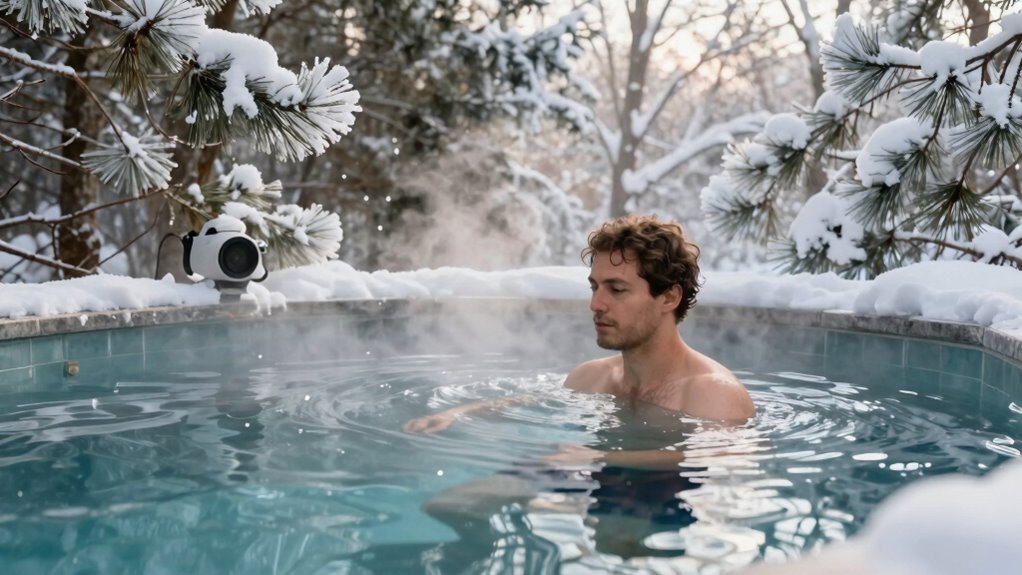
If you’re new to cold plunges, taking the plunge can seem intimidating at first. The idea of immersing yourself in icy water might trigger fears of shock, discomfort, or even panic. But the good news is, you don’t have to dive in headfirst and endure unnecessary misery. Instead, you can approach cold plunges with a plan rooted in gradual adaptation and mindful breathing techniques. This way, you build resilience over time, making the experience more manageable and even enjoyable.
Start by preparing your body through gradual adaptation. Instead of jumping straight into freezing water, begin with cooler showers or dips in slightly cold water. Over days or weeks, slowly lower the temperature so your body becomes accustomed to colder sensations. This incremental process helps your nervous system adapt and reduces the shock factor. The key is consistency—regular exposure allows your body to adjust gradually, diminishing the initial discomfort and preventing you from feeling overwhelmed.
Begin with cool showers and gradually lower water temperature for safe cold plunge adaptation.
Breathing techniques play a vital role in managing the initial shock of cold exposure. When you first step into cold water, your instinct might be to gasp or hold your breath, which can intensify feelings of panic. Instead, focus on controlled, deep breaths. Inhale slowly through your nose, filling your lungs fully, and then exhale steadily through your mouth or nose. This steady breathing activates your parasympathetic nervous system, which promotes relaxation and counters the stress response triggered by cold. Practicing these breathing techniques beforehand, perhaps during meditation or mindfulness exercises, can make it easier to stay calm during your cold plunge.
Remember, the goal isn’t to endure the cold for as long as possible immediately. Instead, listen to your body and take it step by step. Start with just a few seconds in cold water and gradually increase your time as you become more comfortable. Focus on your breath during the process; if you feel yourself starting to panic or shiver uncontrollably, come out and warm up. Over time, with consistent practice and mindful breathing, your tolerance will improve, and the cold will start to feel less intimidating.
In essence, successful cold plunging for beginners hinges on patience and mindfulness. Embrace gradual adaptation and learn to control your breathing. These strategies will help you build confidence and resilience, transforming a potentially miserable experience into a rewarding part of your wellness routine. Additionally, understanding the importance of gradual adaptation can help you avoid unnecessary discomfort and set realistic expectations for your progress.

BAGAIL 8 Set Packing Cubes Luggage Packing Organizers for Travel Accessories-Cream
- Premium Durable Fabric: Resists wrinkles, stains, and wear
- Water-Repellent Material: Protects clothes from spills and leaks
- Lightweight Design: Easy to pack without adding weight
As an affiliate, we earn on qualifying purchases.
Frequently Asked Questions
How Often Should Beginners Cold Plunge?
You should start cold plunges 2-3 times a week, gradually increasing as your body adapts. Remember hydration tips—drink water before and after to stay hydrated, and wear clothing recommendations like a swimsuit or lightweight gear to stay comfortable. Ease into the experience, listen to your body, and don’t push too hard initially. Consistency helps your body adjust without feeling miserable, making cold plunges a invigorating routine.
Can Cold Plunges Help With Mental Health?
Cold plunges can boost your mental health by reducing stress and enhancing mood through the release of endorphins. Regular exposure also builds emotional resilience, helping you handle life’s challenges better. You might notice increased focus, better sleep, and a sense of calm. To maximize these benefits, start slowly, stay consistent, and listen to your body. Over time, cold plunges can become a powerful tool for improving your overall mental well-being.
What Are the Signs of Overdoing Cold Exposure?
If you overdo cold exposure, you might notice signs like persistent cold shock, making you feel dizzy or disoriented, and skin irritation, such as redness or rash. You could also experience numbness, excessive shivering, or fatigue that doesn’t improve. Listen to your body; if these symptoms occur, reduce your cold plunge duration or temperature. Overdoing it can strain your body and hinder recovery rather than help it.
Is Cold Plunging Safe for Everyone?
Is cold plunging safe for everyone? Not necessarily. Your temperature tolerance varies, so it’s essential to listen to your body. If you have cardiovascular issues or other health concerns, consult a doctor first. Always follow safety precautions, such as limiting exposure time and gradually decreasing water temperature. If you experience dizziness or discomfort, stop immediately. With proper care, cold plunging can be a safe and invigorating practice.
How Long Should a Beginner Stay in the Cold Water?
As a beginner, you should start with a cold water temperature around 50-60°F and stay in for about 1-3 minutes. This helps prevent cold shock and overexposure. Gradually increase your time as your body adapts, listening to how you feel. Keep your focus on controlled breathing and avoid pushing too hard too fast. Over time, you’ll build tolerance, making cold plunges more comfortable and beneficial.
Conclusion
Starting your cold plunge journey may feel intimidating, but remember, even explorers like Magellan began with small steps. Just as they charted unknown waters gradually, you’ll build resilience one plunge at a time. Embrace the discomfort as part of the adventure, knowing it’s the path to growth and energy. With patience and persistence, you’ll discover that what once felt miserable can become your new strength—turning icy waters into your personal voyage of transformation.