

Spending time in nature through forest bathing and walks helps reduce your stress levels, boost your immune system, and clear your mind. Breathing fresh air among trees releases calming hormones and decreases stress hormones like cortisol. It also engages your senses, promoting emotional stability and mindfulness. Regular outdoor walks support circulation, enhance energy, and contribute to overall health. Keep exploring to discover how incorporating these practices can lead to long-term wellness and robustness.
Key Takeaways
- Reduces stress and enhances mental clarity through exposure to calming natural environments.
- Boosts immune function by absorbing phytoncides released by trees.
- Engages the senses, promoting emotional stability and mindfulness.
- Improves circulation and physical vitality through gentle movement and fresh air.
- Supports long-term health and wellness with sustainable, nature-based activities.
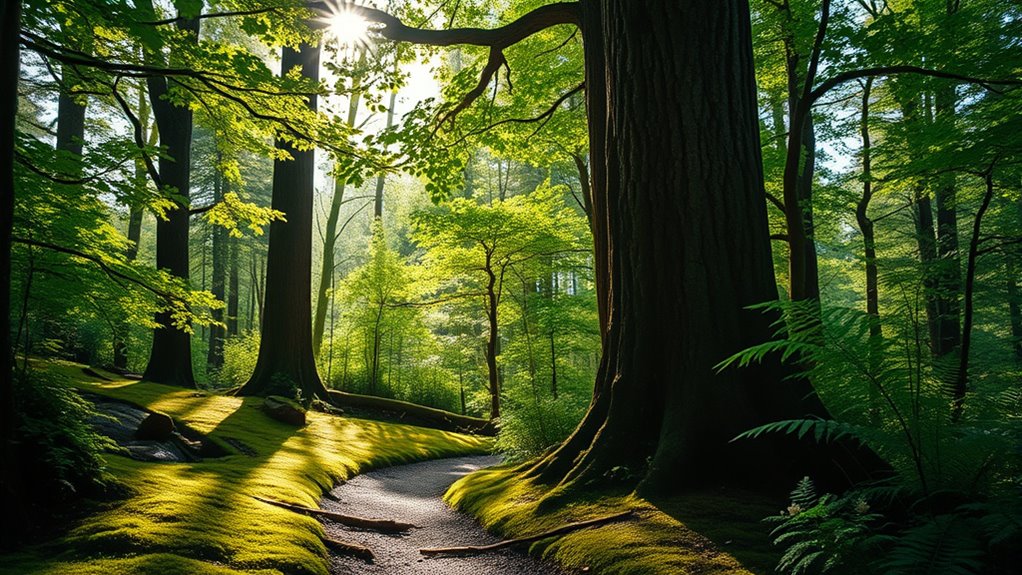
Forest bathing offers a powerful way to boost your well-being by immersing yourself in nature’s calming environment. When you take the time to walk among trees and breathe in fresh air, you’re actively reducing stress and strengthening your immune system. This practice isn’t just about leisure; it’s a scientifically supported method to improve your health. As you stroll through a forest, your body responds by lowering cortisol levels, which are linked to stress. The tranquility of the woods helps clear your mind and calm your nervous system, making you feel more relaxed and centered. Over time, these stress reductions can translate into better sleep, improved mood, and increased resilience against daily pressures.
Immersing in nature reduces stress and boosts your immune system through calming sights, sounds, and fresh air.
Moreover, forest bathing does more than just ease your mind—it provides a tangible immune boost. Phytoncides, natural compounds released by trees, are absorbed through your respiratory system during your walk. These substances have been shown to enhance your body’s natural defenses by increasing the activity of natural killer cells, which play an essential role in fighting off viruses and bacteria. Regular exposure to forest environments can lead to a sustained improvement in immune function, helping your body stay healthier over the long term. You might notice fewer colds or flu episodes, and your overall vitality can improve as your immune system becomes more robust.
As you immerse yourself in nature, you also engage your senses in a way that modern routines often neglect. The fresh scent of pine, the soothing sounds of rustling leaves, and the vibrant sights of greenery all work together to create a sensory experience that promotes mental clarity and emotional stability. This heightened sensory engagement can help you disconnect from digital distractions and daily worries, fostering mindfulness and presence. When you’re fully present in the moment, your stress levels naturally decrease, and your body can focus on healing and renewal.
In addition, the physical activity involved in walking through a forest enhances circulation and boosts energy levels, further supporting your immune health. The combination of physical movement, fresh air, and nature’s calming influence makes forest bathing a holistic approach to wellness. It’s accessible, requiring no special equipment—just a walk in a natural setting. By making time for regular forest walks, you’re investing in your mental resilience and physical health, creating a sustainable way to manage stress and strengthen your body’s defenses. Incorporating nature-based activities into your routine can also help build long-term health benefits. Ultimately, embracing this practice can lead to a more balanced, healthier life.
Frequently Asked Questions
Can Forest Bathing Help Improve Mental Health Conditions?
Yes, forest bathing can help improve mental health conditions. As you immerse yourself in nature, you practice mindfulness meditation, which sharpens your awareness and calms your mind. This activity also promotes stress reduction by lowering cortisol levels and easing anxiety. Regularly spending time outdoors allows you to reconnect with nature, boost your mood, and develop healthier coping strategies for mental health challenges.
What Is the Ideal Duration for a Beneficial Forest Walk?
You might wonder about the ideal duration for a forest walk to reap its benefits. Experts suggest that following duration guidelines of at least 20 to 30 minutes can substantially boost your well-being. The optimum timing varies, but many find that a 45-minute to an hour session allows you to fully unwind, disconnect, and absorb nature’s calming effects. So, set aside enough time—you’ll feel the difference.
Are There Any Risks Associated With Forest Bathing?
You might face some risks like wildlife disturbances or allergic reactions during forest bathing. Animals could unexpectedly approach, so stay alert and respect their space. If you’re prone to allergies, pollen or mold might trigger symptoms. To stay safe, choose well-maintained trails, avoid disturbing wildlife, and carry necessary medications. Being aware of these potential risks helps you enjoy the benefits of nature while minimizing harm.
How Often Should One Practice Forest Bathing for Maximum Benefits?
You should aim for at least one to two sessions weekly, much like watering a plant regularly to see growth. According to frequency guidelines, consistent practice enhances mental clarity and reduces stress. Seasonal considerations matter too; in winter, shorter, more frequent walks help maintain benefits when nature’s vibrancy dwindles. By making forest bathing a routine, you nurture your well-being much like tending to a garden—gradually but steadily flourishing.
Can Children or Seniors Safely Participate in Nature Walks?
Children and seniors can safely participate in nature walks, but you should consider child safety and senior accessibility. Keep walks gentle and age-appropriate, ensuring paths are clear and safe. Watch for hazards like uneven terrain or busy areas. For children, supervise closely and choose engaging routes. For seniors, select accessible trails with benches and shade. Always consult healthcare providers if there are health concerns, and tailor walks to individual needs.
Conclusion
Spending time in nature can boost your mood, reduce stress, and improve your overall health. Did you know that just 20 minutes of forest bathing can lower cortisol levels by up to 40%? So, next time you feel overwhelmed, take a walk in the woods—you’ll feel calmer and more refreshed. Nature’s healing power is right outside your door, waiting to help you reconnect and rejuvenate. Embrace the outdoors and enjoy these incredible benefits today.