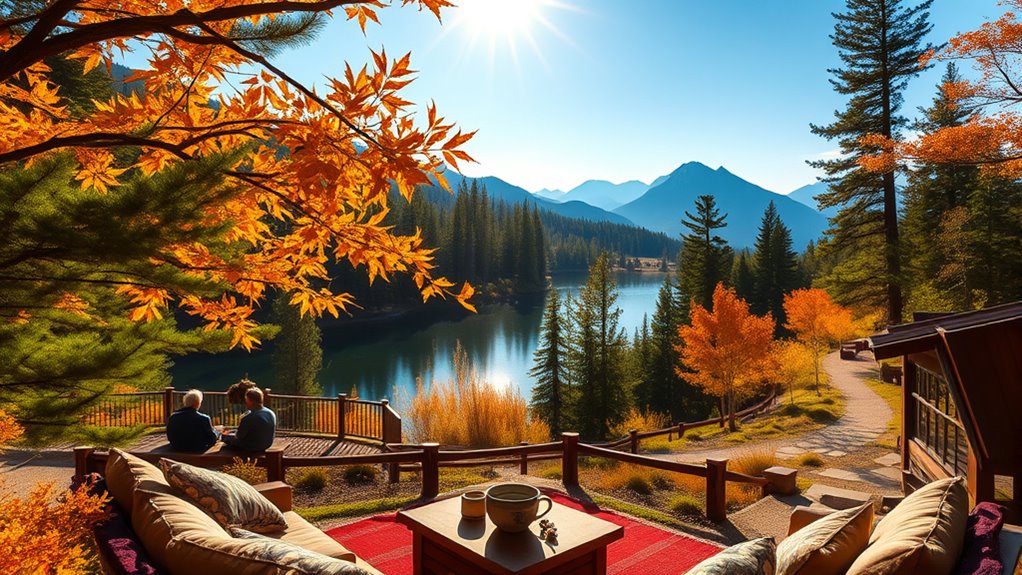

A mental health retreat offers you a dedicated space to focus on emotional wellbeing through mindfulness practices like meditation, breathing exercises, and guided imagery. Here, you can take a break from daily routines, promote emotional healing, and develop healthier coping skills. Surrounded by serene environments, you’ll find it easier to reflect, release emotional barriers, and build resilience. Keep exploring to discover how these retreats can provide lasting benefits for your mental and emotional health.
Key Takeaways
- Mental health retreats offer dedicated environments for mindfulness practices that enhance emotional healing and stress reduction.
- Participating in structured activities like meditation and guided imagery promotes self-awareness and emotional resilience.
- Retreat settings in serene environments facilitate introspection, emotional release, and personal growth.
- These retreats help develop healthier coping mechanisms and foster self-compassion for long-term mental well-being.
- They provide practical tools to incorporate mindfulness into daily routines, supporting ongoing emotional and mental stability.

Have you ever wondered how a dedicated retreat could boost your mental well-being? Stepping away from your daily routine to focus solely on yourself can be transformative. At a mental health retreat, you’ll find opportunities to engage in mindfulness practices that help you stay present and grounded. These practices, such as meditation, breathing exercises, and guided imagery, allow you to quiet the mind and connect with your inner self. By dedicating time to these activities, you create space for emotional healing, which is essential for long-term mental clarity and resilience.
During your retreat, you’ll be encouraged to explore the root causes of stress, anxiety, or depression that might have been weighing you down. With the support of trained professionals, you can explore emotional healing processes that address unresolved feelings and past traumas. This isn’t about talking for hours or reliving painful memories; it’s about gently opening emotional barriers through guided techniques that foster self-awareness and acceptance. As you practice mindfulness and emotional healing, you’ll learn to observe your thoughts and feelings without judgment, which diminishes their power over you. This shift can lead to a greater sense of peace and control in your everyday life.
Explore emotional healing techniques that release past pain and foster self-awareness with professional support.
The environment of a mental health retreat is designed to promote introspection and renewal. Surrounded by nature or serene settings, you’re more receptive to mindfulness exercises, allowing for deeper emotional release and reflection. The combination of tranquil surroundings and structured activities creates an ideal atmosphere for emotional healing, helping you break free from negative thought patterns and develop healthier coping mechanisms. As you progress through your retreat, you’ll gain tools that you can incorporate into your daily routine, making mental wellness a continuous journey rather than a fleeting moment. Incorporating mindfulness techniques into your daily life can significantly enhance your overall emotional resilience.
Additionally, engaging in mindfulness practices at a retreat helps you develop a compassionate attitude toward yourself. You learn to recognize and validate your emotions instead of suppressing or avoiding them. This awareness fosters self-love and resilience, empowering you to face life’s challenges with greater confidence. The supportive environment also provides a sense of community and shared experience, reminding you that you’re not alone in your struggles. As you leave the retreat, you’ll carry with you a renewed sense of emotional strength and practical skills to maintain your mental health beyond the retreat’s boundaries.
In essence, a mental health retreat offers a dedicated space where mindfulness practices and emotional healing work hand in hand to rejuvenate your mind and spirit. It’s an investment in yourself that can yield lasting benefits, helping you navigate life’s ups and downs with greater ease and clarity.
Frequently Asked Questions
How Do I Choose the Right Mental Health Retreat for My Needs?
To choose the right mental health retreat, consider your specific needs for personalized treatment and what retreat amenities matter most to you. Research programs that focus on your mental health goals, whether it’s stress relief or anxiety management. Look for retreats with qualified professionals, supportive environments, and amenities like therapy sessions, wellness activities, and comfortable accommodations. Trust your instincts and select a place where you feel safe and empowered to heal.
Are Mental Health Retreats Covered by Insurance?
Ever wonder if your insurance covers mental health retreats? Generally, insurance doesn’t fully cover these retreats, but some plans might offer partial coverage or reimbursements for related therapy sessions. You should check your policy details or speak with your provider to explore options. Additionally, some retreats offer financial assistance or sliding scale fees, making them more accessible. Isn’t prioritizing your emotional health worth exploring these financial possibilities?
What Should I Pack for a Mental Health Retreat?
You should pack your essentials like comfortable clothing options, a journal, and any medications you need. Include items for relaxation, such as cozy layers and yoga pants, to help you feel at ease. Don’t forget personal care items, a water bottle, and possibly some soothing teas. Keep your packing simple and purposeful, focusing on essentials that promote comfort and emotional wellbeing during your retreat.
Can I Attend a Retreat if I Have Severe Mental Health Issues?
Yes, you can attend a retreat even with severe mental health issues. Many retreats focus on stigma reduction and peer support, creating a safe space for all participants. These programs often tailor activities to different needs and provide professional guidance. By joining, you’ll benefit from a supportive environment that encourages healing and connection, helping you manage your mental health better while breaking down barriers associated with stigma.
How Long Do Most Mental Health Retreats Typically Last?
You’ll find that most mental health retreats typically last between 3 to 7 days, aligning with their program length. It’s a coincidence that many people discover this duration works perfectly to reset their emotional wellbeing without feeling overwhelmed. During this time, you participate in tailored activities designed for healing and growth. So, when planning your retreat, consider this common length to maximize benefits without disrupting your daily life.
Conclusion
Taking time for yourself at a mental health retreat can gently recharge your spirit and bring new clarity to your life. Think of it as a restful pause, a warm embrace from your own well-being. By prioritizing your emotional landscape, you create space for renewal and growth. Remember, sometimes a little escape is all you need to find your balance again—so go ahead, gift yourself this nourishing journey toward inner harmony.