Under-mattress sleep sensors are perfect if you want a hassle-free, unobtrusive way to track your sleep without wearing devices. They’re ideal for those who value natural sleep and prefer not to deal with slipping or discomfort caused by wearables. These sensors provide consistent, detailed data on sleep patterns, even capturing subtle movements and physiological signals. If you’re curious about how they compare in privacy and long-term insights, there’s more to explore on this smart sleep solution.
Key Takeaways
- Ideal for users seeking unobtrusive, non-wearable sleep monitoring without disrupting their sleep environment.
- Suitable for individuals requiring continuous, reliable sleep data without manual setup or calibration.
- Better for those concerned about device displacement or discomfort caused by wearables during sleep.
- Perfect for users prioritizing data privacy, as sensors often transmit data securely and without external devices.
- Beneficial for long-term sleep trend analysis without the hassle of charging or maintaining wearable devices.
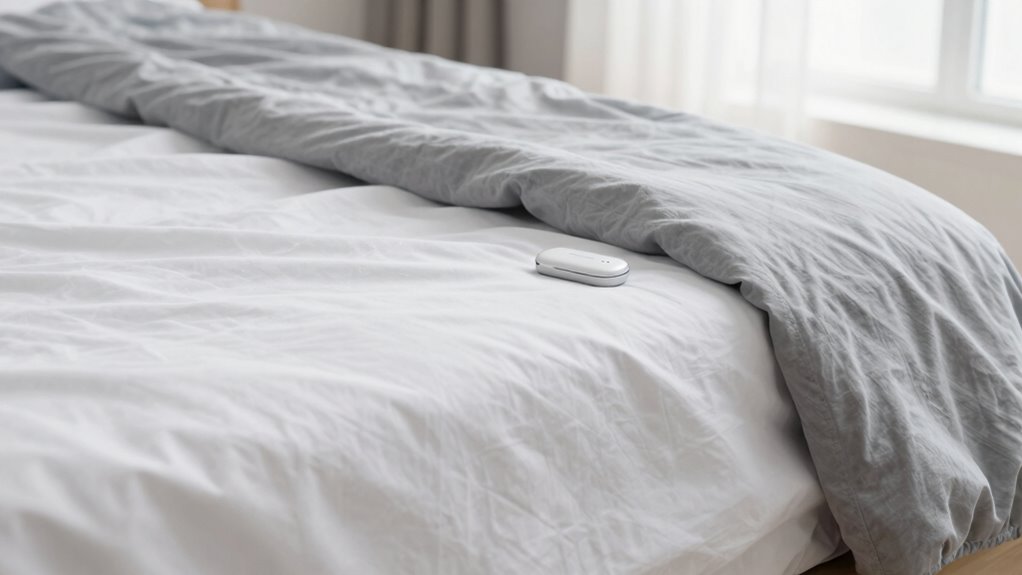
Under-mattress sleep sensors are innovative devices designed to monitor your sleep patterns without disturbing your rest. Unlike wearables that require you to wear a device on your wrist or body, these sensors slip underneath your mattress, providing a seamless way to track sleep. They use sensors embedded in the mattress to detect movement, heart rate, breathing patterns, and even body position, giving you extensive insights into your sleep quality. Because they don’t rely on external devices, they often provide more consistent and uninterrupted data collection, making them ideal for those who value a natural, unobtrusive approach to sleep monitoring.
When it comes to sleep tracking accuracy, under-mattress sensors have made significant strides. They can deliver reliable data on sleep duration, sleep cycles, and disturbances, often matching or surpassing the precision of wearables. Without the need for manual input or calibration, these sensors continuously gather data throughout the night, providing a detailed picture of your sleep trends over time. This consistency benefits people who want a hassle-free way to understand their sleep habits without worrying about wearing a device that might shift or fall off during sleep. Additionally, because they track physiological signals from beneath the mattress, they tend to capture more subtle movements and physiological changes, offering a richer dataset for analysis. These sensors often utilize advanced algorithms to interpret the data accurately, enhancing overall reliability.
However, privacy concerns are a common consideration with under-mattress sleep sensors. Since they collect sensitive data about your sleep patterns, heart rate, and body movements, you might worry about how this information is stored and used. Many manufacturers address these concerns by implementing strong encryption and transparent privacy policies, but it’s essential to review these details before choosing a device. Unlike wearables, which often sync with apps on your phone or cloud services, under-mattress sensors might transmit data wirelessly or store it locally, raising questions about potential breaches or unauthorized access. If privacy is a primary concern for you, it’s wise to select a device from a reputable brand that prioritizes data security and clearly explains how your information is protected.
Frequently Asked Questions
Do Under-Mattress Sensors Work for All Mattress Types?
Under-mattress sensors generally work with most mattress types, but your mattress compatibility depends on its thickness and material. They’re easy to install, usually slipping under the mattress without much hassle. For memory foam or thicker mattresses, make sure the sensor fits snugly and stays in place. Check the product’s specifications for compatibility details, and follow installation instructions carefully to get accurate sleep data and avoid misreads.
Can Under-Mattress Sensors Detect Sleep Disorders Accurately?
Yes, under-mattress sensors can detect sleep disorders accurately by monitoring your sleep cycle and heart rate variability. They provide continuous, non-intrusive data, helping identify irregularities like sleep apnea or restless leg syndrome. You benefit from real-time insights and pattern recognition without wearing devices. While they’re effective for many, for complex or diagnosed sleep disorders, consulting a healthcare professional is essential for thorough assessment and treatment.
Are There Privacy Concerns With Under-Mattress Sleep Sensors?
Yes, there are privacy implications with under-mattress sleep sensors. You might worry about data security, as these devices collect sensitive sleep patterns and movement data. It’s crucial to choose sensors with strong encryption and clear privacy policies. Be aware of who can access your data, and regularly update security settings. Staying informed helps protect your personal information and ensures your sleep data remains private and secure.
How Long Do Under-Mattress Sensors Typically Last?
Under-mattress sensors typically last 2 to 5 years, depending on sensor durability and usage. You won’t need frequent replacement, as most are built to withstand regular use and pressure. To guarantee peak performance, check the manufacturer’s guidelines for maintenance and replacement frequency. If your sensor shows signs of wear or malfunction sooner, it’s wise to replace it to maintain accurate sleep tracking.
Can Multiple Users Share a Single Under-Mattress Sensor?
Yes, multiple users can share a single under-mattress sleep sensor, but it depends on the device’s features. Many shared devices are designed to distinguish between different sleepers, providing personalized insights for each person. If you’re considering a shared device, check if it supports multiple user profiles. This way, everyone gets accurate sleep data without needing separate sensors, making it a convenient and cost-effective solution for households.
Conclusion
Under-mattress sleep sensors are like your silent night guards, offering a discreet way to monitor your sleep without the fuss of wearables. If you want an unobtrusive option that works seamlessly in the background, they’re a smart choice. Just like a lighthouse guiding ships safely home, these sensors help you navigate your sleep patterns effortlessly. Embrace this technology and wake up feeling more refreshed, knowing your sleep health is always on watch—without lifting a finger.