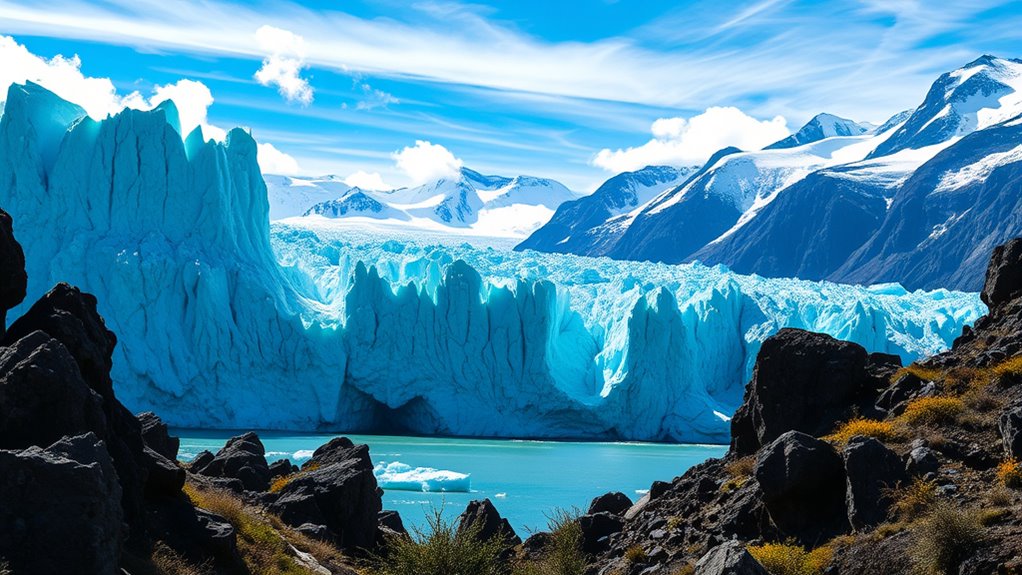

Patagonia’s glaciers in southern Chile and Argentina are breathtaking natural wonders, shaped over thousands of years by powerful forces. These massive ice formations feature jagged edges, deep blue crevasses, and thunderous calving into water. As climate change accelerates, many glaciers are retreating and thinning rapidly. Exploring these glaciers offers a chance to witness stunning ice art and understand their essential role in the Earth’s changing climate. Discover more about how these glaciers reveal our planet’s health.
Key Takeaways
- Patagonia’s glaciers are massive, ancient ice formations shaped over thousands of years, offering stunning views of jagged edges and deep blue crevasses.
- Located in southern Chile and Argentina, these glaciers are vital natural landmarks that showcase the region’s awe-inspiring icy landscapes.
- Climate change has caused significant glacier retreat and thinning, highlighting the importance of monitoring these sensitive environmental indicators.
- These glaciers contribute to global sea level rise and serve as crucial sites for scientific research and environmental education.
- Exploring Patagonia’s glaciers provides a unique opportunity to witness natural frozen art and reflect on environmental preservation efforts.
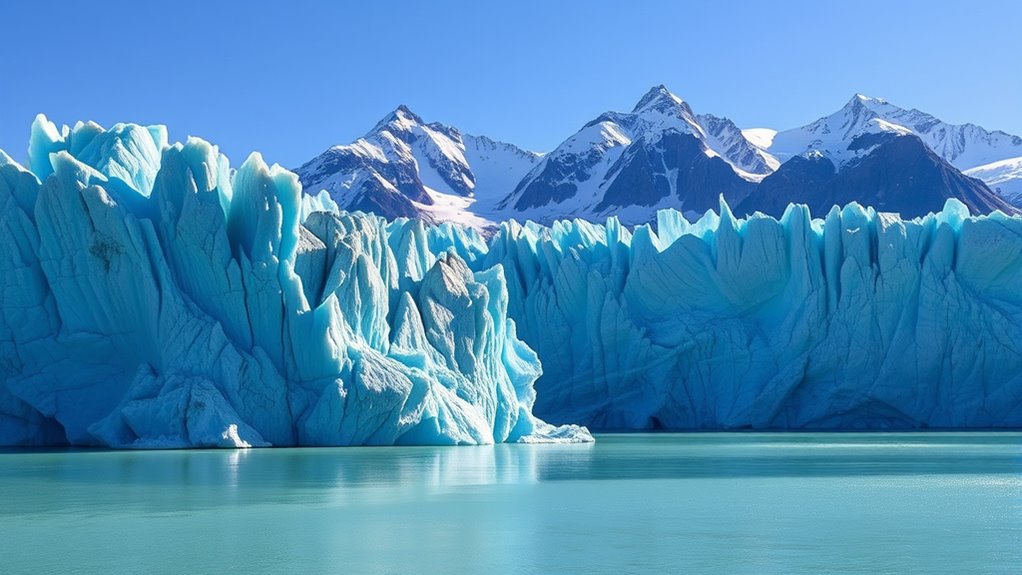
Have you ever wondered what it’s like to stand before some of the world’s most awe-inspiring glaciers? When you visit Patagonia, you get that chance, surrounded by massive ice formations that seem to stretch endlessly into the sky. These glaciers aren’t just frozen rivers; they are living monuments shaped over thousands of years, carved by nature’s relentless forces. As you observe their jagged edges and deep blue crevasses, it’s impossible not to feel a sense of wonder. But beneath their majestic beauty lies a stark reality: climate change is accelerating the melting of these glaciers at an alarming rate. The impact is visibly clear when you compare current ice formations to photographs from just a few decades ago. What once was a thick, sprawling mass has thinned considerably, revealing the urgent need to understand and address the causes of this rapid change.
Walking along the shores of the glaciers, you notice chunks of ice calving into the water with thunderous crashes. This natural process, where large pieces break off and drift away, has become more frequent as global temperatures rise. The warming climate disrupts the delicate balance that sustains these ice formations, hastening their retreat. It’s a sobering sight—these glaciers are not only beautiful but also crucial indicators of the Earth’s health. The more they melt, the more it signals the ongoing shifts in our climate system. As you stand there, you might wonder how much longer these glaciers will survive in their current form. Scientists warn that many of Patagonia’s glaciers could disappear within a few decades unless meaningful action is taken to curb greenhouse gas emissions. Additionally, the presence of security systems in remote research stations can help protect valuable scientific equipment and data from theft or vandalism, ensuring continuous monitoring of these fragile environments.
Your journey through Patagonia’s icy landscapes offers a rare chance to witness the grandeur of nature’s frozen art. The shimmering blue ice, sculpted by centuries of snowfall and pressure, invites awe and reflection. Yet, it also prompts a sense of urgency. These glaciers are more than just scenic sights; they’re barometers of climate health, revealing the profound effects of environmental change. As you explore, remember that every crack and retreat of these ice formations speaks to a larger story—one of climate change’s undeniable impact. Protecting these glaciers means protecting the planet, and understanding their fragility is the first step toward action. So, as you stand amidst Patagonia’s icy giants, embrace the beauty but also acknowledge the responsibility to preserve these incredible natural wonders for future generations.
As an affiliate, we earn on qualifying purchases.
Frequently Asked Questions
What Are the Best Months to Visit Patagonia’s Glaciers?
The best visiting seasons for Patagonia’s glaciers are from late September to early November and from March to May. During these months, you enjoy ideal weather with milder temperatures and fewer crowds. Summer months, December to February, can be busy and warmer, while winter, June to August, brings colder temperatures and snow. Planning your trip during these shoulder seasons ensures you experience the stunning glaciers with excellent weather conditions.
Are There Guided Tours for Glacier Trekking Available?
Yes, you can find guided glacier tours available in Patagonia. Over 90% of visitors opt for guided glacier trekking expedition options, ensuring safety and expert guidance. These tours typically include gear, expert guides, and stunning views of massive ice formations. Whether you’re a beginner or experienced trekker, guided glacier tours give you the chance to explore Patagonia’s icy landscapes confidently and comfortably, making your adventure unforgettable.
How Accessible Are the Glaciers for Travelers With Mobility Issues?
You’ll find that glaciers in Patagonia are generally not wheelchair accessible due to rugged terrain and uneven paths. However, some tours offer mobility assistance and specialized arrangements for travelers with mobility issues. It’s best to contact tour operators ahead of time to confirm wheelchair accessibility and discuss any specific needs. While full glacier trekking may be limited, you can still enjoy breathtaking views via accessible viewpoints or guided scenic drives tailored for mobility support.
What Wildlife Can Be Observed Near Patagonia’s Glaciers?
Near Patagonia’s glaciers, you can observe diverse wildlife perfect for photography. Bird species like condors, guanacos, and southern foxes roam the area, offering stunning subjects for wildlife photography. Keep your camera ready as these animals often appear unexpectedly against the icy backdrop. You might also spot elusive pumas in remote areas. By exploring carefully, you can capture incredible images of Patagonia’s unique wildlife and enjoy a truly immersive experience.
Are There Eco-Friendly Options for Tourist Accommodations Nearby?
Yes, you can find eco-friendly options for accommodations near Patagonia’s glaciers. Look for sustainable lodging that prioritizes eco-tourism initiatives, such as eco-lodges, environmentally conscious hostels, and lodges with green certifications. These options minimize environmental impact and support local communities. By choosing eco-friendly accommodations, you help preserve Patagonia’s stunning landscapes while enjoying your trip responsibly. Always check for certifications or initiatives that promote sustainability before booking.
Conclusion
As you stand before Patagonia’s glaciers, the icy giants seem to whisper secrets of ancient times, their icy breath hinting at mysteries still hidden beneath the surface. The crackling crevices and shimmering blue depths invite you to imagine what lies beneath, waiting to be uncovered. With every step, you feel the weight of history and the promise of discovery lingering in the frosty air. Who knows what wonders—or warnings—these glaciers hold, just beyond your reach?