
Your elliptical’s stride length is a key factor that can make or break your workout experience. If it’s too short, you’ll feel cramped, and if it’s too long, your movement may seem unnatural, risking joint strain. Finding an elliptical with adjustable stride length helps match your height and gait, ensuring comfort and safety. Getting it right improves efficiency and reduces fatigue, so stick around to discover more ways to optimize your exercise setup.
Key Takeaways
- Proper stride length ensures natural movement, preventing discomfort and maximizing workout effectiveness.
- Adjustable stride length accommodates individual body types, enhancing comfort and reducing joint strain.
- Correct stride length aligns with ergonomic design, promoting proper posture and reducing fatigue during extended sessions.
- Inappropriate stride length can cause unnatural gait, increasing the risk of injury and decreasing workout safety.
- Matching stride length with resistance and ergonomic features optimizes muscle engagement and overall exercise quality.

Have you ever wondered how stride length impacts your elliptical workout? It’s a critical factor that can influence your comfort, performance, and overall results. When choosing an elliptical, understanding how stride length interacts with ergonomic features and resistance levels helps you find a machine that suits your body and fitness goals. A proper stride length ensures you move naturally, mimicking a running or walking motion without strain. If the stride is too short, your legs may feel cramped, leading to discomfort and limiting the workout’s effectiveness. Conversely, an overly long stride may cause unnatural movement, risking joint strain or injury.
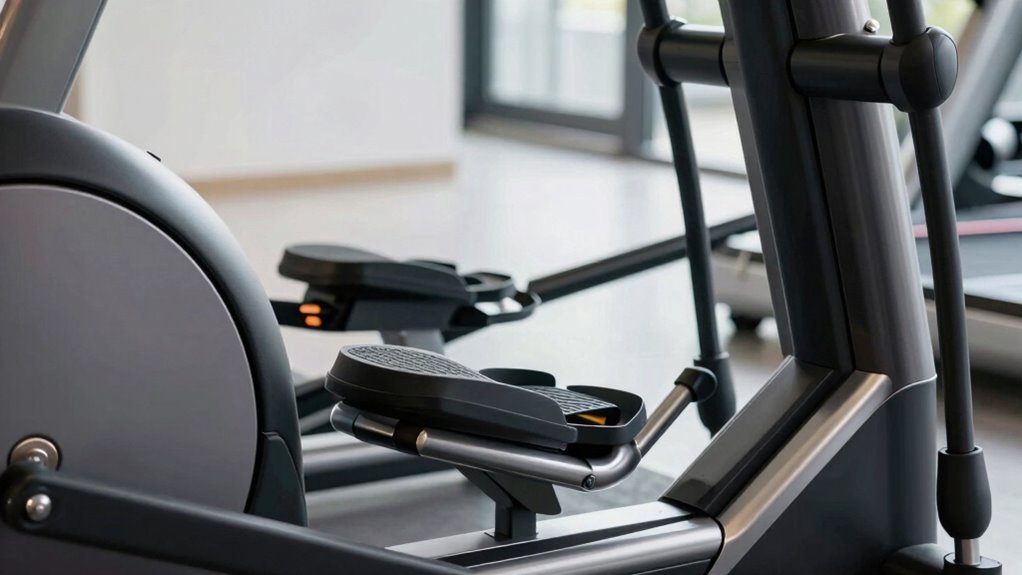
Your body’s natural stride length varies based on height, leg length, and activity level. When selecting an elliptical, look for adjustable stride lengths or models that match your natural gait. Many ellipticals feature ergonomic handles and foot pedals designed to align with your body’s biomechanics, promoting a more comfortable and efficient workout. These ergonomic features help maintain proper posture and reduce fatigue, especially important during longer sessions. The right stride length combined with ergonomic design allows you to engage muscles correctly, ensuring your workout targets the intended areas without unnecessary strain.
Choose elliptical with adjustable stride length for a comfortable, biomechanically aligned workout.
Resistance levels play a fundamental role in how effectively you can challenge yourself during each session. When paired with an appropriate stride length, higher resistance levels can intensify calorie burn and muscle engagement without compromising comfort. If your stride length is off, increasing resistance might only exacerbate discomfort or cause improper form. On the other hand, a well-matched stride length allows you to smoothly increase resistance, pushing your limits safely while maintaining solid posture and alignment.
It’s also worth noting that some ellipticals offer programmable resistance levels and stride length adjustments that can change automatically throughout your workout. This flexibility helps prevent boredom and ensures you’re continually challenging different muscle groups. When you combine adjustable resistance levels with ergonomic features that support your stride, you set yourself up for a more effective, enjoyable workout that minimizes injury risk.
Additionally, understanding the importance of stride length ergonomics can help you choose equipment that reduces joint stress and enhances comfort during long sessions. When you pay attention to these aspects, you can select an elliptical that fits your body and workout style perfectly. A well-chosen stride length, complemented by ergonomic design and adaptable resistance, helps you work out smarter, not harder—leading to better results and a more comfortable experience every time you hit the machine.
Frequently Asked Questions
How Does Stride Length Affect Calorie Burn During Workouts?
Your stride length directly impacts calorie burn during workouts by enhancing stride efficiency. When you choose a machine with an ideal stride length, you engage more muscle groups, making your workout more effective. This leads to better calorie maximization because you’re working smarter, not harder. Longer strides can boost intensity and help you burn more calories, while shorter strides may limit your effort, reducing overall calorie expenditure.
Can Adjustable Stride Length Benefit Different Fitness Levels?
Adjustable stride length definitely benefits different fitness levels by enabling personalized training. You can customize your stride for comfort and efficiency, whether you’re a beginner or an experienced athlete. This stride customization helps prevent injury, improves workout effectiveness, and keeps you motivated. So, if your elliptical offers adjustable stride length, it’s a smart choice—making it easier to tailor each session to your unique needs and goals.
Is a Longer Stride More Suitable for Taller Users?
A longer stride is generally better for taller users because it promotes stride optimization and reduces joint strain. Taller users benefit from ellipticals with adjustable or longer stride lengths, allowing for natural movement and better workout efficiency. If you’re taller, prioritize ellipticals that accommodate your height to guarantee comfort and effective exercise. Choosing the right stride length helps prevent discomfort and maximizes your workout benefits.
How Do Stride Length and Resistance Work Together for Effective Training?
You’ll get the best workout when you combine stride mechanics with resistance customization. Adjust your stride length to match your body for comfortable, natural movement, then tweak resistance to challenge your muscles. This synergy guarantees effective training, boosts calorie burn, and improves endurance. By focusing on both, you maximize your elliptical sessions and prevent injury, making your workout more efficient and tailored to your fitness level.
Are There Safety Concerns With Very Long or Very Short Stride Lengths?
Did you know that choosing the right stride length can reduce injury risk by up to 30%? Long or short stride lengths can cause ergonomic concerns and compromise stride length safety. With very long strides, you risk joint strain and imbalance, while very short strides may lead to improper posture. Always select an elliptical that matches your natural gait to prevent discomfort and guarantee a safer, more effective workout.
Conclusion
Choosing an elliptical with the right stride length can truly transform your workout. It’s the difference between feeling comfortable and pushing yourself to the limit. Don’t you want to maximize every stride and get the most out of your exercise? Remember, the perfect stride isn’t just about comfort — it’s about efficiency and results. So, when you’re selecting your machine, ask yourself: isn’t it worth investing in your long-term fitness journey?